Step through the monumental stone gates and journey back in time to the last great capital of the Khmer Empire: Angkor Thom (អង្គរធំ), the “Great City.” While Angkor Wat stands as a singular, perfectly proportioned temple, Angkor Thom is a sprawling, fortified metropolis that once housed nearly a million people. Established in the late 12th century by the visionary King Jayavarman VII, this vast enclosure was the heart of a powerful kingdom, a center for administration, military, and religion. Its centerpiece, the enigmatic Bayon Temple, with its hundreds of serene, smiling faces, has captivated travelers for centuries. This guide will lead you through its ancient avenues, past colossal terraces, and into the shadow of its most sacred temples, unlocking the stories carved into every stone of this magnificent city.
The Rise of a Great City: The History of Angkor Thom
Following the sacking of the previous Khmer capital by the Chams in 1177, the resilient King Jayavarman VII embarked on an ambitious building program, unparalleled in Khmer history. He established Angkor Thom as his new state capital, a city built to inspire awe and project power. Unlike the Hindu-centric temples before it, Angkor Thom was dedicated to Mahayana Buddhism, reflecting the king’s personal faith. The city was laid out on a near-perfect square grid, surrounded by an 8-meter-high laterite wall and a 100-meter-wide moat, creating a formidable defensive perimeter. At its exact center, he built the mesmerizing Bayon Temple (ប្រាសាទបាយ័ន), a temple-mountain whose stone faces are believed to be a fusion of the bodhisattva Lokeshvara and the king himself, watching over his people in every direction.
The Bayon Temple: The Soul of the City
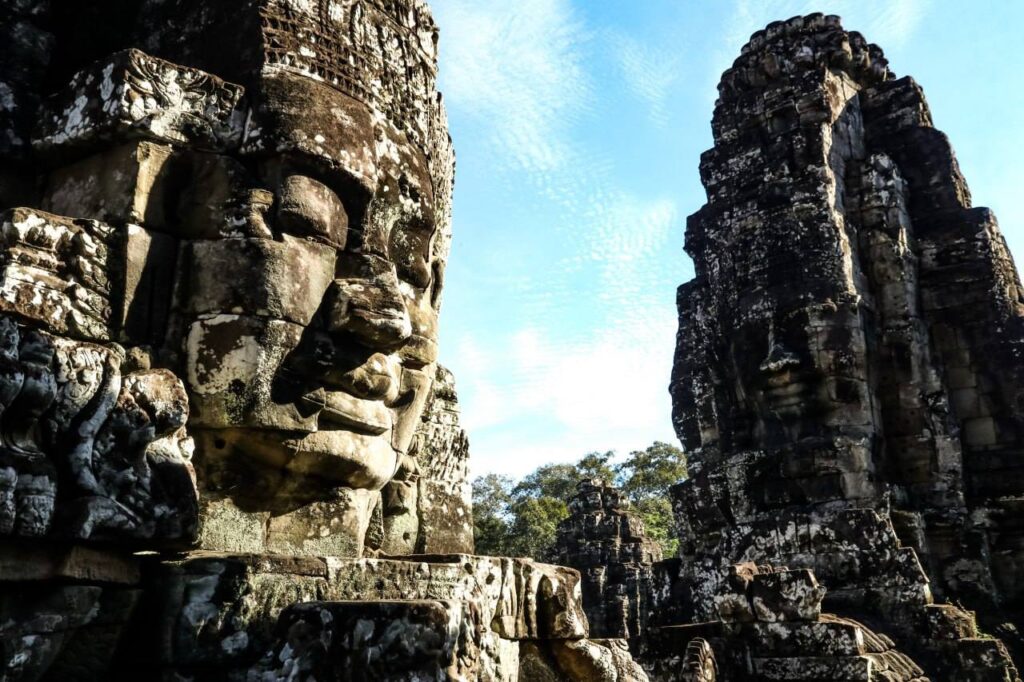
At the heart of Angkor Thom lies its most compelling structure: the Bayon. It is a masterpiece of baroque Khmer architecture, seemingly a chaotic jumble of stone towers from a distance. As you draw closer, the magic reveals itself. Over 200 giant, serene faces gaze down from 54 Gothic towers, each face bearing a subtle, enigmatic smile. These faces are the enduring symbol of Angkor Thom, creating a spiritual and almost surreal atmosphere. The temple’s lower galleries feature stunningly detailed bas-reliefs, not of gods and myths, but of everyday life in the 12th-century Khmer Empire—market scenes, fishing, cockfights, and epic battles, providing a vivid window into the past.
How to Get to Angkor Thom
Angkor Thom is a cornerstone of the “Small Circuit” (the most popular temple route) and is easily accessible from Siem Reap.
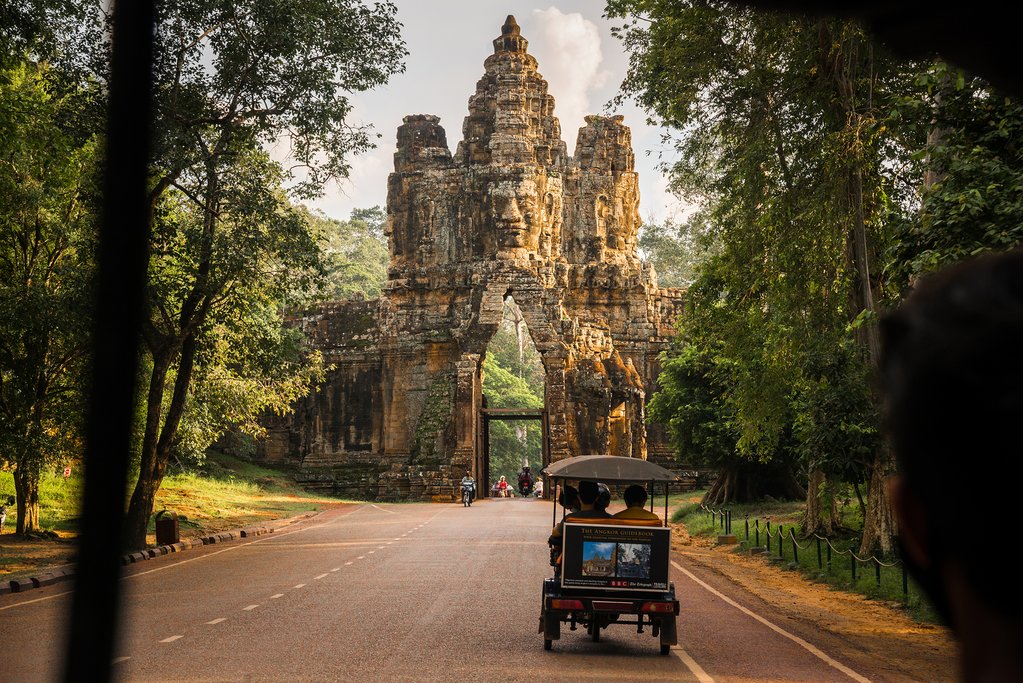
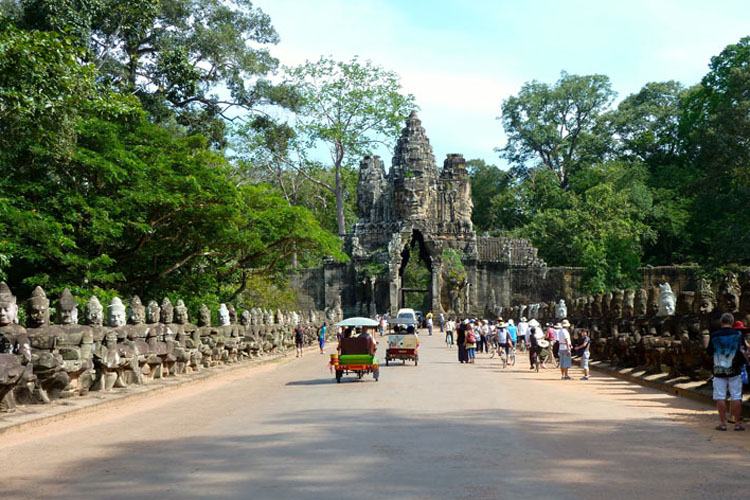
- By Tuk-Tuk (កង់បី): The classic choice. A full-day hire ($20-25 USD) will comfortably cover Angkor Thom and other key temples on the Small Circuit like Angkor Wat and Ta Prohm. Entering through the magnificent South Gate is a highlight in itself.
- By Car with Driver: For A/C comfort, a private car ($30-40 USD) is a great way to travel between the spread-out sites within the Angkor Thom complex, especially during the hot season.
- By Bicycle: For the fit and adventurous, cycling to and around Angkor Thom is very rewarding. The distances between sites inside the city walls (e.g., from Bayon to the Terrace of the Elephants) are easily cyclable.
- Guided Tours: Many tours combine a sunrise at Angkor Wat with a morning exploration of Angkor Thom. A knowledgeable guide is highly recommended to decipher the intricate carvings and history of the Bayon.
What to Do: Top Attractions Inside Angkor Thom City
Angkor Thom is a vast complex with numerous sites. Prioritize these unmissable attractions to capture the essence of the great city.
- 🗿 Marvel at the Bayon Temple (ប្រាសាទបាយ័ន): Get lost in the maze of corridors and towers. The main attraction is the upper terrace, where you can come face-to-face with the iconic smiling stone visages.
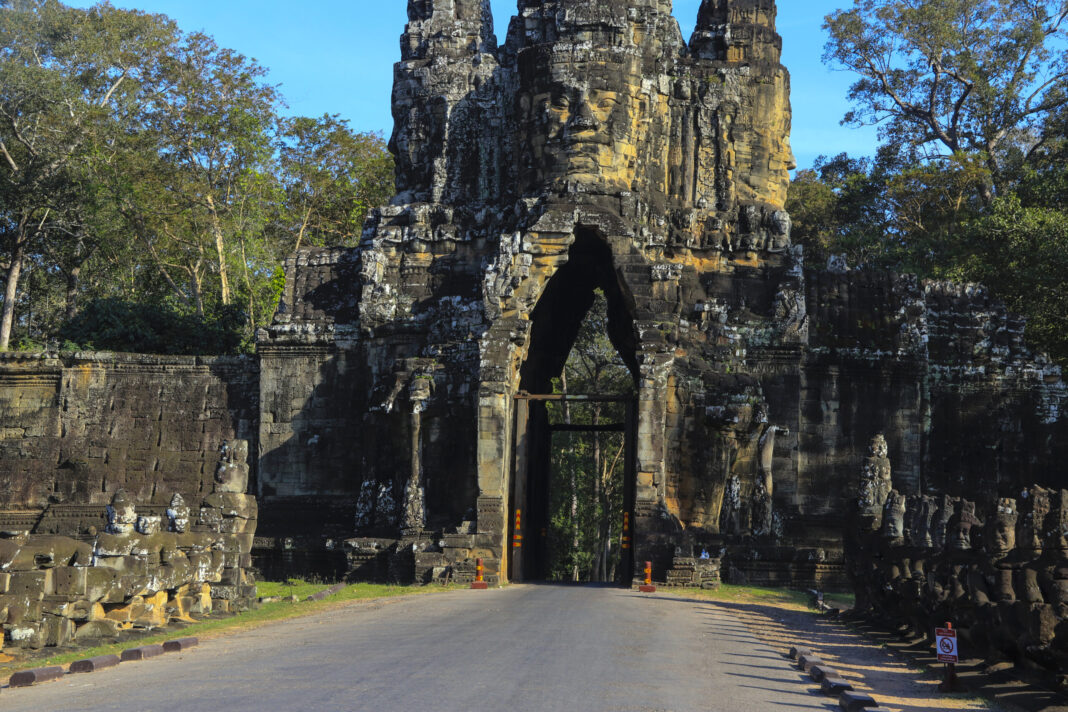
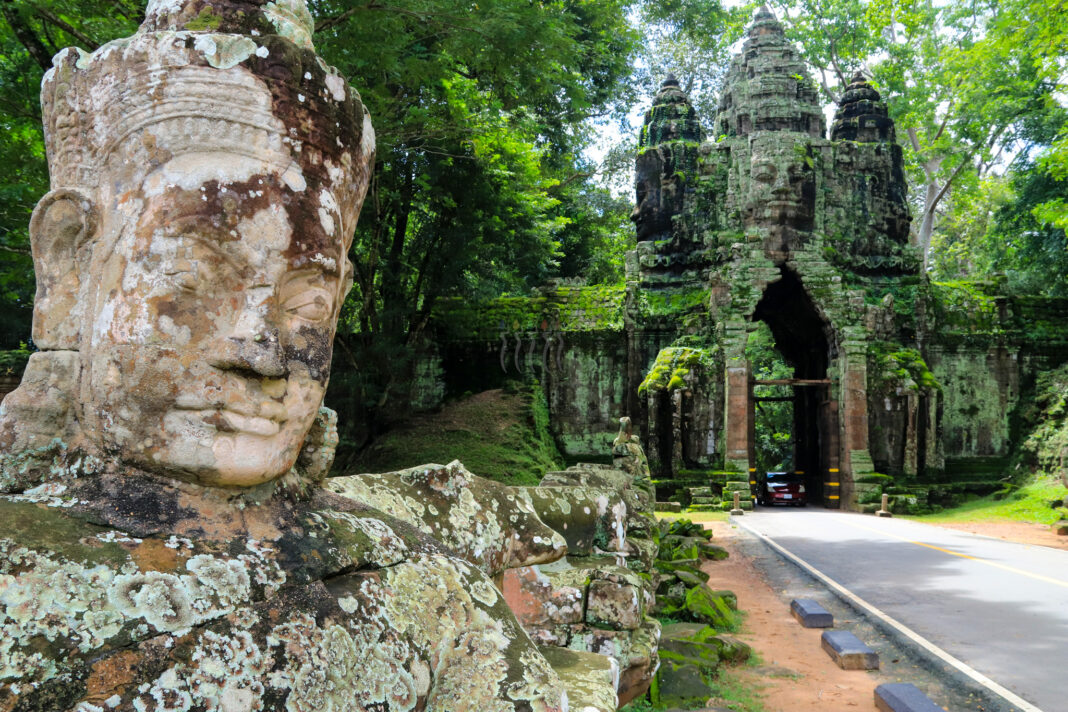
- 🚪 Enter Through the South Gate: This is the best-preserved of the city’s five gates. The causeway is lined with 54 stone figures of devas (gods) on one side and asuras (demons) on the other, depicting the myth of the Churning of the Ocean of Milk.
- 🐘 Walk the Terrace of the Elephants (ព្រះលានជល់ដំរី): Imagine the royal spectacles that took place at this 350-meter-long viewing platform. It is adorned with incredible carvings of elephants, garudas, and lions.
- 👑 Discover the Terrace of the Leper King: Located just north of the Elephant Terrace, this platform features deeply detailed carvings of mythological figures and a mysterious replica statue of the “Leper King.”
- 🏛️ Climb the Baphuon: A massive temple-mountain that predates Angkor Thom itself. A challenging climb to the top is rewarded with stunning views. On its western side, look for the enormous, 70-meter-long reclining Buddha built into the structure.
- ⭐ Explore the Royal Palace Area & Phimeanakas: Though the wooden palace is long gone, you can still explore its stone foundations and the pyramid-like Phimeanakas temple, which legend says housed a golden tower.
Suggested Itinerary for Exploring Angkor Thom
Half-Day Itinerary (3-4 Hours)
- 8:00 AM: Arrive at the South Gate of Angkor Thom. Take time to photograph the causeway.
- 8:30 AM: Head directly to the Bayon Temple. Explore for 1.5 hours.
- 10:00 AM: Walk a short distance north to the Baphuon. Climb to the top if you feel energetic.
- 11:00 AM: Continue to the Phimeanakas and the former Royal Palace grounds.
- 11:30 AM: Conclude your visit by walking along the Terrace of the Elephants and the Terrace of the Leper King.
Combined with Small Circuit (Full Day)
- 5:00 AM – 7:00 AM: Sunrise at Angkor Wat.
- 7:30 AM – 11:00 AM: Follow the half-day Angkor Thom itinerary above.
- 11:00 AM – 1:00 PM: Break for lunch at a restaurant near the gates.
- 1:00 PM – 4:00 PM: Continue the circuit to other temples like Ta Keo and the famous Ta Prohm (“Tomb Raider” temple).
Local Etiquette & Temple Rules 🕊️
As part of the sacred Angkor Archaeological Park, all visitors are expected to show respect.
- Cover Up: A modest dress code requiring covered shoulders and knees is enforced. You will be denied entry to temple complexes if you are not appropriately dressed.
- Be Mindful: These are active places of worship for many Cambodians. Speak softly, do not climb on restricted structures, and be respectful of monks.
- Photography: Always ask for permission before taking photos of local people or monks. Respect their privacy.
Safety & Travel Tips for a Smooth Visit
- Pace Yourself: Angkor Thom is huge. Don’t try to see everything at once. Wear very comfortable walking shoes.
- Hydration is Key: The Cambodian sun is intense. Carry at least one bottle of water with you and buy more throughout the day.
- Monkey Business: Monkeys inhabit the area, especially around the gates. They can be aggressive. Do not feed them and keep a secure hold on your belongings (hats, sunglasses, snacks).
- Use Licensed Guides: For the best experience, hire an official, licensed guide who will wear an identifying uniform.
Explore Beyond: Other Key Temples Nearby
Angkor Thom is perfectly positioned for exploring other wonders of the Khmer Empire on the same day.
- 🕉️ Angkor Wat: The world’s largest religious monument is just a few minutes south and an essential part of any visit.
- 🌳 Ta Prohm: The jungle temple, where nature and stone have merged in a stunning display. A must-see on the Small Circuit.
- ⚔️ Preah Khan: A huge, maze-like monastic complex with a similar atmospheric feel to Ta Prohm but often with fewer crowds.
- ⛰️ Phnom Bakheng: A hill-top temple located between Angkor Wat and Angkor Thom, famous for its sunset views over the park.
Frequently Asked Questions (FAQs)
- 1. What is the main difference between Angkor Wat and Angkor Thom?
- Angkor Wat is a single, massive Hindu-turned-Buddhist temple. Angkor Thom is a vast, walled city complex that contains many different temples and structures within it, with the Bayon Temple at its center.
2. How long should I spend in Angkor Thom?
- To see the main highlights (Bayon, Baphuon, Terraces), you should allocate at least 3 to 4 hours. A more thorough exploration could easily take up a full day.
3. What do the faces on the Bayon temple represent?
- This is a subject of scholarly debate. The most widely accepted theory is that they are portraits of King Jayavarman VII himself, depicted as the compassionate bodhisattva, Lokeshvara (Avalokiteshvara).
4. Can I visit Angkor Wat and Angkor Thom in one day?
- Yes, absolutely. This is the standard “Small Circuit” route. A popular plan is to see the sunrise at Angkor Wat, explore that temple, and then spend the rest of the morning and early afternoon exploring the sites of Angkor Thom.
5. Is there a separate ticket required for Angkor Thom or Bayon?
- No. Your Angkor Pass (whether 1, 3, or 7-day) grants you access to all temples and sites within the Angkor Archaeological Park, including the entire Angkor Thom complex.
Embrace the Majesty of the Great City
Angkor Thom is more than just a collection of ruins; it’s the ghost of a vibrant, powerful capital city. Standing before the silent, smiling faces of the Bayon, you can’t help but feel the enduring spirit of King Jayavarman VII and the civilization he built. It offers a profound sense of discovery, a journey into a world where gods and kings walked the earth. Let the Great City captivate your imagination and become a highlight of your Cambodian adventure.
What part of Angkor Thom are you most excited to see? Let us know in the comments!