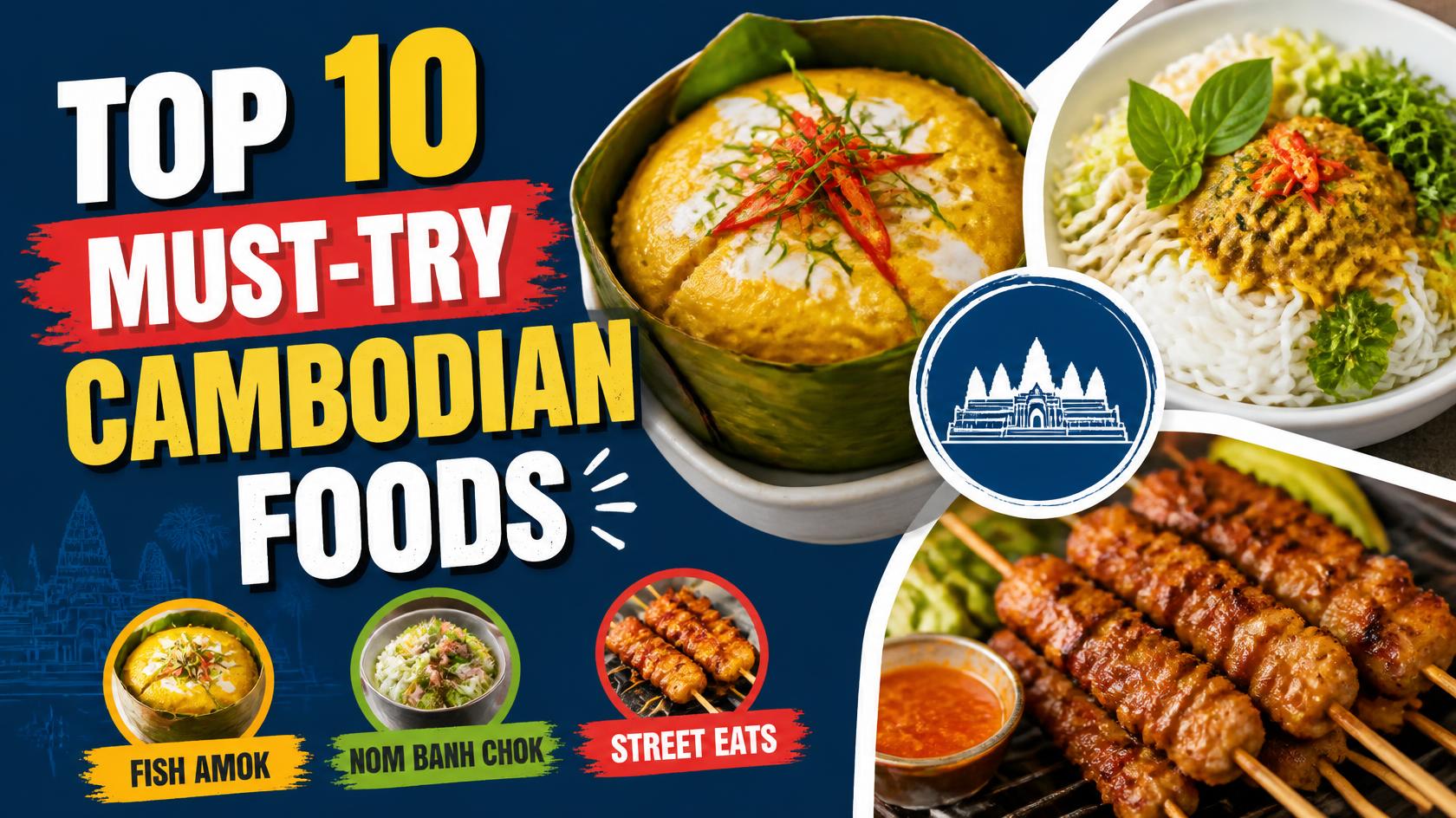
Top 10 Must-Try Cambodian Foods: Fish Amok, Nom Banh Chok, and Street Eats

Cambodian cuisine is one of Southeast Asia’s most rewarding food experiences, combining fresh herbs, aromatic spices, fermented ingredients, rice, freshwater fish, vegetables, and coconut. While Fish Amok and Nom Banh Chok are among the dishes most closely associated with Khmer cuisine, Cambodia offers far more than these two classics.
From fragrant noodle breakfasts and comforting soups to grilled meats, crispy snacks, and lively street-food dishes, Cambodian food reflects the country’s history, geography, and everyday life. For international travelers, trying local food is also one of the easiest ways to experience Cambodian culture beyond temples and tourist attractions.
This guide introduces 10 must-try Cambodian foods, explains what each dish tastes like, and gives practical tips for finding and enjoying Khmer cuisine while traveling around Cambodia.
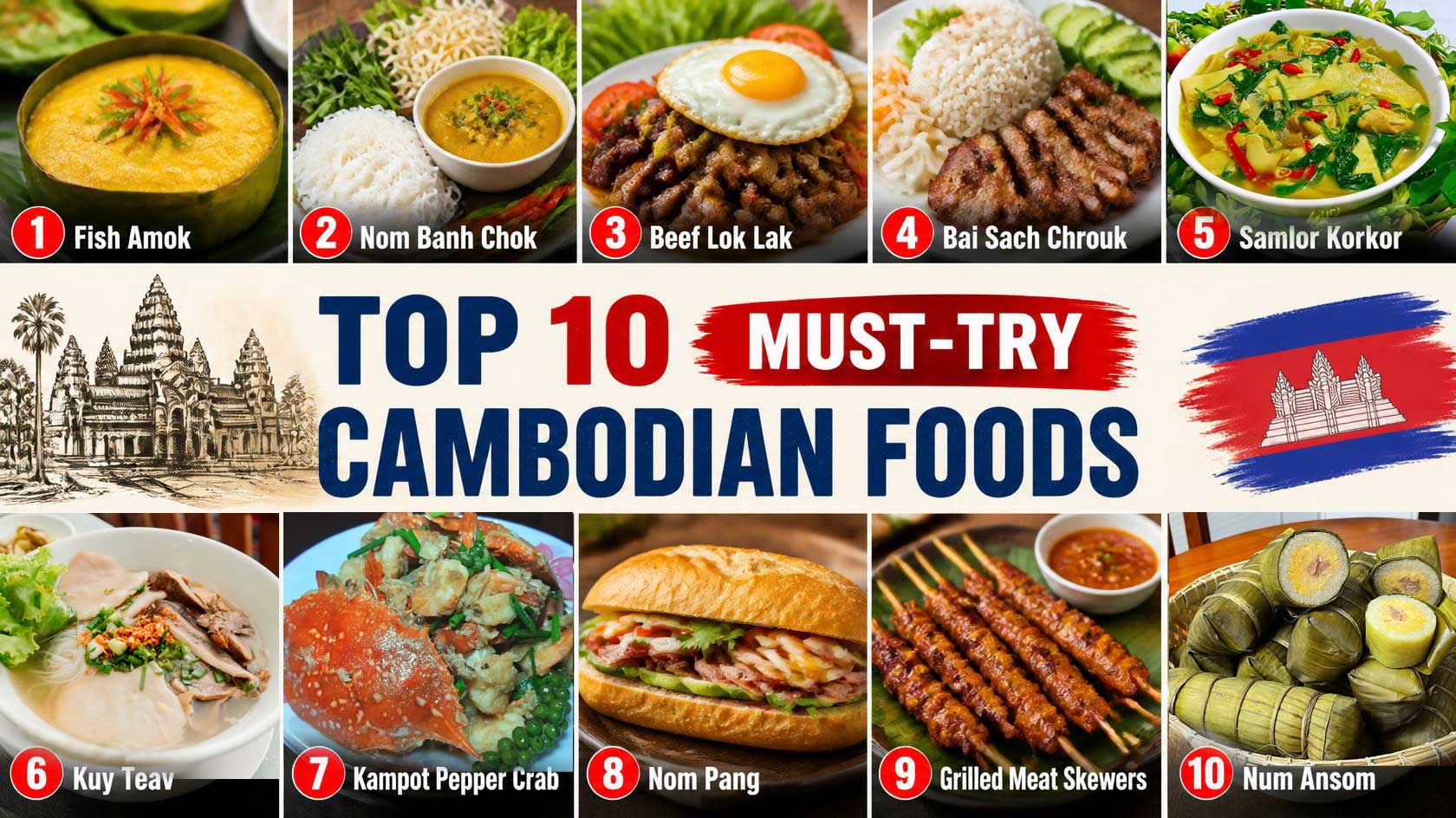
Quick Overview: 10 Cambodian Foods to Try
| # | Dish | What to Expect |
|---|---|---|
| 1 | Fish Amok | Steamed fish with coconut milk and aromatic Khmer kroeung |
| 2 | Nom Banh Chok | Fresh rice noodles with a fragrant fish-based green curry |
| 3 | Beef Lok Lak | Stir-fried beef served with vegetables and a lime-pepper dip |
| 4 | Bai Sach Chrouk | Grilled marinated pork with rice and simple breakfast sides |
| 5 | Samlor Korkor | Hearty traditional Cambodian vegetable and meat soup |
| 6 | Kuy Teav | Rice noodle soup with meat, herbs, and flavorful broth |
| 7 | Kampot Pepper Crab | Fresh crab cooked with Cambodia’s famous Kampot pepper |
| 8 | Nom Pang | Khmer-style baguette sandwich with savory fillings and pickles |
| 9 | Grilled Meat Skewers | Seasoned meat grilled over charcoal and commonly sold as street food |
| 10 | Num Ansom | Sticky-rice cake traditionally prepared with banana or savory fillings |
1. Fish Amok – Cambodia’s Most Famous Signature Dish
Fish Amok is probably the dish most frequently recommended to travelers who want to discover Khmer cuisine. It is made with fish, coconut milk or coconut cream, eggs in some preparations, and a fragrant Khmer spice paste known as kroeung.
The dish is often gently steamed in a banana-leaf container or served in a bowl, creating a soft, custard-like texture. Its flavor is aromatic and mildly spicy rather than overwhelmingly hot.
Typical ingredients in Khmer kroeung may include lemongrass, galangal, turmeric, kaffir lime, garlic, shallots, and other aromatic ingredients. The exact recipe varies between families, restaurants, and regions.
What Does Fish Amok Taste Like?
Expect a creamy, fragrant and slightly sweet flavor with herbal and citrusy notes. The fish is usually tender, while coconut gives the dish its characteristic richness.
Where to Try Fish Amok
Fish Amok is widely available in Cambodian restaurants, particularly in major tourist destinations such as Phnom Penh, Siem Reap, Battambang, Kampot, and Kep.
Traveler Tip: If you are eating Cambodian food for the first time, Fish Amok is a good introduction because it is aromatic and flavorful without necessarily being very spicy.
2. Nom Banh Chok – Cambodia’s Classic Khmer Noodle Dish
Nom Banh Chok is one of Cambodia’s best-known traditional noodle dishes and is particularly associated with breakfast and everyday Cambodian food culture.
The dish uses thin fermented rice noodles topped with a green, herbaceous fish-based curry sauce. It is commonly served with fresh vegetables and herbs such as cucumber, banana blossom, bean sprouts, and various leafy greens.
The combination of soft rice noodles, fragrant sauce, crunchy vegetables, and fresh herbs creates a balanced dish with contrasting textures.
When Do Cambodians Eat Nom Banh Chok?
Nom Banh Chok is traditionally popular as a breakfast food, although it can be enjoyed at other times of the day. Local noodle vendors and markets are often the best places to see how the dish is prepared and served.
Why Travelers Should Try It
Unlike many restaurant dishes designed specifically for tourists, Nom Banh Chok is deeply connected to everyday Khmer food culture. Trying it at a local market can provide a more authentic glimpse into Cambodian daily life.
3. Beef Lok Lak – A Cambodian Favorite for Lunch or Dinner
Beef Lok Lak consists of bite-sized pieces of beef that are marinated and quickly stir-fried. It is commonly served with lettuce, tomatoes, cucumber, onions, and rice.
One of its defining features is the dipping sauce. A simple mixture of lime juice, salt, and Kampot pepper provides a sharp, salty and citrusy contrast to the savory beef.
What Makes Lok Lak Special?
The appeal of Lok Lak comes from its simplicity. Tender beef, fresh vegetables, steamed rice, and a bright dipping sauce combine into a satisfying meal without relying on a complicated presentation.
For visitors who prefer familiar flavors while exploring Khmer cuisine, Beef Lok Lak can be an approachable choice.
4. Bai Sach Chrouk – Cambodia’s Popular Breakfast
Bai Sach Chrouk means pork and rice and is a common Cambodian breakfast. Thin slices of pork are marinated and grilled, often over charcoal, then served with steamed rice.
The pork is typically accompanied by simple sides such as pickled vegetables, cucumber, or a light soup. The smoky aroma from grilling is one of the dish’s most appealing characteristics.
Best Time to Eat Bai Sach Chrouk
Visit a local breakfast stall in the morning to experience Bai Sach Chrouk in the setting where it is most commonly enjoyed. Many vendors begin serving early and may sell out later in the morning.
Local Food Tip: Cambodian breakfast is not limited to sweet or Western-style foods. Rice, noodles, soups, and grilled meats are all common morning choices.
5. Samlor Korkor – A Traditional Cambodian Comfort Food
Samlor Korkor is a hearty Cambodian soup traditionally prepared with a combination of vegetables, herbs, fermented ingredients, and meat or fish.
Its name is often associated with the idea of a mixed or assorted soup because numerous ingredients can be combined in one pot. Different households may prepare it differently depending on available ingredients and personal preferences.
Common ingredients can include pumpkin, green papaya, eggplant, long beans, leafy vegetables, and other seasonal produce. Fish paste or other fermented ingredients may contribute a distinctive savory depth.
What Does Samlor Korkor Taste Like?
It is generally savory, aromatic and earthy, with a complexity that comes from vegetables, herbs and fermented ingredients. It is a particularly interesting choice for travelers who want to explore traditional Khmer flavors beyond the better-known tourist dishes.
6. Kuy Teav – A Popular Cambodian Rice Noodle Soup
Kuy Teav is a popular rice noodle soup found throughout Cambodia. It is commonly eaten for breakfast but can also be enjoyed throughout the day.
The dish usually features thin rice noodles in a clear or lightly seasoned broth, with meat or seafood depending on the vendor. Fresh herbs, bean sprouts, green onions, lime, chili, and other condiments can be added according to personal taste.
How to Eat Kuy Teav
One of the enjoyable parts of eating Kuy Teav is adjusting the bowl yourself. Depending on the stall, you may find a selection of herbs, lime, chili, fish sauce, or other seasonings on the table.
Start with the broth as served, then add small amounts of condiments until you find the balance you prefer.
7. Kampot Pepper Crab – A Must-Try Seafood Dish
Kampot Pepper Crab is particularly associated with Cambodia’s southern coast, especially the seafood areas around Kep and the nearby Kampot region.
Fresh crab is cooked with pepper and other aromatic ingredients. Kampot pepper is internationally recognized for its distinctive aroma and flavor and is an important Cambodian agricultural product.
The combination of sweet crab meat and aromatic pepper creates a memorable seafood dish.
Where to Try It
Kep’s famous crab market and seafood restaurants are among the places travelers commonly go to experience crab prepared with Kampot pepper.
If you are visiting Kep or Kampot, combining a seafood meal with a visit to a Kampot pepper plantation can make for a particularly interesting food-focused day.
8. Nom Pang – Cambodia’s Take on the Baguette Sandwich
Nom Pang is a Cambodian sandwich made with a baguette, reflecting the influence of the country’s French colonial history.
The baguette may be filled with meat, pâté, vegetables, fresh herbs, pickled vegetables, sauces, and other ingredients depending on the vendor.
Nom Pang is particularly convenient for travelers looking for an inexpensive meal or snack while exploring a city.
Why Is Bread Part of Cambodian Food Culture?
The baguette became part of Cambodian food culture during the French colonial period. Over time, local vendors adapted the format using Cambodian ingredients and flavors.
Today, Nom Pang is an example of how Cambodian cuisine has incorporated outside influences while developing its own local identity.
9. Grilled Meat Skewers – Classic Cambodian Street Food
Walking through Cambodian markets and streets, you will often encounter vendors grilling meat over charcoal. Grilled meat skewers can include beef, pork, chicken, or other ingredients, depending on the location.
The meat is usually seasoned or marinated before being grilled. The charcoal creates a smoky aroma that can be difficult to resist when walking through a busy market.
How to Enjoy Cambodian Street Grilled Food
- Choose busy stalls with a high turnover of food.
- Look for vendors who cook meat thoroughly over hot grills.
- Eat grilled food while it is freshly cooked and hot.
- Observe basic food hygiene, especially when food is displayed outdoors.
- Carry small Cambodian riel notes for inexpensive purchases.
Street food is not simply about saving money. It is an important part of everyday Cambodian food culture and provides opportunities to see how locals eat and socialize.
10. Num Ansom – A Traditional Khmer Sticky-Rice Treat
Num Ansom is a traditional Cambodian sticky-rice cake commonly associated with celebrations, religious occasions, family gatherings, and festivals.
Different varieties exist. Some are made with banana and sweet ingredients, while savory versions may contain pork or other fillings. The ingredients are wrapped in banana leaves and cooked until the sticky rice becomes soft and cohesive.
Because Num Ansom is connected to Cambodian traditions and celebrations, it can offer travelers a different perspective on Khmer food beyond restaurants and street stalls.
What Makes Cambodian Cuisine Unique?
Cambodian food shares some ingredients and culinary influences with neighboring Southeast Asian cuisines, but Khmer cuisine has its own distinctive combination of flavors and techniques.
1. Khmer Kroeung
Kroeung refers to aromatic spice pastes used in many Cambodian dishes. Ingredients can include lemongrass, galangal, turmeric, kaffir lime, garlic, shallots, and other herbs or spices.
2. Fresh Herbs and Vegetables
Fresh vegetables and herbs are important components of many Cambodian meals. They provide freshness and texture alongside cooked ingredients.
3. Rice as a Staple
Rice is central to Cambodian food culture. Steamed rice, rice noodles, and sticky-rice preparations appear in many traditional dishes.
4. Freshwater Fish
Cambodia’s extensive waterways and the Mekong and Tonle Sap systems have historically supported a food culture in which freshwater fish plays an important role.
5. Fermented Ingredients
Fermented fish and other preserved ingredients can provide strong savory depth to Cambodian dishes. For first-time visitors, these flavors may be unfamiliar, but they are important to understanding traditional Khmer cooking.
Where to Find the Best Cambodian Food
You do not need to visit expensive restaurants to experience Khmer cuisine. Some of the most memorable food experiences can happen at local markets, family-run restaurants, breakfast stalls, and street-food areas.
Siem Reap
Siem Reap is an excellent starting point for international visitors because it offers everything from traditional Khmer restaurants to markets and street-food vendors. It is also convenient for combining food experiences with a visit to Angkor.
Phnom Penh
Cambodia’s capital offers a broad range of traditional dishes, modern Khmer restaurants, markets, cafés, and street food. It is particularly useful for travelers who want to explore both everyday Cambodian food and contemporary interpretations of Khmer cuisine.
Kampot and Kep
The southern region is especially interesting for seafood and Kampot pepper. Kep is well known for crab and coastal seafood, while Kampot is closely associated with pepper production and a growing food scene.
Battambang
Battambang provides another opportunity to experience Cambodian food away from the country’s largest tourist centers, with local markets and traditional dishes that reflect everyday life in northwestern Cambodia.
Practical Tips for Eating Cambodian Food
🍜 Cambodian Food Tips for Travelers
- Start with familiar dishes: Fish Amok, Beef Lok Lak, Bai Sach Chrouk, and Nom Pang are approachable choices.
- Try breakfast locally: Nom Banh Chok, Kuy Teav, and Bai Sach Chrouk are excellent ways to experience Cambodian mornings.
- Do not avoid street food automatically: Look for busy stalls with good turnover and food cooked fresh.
- Ask about spice: If you are sensitive to chili, tell the vendor or restaurant staff.
- Explore local markets: Markets often provide more variety than tourist-oriented restaurants.
- Try Kampot pepper: Its aroma is one of Cambodia’s distinctive culinary characteristics.
- Drink safe water: Travelers should choose sealed bottled water or reliably treated drinking water.
- Keep an open mind: Fermented fish, herbs, and unfamiliar textures are part of traditional Khmer cuisine.
How Much Does Cambodian Food Cost?
Food prices vary considerably depending on the location, restaurant type, ingredients, and level of tourism. Local breakfast stalls and street-food vendors are generally among the least expensive options, while restaurants in major tourist areas and upscale establishments can cost significantly more.
For budget travelers, eating where local residents eat can provide good value while also offering a more everyday Cambodian food experience. Always check the menu or price before ordering when buying from informal vendors if the price is not clearly displayed.
Is Cambodian Food Spicy?
Cambodian cuisine can use chili, but many traditional Khmer dishes are not as chili-heavy as some travelers might expect from Southeast Asian cuisine.
Spiciness often comes from condiments or added chili rather than being the dominant characteristic of the dish. This means visitors can often adjust the heat level according to their preference.
If you do not eat spicy food, simply ask the vendor or restaurant to prepare the dish with little or no chili.
Vegetarian and Vegan Cambodian Food
Vegetarian travelers can find vegetable-based Cambodian dishes, rice dishes, noodles, soups, salads, and fresh fruit. However, fish sauce, fermented fish, shrimp paste, meat stock, or other animal-based ingredients can appear in dishes that look vegetarian.
If you follow a strict vegetarian or vegan diet, clearly explain your dietary requirements before ordering and ask whether the dish contains fish sauce, meat stock, fish paste, shrimp paste, eggs, or other animal products.
Frequently Asked Questions About Cambodian Food
What is the most famous Cambodian food?
Fish Amok is one of the dishes most strongly associated with Cambodian cuisine internationally. Nom Banh Chok, Kuy Teav, Bai Sach Chrouk, and Beef Lok Lak are also widely recognized Cambodian dishes.
What should I eat in Cambodia for the first time?
For a first food experience, consider trying Fish Amok, Nom Banh Chok, Beef Lok Lak, Bai Sach Chrouk, and Kuy Teav. These dishes provide a useful introduction to different Cambodian flavors and eating occasions.
What is a traditional Cambodian breakfast?
Traditional breakfast choices include Nom Banh Chok, Kuy Teav, and Bai Sach Chrouk. Breakfast stalls and local markets are particularly good places to experience these dishes.
Is Cambodian food similar to Thai food?
Cambodian and Thai cuisines share some regional ingredients and culinary influences, but Khmer cuisine has its own traditions, flavor combinations, fermented ingredients, spice pastes, and cooking methods. It is best experienced as its own cuisine rather than as a variation of Thai food.
Is Cambodian street food safe for tourists?
Street food can be enjoyed safely when travelers use sensible food-hygiene precautions. Choose busy stalls with high food turnover, eat food that is freshly cooked and served hot, and be cautious with raw ingredients or food that has been sitting at room temperature for extended periods.
What Cambodian food is good for people who do not like spicy food?
Fish Amok, Bai Sach Chrouk, Beef Lok Lak, and many versions of Kuy Teav can be suitable for travelers who prefer mild flavors. Ask for little or no chili when ordering.
What Cambodian food should I try in Siem Reap?
In Siem Reap, travelers can look for Fish Amok, Nom Banh Chok, Beef Lok Lak, Kuy Teav, Bai Sach Chrouk, Cambodian barbecue, and other Khmer dishes at local markets and restaurants.
Sources & References
This article was prepared using information from Cambodian tourism and cultural sources, international organizations, and established travel references. Dish names, preparation styles, and regional food traditions can vary between families, vendors, and regions.
- Ministry of Tourism, Cambodia – official tourism information and destination resources.
- UNESCO – information on Cambodian cultural heritage and food-related cultural context.
- FAO – background information on Cambodia’s agriculture, food systems, and traditional food resources.
- National Geographic – regional cultural and travel background.
- Lonely Planet – Cambodia destination and food-travel references.
Conclusion: Discover Cambodia Through Its Food
Cambodian cuisine is much more than Fish Amok. From the fresh herbs and rice noodles of Nom Banh Chok to smoky Bai Sach Chrouk, comforting Samlor Korkor, flavorful Beef Lok Lak, and seafood cooked with Kampot pepper, Khmer food offers an impressive range of flavors and textures.
The best way to experience it is to go beyond the most famous dishes. Eat breakfast at a local noodle stall, explore a market, try a street-food snack, order a traditional soup, and ask local people what they recommend.
When you travel through Cambodia, make food part of the journey. A meal at a small local stall can sometimes tell you as much about Cambodian daily life and culture as a visit to a famous attraction.
Explore more Cambodian food, destinations, culture, and travel guides with GoToKH.