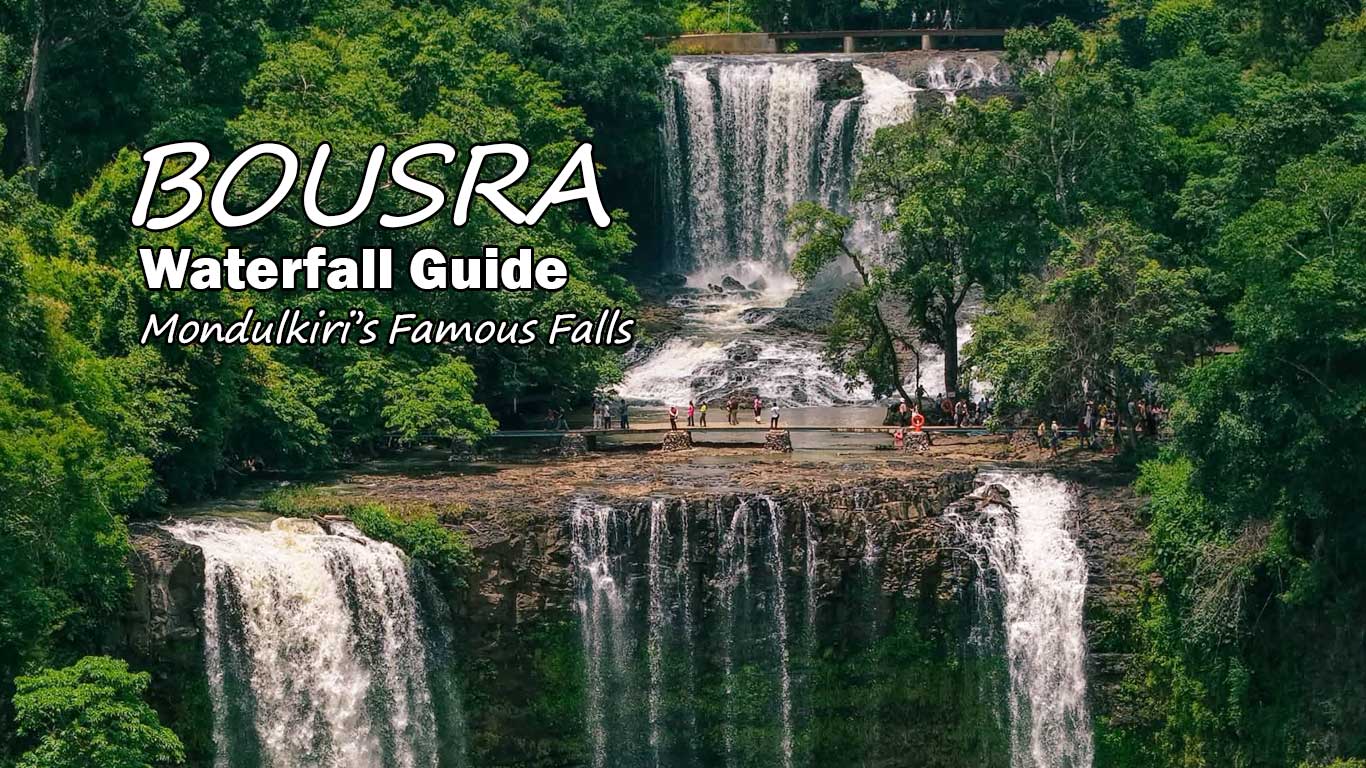

Hidden among the forested highlands of northeastern Cambodia, Bousra Waterfall (also written Bou Sra or Busra) is one of Mondulkiri Province’s best-known natural attractions. Its impressive cascades, wooded surroundings and peaceful countryside make it a memorable destination for visitors who want to experience a different side of Cambodia.
Located approximately 40–43 kilometres from Sen Monorom, the provincial capital, Bousra Waterfall is a popular choice for a half-day countryside excursion. Visitors can explore its accessible waterfall levels, enjoy the surrounding scenery and learn more about the local Bunong community.
This guide explains what to see, when to visit, how to get there and what to prepare before your trip.
Bousra Waterfall at a Glance
| Attraction | Bousra Waterfall (Bou Sra) |
|---|---|
| Location | Bousra Commune, Pechreada District, Mondulkiri Province, Cambodia |
| Distance from Sen Monorom | Approximately 40–43 km |
| Known for | Multi-stage waterfalls and forest scenery |
| Waterfall levels | Three natural stages; access to the third is restricted |
| Best visiting period | Late rainy season to early dry season, depending on road conditions |
| Recommended time | Allow a half-day for the excursion |
| Suitable for | Nature lovers, photographers and countryside travellers |
Why Visit Bousra Waterfall?
Bousra is famous for its successive waterfall stages flowing through a forested landscape. Unlike a small roadside waterfall, the site offers several viewpoints and a more substantial nature outing.
It is particularly attractive to travellers who want to:
- Enjoy the sound and scenery of a powerful natural waterfall.
- Take photographs of the cascades and surrounding forest.
- Experience Mondulkiri’s cooler highland atmosphere.
- Explore the countryside outside Sen Monorom.
- Support local businesses and community-based tourism in the area.
Explore the Three Stages of Bousra Waterfall
Bousra Waterfall is commonly described as having three stages. The first two are the main visitor attractions, while the third is in a more remote forest area and should not be treated as an accessible tourist trail.
First Stage: The Main Waterfall
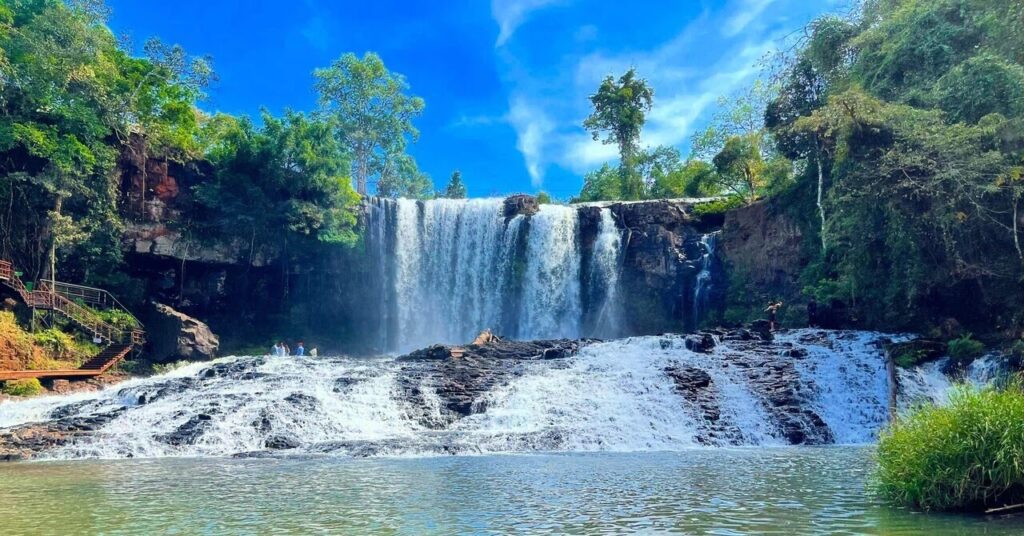
The first stage is one of the most accessible and popular viewing areas. Water flows over a rocky formation into the area below, creating an attractive setting for photography and sightseeing.
During the rainy season, the waterfall generally carries more water and appears fuller. Visitors should remain behind barriers and use designated viewpoints rather than climbing onto wet rocks.
Second Stage: A Higher Cascade
The second stage is located approximately 150 metres from the first. It features another impressive drop surrounded by forest and rocky terrain.
The route between the two stages can involve steps or uneven paths. Wear shoes with good grip and allow enough time to walk carefully between viewpoints.
Third Stage: A Remote Forest Area
A third waterfall stage is described in local tourism information, but it is situated deeper in dense forest and is not generally accessible to visitors. The lack of established access and potential wildlife hazards make it unsuitable for independent exploration.
For safety, enjoy the designated visitor areas instead of attempting to reach the remote third stage.
Best Time to Visit Bousra Waterfall
The best time depends on whether you prefer stronger water flow or easier travel conditions.
Rainy Season: May to October
The rainy season brings more rainfall to Mondulkiri, helping the waterfall become fuller and the surrounding forest greener. The scenery can be especially attractive toward the end of the rainy season.
However, heavy rain can make rural roads, steps and walking paths muddy or slippery. Check local conditions before travelling.
Early Dry Season: November to December
November and December can offer a good balance between remaining water flow and improving travel conditions. This period is worth considering if you want to enjoy the waterfall without travelling during the heaviest rains.
Late Dry Season: January to April
Roads may be easier to travel during the dry season, but the waterfall can become less powerful as rainfall decreases. The surrounding landscape may also look drier than it does during the rainy months.
Travel recommendation: Consider October to December, subject to rainfall and road access. Check the actual water conditions shortly before your visit rather than relying only on the calendar.
How to Get to Bousra Waterfall
Bousra Waterfall is approximately 40–43 kilometres from Sen Monorom. The journey takes visitors east or northeast from town toward Bousra Commune in Pechreada District.
By Private Car or SUV
A private car or SUV with a local driver is a convenient option, especially for families and groups. A driver familiar with the area can help assess road conditions and identify the visitor entrance.
By Motorbike
Travellers with suitable riding experience may choose a motorbike. However, rural road surfaces can vary, particularly after rain. Wear a helmet, ride cautiously and avoid continuing if conditions become unsafe.
By Local Tour or Driver
Visitors can ask their hotel or guesthouse in Sen Monorom to arrange a local driver or sightseeing trip. This is a practical option for people unfamiliar with Mondulkiri’s roads.
Because road conditions and journey times can change, confirm the route and expected travel time with your driver before departure.
Entrance Fees, Opening Hours and Facilities
Bousra is a developed visitor attraction, but a dependable, current official entrance-fee schedule and fixed opening hours could not be verified from the sources reviewed for this guide.
Keep some Cambodian riel or small US-dollar notes available and confirm the entrance charge, parking arrangements and any additional activity fees at the site. Do not rely on older online prices without checking them locally.
Facilities and activities may change. Ask which visitor paths and services are operating when you arrive, and bring your own drinking water and basic supplies.
Practical Tips for Visiting Bousra Waterfall
- Wear suitable shoes: Choose footwear with good grip because rocks and steps can become slippery.
- Bring drinking water: Carry enough water for the journey and your time at the waterfall.
- Carry small cash: Keep money available for admission, parking and local purchases.
- Start early: An early departure from Sen Monorom gives you more daylight for the visit and return journey.
- Check the weather: Avoid walking close to the water during heavy rainfall or rapidly rising water levels.
- Follow safety signs: Stay within designated visitor areas and respect barriers.
- Protect the environment: Take rubbish with you and avoid damaging plants or disturbing wildlife.
Respecting the Local Bunong Community
Mondulkiri is an important homeland of the Indigenous Bunong people, whose cultural traditions and livelihoods are closely connected to the province’s highland environment.
When visiting communities around Bousra, travellers should behave respectfully and support responsible local tourism.
- Ask permission before photographing local residents.
- Respect private homes, farmland and culturally significant places.
- Buy local products directly from community sellers when possible.
- Choose local guides and services that benefit residents.
- Avoid leaving rubbish or disturbing the surrounding forest.
Suggested Half-Day Visit
A half-day excursion from Sen Monorom is a practical way to experience Bousra Waterfall without rushing the visit.
| Stage | Suggested Plan |
|---|---|
| Morning | Depart Sen Monorom with a local driver or suitable vehicle. |
| Arrival | Check entrance arrangements and ask which waterfall paths are open. |
| First stop | Explore the first waterfall stage and enjoy the main viewpoints. |
| Second stop | Walk carefully to the accessible second stage if conditions permit. |
| Return | Leave enough daylight to travel back to Sen Monorom. |
If you want to explore more of the province, see our Mondulkiri Travel Guide: Mountains, Waterfalls, and Wildlife.
Frequently Asked Questions
1. Where is Bousra Waterfall located?
Bousra Waterfall is located in Bousra Commune, Pechreada District, Mondulkiri Province, northeastern Cambodia.
2. How far is Bousra Waterfall from Sen Monorom?
It is approximately 40–43 kilometres from Sen Monorom. Actual travel time depends on road conditions and the type of vehicle.
3. How many stages does Bousra Waterfall have?
The waterfall is traditionally described as having three stages. The first two are the main visitor areas, while the third is in dense forest and is not generally accessible.
4. When is the best time to visit Bousra Waterfall?
October to December can be a good period to balance water flow and travel conditions. However, rainfall and local road conditions should be checked before departure.
5. Can visitors swim at Bousra Waterfall?
Do not assume that swimming is permitted or safe. Follow local instructions and only consider entering water if the designated area is explicitly open and conditions are safe. Never swim near strong currents or waterfall edges.
6. Is Bousra Waterfall suitable for families?
Families can enjoy the main viewpoints, but some paths and steps may be uneven or slippery. Children should remain under close adult supervision, especially near water and steep areas.
7. Is there an entrance fee?
Admission charges may apply, but a reliable current official price was not confirmed for this guide. Check the latest fee at the entrance before visiting.
8. Can I visit Bousra Waterfall in the rainy season?
Yes, but heavy rain can affect road access and make walking paths slippery. Check the weather and local access conditions before setting out.
Conclusion
Bousra Waterfall is one of Mondulkiri’s most memorable nature destinations. Its multi-stage cascades, forest surroundings and highland atmosphere make it an excellent excursion for travellers looking to discover Cambodia beyond its major cities and ancient temples.
For the best experience, plan your visit around seasonal water conditions, arrange suitable transport from Sen Monorom and follow local safety instructions. Most importantly, respect the natural environment and the communities that call this beautiful region home.
If you are planning a longer trip to northeastern Cambodia, use our complete Mondulkiri Travel Guide to discover more attractions and travel ideas.
Sources and Further Information