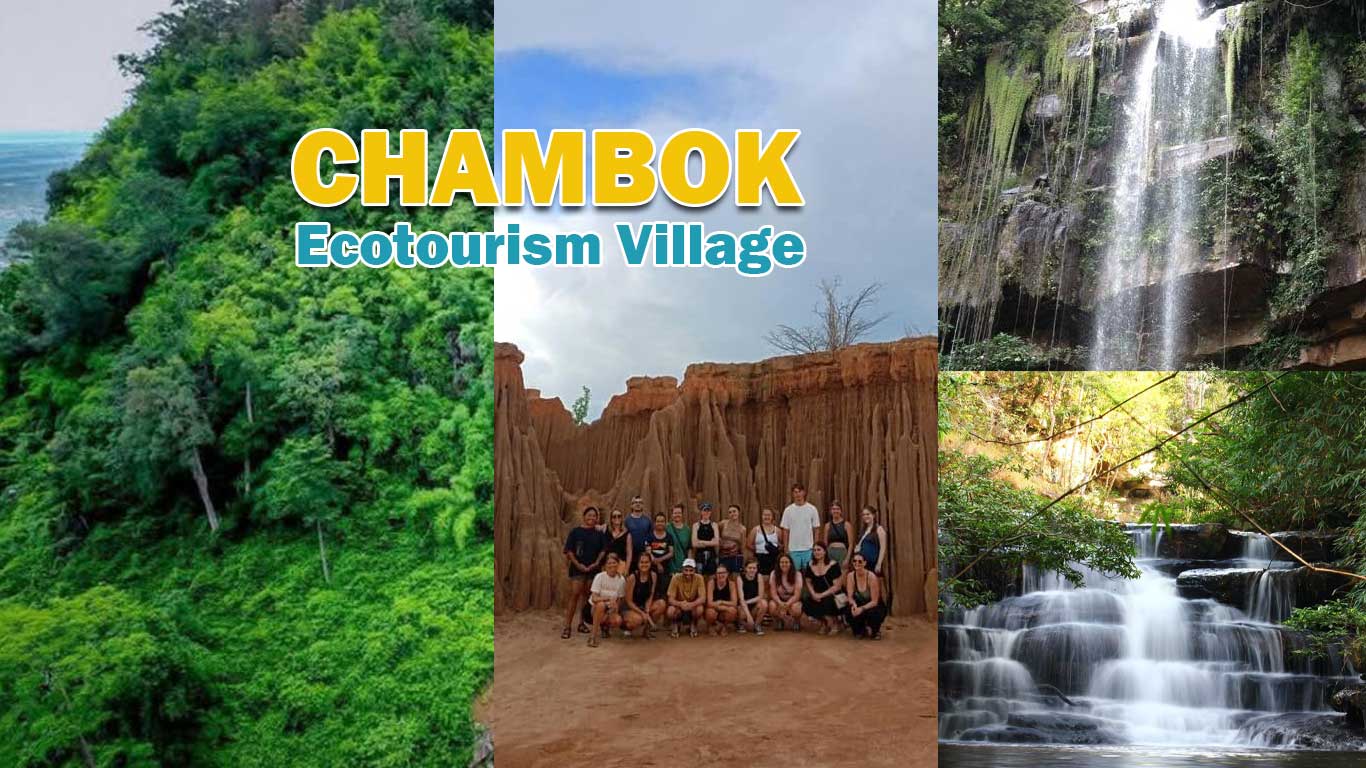

Imagine walking through a peaceful Cambodian village, listening to birds singing in the forest and following a natural trail towards a beautiful waterfall hidden among the mountains. This is the kind of experience waiting for visitors at Chambok Ecotourism Village in Kampong Speu Province.
Located near Kirirom National Park, approximately 106–110 kilometres from Phnom Penh, Chambok is one of Cambodia’s notable community-based ecotourism destinations. It offers an opportunity to explore natural forests, enjoy refreshing streams, discover local village traditions and experience the hospitality of Cambodian families.
The main attraction is Chambok Waterfall, which is more than 40 metres high. However, the destination offers much more than a waterfall. Visitors can join guided forest walks, enjoy locally prepared meals, experience traditional ox-cart rides, explore rural landscapes and stay overnight in community homestays.
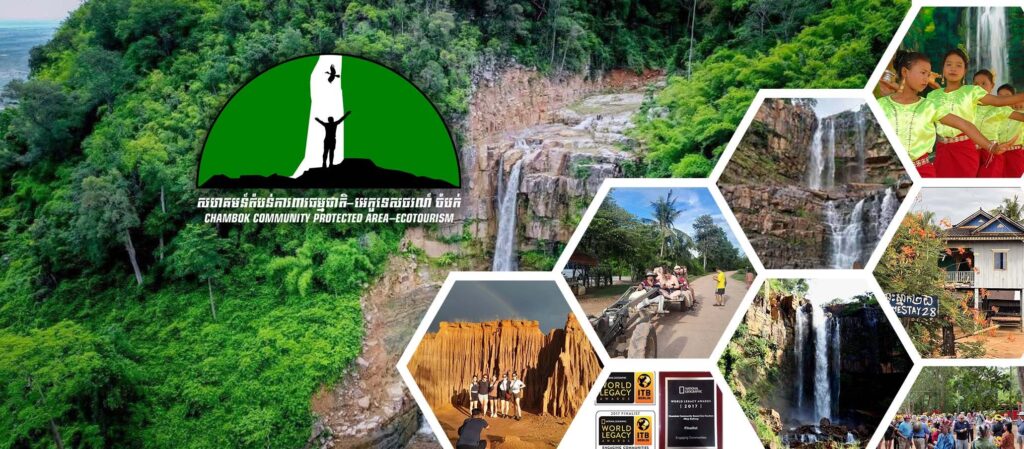
What makes Chambok particularly special is its community-based tourism model. Local residents participate in tourism management and services, helping create alternative livelihoods while supporting the protection of surrounding natural resources.
Whether you are a nature enthusiast, a cultural traveler or someone looking for a peaceful weekend escape from Phnom Penh, Chambok is a destination worth discovering.
1. What Is Chambok Ecotourism Village?
Chambok Community-Based Ecotourism (CBET) is a rural tourism initiative located in Phnom Sruoch District, Kampong Speu Province, southwestern Cambodia.
The destination was developed through cooperation between local communities and Mlup Baitong, a Cambodian environmental organization. The project began in the early 2000s to improve local livelihoods while encouraging the conservation of surrounding forests and natural resources.
Before the development of community-based tourism, some households in the area depended heavily on forest resources, including charcoal production, fuelwood collection and other activities that placed pressure on the natural environment.
Ecotourism introduced alternative income opportunities through local guiding, accommodation, food services and cultural activities.
Today, Chambok is recognised as an example of community-based ecotourism in Cambodia. The local community manages tourism activities and provides services that connect visitors with the area’s natural and cultural heritage.
Why Is Chambok Important?
- Forest conservation: Encourages the protection of natural forests and biodiversity.
- Local employment: Creates opportunities for community members to work as guides, cooks and accommodation providers.
- Cultural preservation: Gives visitors opportunities to experience traditional village life.
- Sustainable tourism: Connects tourism activities with local economic development and environmental protection.
For travelers, visiting Chambok is an opportunity to experience nature while supporting a tourism model that places local communities at the centre of destination management.
2. Chambok Waterfall: The Main Natural Attraction
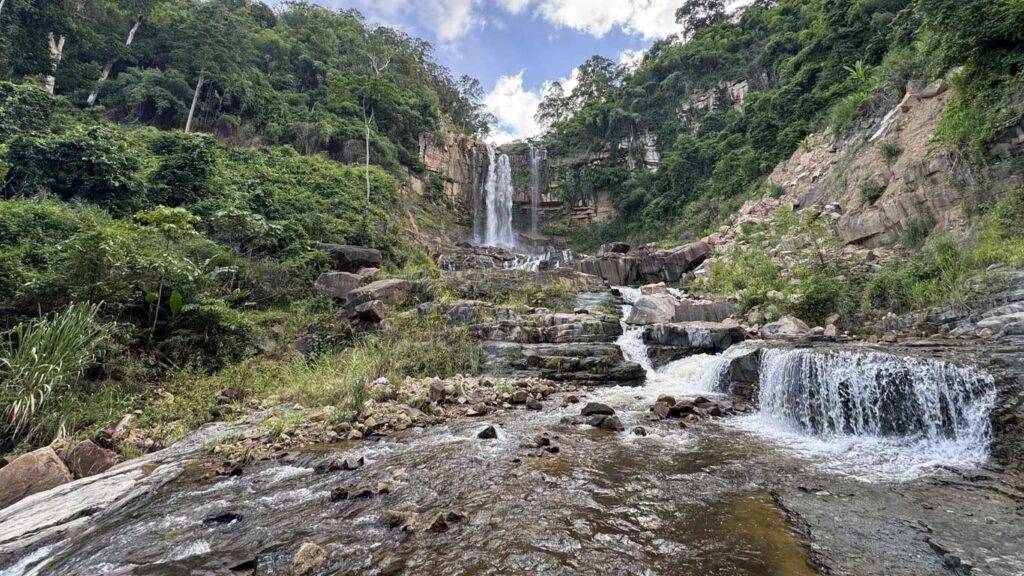
Chambok Waterfall is the highlight of the ecotourism destination. Surrounded by forest vegetation and mountainous scenery, it offers visitors a peaceful natural environment away from Cambodia’s busy cities.
According to Cambodia’s Ministry of Tourism, the Chambok area features three streams, with the largest waterfall reaching more than 40 metres in height.
The waterfall is reached through a natural forest trail, making the journey part of the overall experience.
What to Expect at Chambok Waterfall
- A scenic natural waterfall surrounded by forest.
- Freshwater streams and natural rock formations.
- Forest vegetation and opportunities to observe local biodiversity.
- A peaceful setting for nature photography and relaxation.
- Opportunities to enjoy the natural environment with a local guide.
Best Time to Visit the Waterfall
The waterfall’s appearance changes throughout the year according to rainfall and seasonal water levels.
Rainy season: During periods of sufficient rainfall, the waterfall and streams generally have stronger water flows. The surrounding vegetation is also greener, creating attractive scenery for photography.
Dry season: Water levels may decrease, but the trails can be easier to navigate during suitable weather conditions. Visitors should check the waterfall’s condition before travelling if seeing a strong waterfall is their main priority.
For safety, avoid climbing wet rocks, entering strong currents or swimming during heavy rainfall. Follow the instructions of local guides.
3. Forest Walks and Community-Guided Hiking
One of the most rewarding activities at Chambok is walking through the surrounding forest with a local community guide.
Instead of exploring unfamiliar trails alone, visitors can arrange guided walks that introduce them to the natural environment and the everyday knowledge of local residents.
What Can You Discover Along the Trails?
During a guided forest walk, visitors may experience:
- Different types of forest vegetation and native plants.
- Bird calls and signs of local wildlife.
- Natural streams and small waterfalls.
- Mountainous landscapes and forest scenery.
- Traditional knowledge about plants and the local environment.
The Ministry of Tourism describes guided excursions in which local English-speaking guides explain the plants and animals found in the forest.
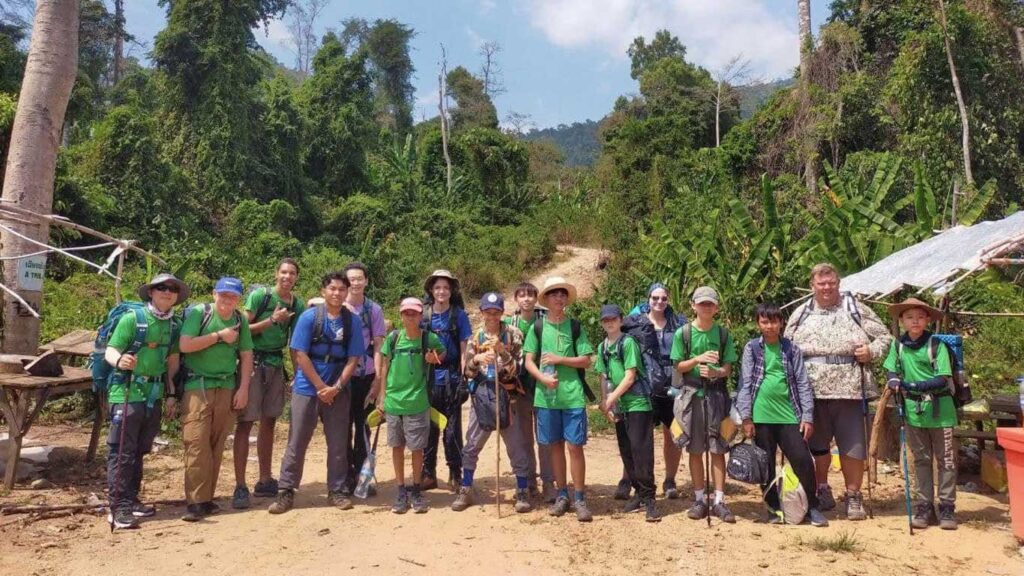
Why Choose a Local Guide?
A community guide can help visitors understand more than the physical landscape. Guides can share knowledge about the forest, local customs and the importance of protecting natural resources.
Hiring a guide also creates direct economic benefits for the community.
For international visitors, arranging an English-speaking guide in advance is recommended because guide availability may vary.
4. Discover Local Village Life and Community Activities
Chambok is not simply a nature attraction. It is also a place where travelers can learn about rural Cambodian culture and the daily lives of local residents.
Community-based tourism allows visitors to participate in activities that connect traditional village life with responsible travel.
Traditional Ox-Cart Rides
Ox-cart rides offer an opportunity to experience a traditional form of rural transportation. Visitors can enjoy the countryside at a slower pace while learning about agricultural life and local traditions.
These activities should be arranged through the community, with attention to animal welfare and visitor safety.
Bicycle Activities
Cycling around the village and nearby countryside can be an enjoyable way to explore the local environment.
Visitors can observe agricultural landscapes, village homes and everyday community activities while travelling at a comfortable pace.
Birdwatching and Nature Observation
The forest surrounding Chambok provides opportunities to observe birds and other wildlife. Visitors interested in nature can ask local guides about suitable routes and the best times for wildlife observation.
Bring binoculars if you enjoy birdwatching, and avoid disturbing animals or damaging vegetation.
Traditional Food and Cooking Experiences
Food is an important part of experiencing Cambodian village life.
Visitors can arrange meals prepared by local households and community food providers. Traditional Khmer dishes often feature rice, vegetables, freshwater fish and locally available ingredients.
Where available, cooking activities provide an opportunity to learn about Cambodian ingredients and traditional preparation methods.
5. Explore the Bat Cave and Local Biodiversity
Another attraction mentioned by Cambodia’s Ministry of Tourism is a bat cave in the Chambok area.
The cave provides an interesting opportunity to learn about local wildlife and the role of bats in natural ecosystems.
Bats play important ecological roles, including insect control and, for certain species, pollination and seed dispersal.
Responsible Cave Visiting Tips
- Keep noise to a minimum near the cave entrance.
- Do not touch bats or disturb their roosting areas.
- Never use flash photography directly towards wildlife.
- Do not leave rubbish inside or around the cave.
- Follow the local guide’s instructions regarding access.
Access to wildlife areas can change according to conservation conditions, so confirm whether cave visits are currently available before including them in your itinerary.
6. Experience a Chambok Community Homestay
For travelers who want to experience more than a short visit, staying overnight in a local homestay is an excellent option.
Community homestays provide a closer connection to Cambodian rural life. Instead of staying in a conventional hotel, visitors stay with local families and experience a simpler style of accommodation.
What Is a Homestay Like?
A typical rural homestay may offer:
- A basic private or shared sleeping area.
- Traditional Cambodian meals prepared by the host family.
- A chance to interact with local residents.
- Opportunities to learn about farming and village activities.
- A more personal understanding of rural Cambodian culture.
Facilities and comfort levels vary between households. Travelers should confirm sleeping arrangements, bathroom facilities, mosquito protection and meal arrangements before booking.
Why Stay Overnight?
A day trip allows visitors to experience the waterfall and forest, but an overnight stay provides more time to enjoy the village and support local households.
It also makes the journey less rushed, especially for travelers coming from Phnom Penh.
7. Best Time to Visit Chambok Ecotourism Village
Chambok can be visited throughout the year, but the best time depends on the activities you want to enjoy.
Rainy Season: May to October
The rainy season generally brings greener vegetation and increased water flow to the streams and waterfall.
This can be an attractive period for visitors who want to experience lush forest scenery and see the waterfall with stronger water flow.
However, heavy rainfall can make trails muddy and slippery. Check local conditions before starting a hike.
Dry Season: November to April
The dry season can provide more comfortable conditions for outdoor exploration, depending on temperatures and local weather.
Trails may be easier to walk on when there has been little recent rainfall, although some streams and waterfalls may have reduced water flow.
Recommended Time of Day
- Early morning: Ideal for starting forest walks before the hottest part of the day.
- Late morning: Suitable for village activities and arranged community experiences.
- Afternoon: A good time for relaxing and enjoying local hospitality, provided there is enough daylight for the return journey.
For hiking and waterfall visits, start early and avoid entering forest trails late in the afternoon.
8. How to Get to Chambok Ecotourism Village
Chambok is located in Phnom Sruoch District, Kampong Speu Province, southwestern Cambodia.
It is approximately 106–110 kilometres from Phnom Penh, making it a practical destination for a weekend escape from the capital.
From Phnom Penh by Private Car
Travelling by private car is one of the most convenient ways to reach Chambok.
Visitors generally travel west from Phnom Penh along National Road 4 towards the Treng Trayeung and Kirirom area before continuing towards the Chambok community.
Allow approximately 2.5–3 hours, depending on traffic, road conditions and the exact starting point.
From Phnom Penh by Motorbike
Experienced riders can travel by motorbike, but should check road and weather conditions before departure.
Wear a proper helmet, carry sufficient drinking water and avoid riding unfamiliar rural roads after dark.
By Bus or Minivan
Visitors may take intercity transport towards Treng Trayeung or the Kirirom area, then arrange local transportation for the remaining journey.
Public transport connections to the community entrance may be limited. Confirm departure points, schedules and local transport availability before travelling.
Google Maps Location
Use the following map to locate Chambok Community-Based Ecotourism and plan your journey:
9. Suggested One-Day Itinerary in Chambok
A one-day visit is suitable for travelers who want to experience the main natural attractions without staying overnight.
Sample Day Trip
| Time | Activity |
|---|---|
| 7:00 AM | Depart from Phnom Penh |
| 9:30 AM | Arrive in the Chambok area and arrange community services |
| 10:00 AM | Begin a guided forest walk |
| 11:30 AM | Explore Chambok Waterfall and enjoy the natural scenery |
| 12:30 PM | Enjoy a locally prepared Khmer lunch |
| 1:30 PM | Explore village activities or arrange a short additional walk |
| 2:30 PM | Depart for Phnom Penh |
| 5:00 PM | Estimated arrival in Phnom Penh |
Important: This is a suggested itinerary, not an official operating schedule. Actual activity durations depend on the trail, weather and community service arrangements.
10. Suggested Two-Day Chambok Experience
If you have more time, spending one night in Chambok offers a more meaningful opportunity to experience the local community.
Day 1: Waterfalls and Forest Exploration
- Travel from Phnom Penh to Chambok.
- Meet local community representatives and arrange a guide.
- Explore the forest trails and visit the main waterfall.
- Enjoy a locally prepared lunch.
- Participate in available village activities.
- Check in to a community homestay.
- Enjoy dinner and learn about local traditions.
Day 2: Village Life and Local Experiences
- Enjoy breakfast with the host family.
- Explore the village and surrounding countryside.
- Arrange a bicycle ride or traditional ox-cart experience if available.
- Visit local handicraft activities where offered.
- Enjoy lunch and support local businesses.
- Return to Phnom Penh.
This itinerary is flexible and should be adjusted according to the services currently offered by the community.
11. Travel Costs and Practical Planning
Chambok is a community-based destination, so visitors should arrange services directly with the local management committee or service providers.
Potential expenses include:
- Transportation from Phnom Penh.
- Community entrance or service charges, where applicable.
- Local guide services.
- Food and drinking water.
- Homestay accommodation.
- Optional activities such as cycling and ox-cart rides.
Older tourism listings publish accommodation and meal prices, but these should not be treated as current quotations. Contact the community before travelling to confirm prices and availability.
How to Support the Local Community
- Hire local guides rather than exploring independently on unfamiliar trails.
- Choose locally operated accommodation.
- Purchase food and handicrafts from community providers.
- Respect local customs and private property.
- Follow conservation instructions during outdoor activities.
12. Responsible Ecotourism: Protecting Chambok’s Natural Environment
Chambok’s long-term success depends on maintaining a balance between tourism development, community livelihoods and forest conservation.
Visitors can help protect the destination by following responsible tourism practices.
Leave No Trace
Take all rubbish back with you. Avoid leaving plastic bottles, food packaging or other waste along forest trails and near streams.
Stay on Designated Trails
Do not create new walking paths or damage plants. Follow the routes recommended by local guides.
Respect Wildlife
Observe birds, bats and other animals quietly. Never feed wild animals or remove wildlife from their natural habitats.
Respect Local People
Ask permission before photographing residents, entering private homes or recording cultural activities.
Support Community-Owned Tourism
Choose services that provide direct benefits to local residents. Community-based tourism works best when local people participate in decision-making and receive fair benefits from tourism activities.
By travelling responsibly, visitors can contribute to the long-term protection of Chambok’s natural and cultural heritage.
13. Other Attractions Near Chambok
Visitors who travel to Kampong Speu can also explore other attractions in the surrounding region.
Kirirom National Park
Kirirom National Park is a popular nature destination known for its pine forests, cooler mountain atmosphere and scenic landscapes.
It offers opportunities for nature walks, photography and relaxing in a different environment from the lowland plains.
Although Chambok is located near Kirirom, the two destinations should be treated as separate stops when planning transportation and activities.
Kirirom Mountain and Pine Forest
The Kirirom highlands are known for their pine trees and open landscapes. Visitors can enjoy the natural scenery and cooler temperatures, particularly during the dry season.
Treng Trayeung Area
Treng Trayeung is a useful transport and local service area along the National Road 4 corridor. Visitors can find local shops and food options while travelling towards the Kirirom region.
Combining these destinations can create a varied nature trip in Kampong Speu Province.
14. Frequently Asked Questions About Chambok Ecotourism Village
1. Where is Chambok Ecotourism Village located?
Chambok Community-Based Ecotourism is located in Phnom Sruoch District, Kampong Speu Province, southwestern Cambodia, near Kirirom National Park.
2. How far is Chambok from Phnom Penh?
Chambok is approximately 106–110 kilometres from Phnom Penh, depending on the route and starting point. The journey generally takes around 2.5–3 hours by private vehicle.
3. What is Chambok famous for?
Chambok is best known for its natural waterfall, forest trails, community-guided walks, local homestays and community-based ecotourism activities.
4. How high is Chambok Waterfall?
The Ministry of Tourism describes the largest waterfall in the Chambok area as more than 40 metres high.
5. When is the best time to visit Chambok Waterfall?
The rainy season generally provides stronger water flow and greener surroundings. The dry season can offer more comfortable trail conditions, although waterfall flow may be lower.
6. Can I visit Chambok as a day trip from Phnom Penh?
Yes. A day trip is possible by private car or motorbike. However, visitors should depart early to allow enough time for hiking and community activities.
7. Can I stay overnight in Chambok?
Yes. Community homestays have been part of Chambok’s ecotourism services. Confirm current accommodation availability and facilities before travelling.
8. Are local guides available at Chambok?
Yes. Community-guided forest walks are an important part of the destination’s tourism model. English-speaking guide availability should be confirmed in advance.
9. What activities can visitors enjoy at Chambok?
Activities have included waterfall walks, forest hiking, birdwatching, bat cave visits, bicycle rides, ox-cart experiences, local meals and homestays. Confirm which activities are currently operating.
10. Is Chambok suitable for families?
Families can enjoy the village environment and suitable walking routes. However, some forest trails and waterfall approaches may be challenging for young children. Choose activities according to the age and physical ability of your group.
11. Can visitors swim at Chambok Waterfall?
Swimming may be possible in suitable areas when conditions allow, but visitors should ask local guides first. Avoid swimming during heavy rain, strong currents or unsafe water conditions.
12. Is there an entrance fee at Chambok?
Visitors should confirm current entrance charges and activity prices directly with the community. A reliable current tariff for all services is not available in the sources reviewed for this guide.
13. What should I bring when visiting Chambok?
Bring drinking water, comfortable walking shoes, sunscreen, insect repellent, a hat, a change of clothes and sufficient cash for local services.
14. Is Chambok the same as Kirirom National Park?
No. Chambok is a community-based ecotourism destination near Kirirom National Park. They are related geographically but have different visitor activities and service arrangements.
Conclusion: Discover Cambodia Through Community-Based Ecotourism
Chambok Ecotourism Village is one of the interesting destinations for travelers who want to discover Cambodia beyond its famous temples and cities.
Its beautiful waterfall, forest trails, local guides, traditional village activities and community homestays provide a meaningful opportunity to experience the natural and cultural richness of Kampong Speu Province.
More importantly, Chambok demonstrates how tourism can create livelihood opportunities while encouraging communities to protect their surrounding forests and natural resources.
Whether you visit for a day or stay overnight, take time to appreciate the landscape, respect local traditions and support community-owned tourism services.
Discover Cambodia. Support Local Communities. Protect Nature.
Explore more destinations and authentic travel experiences with GoToKH.com.
Sources and References
- Ministry of Tourism, Cambodia – Chambok Community-Based Ecotourism Site
- Agence Kampuchea Presse – Chambok Ecotourism Thrives as Model of Sustainability and Community Empowerment (June 2025)
- Mlup Baitong – Using a Participatory Approach to Build Community-Based Tourism
- World Bank – Enabling Ecotourism Development in Cambodia
- Effective Community-Based Tourism – Best Practice Manual