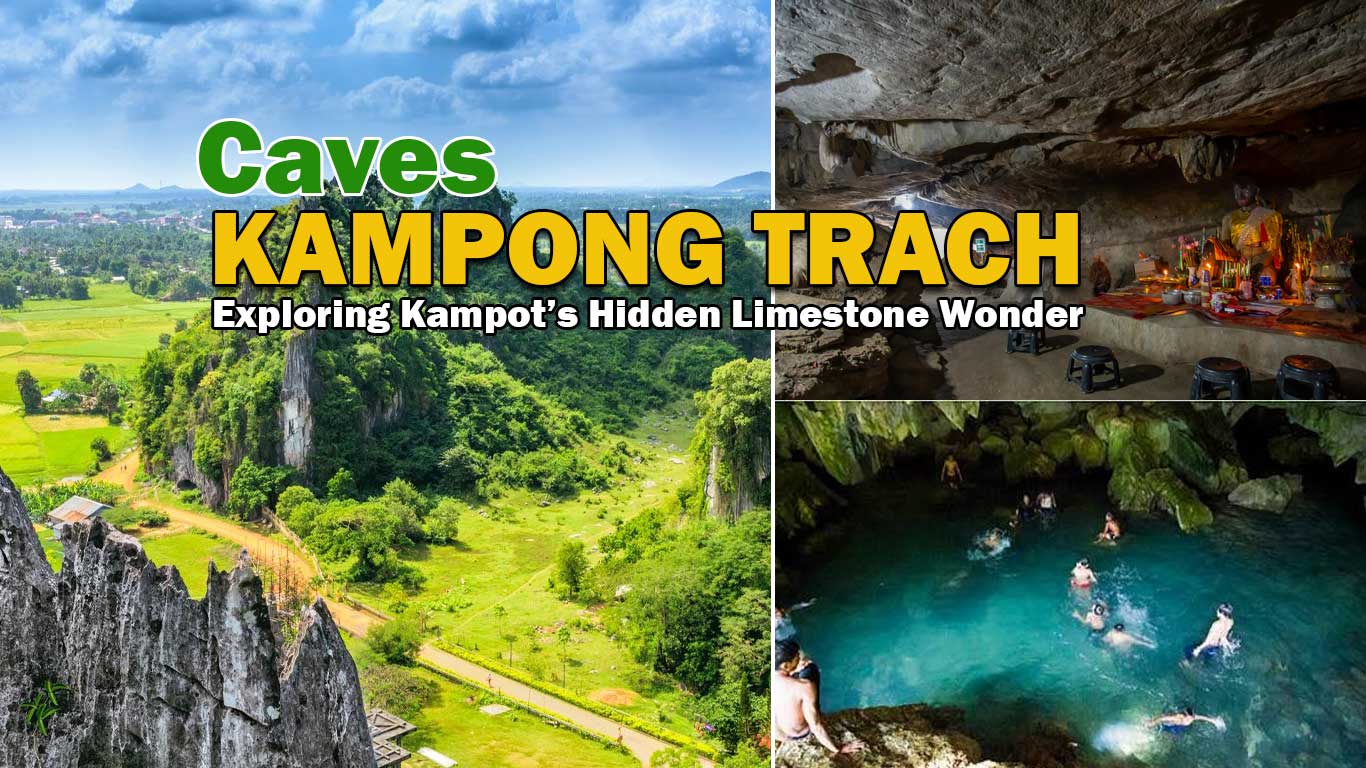
Kampong Trach Caves: Exploring Kampot’s Hidden Limestone Wonder

Beyond the riverside cafés, pepper plantations, and coastal scenery of Kampot lies a remarkable natural attraction that many international visitors overlook: the Kampong Trach Caves. Located in the eastern part of Kampot Province, near the Vietnamese border, this fascinating limestone landscape combines dramatic rock formations, mysterious cave passages, Buddhist shrines, and peaceful rural scenery.
Known locally for its limestone hills and sacred caves, the area around Phnom Kampong Trach offers a different experience from the more familiar attractions near Kampot town. Visitors can walk through dark passages, discover chambers illuminated by natural daylight, admire religious monuments inside the caves, and enjoy views of the surrounding countryside.
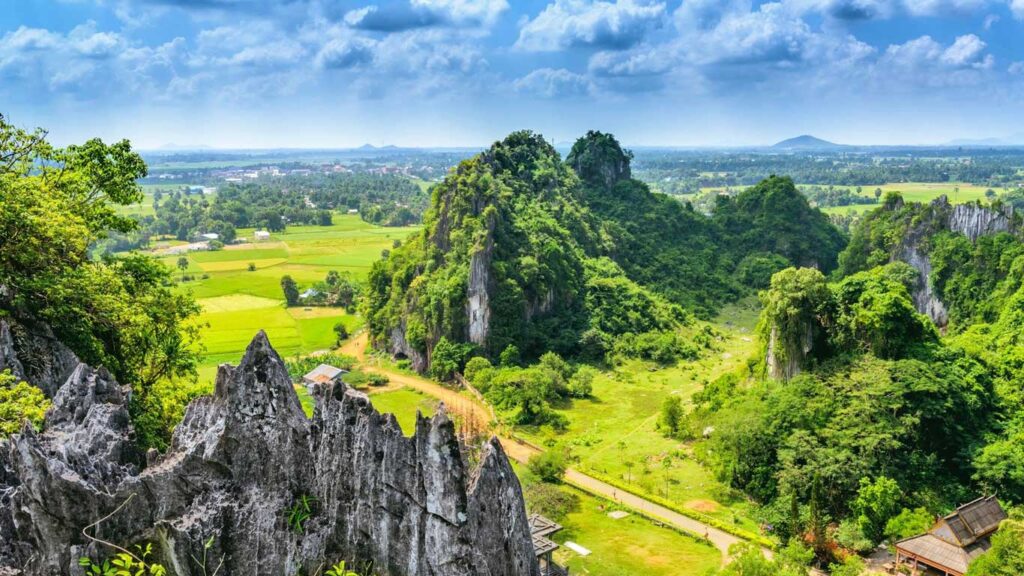
One of the most memorable features is a large cavern whose roof collapsed long ago, creating an unusual open-air space enclosed by high limestone walls. Vegetation grows along the rocky surfaces, while sunlight reaches the floor of the chamber from above. The result is a natural setting that feels like a hidden garden inside a mountain.
Whether you are interested in geology, photography, local culture, or less-visited destinations in southern Cambodia, Kampong Trach deserves consideration as a day trip from Kampot or Kep.
Quick Facts About Kampong Trach Caves
| Information | Details |
|---|---|
| Destination | Kampong Trach Caves / Phnom Kampong Trach |
| Location | Kampong Trach District, Kampot Province, Cambodia |
| Geography | Limestone hills and karst cave formations |
| Distance from Kampot | Approximately 35–40 km, depending on the route and starting point |
| Nearest popular destination | Kep Province |
| Main attractions | Limestone caves, open-air cavern, religious shrines, and countryside scenery |
| Recommended visit duration | Allow around 1–2 hours for the main cave area; longer for nearby countryside exploration |
| Best visiting conditions | Daylight hours, with dry and stable walking conditions |
| Recommended footwear | Comfortable shoes with good grip |
| Entrance fee | Confirm locally before visiting; reliable current tariffs are not consistently published |
Where Are the Kampong Trach Caves?
The Kampong Trach Caves are located around Phnom Kampong Trach in Kampong Trach District, eastern Kampot Province. The district lies near Cambodia’s border with Vietnam and is known for its rural landscape, limestone hills, and scattered cave formations.
Unlike the flat rice fields that dominate much of the surrounding countryside, the limestone hills rise noticeably above the landscape. These rocky formations contain a network of caves and passages, some of which have become places of worship and local cultural interest.
The main cave attraction is associated with a pagoda at the foot of the limestone hill. Visitors can explore the cave area from there, although access conditions may vary between individual passages.
From Kampot town, the journey is approximately 35–40 kilometres, depending on the route. It is also possible to include the caves in a wider trip around Kep and the countryside of eastern Kampot Province.
Why Are Kampong Trach Caves Special?
Kampong Trach is interesting because it brings together natural geology, local religious traditions, and the history of rural communities. It is not simply one cave with a single viewpoint. The surrounding limestone landscape contains multiple caves and chambers, each with different features.
1. A dramatic limestone landscape
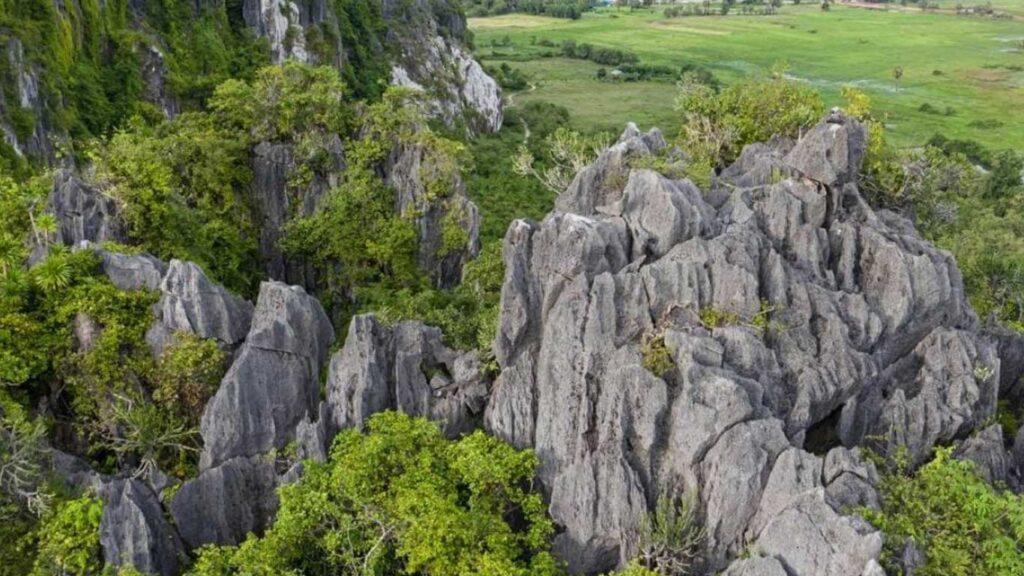
The area is characterized by limestone karsts rising from relatively flat agricultural land. Over a long period, natural processes have created openings, passages, and underground chambers within the rock.
These formations give Kampong Trach a distinctive appearance compared with the river valleys and coastal scenery that many travellers associate with Kampot. The contrast between the rocky hills and surrounding rice fields also creates interesting opportunities for landscape photography.
2. The remarkable open-roof cavern
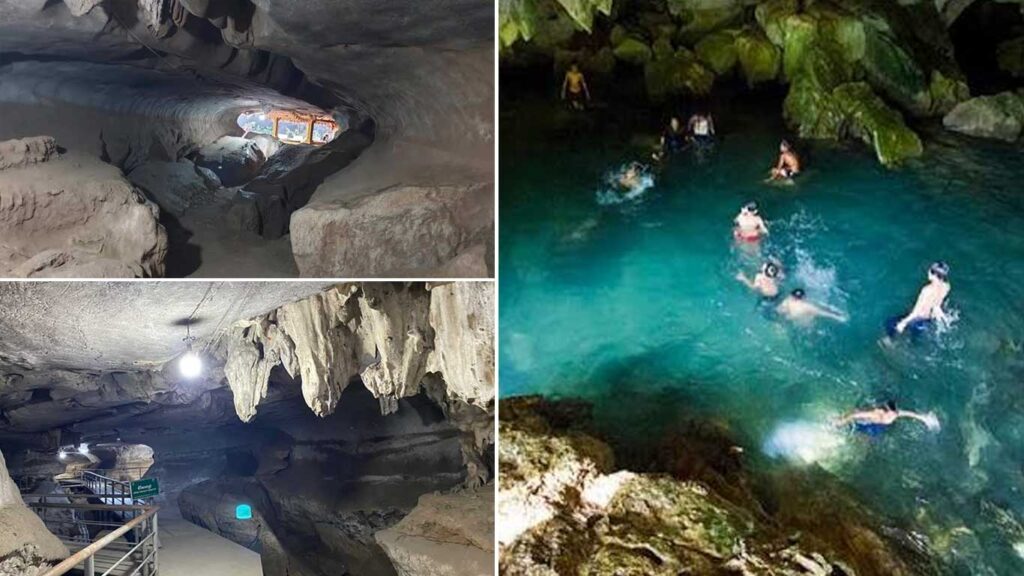
One of the best-known features of Phnom Kampong Trach is a large cavern whose roof collapsed in the distant past. The opening allows sunlight and rain to enter, creating an enclosed natural space with high limestone walls and vegetation.
Rather than feeling like a completely dark underground cave, this chamber has the atmosphere of a small natural courtyard hidden inside the mountain. The combination of exposed rock, plants, and daylight makes it one of the most memorable parts of the visit.
3. Buddhist shrines inside the caves
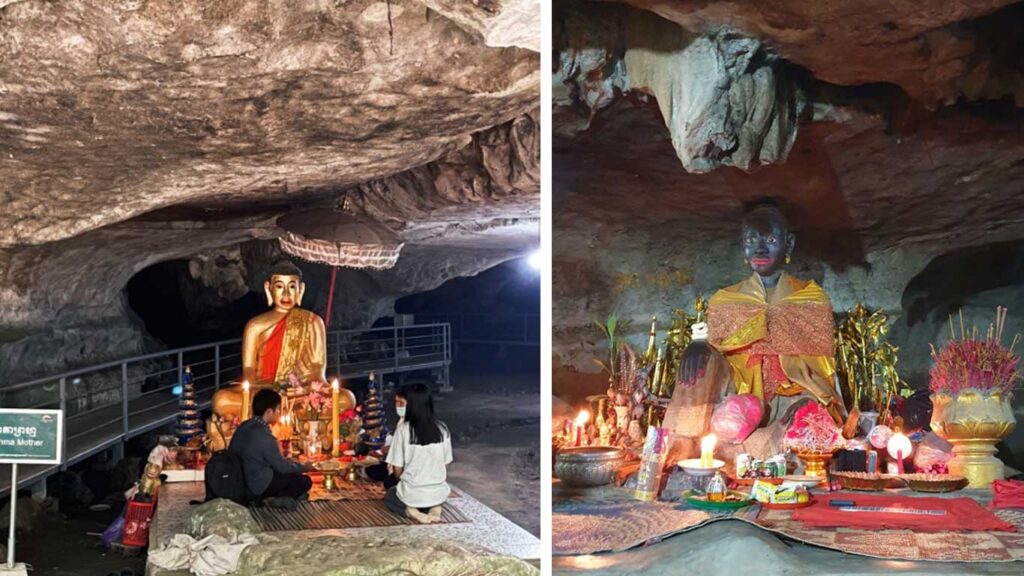
Several caves in the area contain Buddhist images, shrines, and religious structures. These features reflect the importance of the limestone hills to local communities.
For Cambodian visitors, the caves are not only natural attractions but also spiritual places. Some areas may be used for prayer, offerings, or religious activities. Visitors should therefore approach the site with respect and avoid treating every chamber as an ordinary sightseeing space.
4. Sacred wells near the mountain
The Cambodian Ministry of Tourism also describes small mountain wells at the foot of Kampong Trach Mountain. These wells are respected by local Cambodian, Chinese, and Vietnamese communities.
One of the larger wells is described as being approximately 30 metres in diameter, with different colours visible in the surrounding soil. Other smaller wells contain stones whose shapes resemble animals.
These features add another cultural and natural dimension to the destination. They also show that the significance of Kampong Trach extends beyond the caves themselves.
What to See and Do at Kampong Trach
Explore the main cave complex
Start your visit near the pagoda at the base of the limestone hill. From this area, visitors can explore the accessible cave sections and discover the unusual shapes created by the natural rock formations.
Some passages are dark and have uneven floors. A flashlight is useful, particularly when exploring areas that do not receive natural daylight. If you are unfamiliar with the cave layout, consider asking a local guide to accompany you.
Discover the open-air cave chamber
Make time to visit the large chamber with the collapsed roof. It is one of the most distinctive natural features of the area and offers a very different experience from walking through a conventional underground cave.
Take a moment to look upward at the limestone walls and vegetation growing around the opening. The lighting can change throughout the day, making the chamber particularly interesting for photography.
Visit the cave shrines
Look for the religious images and shrines located inside the caves. These features are important parts of the local cultural landscape and should be treated with care.
Do not touch religious objects, move offerings, or disturb people who are praying. If you want to photograph a shrine or worshippers, ask permission when appropriate.
Enjoy the surrounding countryside
The rural roads around Kampong Trach pass through villages, rice fields, and limestone hills. Travelling slowly through this landscape can be one of the most enjoyable parts of the trip.
Depending on your route and available time, you may also find local food stalls, small shops, and opportunities to observe everyday village life.
Take landscape photographs
Kampong Trach offers several photographic subjects, including limestone cliffs, cave entrances, the open-roof cavern, religious shrines, and surrounding countryside.
For the best results, visit during daylight and avoid using flash directly at people who are praying. Be careful when positioning yourself on rocks or near cave edges, especially where the ground is uneven.
Other Caves and Attractions Around Kampong Trach
The wider Kampong Trach area contains more than one cave. Local tourism information and regional guides describe several cave sites and limestone features around the district. However, access, names, and visitor facilities can vary, so it is sensible to confirm which locations are open before planning a multi-cave excursion.
Smaller caves and natural passages
Some smaller caves contain religious images or shrines, while others are primarily natural formations. Their passages can be dark and irregular, and not every section is suitable for visitors without a guide.
Caves with water features
Local travel accounts describe a nearby cave containing a cool pool that residents sometimes use for swimming during hot weather. Water conditions, access, and safety can change. Do not assume that swimming is permitted or safe during your visit.
Sun and Moon caves
Some regional accounts refer to caves known as the Sun Cave and Moon Cave, named after the shapes of their entrances. These are examples of the variety of limestone formations in the wider area. Ask locally for directions and current access rather than relying on an unverified route.
Rural roads and limestone viewpoints
Even if you do not visit every cave, the countryside around Kampong Trach is worth exploring. Limestone hills appear between agricultural fields, and quiet village roads provide a glimpse of rural life in eastern Kampot Province.
Best Time to Visit Kampong Trach Caves
The most practical time to explore the caves is during daylight, when natural light makes it easier to see the paths, cave entrances, and surrounding landscape.
Dry season: November to April
The dry season is generally convenient for countryside travel in southern Cambodia. Roads are often easier to navigate, and outdoor walking is less likely to be interrupted by heavy rain.
November to February can be particularly comfortable for outdoor activities because temperatures are usually more manageable than during the hottest months.
Hot season: March to May
Temperatures can become very high during the hot season. The caves may offer cooler conditions in some areas, but walking outdoors and climbing over exposed limestone can still be physically demanding.
Start early in the morning, bring drinking water, and avoid rushing through the cave passages.
Rainy season: May to October
The rainy season can make the surrounding countryside greener and more attractive. However, rain may also make limestone surfaces slippery and rural roads muddy.
Heavy rainfall can affect access to certain cave passages. Check local conditions before travelling and do not enter flooded or unfamiliar underground sections.
How to Get to Kampong Trach Caves
From Kampot town
Kampot is the most convenient base for many visitors. The caves are approximately 35–40 kilometres away, and the journey can be made by motorbike, tuk-tuk, or private vehicle.
- Motorbike: Suitable for experienced riders who are comfortable navigating rural roads and checking their route in advance.
- Tuk-tuk: A practical option for visitors who prefer not to drive. Agree on the return journey, waiting time, and total price before departure.
- Private car: A comfortable choice for families, small groups, or travellers who want to combine several stops.
- Local guide: Helpful if you want to explore lesser-known caves or learn about local history and traditions.
From Kep
Kampong Trach can also be visited from Kep. Its location makes it possible to combine a cave excursion with a coastal visit, seafood meal, or other attractions around Kep Province.
If you are staying in Kep, arrange transport in advance and confirm how long the driver will wait while you explore.
From Phnom Penh
Travellers coming from Phnom Penh should first travel to Kampot or Kep by bus, minivan, or private vehicle. From there, continue to Kampong Trach using local transport.
A direct day trip from Phnom Penh is possible by private vehicle, but it involves a much longer journey. Staying overnight in Kampot or Kep is a more relaxed option if you want to explore the caves and nearby attractions without rushing.
Suggested One-Day Itinerary: Kampot to Kampong Trach
This itinerary is designed for travellers staying in Kampot who want to explore the caves and enjoy some of the surrounding countryside.
| Suggested time | Activity |
|---|---|
| 7:30 AM | Depart Kampot town after breakfast. |
| 8:30 AM | Arrive around Phnom Kampong Trach and check local access conditions. |
| 8:45 AM | Explore the main cave area and open-roof cavern. |
| 10:00 AM | Visit accessible shrines and learn about the local religious significance. |
| 11:00 AM | Explore the surrounding countryside or other accessible attractions with a local guide. |
| 12:30 PM | Enjoy lunch at a local restaurant or food stall. |
| 2:00 PM | Continue towards Kep or return to Kampot, depending on your travel plan. |
| 4:00 PM | Return to Kampot for an evening along the riverside. |
This is a suggested schedule, not an official tour timetable. Actual travel times depend on road conditions, stops, and the parts of the cave complex that are accessible.
Combine Kampong Trach with Nearby Destinations
One advantage of visiting Kampong Trach is that it can be combined with other attractions in the Kampot and Kep region.
Kep Beach and Kep Crab Market
Kep is known for its coastal atmosphere and seafood. After exploring the caves, visitors can travel towards Kep for a meal, a walk along the waterfront, or a visit to the crab market.
Kampot Riverside
The Kampot riverside is a relaxing place to end the day. Visitors can enjoy views of the river, explore cafés and restaurants, or simply walk through the town.
Phnom Chhngok Cave Temple
Another interesting cave destination in Kampot Province is Phnom Chhngok, known for its historic brick temple inside a limestone cave. It offers a different experience from Kampong Trach, combining archaeology and religious heritage.
Travellers interested in cave attractions may want to plan a separate visit because the two destinations have different locations and visitor experiences.
Kampot Pepper Plantations
Kampot is internationally associated with its pepper-growing tradition. A visit to a pepper plantation can add an agricultural and culinary experience to a countryside itinerary.
Travel Tips for Visiting Kampong Trach Caves
Wear suitable shoes
Good footwear is one of the most important things to bring. Limestone can be uneven, sharp, or slippery, particularly where water has flowed over the rock. Avoid flip-flops when exploring cave passages.
Bring a flashlight
The Cambodian Ministry of Tourism specifically recommends bringing a flashlight. Some passages have limited natural light, so a reliable torch is more useful than depending entirely on a mobile phone.
Dress respectfully
Because the caves include religious areas, wear clothing that covers your shoulders and knees when visiting shrines or pagoda grounds. Follow local instructions and remove footwear where requested.
Consider hiring a local guide
A local guide can help you identify accessible routes and understand the cultural significance of the caves. This is especially useful if you want to explore smaller passages beyond the main visitor area.
Do not enter unsafe passages
Avoid entering narrow, unstable, flooded, or unmarked cave sections. Do not climb on fragile formations or attempt to explore unfamiliar passages alone.
Carry drinking water
Even though some cave areas are shaded, the journey and outdoor walking can be hot. Bring enough drinking water, especially if you plan to explore the surrounding countryside.
Respect local communities
Ask before photographing residents, monks, or religious ceremonies. Keep noise low around worship areas and take all rubbish with you when leaving.
Responsible Tourism at Kampong Trach
Kampong Trach is a natural and cultural destination that deserves careful treatment. Its caves and religious spaces are part of the surrounding community’s environment and traditions.
Visitors can help protect the area by following a few simple practices:
- Do not leave plastic bottles, food packaging, or other rubbish inside caves.
- Avoid writing or carving names into limestone walls.
- Do not remove rocks, cave formations, plants, or religious objects.
- Respect shrines, Buddha images, and local worship practices.
- Use established paths where available and avoid damaging vegetation.
- Support local guides and businesses when appropriate.
- Follow local advice about areas that are closed or unsafe.
Responsible behaviour helps preserve the caves as both a natural attraction and a meaningful place for local residents.
Is Kampong Trach Caves Worth Visiting?
Yes. Kampong Trach is a worthwhile destination for travellers who enjoy natural landscapes, cave exploration, and local culture. Its limestone formations and open-roof cavern provide a distinctive experience, while the Buddhist shrines and sacred wells reveal another side of the region’s cultural identity.
It may not have the extensive visitor facilities of Cambodia’s major tourist attractions, and some cave passages require care. However, that is also part of its appeal for visitors who want to discover a quieter destination beyond the usual Kampot sightseeing route.
If you are staying in Kampot or Kep and have time for a countryside excursion, consider adding Phnom Kampong Trach to your itinerary. Travel with suitable footwear, bring a flashlight, respect the religious areas, and check local conditions before exploring.
Frequently Asked Questions About Kampong Trach Caves
1. Where are the Kampong Trach Caves located?
The Kampong Trach Caves are located around Phnom Kampong Trach in Kampong Trach District, Kampot Province, in southeastern Cambodia.
2. How far are the caves from Kampot town?
The caves are approximately 35–40 kilometres from Kampot town, depending on the route and starting point. Allow additional time for rural roads and sightseeing stops.
3. What is Kampong Trach famous for?
Kampong Trach is known for its limestone hills, cave network, Buddhist shrines, and a large cavern with a collapsed roof that has created an open-air chamber.
4. Is there a temple inside the Kampong Trach Caves?
There are religious structures, Buddhist images, and shrines in parts of the cave complex. The caves are also connected to local worship and cultural traditions.
5. How much time should I spend at Kampong Trach?
Allow around one to two hours for the main cave area. If you plan to explore additional caves or nearby countryside attractions, you should allow more time.
6. Is there an entrance fee?
Reliable current admission prices are not consistently published. Ask locally about any entrance, parking, donation, or guide charges before beginning your visit.
7. What are the opening hours?
There is no consistently verified public timetable available in the sources reviewed for this guide. Plan to visit during daylight and confirm local access arrangements before travelling.
8. Can I explore the caves without a guide?
You may be able to visit the main accessible areas independently, but a local guide is recommended for unfamiliar or darker passages. Do not enter restricted or unsafe sections.
9. What should I bring when visiting the caves?
Bring a flashlight, drinking water, comfortable shoes with good grip, sun protection, and a small amount of cash for local expenses.
10. Are the caves suitable for children?
Families may visit the main accessible areas, but children should be supervised closely. Dark passages, uneven floors, and slippery limestone can create hazards. Avoid difficult cave sections with young children.
11. Can visitors swim in the caves?
Some regional travel accounts describe a cave with a pool used by local residents. However, swimming access and water safety are not reliably confirmed. Do not swim unless local authorities or responsible guides confirm that it is permitted and safe.
12. Can I visit Kampong Trach from Kep?
Yes. The caves can be included in a day trip from Kep. Arrange transport in advance and confirm the return journey with your driver.
13. What is the best season to visit Kampong Trach?
The dry season, particularly November to February, is generally convenient for outdoor exploration. During the rainy season, limestone surfaces and rural roads may become slippery.
14. Is Kampong Trach suitable for photography?
Yes. The limestone hills, cave entrances, open-air chamber, shrines, and rural scenery provide interesting photographic subjects. Always respect worshippers and ask permission before photographing people.
15. Can I combine Kampong Trach with other Kampot attractions?
Yes. Depending on your route and available time, you can combine the caves with Kep, the Kep Crab Market, Kampot town, Phnom Chhngok Cave Temple, or a pepper plantation visit.
Final Thoughts
The Kampong Trach Caves are one of the more distinctive natural and cultural attractions in Kampot Province. Their limestone chambers, open-air cavern, religious shrines, and surrounding countryside make them an appealing choice for travellers looking beyond Cambodia’s best-known destinations.
For visitors based in Kampot or Kep, a trip to Phnom Kampong Trach offers an opportunity to explore a different side of southern Cambodia. Go with suitable footwear, bring a flashlight, respect local religious traditions, and enjoy the remarkable landscape at a responsible pace.
Useful Sources and Further Reading
- Ministry of Tourism, Cambodia – Kampong Trach
- Discover Kampot – Kampong Trach: Kampot’s Best Kept Secret
- Discover Kampot – Kampong Trach Day Trip Guide
- Cambodia Association of Travel Agents (CATA)
Travel information note: Distances are approximate. Access arrangements, local guiding, fees, and road conditions can change. Confirm details locally before travelling.