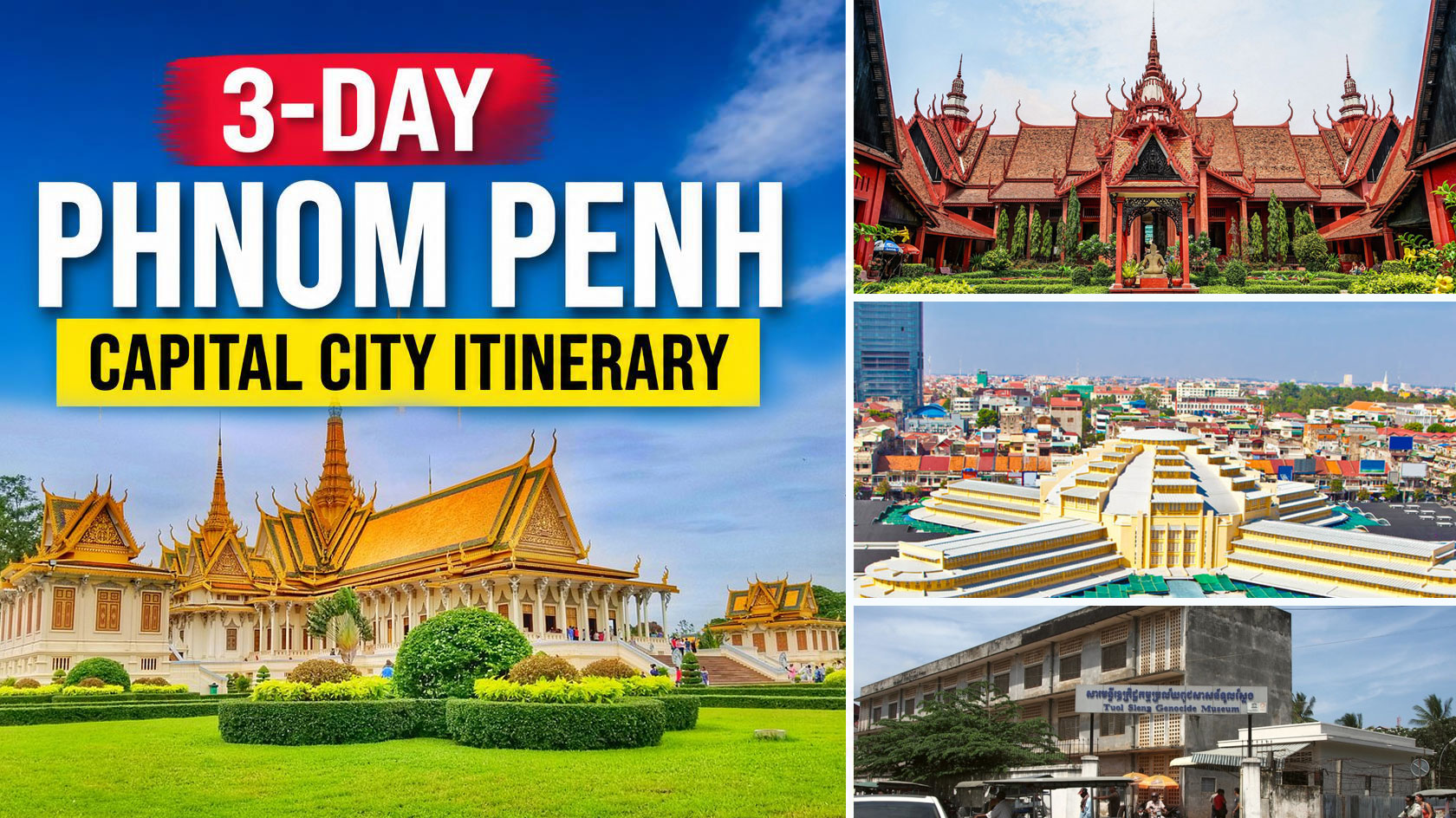

Phnom Penh, the capital of Cambodia, is a fascinating city where royal traditions, Khmer history, French colonial architecture, busy markets and modern cafés come together. Located near the meeting point of the Mekong and Tonlé Sap rivers, the city offers international visitors an introduction to Cambodia’s culture, history and everyday life.
If you have three days in Phnom Penh, you can explore its most important landmarks, learn about Cambodia’s difficult past, sample authentic Khmer cuisine and experience the atmosphere of the riverside after sunset. This itinerary balances major attractions with time to enjoy the city at a comfortable pace.
Whether you are visiting before traveling to Siem Reap, continuing toward Kampot and Kep, or spending a short holiday in the capital, this guide will help you make the most of your stay.
Quick Overview: Phnom Penh in 3 Days
| Day | Main Theme | Highlights |
|---|---|---|
| Day 1 | Royal Heritage and Riverside | Royal Palace, Silver Pagoda, National Museum, Wat Phnom and Sisowath Quay |
| Day 2 | History and Remembrance | Tuol Sleng Genocide Museum, Choeung Ek Genocidal Center and a relaxed evening |
| Day 3 | Markets and Local Life | Central Market, Russian Market, Khmer food, cafés and modern Phnom Penh |
Recommended stay: Three nights in Phnom Penh. Choose accommodation in a convenient central neighborhood so you can reach major attractions without spending too much time in traffic.
Day 1: Discover Phnom Penh’s Royal Heritage and Riverside
Spend your first day exploring the capital’s royal landmarks, cultural treasures and riverside district. Start early to avoid the strongest midday heat and allow enough time for the main attractions.
8:00 AM – Breakfast and Khmer Coffee
Begin your morning with a Cambodian breakfast at a local restaurant or café. Popular options include rice porridge, noodle soup, kuy teav, or bread with eggs and coffee.
For a local experience, order iced Khmer coffee. Cambodian coffee is often served with condensed milk, creating a rich and sweet drink that is popular with residents.
9:00 AM – Visit the Royal Palace and Silver Pagoda
The Royal Palace is one of Phnom Penh’s most recognizable landmarks and an important symbol of Cambodia’s monarchy. Its landscaped grounds, ornate roofs and traditional Khmer architectural details make it a major stop for first-time visitors.
Within the palace complex, the Silver Pagoda is known for its religious significance and valuable Buddhist objects. The site provides insight into Cambodia’s royal and spiritual heritage.
Visitor tips:
- Wear clothing that covers your shoulders and knees.
- Bring water and sun protection for walking outdoors.
- Follow signs and staff instructions about restricted areas and photography.
- Check current opening times and admission information before visiting, as access arrangements may change.
Allow approximately 1.5–2 hours, depending on access and your interest in the architecture.
11:00 AM – Explore the National Museum of Cambodia
Continue to the National Museum of Cambodia, an important cultural institution that houses Khmer sculpture and archaeological objects associated with different periods of Cambodian history.
The museum is a useful introduction to Khmer art, religious traditions and the civilizations that shaped the country before your visit to Angkor Wat and other ancient temples.
Plan around 1–1.5 hours. The museum’s published visitor information lists daily opening hours of 8:00 AM–5:00 PM, with the last admission tickets sold at 4:30 PM. Confirm details before your visit.
12:30 PM – Enjoy a Khmer Lunch
Take a break at a Cambodian restaurant near the city center. This is a good opportunity to try traditional dishes such as:
- Fish Amok: A fragrant fish curry steamed with coconut milk and Khmer herbs.
- Beef Lok Lak: Stir-fried beef commonly served with rice, vegetables and a pepper-lime dipping sauce.
- Nom Banh Chok: Cambodian rice noodles traditionally served with a fragrant green fish-based curry and fresh vegetables.
- Samlor Korkor: A traditional Cambodian soup made with vegetables, herbs and other ingredients that vary by recipe.
Food prices vary by venue, but local restaurants and casual eateries generally provide more affordable meals than upscale international dining establishments.
2:00 PM – Visit Wat Phnom
Head to Wat Phnom, a historic Buddhist temple situated on a small hill in central Phnom Penh. The temple is closely associated with the city’s traditional founding story and gives the capital its name.
Explore the temple grounds, observe local religious customs and appreciate the contrast between the peaceful hilltop setting and the busy streets below. Dress modestly and behave respectfully around worshippers.
Allow approximately 30–60 minutes for the visit.
4:00 PM – Walk Along Sisowath Quay
Make your way to Sisowath Quay, the well-known riverside promenade along the Tonlé Sap River near its confluence with the Mekong.
This is a pleasant area for walking, people-watching and observing everyday Phnom Penh life. In the late afternoon, residents and visitors gather along the promenade to exercise, socialize and enjoy the cooler air.
6:00 PM – Dinner and Riverside Evening
Finish your first day with dinner at a riverside restaurant or a nearby Khmer eatery. You can choose traditional Cambodian food, seafood or international cuisine.
After dinner, enjoy a gentle evening walk or relax at a café. If you are tired from sightseeing, there is no need to add more attractions; Phnom Penh is best appreciated when you leave time to absorb the city’s atmosphere.
Day 2: Understand Cambodia’s History and Resilience
Your second day focuses on the Khmer Rouge period, one of the most tragic chapters in Cambodian history. The sites on this itinerary are important places of remembrance and education. Allow yourself enough time to reflect, and remember that the experience may be emotionally difficult.
8:00 AM – Breakfast Before Sightseeing
Eat breakfast and carry drinking water before leaving your hotel. Wear comfortable clothing and arrange reliable transportation between the day’s sites.
9:00 AM – Visit Tuol Sleng Genocide Museum
The Tuol Sleng Genocide Museum, formerly Security Prison 21 (S-21), preserves the history of a detention and interrogation center used by the Khmer Rouge regime from 1975 to 1979.
The museum contains photographs, personal objects, historical evidence and preserved buildings that document the suffering of prisoners during this period. Its exhibitions help visitors understand the human cost of the regime and the importance of remembering the victims.
Official visitor information lists opening hours of 8:00 AM–5:00 PM daily. The published international adult admission fee is US$5, with different rates for eligible children and other visitor categories. Confirm the latest details directly with the museum.
Visiting respectfully:
- Dress appropriately for a memorial site.
- Speak quietly and follow museum rules.
- Do not photograph where photography is prohibited.
- Give other visitors space to reflect.
Allow around 1.5–2 hours, or longer if you wish to examine the exhibits carefully.
11:30 AM – Lunch and a Break
After the museum, take time for lunch and a short break. Choose a nearby restaurant or café where you can sit quietly before continuing to the next site.
1:00 PM – Visit Choeung Ek Genocidal Center
Continue to the Choeung Ek Genocidal Center, located outside the central city. The site is associated with the mass executions of prisoners during the Khmer Rouge period and is closely connected to the history of Tuol Sleng.
Visitors can learn about the events that occurred there through preserved memorial areas and interpretive information. The site should be approached with respect, as it commemorates people who lost their lives during the genocide.
Allow approximately 1.5–2 hours for the visit, plus transportation time. The journey can take longer depending on traffic, so avoid scheduling a tight connection afterward.
Consider using an audio guide or a knowledgeable guide to better understand the historical context. Follow all site rules and avoid treating the memorial as a casual photo stop.
4:00 PM – Return to Central Phnom Penh
Return to your hotel and take some time to rest. After visiting two emotionally demanding historical sites, you may prefer a quiet afternoon rather than adding another major attraction.
6:00 PM – Dinner and a Relaxed Evening
Choose a restaurant serving Cambodian cuisine or enjoy a relaxed meal near your accommodation. If you want to go out, consider a café or restaurant in a central neighborhood rather than planning a long night of activities.
Day 2 can be emotionally intense. Give yourself permission to slow down and reflect on what you have learned about Cambodia’s history and resilience.
Day 3: Markets, Shopping and Everyday Phnom Penh
On your final day, experience the city’s commercial life, sample local food and explore a different side of the capital. This day is more flexible, making it easy to adjust according to your interests and departure schedule.
8:00 AM – Explore Central Market (Phsar Thmei)
Begin at Central Market, known in Khmer as Phsar Thmei, meaning “New Market.” Its distinctive Art Deco design and large central dome make it one of Phnom Penh’s best-known architectural landmarks.
The market’s stalls sell a wide range of goods, including clothing, souvenirs, jewelry, flowers, household items and local products. It is also a good place to observe how residents shop and conduct business.
Take your time exploring the different sections, and ask permission before photographing vendors or individuals at work.
10:00 AM – Visit the Russian Market
Continue to Russian Market (Phsar Toul Tom Poung), a popular market for clothing, handicrafts, souvenirs and everyday shopping.
Compared with Central Market, the Russian Market has a more compact, maze-like layout. It can be interesting for travelers looking for locally made goods, textiles, small gifts and casual food stalls.
Shopping tips:
- Compare prices before buying.
- Bargain politely when appropriate.
- Inspect products carefully before paying.
- Carry small denominations of cash.
- Keep your phone and valuables secure in crowded areas.
12:00 PM – Try More Cambodian Food
For lunch, seek out a local restaurant or market-area eatery. If you have not tried them yet, consider Cambodian grilled meats, rice dishes, fresh spring rolls, noodle soups or Khmer curry.
Choose food from vendors who handle ingredients carefully and serve freshly prepared meals. If you have a sensitive stomach, use safe drinking water and take care with raw ingredients.
1:30 PM – Discover Modern Phnom Penh
Spend the afternoon exploring one of the city’s modern neighborhoods, independent cafés or contemporary dining areas. Phnom Penh has a growing café culture, with options ranging from traditional Cambodian coffee shops to specialty coffee bars and international bakeries.
This is also a good opportunity to see the contrast between historic neighborhoods and the city’s newer commercial developments.
If shopping is not your priority, use this time to visit another museum or cultural attraction, browse local crafts, or enjoy a longer lunch.
3:30 PM – Optional Visit to the Independence Monument Area
If time allows, visit the area around the Independence Monument, a prominent city landmark commemorating Cambodia’s independence from France in 1953.
The monument is especially recognizable from the surrounding roads and landscaped public spaces. It is generally best appreciated from public viewing areas; follow traffic rules and use safe pedestrian crossings when taking photographs.
5:00 PM – Final Riverside Walk or Café Stop
Return to the riverside or choose a café for your final afternoon in the capital. Enjoy a cold drink, watch boats and river traffic, or simply relax before dinner.
6:30 PM – Farewell Dinner in Phnom Penh
End your three-day visit with a memorable Cambodian meal. You might choose fish amok, beef lok lak, a shared Khmer dinner or a restaurant serving a mix of local and regional dishes.
If you are leaving Phnom Penh the following morning, use the evening to confirm your transport arrangements and prepare for the next destination.
How to Get Around Phnom Penh
Phnom Penh’s attractions are spread across the city, so transportation planning can make a significant difference to your experience.
- Ride-hailing apps: Services such as Grab and PassApp can make it easier to arrange rides and check quoted fares.
- Tuk-tuks: A convenient way to travel short distances and enjoy the city, especially when the weather is pleasant.
- Private car with driver: Useful for a full day of sightseeing or visiting Choeung Ek outside the central area.
- Walking: Suitable for exploring nearby attractions, but heat, humidity, traffic and uneven sidewalks can make longer walks tiring.
Traffic can be busy, particularly during morning and evening rush hours. Allow extra time between attractions and avoid assuming that two nearby locations will always be connected by a quick journey.
Where to Stay in Phnom Penh for Three Days
The best neighborhood depends on your budget and travel style.
- Riverside and Daun Penh: Convenient for the Royal Palace area, riverfront walks and several historic attractions.
- Boeung Keng Kang (BKK): Offers a broad choice of cafés, restaurants, hotels and modern city amenities.
- Toul Tom Poung: A useful option for travelers interested in local markets, independent cafés and a more neighborhood-oriented atmosphere.
For a short visit, prioritize a hotel with reliable air conditioning, secure luggage storage and convenient access to transportation. Compare recent reviews, total prices and cancellation policies before booking.
Estimated Budget for a 3-Day Phnom Penh Trip
Your costs will depend on accommodation, dining choices, transport and the attractions you visit. The following figures are illustrative planning estimates per person, excluding international flights.
| Travel Style | Estimated Daily Budget | Estimated 3-Day Budget |
|---|---|---|
| Backpacker | US$25–40 | US$75–120 |
| Mid-range | US$60–100 | US$180–300 |
| Comfortable / upscale | US$120–220+ | US$360–660+ |
These are broad estimates rather than fixed prices. Confirm current hotel rates, transport costs and admission fees before traveling. Keep extra money available for unexpected transport changes, shopping and optional activities.
Practical Tips for Visiting Phnom Penh
- Dress respectfully: Cover your shoulders and knees at religious sites and memorials.
- Start early: Morning sightseeing is often more comfortable in Cambodia’s tropical climate.
- Carry water: Stay hydrated, especially when walking outdoors.
- Protect valuables: Keep your phone, wallet and passport secure, particularly in crowded areas and near roads.
- Use reputable transportation: Confirm the destination and fare or app quotation before starting a journey.
- Carry some cash: Small shops and market vendors may not accept cards.
- Check opening hours: Public holidays, maintenance and operational changes can affect access to attractions.
- Respect memorial sites: Be mindful of the experiences of victims, survivors and local visitors.
- Plan around the weather: During the rainy season, carry rain protection and allow additional time for road travel.
Frequently Asked Questions
Is three days enough to visit Phnom Penh?
Yes. Three days is enough to see many of the capital’s major highlights, including the Royal Palace area, National Museum, Tuol Sleng Genocide Museum, Choeung Ek, major markets and the riverside. A longer stay is worthwhile if you prefer a slower pace or want to explore more neighborhoods.
What is the best time of year to visit Phnom Penh?
The drier months, generally November through April, are popular for sightseeing. The rainy season, generally May through October, can also be enjoyable, although heavy showers may affect transportation and outdoor activities.
Can I visit Tuol Sleng and Choeung Ek in one day?
Yes. Visiting both in one day is practical if you start in the morning and allow sufficient time for transportation. Both sites relate to the Khmer Rouge period, so prepare for a potentially emotional experience.
Is Phnom Penh walkable for tourists?
Some central areas are suitable for walking between nearby attractions, but the city is not uniformly pedestrian-friendly. Traffic, heat, rain and uneven sidewalks mean that ride-hailing services or tuk-tuks are useful for longer distances.
How much money should I bring for three days in Phnom Penh?
A backpacker might plan around US$75–120 for three days, while a mid-range traveler might budget US$180–300, excluding international flights. Accommodation choices and activities can substantially change the total.
Is Phnom Penh suitable for families?
Yes, but adapt the itinerary to the ages and interests of your family. The historical museums cover difficult subject matter and may not be appropriate for every child. Consider prioritizing the Royal Palace area, markets, cultural activities and family-friendly restaurants.
What should I wear when visiting temples in Phnom Penh?
Wear clothing that covers your shoulders and knees. Comfortable footwear is useful, and you may need to remove your shoes in designated religious areas.
Where should I go after Phnom Penh?
Popular onward destinations include Siem Reap for Angkor’s temples, Kampot and Kep for riverside and coastal scenery, and Sihanoukville for onward ferry connections to Cambodia’s islands. Choose your route according to available transport and the amount of time you have.
Sources & References
- Ministry of Tourism, Cambodia — destination information and visitor guidance
- National Museum of Cambodia — official admission and visitor information
- Tuol Sleng Genocide Museum — official history, opening hours and visitor regulations
- Choeung Ek Genocidal Center — visitor information and historical context
Conclusion
A three-day visit to Phnom Penh gives you a meaningful introduction to Cambodia’s royal heritage, history, food and contemporary city life. Start with the Royal Palace and riverside landmarks, dedicate the second day to learning about the Khmer Rouge period, and spend your final day exploring markets, cafés and local neighborhoods.
Phnom Penh is more than a stop between other Cambodian destinations. It is a city of cultural traditions, historical memory, busy markets and changing urban life. With a balanced itinerary and respectful approach to its landmarks, you can gain a deeper appreciation of Cambodia’s capital in just three days.
Continue planning your trip with GoToKH: explore our Cambodia travel guides for Siem Reap and Angkor Wat, Cambodian food, transportation, cultural etiquette and practical advice for international visitors.