Koh Ker Temple Complex: A Guide to Cambodia’s Ancient Capital

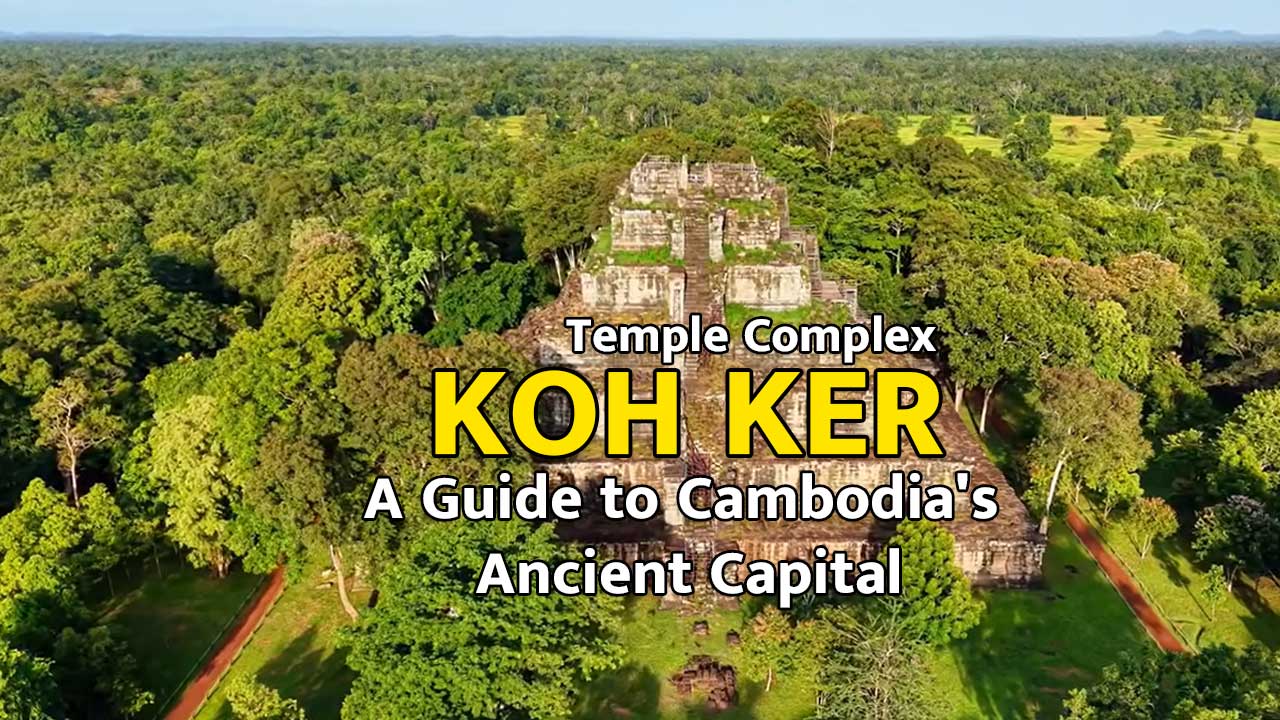
Hidden among the forests of northern Cambodia, the Koh Ker Temple Complex is one of the country’s most remarkable archaeological destinations. Once a capital of the Khmer Empire, Koh Ker is famous for its impressive seven-tiered pyramid, ancient sanctuaries, and distinctive Khmer architecture.
Recognized as a UNESCO World Heritage Site in 2023, Koh Ker offers travelers a fascinating opportunity to discover Cambodia’s history beyond Angkor Wat.
This guide covers the history of Koh Ker, its main attractions, location, entrance information, and practical travel tips.
Koh Ker Temple at a Glance
| Information | Details |
|---|---|
| Location | Kulen District, Preah Vihear Province, Cambodia |
| Ancient Names | Lingapura / Chok Gargyar |
| Founded | 921 CE, under King Jayavarman IV |
| Khmer Empire Capital | 928–944 CE as the sole capital |
| UNESCO World Heritage | September 17, 2023 |
| Main Attraction | Prasat Prang, the seven-tiered pyramid |
| Distance from Siem Reap | Approximately 120 km by road |
| Recommended Visit | 2–3 hours at the archaeological site |
History of Koh Ker: Cambodia’s Ancient Capital
Koh Ker became an important political and religious center during the 10th century. King Jayavarman IV established his capital here in 921 CE, at a time when another royal center existed at Angkor.
From 928 to 944 CE, Koh Ker served as the sole capital of the Khmer Empire. After this period, the empire’s political center returned to Angkor.
The ancient city was known as Lingapura, meaning “City of Lingas,” reflecting its strong association with the Hindu god Shiva. It was also called Chok Gargyar, an Old Khmer name associated with ironwood trees.
Although Koh Ker’s period as the imperial capital was relatively short, its rulers developed an ambitious city with temples, reservoirs, roads, and monumental sculptures.
Why Is Koh Ker a UNESCO World Heritage Site?
On September 17, 2023, UNESCO officially inscribed Koh Ker on the World Heritage List under criteria (ii) and (iv).
UNESCO recognized the site for its exceptional architecture, innovative city planning, monumental stone construction, and distinctive artistic style.
Koh Ker’s sculptures are particularly important. Artists created large, expressive figures that introduced new approaches to movement and composition in Khmer art.
Best Temples to Explore at Koh Ker
1. Prasat Thom and Prasat Prang – The Famous Pyramid
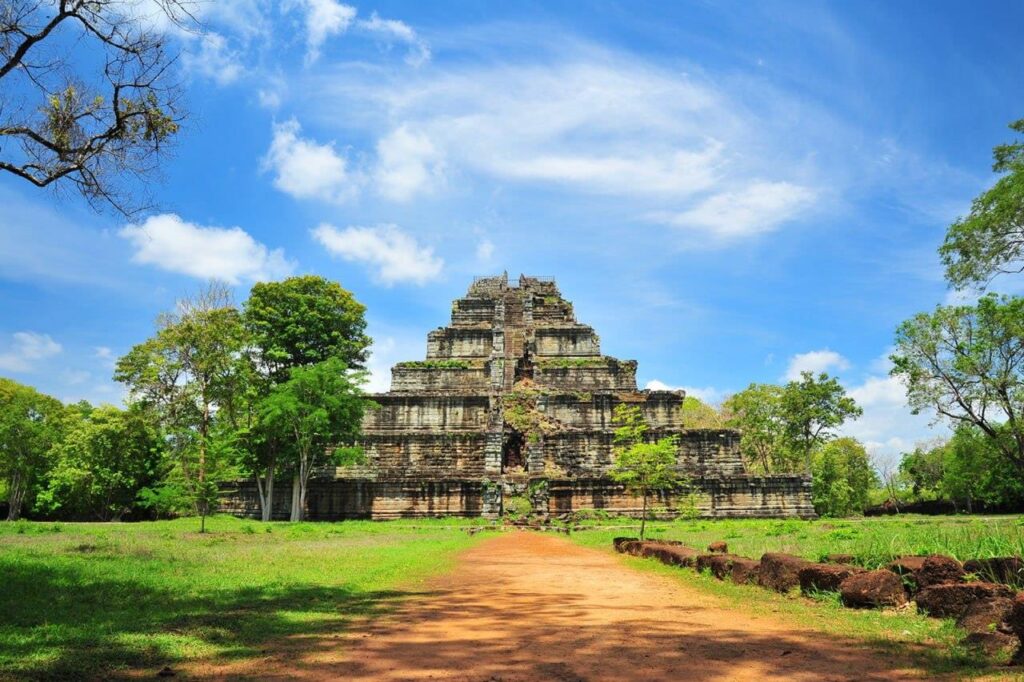
The most recognizable attraction at Koh Ker is Prasat Prang, the magnificent seven-tiered pyramid within the larger Prasat Thom temple complex.
Standing approximately 35 meters high, the pyramid is one of Cambodia’s most distinctive ancient monuments. Its stepped design differs significantly from the familiar towers of Angkor Wat.
The pyramid was associated with the worship of Shiva and once supported a monumental Shiva linga.
Visitors may be able to climb the designated modern staircase for panoramic forest views, subject to current access and conservation restrictions.
Best for: Khmer architecture, photography, and historical exploration.
2. Prasat Krahom – The Red Temple
Prasat Krahom is an important monument within the Prasat Thom complex. Its name means “Red Temple,” referring to its reddish brick construction.
The temple once featured remarkable sculptural decorations, including representations connected to Hindu religious traditions.
It provides an excellent introduction to Koh Ker’s architectural style and ceremonial layout.
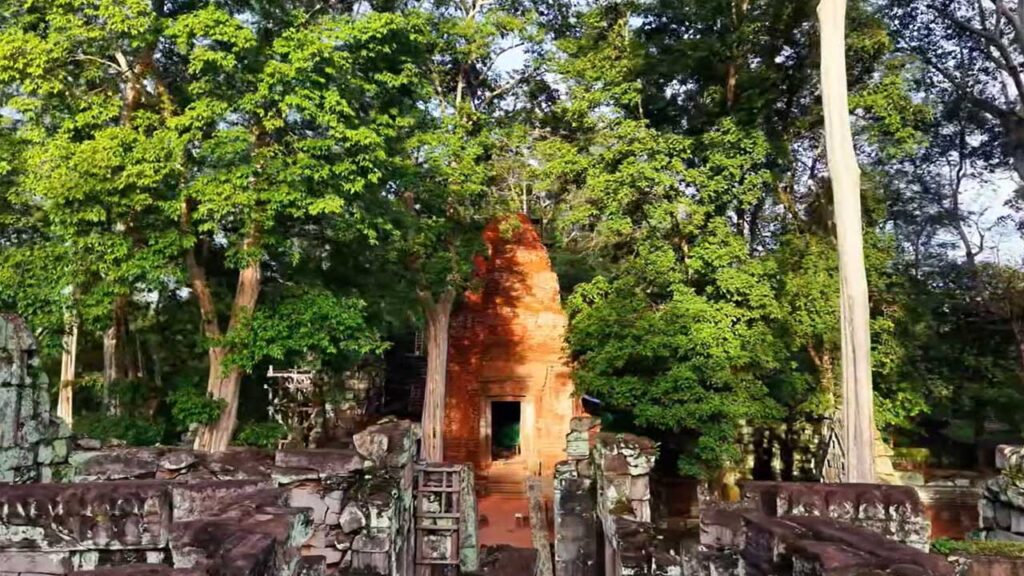
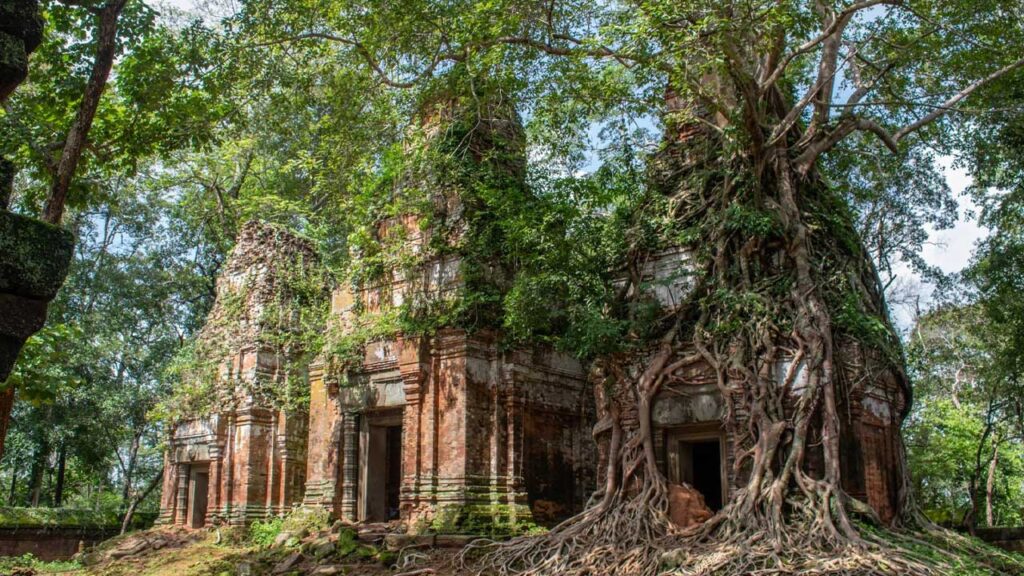
3. Prasat Pram – Temples Surrounded by Tree Roots
Prasat Pram is one of Koh Ker’s most photogenic temple groups. Its ancient brick towers stand among trees, with impressive roots wrapping around parts of the structures.
The combination of architecture and forest creates a memorable atmosphere, making Prasat Pram especially popular among photography enthusiasts.
Best for: Nature, temple photography, and ancient architecture.
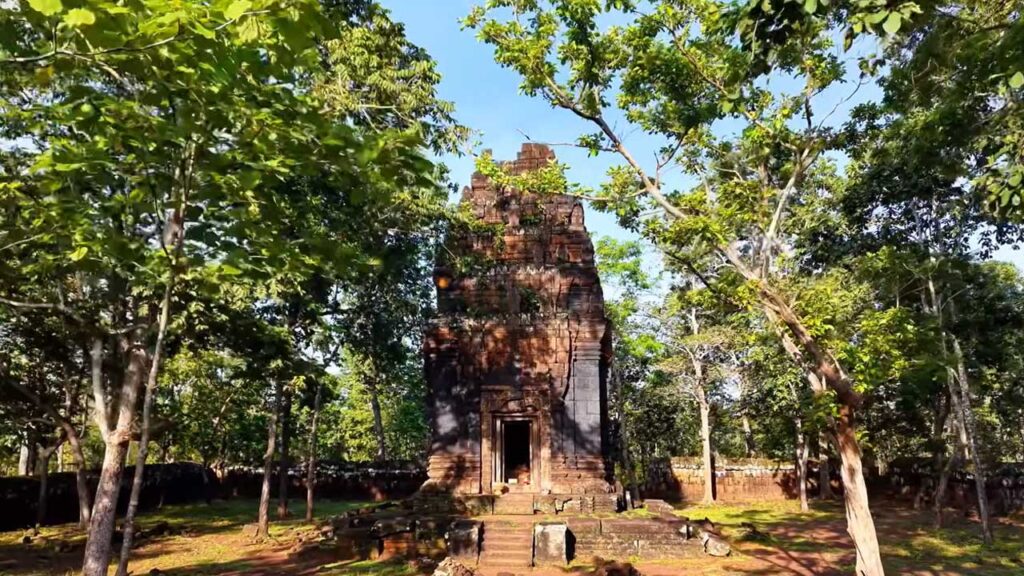
4. Prasat Neang Khmau – A Distinctive Dark Temple
Prasat Neang Khmau is another interesting sanctuary within the Koh Ker archaeological area.
Its dark-colored laterite walls give the monument a distinctive appearance. The temple offers visitors another perspective on the materials and construction techniques used during the Koh Ker period.
5. Prasat Krachap – Ancient Khmer Architecture
Prasat Krachap is an important temple group featuring ancient brick towers and archaeological remains.
The site is valuable for understanding Koh Ker’s wider religious landscape. Conservation and restoration work continued at the temple during 2026, so some sections may be temporarily restricted.
How to Get to Koh Ker Temple
Koh Ker is located in Srayang Commune, Kulen District, Preah Vihear Province, approximately 120 kilometers from Siem Reap.
The most convenient option is usually a private car with a driver or an organized guided tour from Siem Reap.
The journey commonly takes around 2–3 hours each way, depending on road conditions and stops.
Travelers sometimes combine Koh Ker with Beng Mealea Temple on a full-day excursion. However, confirm current attraction access, road safety, and transport arrangements before booking.
Koh Ker Entrance Fee and Opening Hours
Koh Ker requires a separate entrance ticket and is not included in the standard Angkor Archaeological Park pass.
- Foreign visitor ticket: Commonly listed at approximately US$15; confirm the latest official rate before travel.
- Ticket counter: Generally operates from 7:00 AM to 5:30 PM, according to Angkor Enterprise.
- Payment: US dollar cash and major credit cards are listed as accepted at the ticket counter.
- Site access: Individual temple hours and permitted visitor routes may differ.
Check the official Angkor Enterprise website for updated ticket information.
Best Time to Visit Koh Ker
The cooler dry season, generally November to February, offers more comfortable conditions for exploring the archaeological site.
Morning visits are particularly pleasant because temperatures are lower. During the rainy season, the surrounding forest becomes greener, but paths and stone surfaces may be slippery.
Important Safety and Travel Advice
Travel advisory – October 26, 2026: Parts of northern Cambodia remain affected by security concerns associated with the Cambodia–Thailand border. Official Australian, Canadian, and US travel advisories recommend avoiding areas within 50 kilometers of the border.
Koh Ker is inland, away from the main border temple sites, and Cambodian authorities continued tourism development and conservation activities there during 2026. Nevertheless, visitors should verify the current access status and safety of their intended route before departure.
Do not automatically apply information about Koh Ker to Preah Vihear Temple, which lies directly in the sensitive border area.
- Follow marked visitor paths because unexploded ordnance remains a concern in parts of rural Cambodia.
- Never enter restricted archaeological or forest areas.
- Wear comfortable shoes and bring drinking water.
- Respect ancient monuments and avoid climbing on fragile structures.
- Use local guides and support nearby community businesses.
Frequently Asked Questions
1. Why is Koh Ker Temple famous?
Koh Ker is famous for being a former Khmer imperial capital and for its unusual seven-tiered pyramid, Prasat Prang.
2. Where is Koh Ker Temple located?
Koh Ker is located in Kulen District, Preah Vihear Province, northern Cambodia, approximately 120 kilometers from Siem Reap.
3. Who built Koh Ker?
King Jayavarman IV established the ancient capital in 921 CE. Major construction continued during the period when Koh Ker became the Khmer Empire’s principal capital.
4. Is Koh Ker a UNESCO World Heritage Site?
Yes. Koh Ker was inscribed on the UNESCO World Heritage List on September 17, 2023.
5. Is Koh Ker included in the Angkor Pass?
No. Koh Ker requires a separate entrance ticket.
6. Can visitors climb the Koh Ker pyramid?
A designated staircase has been used for visitor access, but climbing permissions may change for conservation or safety reasons. Follow current instructions from site staff.
7. How long does it take to visit Koh Ker?
Allow approximately 2–3 hours to explore the main monuments, plus travel time from Siem Reap.
8. Can I visit Koh Ker and Beng Mealea in one day?
Yes, the two sites can normally be combined into a long day trip from Siem Reap, provided both sites and the connecting roads are open and safe.
Sources and References
- UNESCO World Heritage Centre – Koh Ker Archaeological Site
- UNESCO – Koh Ker World Heritage Inscription
- Cambodia Ministry of Culture and Fine Arts – Koh Ker Heritage
- National Authority for Preah Vihear – Koh Ker Archaeological Sites
- Angkor Enterprise – Koh Ker Ticket Counter
- Ministry of Culture and Fine Arts – Koh Ker Tourism Facilities, August 2026
- Australian Government – Cambodia Travel Advice
- US Department of State – Cambodia Travel Advisory
Final Thoughts
The Koh Ker Temple Complex is one of Cambodia’s most fascinating archaeological treasures. Its ancient capital history, remarkable seven-tiered pyramid, and forest-covered temples reveal a distinctive chapter of the Khmer Empire.
For travelers interested in Cambodian history and UNESCO World Heritage Sites, Koh Ker offers a valuable cultural experience beyond the famous temples of Angkor.
Discover more ancient temples, historical destinations, and practical Cambodia travel guides at GoToKH.com.