
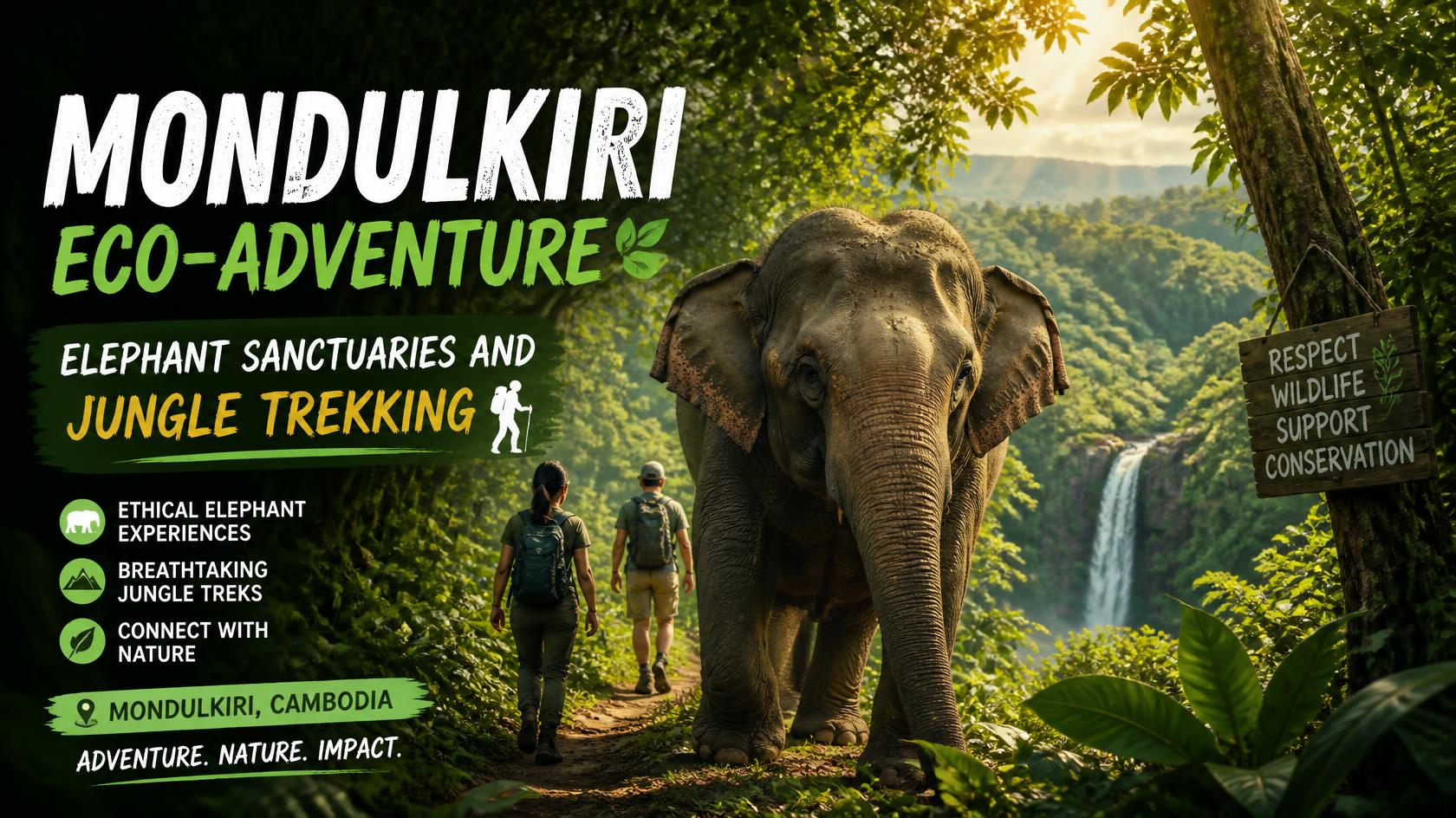

Far from Cambodia’s busy cities and famous temple destinations, Mondulkiri Province offers a very different kind of travel experience. Rolling hills, dense forests, waterfalls, rivers and Indigenous Bunong communities make this eastern province one of Cambodia’s most interesting destinations for travelers who want nature and adventure.
The provincial capital, Sen Monorom, is the main base for exploring the surrounding countryside. From here, visitors can join forest treks, discover waterfalls, learn about Bunong traditions and visit elephant projects that place animal welfare and conservation at the center of the experience.
One of the most important lessons for responsible travelers is that an elephant encounter should not be about riding, performances or forcing animals to interact with visitors. Genuine welfare-focused projects allow elephants to behave naturally and give visitors the opportunity to observe rather than control them.
For travelers looking beyond Cambodia’s beaches and Angkor temples, Mondulkiri offers an opportunity to experience a quieter side of the country—one where forests, wildlife and local communities are the main attractions.
Quick Summary: Mondulkiri Eco-Adventure
| Experience | What to Expect |
|---|---|
| Elephant sanctuary | Observe elephants in a forest environment without riding or performances |
| Jungle trekking | Walk through forests, valleys, rivers and community forest areas |
| Wildlife | Opportunities to learn about elephants, primates, birds and other forest species |
| Waterfalls | Scenic forest waterfalls and swimming opportunities depending on conditions |
| Bunong culture | Learn about Indigenous traditions, communities and relationships with forests |
| Best base | Sen Monorom |
| Travel style | Nature, adventure, responsible tourism and cultural experiences |
1. Why Visit Mondulkiri for an Eco-Adventure?
Mondulkiri is one of Cambodia’s most distinctive nature destinations. Its highland landscape is noticeably different from the lowland plains surrounding Phnom Penh and Siem Reap.
The area around Sen Monorom is characterized by forested hills, open grassland, streams and waterfalls. Farther into the province, protected forests provide important habitat for Cambodia’s wildlife.
For travelers, this creates several opportunities in one destination:
- Ethical elephant experiences
- Jungle trekking
- Wildlife observation
- Waterfall visits
- Camping and overnight forest trips
- Community-based tourism
- Learning about Bunong Indigenous culture
- Exploring Cambodia’s protected forests
Mondulkiri is especially rewarding for visitors who prefer active travel rather than spending an entire holiday in a city or resort.
2. Elephant Sanctuaries in Mondulkiri: What Should Travelers Look For?
Elephants are one of Mondulkiri’s most recognizable symbols, but choosing an elephant experience requires careful consideration.
A responsible sanctuary should prioritize the welfare and natural behavior of the elephants rather than creating entertainment for visitors.
The Elephant Valley Project (EVP), operated by the local NGO Elephant Livelihood Initiative Environment (ELIE), describes its approach as allowing elephants to live with greater freedom and dignity in a forest environment. The project does not offer elephant riding, tricks, feeding or swimming as visitor activities.
This approach changes the visitor experience. Instead of climbing onto an elephant or asking it to perform, visitors hike through the forest and observe the animals from a respectful distance.
What Makes an Elephant Visit More Responsible?
- No elephant riding
- No performances or unnatural tricks
- No forced interaction with tourists
- Space for elephants to move naturally
- Qualified staff involved in elephant care
- Support for local communities
- Contribution toward forest or conservation programs
- Clear information about elephant welfare
Travelers should be cautious about any attraction that markets close interaction as its main selling point while providing little information about animal welfare.
3. Elephant Valley Project: A Forest-Based Elephant Experience
The Elephant Valley Project is one of the best-known elephant conservation and ecotourism projects in Mondulkiri. ELIE was founded in 2006 and works on elephant welfare, habitat conservation and support for local communities, including Bunong people and mahouts.
The project is located within community land near forest areas associated with the Keo Seima Wildlife Sanctuary. Visitors experience the sanctuary primarily by walking through the forest with a guide and observing elephants as they move, feed and interact naturally.
The current full-day Explorer program combines a morning elephant observation hike with an afternoon jungle trek. The project describes the total hiking distance as approximately 5–8 kilometers for the day.
The program also includes lunch, transportation from Sen Monorom and water refills, while part of the visitor contribution supports local community and forest-protection programs.
What You May See During an Elephant Visit
The experience is deliberately different from a traditional animal attraction. Rather than guaranteeing a particular behavior, guides take visitors into the forest and explain the elephants’ histories, welfare and natural behavior.
Depending on the day and conditions, you may see elephants walking through vegetation, feeding on forest plants or interacting with one another.
That uncertainty is part of responsible wildlife tourism. The animals are not there to perform according to a visitor schedule.
4. What Is Jungle Trekking in Mondulkiri Like?
Mondulkiri trekking can range from relatively easy walks to more demanding full-day hikes through forest terrain.
A typical trek may pass through:
- Dense jungle
- Community forest
- Streams and rivers
- Waterfalls
- Open viewpoints
- Large and ancient-looking trees
- Forest valleys
The Elephant Valley Project’s full-day Explorer program, for example, includes an afternoon community-forest trek after the morning elephant experience. The project describes routes that can include rivers, waterfalls and forest scenery.
Other local trekking operators offer one-, two- and three-day programs combining jungle trekking, waterfalls, wildlife, elephant experiences and overnight stays in or near forest and Indigenous communities.
The difficulty depends on the route, season and weather. During rainy periods, trails can become muddy and slippery, so travelers should be prepared for changing conditions.
5. Wildlife: More Than Just Elephants
Elephants are the most famous animals associated with Mondulkiri, but the province contains much more biodiversity.
The Keo Seima Wildlife Sanctuary is particularly important for wildlife conservation. The forest supports species including black-shanked doucs, southern yellow-cheeked crested gibbons and wild elephants, as well as numerous bird species and other mammals.
Another important protected area is the Phnom Prich Wildlife Sanctuary, which is associated with the Eastern Plains landscape and provides habitat for a range of mammals, birds and reptiles. Tourism Cambodia identifies species such as Asian elephants, wild water buffalo, deer and several bird species among the wildlife found in the sanctuary.
Wildlife sightings are never guaranteed. Forest travel is about entering an ecosystem rather than visiting an enclosure where animals are expected to appear on schedule.
This is why an experienced local guide can make such a difference. Guides can explain tracks, plants, sounds and the wider ecological environment even when large animals remain hidden.
6. Discover Bunong Culture and Community-Based Tourism
Mondulkiri is also home to a significant Bunong Indigenous community, whose cultural traditions have a deep relationship with forests, land and elephants.
Elephants have historically played an important role in Bunong communities. Responsible tourism can provide visitors with a chance to learn about this relationship without reducing the culture to a simple tourist performance.
Some trekking experiences are guided or supported by local Bunong community members who have extensive knowledge of the forest and its environment.
The Elephant Valley Project states that its visitor programs include learning about the traditions and culture of the local Indigenous Bunong people.
When visiting Indigenous communities, travelers should remember that they are entering people’s homes and cultural spaces. Ask before taking photographs, listen to local explanations and avoid treating cultural traditions as entertainment.
7. Waterfalls and Forest Adventures
Mondulkiri’s waterfalls are another reason to include the province in an eco-adventure itinerary.
Several local tours combine forest trekking with waterfalls, rivers and swimming areas. During suitable weather conditions, these can provide a refreshing break after walking through the forest.
Water levels and trail conditions change significantly between the dry and rainy seasons. A waterfall that is flowing strongly during the wet season may look very different during a drier period.
Always follow local guidance before swimming. Rocks can be slippery, currents can be stronger than they appear and conditions can change after rain.
8. Keo Seima Wildlife Sanctuary: A Deeper Wildlife Experience
Travelers with a strong interest in wildlife can consider extending their Mondulkiri trip toward the Keo Seima Wildlife Sanctuary.
The sanctuary covers a large forest landscape and is known for important populations of primates and other wildlife. Conservation and ecotourism initiatives in the area provide opportunities for visitors to learn about forest biodiversity and conservation.
One of the area’s notable wildlife experiences involves searching for primates such as black-shanked doucs and southern yellow-cheeked crested gibbons. Wild elephants are also present in the wider sanctuary landscape.
This type of trip is best for travelers who are comfortable with early starts, forest walking and the possibility of seeing wildlife only from a distance—or not seeing it at all.
9. Phnom Prich Wildlife Sanctuary
Phnom Prich Wildlife Sanctuary is another important protected area associated with Mondulkiri’s Eastern Plains.
The landscape includes extensive forests and rivers and supports a variety of wildlife. Tourism Cambodia describes the sanctuary as habitat for endangered and protected species and notes that trips can include forest excursions and camping.
For most short-term visitors, however, it is more practical to organize an excursion through a knowledgeable local guide or established tour provider rather than attempting to explore remote protected areas independently.
10. Phnom Nam Lear: Remote Forest Scenery
For travelers looking for a more remote experience, Phnom Nam Lear Wildlife Sanctuary is another destination in Mondulkiri.
Tourism Cambodia describes the area as a wildlife reserve with forest landscapes, streams, cliffs and waterfalls. It is considerably farther from Sen Monorom, making it more suitable for travelers with additional time rather than visitors on a very short itinerary.
Trekking and camping opportunities are available through local tourism arrangements, although visitors should confirm current access and conditions before traveling into remote areas.
11. How Many Days Do You Need in Mondulkiri?
A short visit can cover the main highlights, but 3–4 days provides a much more comfortable eco-adventure.
2-Day Mondulkiri Itinerary
- Day 1: Arrive in Sen Monorom and explore the town or nearby viewpoints.
- Day 2: Join an elephant sanctuary visit or jungle trek before returning to your next destination.
3-Day Itinerary
- Day 1: Travel to Sen Monorom and relax.
- Day 2: Elephant sanctuary and forest experience.
- Day 3: Waterfalls, jungle trekking or a cultural/community experience.
4–5 Day Adventure
- Spend your first day traveling and settling into Sen Monorom.
- Visit an ethical elephant sanctuary.
- Take a full-day jungle trek.
- Explore waterfalls and surrounding countryside.
- Consider a deeper wildlife or community-based experience before departure.
Adding an extra day is particularly useful if you want to visit remote forest areas or include an overnight jungle experience.
12. Best Time to Visit Mondulkiri
Mondulkiri can be visited throughout much of the year, but the experience changes with the seasons.
The dry season generally offers easier conditions for trekking, with less rain and fewer muddy trails. The cooler months can be particularly comfortable for long hikes.
The wet season brings greener forests, flowing streams and waterfalls, but trails can become muddy and slippery. Heavy rain may also affect road and trekking conditions.
For an outdoor-focused trip, travelers should choose their season according to whether they prioritize easier hiking conditions or greener landscapes and stronger waterfalls.
Regardless of season, check the current weather before entering remote forest areas.
13. How to Get to Mondulkiri
Sen Monorom is the main gateway to Mondulkiri’s tourism attractions.
Most visitors travel overland from Phnom Penh by minivan or bus. The journey takes several hours, depending on the vehicle, road conditions and number of stops.
The Elephant Valley Project currently advises that Phnom Penh to Sen Monorom by VIP minivan takes roughly 5–6 hours, while the journey from Siem Reap can take around 10–12 hours.
Once in Sen Monorom, many eco-adventure programs include transportation to the sanctuary or trekking area.
Because remote attractions are spread across the province, arranging transport with your accommodation or tour provider can be much easier than trying to reach every destination independently.
14. What Should You Pack for a Mondulkiri Trek?
A forest adventure requires more preparation than a normal city sightseeing trip.
- Comfortable hiking shoes with good grip
- Lightweight, breathable clothing
- Long trousers for forest trails
- Rain jacket during the wet season
- Insect repellent
- Sunscreen
- Reusable water bottle
- Small backpack
- Personal medicines
- Phone or camera with waterproof protection
- Small towel
- Extra socks
For overnight trekking, follow your tour operator’s packing list. You may need additional clothing, a flashlight, sleeping equipment and other supplies depending on the program.
Practical Tips Box: Responsible Eco-Adventure in Mondulkiri
Travel Responsibly
- Choose elephant experiences that prioritize animal welfare.
- Never ride elephants or support performances involving forced behavior.
- Do not feed wildlife unless a legitimate conservation program specifically permits it.
- Stay on designated trails and follow your guide.
- Do not remove plants, rocks or other natural materials from protected areas.
- Carry your rubbish out of the forest.
- Ask permission before photographing local people.
- Respect Bunong communities and cultural traditions.
- Use refillable water bottles whenever possible.
- Support locally owned guides, restaurants and accommodation.
Frequently Asked Questions
Is Mondulkiri worth visiting for nature lovers?
Yes. Mondulkiri offers a combination of forest landscapes, wildlife areas, waterfalls, trekking opportunities, elephant conservation and Indigenous cultural experiences that are different from Cambodia’s major temple and beach destinations.
Where should I stay in Mondulkiri?
Sen Monorom is the most practical base for most travelers. It provides access to elephant projects, trekking operators, restaurants and transportation services.
Can I ride an elephant in Mondulkiri?
Responsible elephant tourism should not require riding. Welfare-focused projects such as the Elephant Valley Project specifically avoid riding, tricks, feeding and swimming and instead allow visitors to observe elephants in a forest environment.
Can I see wild elephants in Mondulkiri?
Wild elephants live in protected forest landscapes in Mondulkiri, including the wider Keo Seima area. However, seeing a wild elephant is never guaranteed and visitors should never attempt to approach or follow one.
Is jungle trekking difficult?
Difficulty varies significantly. Some excursions are relatively manageable, while full-day and multi-day treks can involve several kilometers of walking, uneven ground, streams, hills and muddy trails. Ask your guide about the route before booking.
Is Mondulkiri suitable for families?
Yes, but the activity should be matched to the children’s age and fitness. Shorter nature walks and waterfall visits may be more suitable than demanding multi-day jungle treks.
How much does an elephant sanctuary visit cost?
Prices vary by organization and program. The Elephant Valley Project currently lists its full-day Explorer program at US$75 for foreign nationals and US$37.50 for Cambodian national residents, including transportation, guided hikes, lunch and water refills. Always confirm the latest price directly with the project before booking.
Do I need to book an elephant sanctuary in advance?
Yes. The Elephant Valley Project states that visitor numbers are limited and that advance booking is required. Its sanctuary is currently open to visitors Sunday through Friday, with Saturday generally reserved as a rest day.
Can I visit Mondulkiri without joining a tour?
You can travel independently to Sen Monorom, but many forest, wildlife and elephant experiences require local guides or advance arrangements. For remote protected areas, an experienced guide is strongly recommended.
Sources & References
- Elephant Valley Project / ELIE – Elephant welfare, sanctuary programs, visitor information and community conservation work.
- Tourism Cambodia – Provincial tourism information for Mondulkiri, including Phnom Prich and Phnom Nam Lear.
- Lonely Planet – Background information on Keo Seima Wildlife Sanctuary and its biodiversity.
- Mondulkiri Eco Tour – Local trekking and eco-adventure program information.
Travel information note: Trekking routes, sanctuary programs, prices, transport schedules, road conditions and access to protected areas can change. Confirm current arrangements directly with your accommodation, sanctuary or tour operator before traveling.
Conclusion
Mondulkiri is one of Cambodia’s best destinations for travelers who want to replace crowded sightseeing with forests, wildlife and meaningful outdoor experiences.
Its appeal goes beyond simply seeing an elephant. A responsible visit can introduce you to elephant welfare, protected forests, jungle trekking, waterfalls, wildlife conservation and the cultural traditions of the Bunong people.
For a first trip, spend time in Sen Monorom, choose a genuine welfare-focused elephant experience and allow at least one full day for trekking or exploring the surrounding forests. If you have more time, extend your journey into one of the province’s protected landscapes for a deeper wildlife and eco-adventure experience.
Travel slowly, respect the forest, listen to local guides and choose tourism activities that benefit both wildlife and communities. That is the best way to experience the wild side of Cambodia while helping protect it for the future.
Explore more of Cambodia with GoToKH and discover the country’s mountains, forests, islands, culture, food and unforgettable travel experiences.


