

Choosing the best time to visit Angkor Wat can make a big difference to your experience. Cambodia’s weather, visitor numbers and sunrise conditions change throughout the year, affecting everything from comfortable temple walks to photography opportunities.
For most first-time visitors, November to February is the most comfortable period because mornings are generally cooler and rainfall is lower. However, these months are also popular with international tourists. If you prefer greener scenery and fewer foreign visitors, the rainy season from May to October can be an excellent alternative.
This guide explains the best months to explore Angkor Wat, what to expect in each season, when the sunrise happens and how to plan your visit around the weather and crowds.
Quick Facts: Best Time to Visit Angkor Wat
- Best overall season: November to February.
- Best for comfortable weather: December and January.
- Best for fewer foreign visitors: Generally May to October.
- Best for green landscapes: Rainy season, especially after the monsoon has refreshed the vegetation.
- Hottest period: March to May, particularly April.
- Approximate sunrise: Around 5:35 AM to 6:30 AM, depending on the season.
- Angkor Wat opening time: 5:00 AM.
- Recommended visit: Arrive early and allow around 2–3 hours for Angkor Wat itself.
1. Understanding Angkor Wat’s Weather and Seasons
Angkor Wat is located in Siem Reap Province, northwestern Cambodia. The region has a tropical monsoon climate with two main seasons: dry and rainy.
Dry Season: November to April
The dry season generally runs from November through April. It brings less rainfall and is a popular period for exploring Angkor’s temples.
November to February is usually the most comfortable part of the dry season. Mornings are relatively cool, making it easier to walk around the large temple complex and enjoy outdoor photography.
Temperatures rise from March onward. By late March and April, outdoor sightseeing can become challenging because of intense heat, particularly around exposed stone courtyards.
Rainy Season: May to October
The rainy season generally begins in May and continues through October. The landscape becomes greener, vegetation grows around the temples, and water levels in surrounding reservoirs and moats change.
Rain does not necessarily prevent sightseeing throughout the day. However, showers and heavier rainfall can affect outdoor plans, while stone steps and pathways may become slippery.
The rainy season also tends to attract fewer foreign Angkor Pass buyers than the main dry-season months, making it appealing to visitors who prefer a quieter experience.
2. Best Months to Visit Angkor Wat
| Month | Weather | Crowds | Travel advice |
|---|---|---|---|
| January | Generally dry and comfortable | Very high | Excellent weather, but popular viewpoints can be busy |
| February | Dry and warm | High | Good for sightseeing and photography |
| March | Hot and mostly dry | High | Start early and plan around the heat |
| April | Very hot | Variable, with holiday activity | Visit at sunrise and avoid long midday walks |
| May | Hot, with the rainy season beginning | Generally lower | Good for visitors seeking fewer foreign tourists |
| June–August | Rainy and humid | Generally lower | Enjoy green scenery and plan flexible mornings |
| September–October | Wet season conditions | Generally lower | Allow extra time for rain and slippery paths |
| November | Transition toward drier weather | Increasing | A good balance as the main tourist season begins |
| December | Generally dry and comfortable | High, especially near year-end | Excellent sightseeing weather; book ahead for busy dates |
These are general seasonal patterns, not guaranteed weather forecasts. Actual conditions can vary from year to year.
3. Best Time to Visit Angkor Wat for Comfortable Weather
If comfortable sightseeing conditions are your main priority, December and January are excellent choices.
During these months, mornings are generally cooler and rainfall is relatively low. Visitors can spend more time walking around the galleries, courtyards and outer areas without dealing with the intense heat common later in the dry season.
November and February are also good options. November offers a transition into the drier months, while February usually remains suitable for outdoor temple visits.
For travellers visiting from the United States, United Kingdom or Australia during winter holidays, December and January can be convenient months to plan a Cambodia trip. However, accommodation and popular tours may be in greater demand around Christmas and New Year.
4. Best Time to Visit Angkor Wat to Avoid Crowds
Angkor Wat is one of Cambodia’s most famous attractions, so popular areas can become busy throughout the year. However, international visitor numbers vary significantly between seasons.
Monthly Angkor Pass statistics published by Angkor Enterprise show that foreign visitor demand is generally strongest during the early dry-season months and lower during much of the rainy season.
For example, Angkor Enterprise’s 2025 figures recorded 146,140 foreign Angkor Pass buyers in January, compared with 35,650 in September. These figures represent foreign pass buyers rather than every domestic and international visitor in the wider Angkor area.
When Is Angkor Wat Most Crowded?
- December and January: Popular with international holiday travellers.
- February: Can be busy, including around major regional holiday periods.
- March: Sunrise photography and the equinox period can attract additional visitors.
- April: Khmer New Year brings domestic travel and cultural activities around Cambodia.
When Is Angkor Wat Quieter?
May to October generally offers a quieter experience for international visitors. This is particularly attractive to photographers, independent travellers and visitors who prefer to explore at a relaxed pace.
Keep in mind that lower international visitor numbers do not guarantee an empty temple. Weekends, Cambodian holidays, special events and popular sunrise sessions can still attract many people.
5. Best Time to See Angkor Wat Sunrise
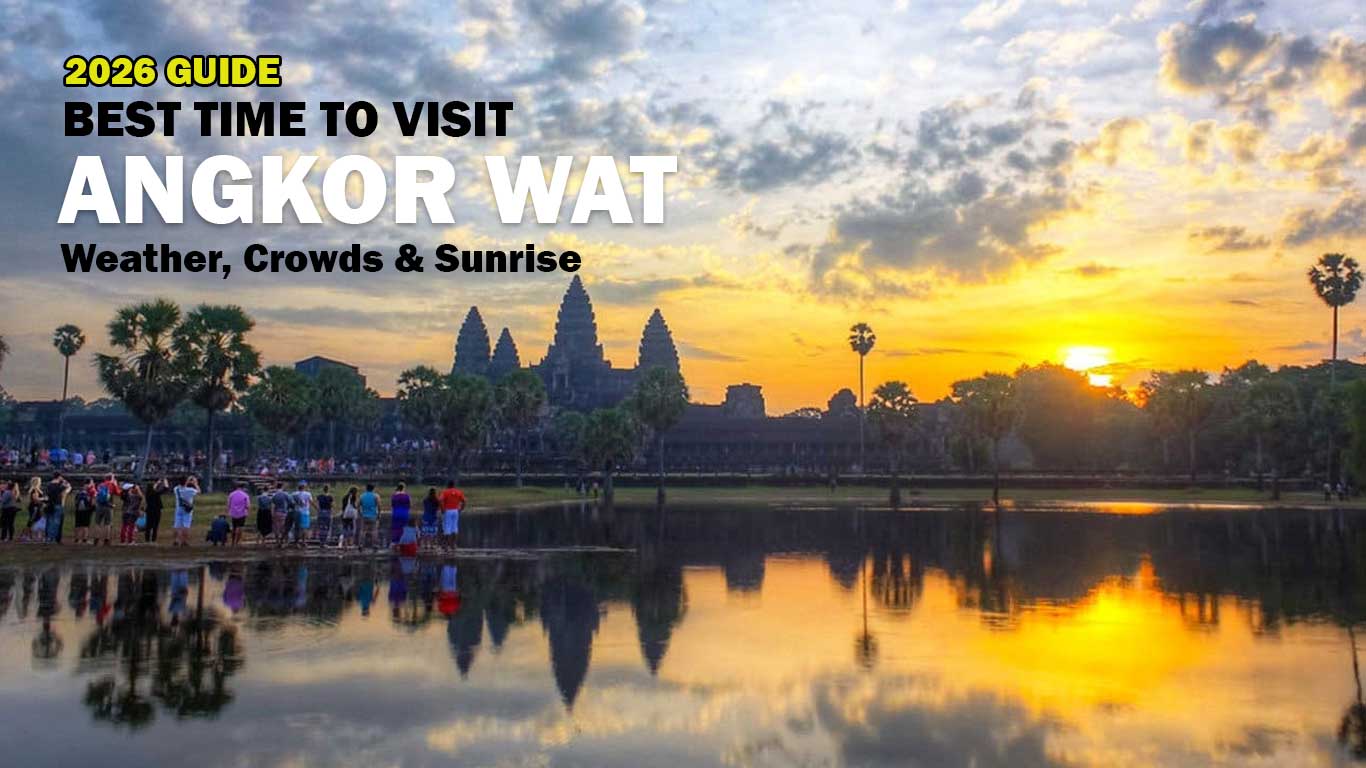
Watching the sunrise over Angkor Wat is one of the most memorable experiences in Cambodia. As the sky becomes brighter, the temple’s five iconic towers appear against the morning light, sometimes reflected beautifully in the water of the reflecting pools.
The best time for sunrise photography depends on the season and the weather.
What Time Does the Sun Rise at Angkor Wat?
Sunrise changes throughout the year. In the Siem Reap area, it generally occurs between approximately 5:35 AM and 6:30 AM.
| Period | Approximate sunrise |
|---|---|
| December–February | About 6:10–6:30 AM |
| March–April | About 5:50–6:15 AM |
| May–August | About 5:35–5:55 AM |
| September–November | About 5:50–6:15 AM |
These are approximate seasonal ranges. Check the exact sunrise time for your travel date before arranging transportation.
What Time Should You Arrive?
Angkor Wat opens at 5:00 AM, allowing visitors to enter for sunrise. Arrive at opening time if you want to reach a popular viewing position before the sky becomes bright.
The Northern Reflecting Pool is the classic photography location. The Southern Reflecting Pool provides an alternative composition and may be less crowded on some mornings.
Remember that sunrise visibility depends on cloud cover, haze and weather. A dry-season visit does not guarantee a clear sky, and rainy-season mornings can sometimes produce beautiful dramatic light.
For more detailed advice about viewpoints, arrival timing and photography, read our Angkor Wat Sunrise Guide.
6. Best Time of Day to Explore Angkor Wat
Even if you are not interested in sunrise photography, starting early is one of the best ways to enjoy Angkor Wat.
- 5:00–7:00 AM: Sunrise photography and cooler conditions.
- 7:00–10:00 AM: A good period for exploring galleries, carvings and temple architecture.
- 10:00 AM–2:00 PM: Often the hottest part of the day. Take a break, have lunch or choose a shaded activity.
- 2:00–5:30 PM: Continue sightseeing when conditions allow, keeping the temple’s closing time in mind.
Angkor Wat’s published visitor hours are 5:00 AM to 5:30 PM. Other temples in the archaeological park have different opening times, so do not assume that every monument is available for sunrise visits.
7. Best Time for Angkor Wat Photography
Angkor Wat offers different photographic opportunities throughout the year. Your preferred season depends on the kind of images you want to capture.
| Photography style | Recommended period | Why it works |
|---|---|---|
| Classic sunrise | November–February | Generally drier mornings and comfortable conditions |
| Green landscapes | June–October | Lush vegetation and greener surroundings |
| Dramatic skies | Rainy season | Cloud formations and changing light |
| Temple architecture | Early morning or late afternoon | More comfortable temperatures and softer light |
| Equinox sunrise | Around March and September | The sun can appear aligned with the central tower from suitable viewing positions |
If you plan to photograph the equinox sunrise, check announcements and visitor arrangements from the APSARA National Authority. Special dates may attract additional visitors.
8. What to Wear and Bring for Your Visit
Angkor Wat is a sacred religious and heritage site. Visitors should dress respectfully and prepare for Cambodia’s tropical climate.
What to Wear
- Lightweight, breathable clothing.
- Clothing that covers the shoulders and knees.
- Comfortable walking shoes or sandals with good grip.
- A light jacket for cool early-morning rides during the cooler season.
- A rain jacket or compact umbrella during the rainy season.
What to Bring
- Valid Angkor Pass.
- Drinking water.
- Sun protection, including sunscreen and sunglasses.
- Camera or smartphone with sufficient battery.
- Power bank.
- Insect repellent.
- Small flashlight if walking before sunrise.
Follow official visitor instructions, avoid climbing restricted structures and do not touch fragile carvings or disturb religious activities.
9. So, When Should You Visit Angkor Wat?
The best month depends on what matters most to you.
- For first-time visitors: December or January offers generally comfortable sightseeing weather.
- For a balance of weather and visitor numbers: November is worth considering as the dry season begins.
- For fewer foreign visitors: Consider May to October if you are comfortable with rain and humidity.
- For green landscapes and photography: The rainy season offers a different atmosphere and lush surroundings.
- For sunrise photography: Arrive at 5:00 AM and choose your viewpoint based on the season and expected crowds.
- If you dislike extreme heat: Avoid long outdoor temple visits in the hottest part of March and April.
There is no single perfect month for everyone. Angkor Wat is worth visiting throughout the year, and a well-planned early morning can make even a hot or rainy-season visit rewarding.
10. Frequently Asked Questions
What is the best month to visit Angkor Wat?
December and January are among the best months for comfortable weather, with relatively cool mornings and little rainfall. November is also a good choice for travellers looking for the start of the dry season.
Is the rainy season a good time to visit Angkor Wat?
Yes. The rainy season from May to October brings greener landscapes and generally fewer foreign visitors. However, rain and slippery paths can affect sightseeing, so allow flexibility in your itinerary.
What is the hottest month to visit Angkor Wat?
April is generally one of the hottest months in the Angkor region. Temperatures near the end of the dry season can reach around 40°C, so early-morning visits are strongly recommended.
What time does Angkor Wat open for sunrise?
Angkor Wat opens at 5:00 AM. Visitors can enter early to watch the sunrise, which generally occurs between approximately 5:35 AM and 6:30 AM depending on the time of year.
Is Angkor Wat sunrise worth seeing?
Yes. The sunrise over Angkor Wat is a memorable experience, especially when the sky is clear and the temple is reflected in the pools. However, cloud cover can affect visibility, and the most popular viewpoints can become crowded.
When is Angkor Wat least crowded?
May to October generally sees fewer foreign Angkor Pass buyers than the main dry-season months. The exact crowd level depends on holidays, weekends, special events and the time of day.
How many hours should I spend at Angkor Wat?
Allow approximately 2–3 hours to explore Angkor Wat itself. If you plan to visit other temples in the archaeological park, consider spending at least two or three days in the area.
Can I visit Angkor Wat during the afternoon?
Yes. Angkor Wat is generally open until 5:30 PM. Afternoon visits can be useful if you prefer not to wake up early, although temperatures may remain high and some areas may have different access rules.
Conclusion
The best time to visit Angkor Wat depends on your priorities. November to February is generally the most comfortable period for sightseeing, while May to October offers greener landscapes and fewer foreign visitors. March and April can be very hot, making early starts especially important.
For the classic sunrise experience, arrive when Angkor Wat opens at 5:00 AM. Check the sunrise time for your travel date, prepare for the weather and allow enough time to explore the temple beyond the famous reflection pools.
Whether you visit during the dry season or the rainy season, Angkor Wat remains one of Cambodia’s most extraordinary cultural experiences.
Continue planning your visit with our Angkor Wat Sunrise Guide, Angkor Wat Travel Guide and Best Temples to Visit in the Angkor Archaeological Park.
Official Sources and Further Reading