









































Angkor Wat is Cambodia’s most famous landmark and one of the world’s most extraordinary ancient monuments. Rising above forests, broad moats, and centuries-old stone galleries near Siem Reap, this magnificent temple represents the artistic achievements of the Khmer Empire and remains a powerful symbol of Cambodian identity.
Visiting Angkor Wat for the first time can be unforgettable, especially when the temple’s iconic towers appear in the early morning light. But a successful visit requires more planning than simply arriving at the entrance. You need to understand the Angkor Pass, temple opening hours, clothing requirements, transportation, and how much time to allow for the surrounding archaeological park.
One of the most common mistakes is confusing Angkor Wat, the individual temple, with Angkor Archaeological Park, the much larger UNESCO World Heritage site containing dozens of significant monuments, including Bayon, Ta Prohm, Preah Khan, and Banteay Srei.
This complete Angkor Wat travel guide covers everything first-time visitors should know, from ticket prices and sunrise photography to temple itineraries, travel costs, cultural etiquette, and practical advice for exploring Angkor comfortably and respectfully.
Angkor Wat at a Glance
| Visitor Information | Details |
|---|---|
| Location | Siem Reap Province, Cambodia |
| Nearest Tourism City | Siem Reap |
| Built | Early twelfth century |
| Commissioned By | King Suryavarman II |
| Original Religious Dedication | Hinduism, particularly Vishnu |
| Present Religious Significance | Important Buddhist sacred site |
| UNESCO World Heritage Status | Angkor Archaeological Park inscribed in 1992 |
| Angkor Wat Opening Hours | 5:00 AM–5:30 PM, subject to changes |
| Suggested Time Inside Angkor Wat | 2–3 hours, or longer for detailed exploration |
| Recommended Temple-Visiting Time | 2–3 days for most first-time visitors |
| Best Base | Siem Reap city |
1. What Is Angkor Wat, and Why Is It Famous?
Angkor Wat is a monumental temple constructed during the reign of King Suryavarman II in the early twelfth century, when the Khmer Empire was one of the most powerful political and cultural forces in mainland Southeast Asia.
Originally dedicated to the Hindu god Vishnu, the temple later became an important place of Buddhist worship.
Its architectural layout reflects religious ideas about the cosmos. The central towers are commonly interpreted as representing Mount Meru, the sacred mountain associated with Hindu and Buddhist cosmology, while surrounding galleries and the moat form part of the symbolic landscape.
Angkor Wat is admired for its extraordinary scale, carefully balanced architecture, lotus-shaped towers, decorative carvings, and extensive narrative bas-reliefs.
Its western orientation is unusual among major Angkorian temples and has prompted different scholarly interpretations.
Today, Angkor Wat appears on Cambodia’s national flag and holds deep cultural, historical, and spiritual significance for the Cambodian people.
Angkor Wat vs. Angkor Archaeological Park
Understanding the difference helps visitors plan properly.
- Angkor Wat: The famous twelfth-century temple with five central towers, extensive galleries, and a surrounding moat.
- Angkor Archaeological Park: The wider protected archaeological landscape, covering approximately 400 square kilometers and containing numerous temples, reservoirs, ancient roads, and former urban areas.
UNESCO inscribed Angkor Archaeological Park on the World Heritage List in 1992, recognizing the importance of the larger heritage landscape rather than Angkor Wat alone.
2. Angkor Wat Tickets and Entrance Fees in 2026
Most international visitors need an Angkor Pass to enter the principal temples within Angkor Archaeological Park.
Angkor Enterprise, the Cambodian government institution responsible for ticketing, offers three standard pass types.
| Pass Type | 2026 Price | Validity | Best For |
|---|---|---|---|
| 1-Day Pass | US$37 | One visiting day | Travelers with limited time |
| 3-Day Pass | US$62 | Three visiting days within seven days | Most first-time visitors |
| 7-Day Pass | US$72 | Seven visiting days within thirty days | Photographers and dedicated temple enthusiasts |
Prices and validity information reviewed for October 2026. Always check Angkor Enterprise for the latest rules before purchasing.
Which Angkor Pass Should You Buy?
Choose the 1-day pass if you have only one full day available and mainly want to see Angkor Wat, Bayon, and Ta Prohm.
Choose the 3-day pass if you want to explore the temples at a more comfortable pace, take a midday break, enjoy both major visiting circuits, and allow time for sunrise photography.
Choose the 7-day pass if you are particularly interested in Khmer history, architecture, photography, or exploring smaller temples over several days.
For many international travelers planning their first trip to Siem Reap, the three-day pass provides a good balance between cost, flexibility, and sightseeing time.
Do Children Need an Angkor Pass?
According to Angkor Enterprise, children under 12 do not need to purchase a standard Angkor entrance ticket.
However, staff may request a passport to confirm the child’s age.
Children under 12 are also not permitted to climb Angkor Wat’s upper Bakan sanctuary, which has additional safety restrictions.
Where to Buy Angkor Wat Tickets
Use only official Angkor Enterprise ticketing channels.
Official website: Angkor Enterprise.
Visitors can purchase tickets through official online channels, the Angkor Pass mobile app, eligible self-service kiosks, or authorized ticket counters.
The main Angkor Enterprise ticket office is located near Road 60 in Siem Reap.
For online purchases, electronic tickets can be displayed at entry checkpoints. Save your ticket somewhere accessible without an internet connection.
A Useful Tip for One-Day Ticket Holders
Angkor Enterprise’s official FAQ states that visitors who purchase a one-day ticket for the following day after 4:45 PM may enter the park that evening for sunset and still use their pass during the following day.
This arrangement can be useful for travelers who want an additional sunset experience.
However, the individual monument’s opening hours and other restrictions still apply. Confirm the conditions directly with the official ticketing authority before planning around this benefit.
3. Angkor Wat Opening Hours and Temple Access
One important detail for first-time visitors is that not every temple in Angkor Archaeological Park follows the same opening schedule.
Angkor Wat opens early for sunrise, while other temples may not open until later in the morning.
| Temple | Published Visiting Hours |
|---|---|
| Angkor Wat | 5:00 AM–5:30 PM |
| Bayon | 7:30 AM–5:30 PM |
| Banteay Srei | 7:30 AM–5:30 PM |
| Phnom Bakheng | 5:00 AM–7:00 PM |
These hours are based on Angkor Enterprise’s published monument pages. Other temples, upper levels, and conservation zones may follow different schedules.
Visiting Angkor Wat’s Upper Bakan Sanctuary
The upper central sanctuary, often referred to as Bakan, has special access requirements.
Visitors must follow restrictions relating to clothing, safety, capacity, and the use of steep stairways.
Children under 12 are not permitted to climb to this level. Additional restrictions apply to pregnant visitors and certain other situations for safety reasons.
2026 update: In June 2026, the APSARA National Authority announced that Bakan would normally be accessible daily, except that entry would be suspended from 1:00 PM on the 14th and 28th of each month for conservation and maintenance work.
This updated announcement is important because older travel guides may still describe different recurring closure arrangements.
Check the latest instructions at the entrance, as temporary conservation work or safety conditions can also affect access.
4. How to See Sunrise at Angkor Wat
Watching sunrise at Angkor Wat is one of Cambodia’s most iconic travel experiences.
Before daylight, the temple’s towers appear against the changing sky. On calm mornings, their silhouettes may be reflected in the pools near the western approach.
It is a spectacular setting, but popular sunrise viewpoints can become crowded.
What Time Should You Arrive?
Angkor Wat opens at 5:00 AM, and travelers commonly leave their accommodation in Siem Reap well before dawn.
If sunrise photography is a priority, arrange your driver and ticket the day before. Your exact departure time should depend on the season, hotel location, and expected sunrise time.
Arriving near opening time gives you more flexibility to walk into the temple grounds and choose an appropriate viewpoint.
Best Sunrise Viewpoints
The most recognizable sunrise photographs are taken from the western approach, especially near the reflection pools with views toward the central towers.
Different positions create different compositions. Move respectfully, stay on authorized visitor paths, and avoid blocking access for other visitors.
Beautiful photographs are possible without standing in the most crowded location.
What Happens After Sunrise?
After enjoying the sunrise, take time to explore Angkor Wat’s galleries, courtyards, and exterior architecture.
If you wish to visit the upper Bakan sanctuary, remember that it opens later than the main temple and has separate entry conditions.
A sunrise visit can continue into a longer morning of sightseeing before the hottest part of the day.
Photography tip: Clear skies are not guaranteed. Clouds, rain, water levels in the reflecting pools, and seasonal light conditions all influence the experience.
5. Best Things to See Inside Angkor Wat
Angkor Wat deserves more than a quick photograph from outside.
The temple contains magnificent architecture and decorative details that reveal the sophistication of Khmer craftsmanship.
The Western Causeway and Entrance
The main western approach provides one of the most famous views of Angkor Wat.
Walking toward the towers allows visitors to appreciate the monumental scale of the temple complex and the relationship between its architecture and surrounding moat.
The Central Towers
The temple’s five central towers are arranged in a composition traditionally associated with Mount Meru.
From ground level, visitors can admire their lotus-bud profiles, symmetry, and relationship to the surrounding galleries.
The Bas-Relief Galleries
Angkor Wat contains extensive stone reliefs depicting Hindu religious narratives, royal processions, and mythological scenes.
Among the most celebrated is the Churning of the Ocean of Milk, an elaborate scene from Hindu mythology.
Other galleries include scenes associated with the Mahabharata, Ramayana, and royal imagery.
Even visitors who are not specialists in Khmer history can appreciate the detail and artistic skill involved.
Devata Carvings
Thousands of carved female figures, often described as devatas or apsaras in different contexts, decorate Angkor Wat.
Their jewelry, hairstyles, clothing, and facial expressions provide a window into Angkorian artistic traditions.
Active Religious Areas
Angkor Wat is not simply an abandoned historical monument. It remains an important Buddhist religious site.
Visitors may encounter worshippers, Buddha images, offerings, and religious activities.
Respect these areas and allow people to practice their faith without interruption.
6. Best Temples to Visit Near Angkor Wat
Although Angkor Wat is the main attraction, the wider archaeological park contains many other outstanding monuments.
Bayon Temple – The Famous Stone Faces
Bayon is located at the center of Angkor Thom, an important royal city associated with King Jayavarman VII.
It is famous for its enormous carved faces, unusual architectural composition, and narrative bas-reliefs.
The galleries contain scenes illustrating historical events, religious imagery, and aspects of everyday life.
Best for: History, sculpture, photography, and Khmer royal architecture.
Ta Prohm – The Temple of Giant Tree Roots
Ta Prohm is one of Angkor’s most atmospheric temples.
Enormous tree roots grow around ancient stone walls, creating a striking relationship between architecture and nature.
The temple was originally a major Buddhist foundation associated with Jayavarman VII.
Conservation work seeks to preserve the site’s historic character while managing risks from unstable masonry and vegetation.
Best for: Photography, architecture, and evocative ancient ruins.
Angkor Thom – A Historic Royal City
Angkor Thom is a large walled city that includes Bayon and other important monuments.
Its monumental gates and causeways are decorated with imagery reflecting Khmer religious and royal traditions.
Other sites within the area include Baphuon, the Terrace of the Elephants, and the Terrace of the Leper King.
Best for: Visitors who want to understand Angkor’s larger political and urban landscape.
Preah Khan – A Remarkable Temple Complex
Preah Khan is a large religious complex north of Angkor Thom.
Its corridors, decorative carvings, courtyards, and partly forested surroundings make it rewarding for travelers interested in exploring beyond the most familiar monuments.
The temple was associated with Jayavarman VII and formed part of an important religious and institutional foundation.
Best for: Architecture enthusiasts and travelers with multiple days available.
Banteay Srei – Exceptional Sandstone Carvings
Banteay Srei is a tenth-century temple located northeast of the principal Angkor monuments.
It is celebrated for its refined sandstone carving and exceptionally detailed decorative art.
Because it lies farther from the main temple circuits, it is often best included in a longer excursion.
Best for: Sculpture, art history, and visitors wanting to see a different side of Khmer architecture.
Phnom Bakheng – A Popular Sunset Viewpoint
Phnom Bakheng is a hilltop temple associated with King Yasovarman I.
It is a well-known destination for sunset views over the surrounding landscape.
Access requires walking uphill, and visitor management measures may restrict entry during popular periods.
Best for: Scenic views, photography, and travelers who can comfortably manage the uphill walk.
7. Angkor Small Circuit vs. Grand Circuit
Visitors commonly explore the archaeological park using two established routes: the Small Circuit and the Grand Circuit.
| Route | Main Highlights | Best For |
|---|---|---|
| Small Circuit | Angkor Wat, Bayon, Ta Prohm, Banteay Kdei, and nearby temples | First-time visitors and one-day trips |
| Grand Circuit | Preah Khan, Neak Pean, Ta Som, East Mebon, Pre Rup, and other sites | Travelers with a second or third temple day |
The Small Circuit is usually the most practical introduction to the major monuments.
The Grand Circuit offers additional historical sites and can feel less concentrated around the three best-known temples.
The circuit names describe traditional sightseeing routes, not separate pass categories. Standard Angkor Pass rules govern access to the included park monuments.
8. Suggested Angkor Wat Itineraries for First-Time Visitors
One-Day Angkor Highlights Itinerary
If you have only one day, focus on the essential monuments rather than trying to see everything.
- Before sunrise: Leave Siem Reap with your ticket already arranged.
- Early morning: Watch sunrise and explore Angkor Wat.
- Late morning: Visit Angkor Thom and Bayon.
- Lunch: Stop for food, water, and rest.
- Afternoon: Explore Ta Prohm and one nearby temple if time permits.
- Late afternoon: Return to Siem Reap, or include a suitable viewpoint if conditions and energy allow.
This can be a long day, especially in hot weather. A shorter itinerary with more time at each monument is often more enjoyable than visiting as many temples as possible.
Two-Day Angkor Itinerary
Day 1 – Essential Angkor: Angkor Wat, Angkor Thom, Bayon, and Ta Prohm.
Day 2 – Grand Circuit: Preah Khan, Neak Pean, Ta Som, East Mebon, and Pre Rup, with suitable breaks.
This itinerary covers a wider range of temple architecture without requiring every monument to be visited in a single day.
Three-Day Angkor Itinerary
Day 1: Angkor Wat sunrise, Bayon, Angkor Thom, and Ta Prohm.
Day 2: Grand Circuit, including Preah Khan, Neak Pean, Ta Som, and Pre Rup.
Day 3: Banteay Srei, selected Roluos temples, or a return visit to favorite monuments for photography and deeper exploration.
A three-day pass allows rest days between visits within its official validity window. This flexibility can be especially useful during hot or rainy weather.
9. Best Time to Visit Angkor Wat
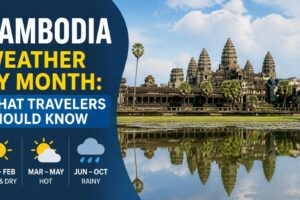
Angkor Wat can be visited throughout the year, but Cambodia’s seasons affect heat, rainfall, crowds, and photographic conditions.
November to February – Generally the Most Comfortable Season
The cooler part of Cambodia’s dry season usually provides pleasant conditions for walking around the temples.
Morning and evening temperatures are generally more comfortable than during the hottest months.
However, this is also a popular travel period, so busy viewpoints and major monuments may attract crowds.
March to May – Hot Season
Temperatures can be high, particularly around midday.
Visitors should begin early, drink plenty of water, and consider returning to their hotel during the hottest hours.
Sun protection is important because many temple courtyards and pathways have limited shade.
June to October – Rainy Season and Lush Landscapes
Rainy-season visits can be beautiful, with greener vegetation and atmospheric cloud formations.
Rain often arrives in showers, but heavy downpours can occur and pathways may become slippery.
Carry suitable rain protection and allow flexibility in your sightseeing schedule.
Seasonal Comparison
| Season | Advantages | Considerations |
|---|---|---|
| November–February | Generally comfortable sightseeing weather | Popular visitor season |
| March–May | Longer dry periods and strong daylight | Intense midday heat |
| June–October | Green landscapes and dramatic skies | Rain, humidity, slippery paths |
Our recommendation: For a first-time visit focused on temple sightseeing, November through February is usually the easiest period. If you prefer greener scenery and can accept some rain, the wet season is also rewarding.
10. How to Get to Angkor Wat from Siem Reap
Angkor Wat is located north of central Siem Reap, making the city the most convenient base for visiting the temple complex.
The journey from most central accommodation areas is relatively short, although travel time varies depending on traffic, route, and the specific temple you plan to visit.
Tuk-Tuk
Tuk-tuks are a popular option for exploring the temples.
Many drivers offer half-day or full-day arrangements and wait while visitors explore individual sites.
Before departure, agree on the exact route, duration, sunrise pickup time, waiting arrangements, and total price.
Private Car
A private air-conditioned car can be a comfortable choice for families, older travelers, or visitors planning longer routes.
It is particularly useful during hot weather or when visiting Banteay Srei and other more distant sites.
Bicycle
Cycling can be an enjoyable way to see Angkor for fit and experienced riders.
However, the park is extensive and tropical heat can make longer journeys tiring.
Carry sufficient water, wear a helmet, and plan a manageable route.
Motorbike or Scooter
Independent motorbike travel may be possible where permitted, but visitors must comply with Cambodian licensing, insurance, helmet, and road-safety requirements.
Do not assume that being able to rent a scooter automatically means you are legally licensed or insured to ride it.
Guided Tours
A knowledgeable Cambodian guide can explain the history, religious symbolism, architectural details, and conservation work behind the monuments.
For visitors particularly interested in Khmer civilization, a qualified guide can make the experience much more informative.
11. Getting to Siem Reap from the Airport
Most international visitors arriving by air use Siem Reap–Angkor International Airport (SAI).
The airport is located outside Siem Reap city, so the journey to central hotels is significantly longer than many visitors expect.
Allow approximately 60–90 minutes for the airport-to-city journey, depending on the route, traffic, and chosen transportation.
Options include airport shuttle buses and private transfers.
The Siem Reap Airport Bus service publishes an indicative one-way fare of US$8, with scheduled departures between the airport and the town.
Schedules and prices may change, so check the provider’s current information before traveling.
Airport bus website: Siem Reap Airport Bus.
Practical tip: If you arrive late at night or are traveling with young children or bulky luggage, consider arranging a transfer directly with your hotel.
12. Where to Stay for Visiting Angkor Wat
Most visitors stay in Siem Reap city, which has a wide selection of guesthouses, boutique hotels, resorts, restaurants, cafés, and tourism services.
Different neighborhoods suit different travel styles.
| Area | Best For |
|---|---|
| Old Market and Pub Street | First-time visitors, restaurants, and nightlife |
| Wat Bo | Boutique hotels and cafés |
| Wat Damnak | Couples and quieter central stays |
| Old French Quarter | Comfortable hotels and central convenience |
| Charles de Gaulle Road | Travelers prioritizing access toward Angkor |
If you plan to leave for sunrise, choose accommodation that can arrange an early driver pickup or breakfast package.
For a first-time visit combining temples and Siem Reap’s restaurants, staying in or near the central city is generally more convenient than staying in an isolated property.
13. What to Wear at Angkor Wat
Angkor Wat and many surrounding temples are sacred sites, so visitors must follow appropriate clothing requirements.
Angkor Enterprise’s official visitor code prohibits revealing clothing such as shorts or skirts above the knee and clothing that leaves shoulders exposed in sacred areas.
Choose clothing that covers your shoulders and knees, and avoid overly revealing outfits.
Recommended Clothing
- Lightweight shirts covering the shoulders.
- Long trousers or skirts extending below the knees.
- Comfortable walking shoes with good traction.
- Breathable fabrics suitable for tropical weather.
- A hat and sunglasses for outdoor areas.
Do not rely on wrapping a scarf around an otherwise inappropriate outfit as a guaranteed solution. Wear suitable clothing from the beginning of your visit.
Visitors entering upper sanctuaries may be subject to additional clothing requirements.
14. How Much Does a Visit to Angkor Wat Cost?
The Angkor Pass is the principal fixed sightseeing expense for international visitors, but transportation, food, guides, and accommodation are generally separate.
The following table provides illustrative daily planning allowances, not live quotations or guaranteed operator prices.
| Expense | Approximate Planning Allowance |
|---|---|
| One-day Angkor Pass | US$37 |
| Shared or basic arranged transport | Varies by operator and route |
| Private tuk-tuk for a temple day | Roughly US$15–35+ |
| Private air-conditioned car | Roughly US$35–70+ |
| Meals and drinking water | Roughly US$8–20+ per person |
| Licensed guide | Additional fee depending on language, group, and duration |
Transportation prices can rise for sunrise departures, distant temples, larger vehicles, and specialized itineraries.
Always agree on the full cost and clarify whether the quoted price includes fuel, waiting time, additional stops, and hotel pickup.
15. Essential Angkor Wat Travel Tips
- Buy your ticket from official channels. Avoid unofficial ticket sites and suspicious discounts.
- Plan your sunrise visit the day before. Arrange your driver, ticket, clothing, and alarm in advance.
- Carry drinking water. Heat and walking can cause dehydration.
- Start early. Cooler morning conditions are often more comfortable.
- Take breaks. Multiple temples in one day can be physically demanding.
- Use sun protection. Many paths and courtyards are exposed.
- Respect sacred spaces. Keep your voice down during worship.
- Do not touch fragile carvings. Avoid leaning on ancient masonry or climbing restricted structures.
- Be careful around monkeys. Do not feed them or approach closely, as wild animals can bite or snatch food.
- Watch your footing. Steps can be steep, uneven, or slippery.
- Use authorized paths. Some structures are closed for visitor safety or conservation.
- Ask before photographing monks or worshippers. Respect privacy and religious etiquette.
- Keep your Angkor Pass available. Staff may inspect it at multiple checkpoints.
- Confirm individual temple hours. Opening times are not identical throughout the park.
- Follow local guidance. Conservation work may change visitor routes with little notice.
16. Responsible Tourism at Angkor
Angkor is both a UNESCO World Heritage site and a living cultural landscape.
Local communities continue to live and work in the wider park region, while Buddhist worship remains important at several monuments.
Visitors have an important role in helping protect this exceptional heritage.
Protect Ancient Monuments
Never climb on restricted ruins, touch delicate bas-reliefs, carve graffiti, remove fragments, or disturb archaeological materials.
Follow APSARA National Authority signs and marked visitor routes.
Respect Local Communities
Use local guides and services where appropriate, support legitimate Cambodian businesses, and ask before photographing residents.
Do not enter private homes or working areas without permission.
Avoid Encouraging Child Begging
Angkor Enterprise’s visitor code advises against giving money or sweets to children at the temples, because this can encourage begging instead of school attendance.
Travelers wishing to help should consider reputable organizations that support education and community well-being.
Respect Wildlife and the Environment
Do not feed monkeys, litter, smoke in prohibited areas, or disturb vegetation.
Use designated bins and avoid damaging historic surfaces while taking photographs.
Photography equipment, drones, and commercial filming may be subject to restrictions or permit requirements. Confirm applicable rules in advance.
17. Common Mistakes First-Time Visitors Should Avoid
A few planning mistakes can make an otherwise wonderful visit stressful.
- Trying to see every temple in one day: Angkor is too extensive for a complete single-day visit.
- Arriving for sunrise without a ticket: Arrange your pass before departure whenever possible.
- Assuming all temples open at 5:00 AM: Many famous sites open later.
- Wearing inappropriate clothing: Dress respectfully from the beginning.
- Ignoring the heat: Plan shade, rest, and hydration.
- Booking a driver without agreeing on the route: Clarify every intended stop.
- Confusing Angkor Wat with the entire park: Allow time for Bayon, Ta Prohm, and other important monuments.
- Planning to climb Bakan without checking restrictions: The upper level follows additional rules and may be temporarily closed.
Frequently Asked Questions About Angkor Wat
Is Angkor Wat worth visiting?
Yes. Angkor Wat is one of the world’s most impressive historic religious monuments, and the surrounding Angkor Archaeological Park offers extraordinary examples of Khmer architecture, sculpture, urban planning, and cultural heritage.
How much is the Angkor Wat entrance fee in 2026?
The standard Angkor Pass prices for international visitors are US$37 for one day, US$62 for three visiting days within seven days, and US$72 for seven visiting days within thirty days. Verify current details on the official Angkor Enterprise website.
Do you need a ticket for Angkor Wat?
Most international visitors need a valid Angkor Pass. Children under 12 are generally exempt, although proof of age may be requested.
Where can I buy Angkor Wat tickets?
Purchase your pass through Angkor Enterprise’s official website, app, authorized ticket counters, or other official sales channels. Avoid unofficial sellers.
What time does Angkor Wat open?
Angkor Enterprise lists Angkor Wat’s opening hours as 5:00 AM to 5:30 PM. Other temples have different schedules, and the upper Bakan sanctuary has additional access restrictions.
What time should I leave Siem Reap for Angkor Wat sunrise?
Arrange to leave well before dawn so that you can enter when the temple opens at 5:00 AM and reach a suitable viewpoint before sunrise. The exact time depends on your hotel and the season.
How long do you need at Angkor Wat?
Allow around two to three hours for the main temple, including the galleries, courtyards, and decorative carvings. A more detailed visit may take longer.
How many days should I spend exploring Angkor?
Two to three days provide a comfortable introduction to the main monuments. One day is possible for highlights, while longer stays are ideal for architecture enthusiasts and photographers.
What should I wear to Angkor Wat?
Wear clothing that covers your shoulders and knees, along with comfortable walking shoes. Revealing clothing is prohibited in sacred areas.
Can children visit Angkor Wat?
Yes. Families can visit Angkor Wat, but parents should supervise children around steep steps, uneven surfaces, and crowds. Children under 12 cannot climb the Bakan upper sanctuary.
Can I visit Angkor Wat without a guide?
Yes. Independent visits are possible. However, a knowledgeable local guide can provide useful explanations of Khmer history, architecture, mythology, and temple symbolism.
Is Angkor Wat wheelchair accessible?
Accessibility varies within the temple and across the archaeological park. Ancient stairs, uneven stone surfaces, and restricted elevated areas can present significant barriers. Visitors with mobility needs should confirm current accessible routes and suitable transportation with the relevant authorities or a specialist tour operator.
Is Angkor Wat open every day?
The main temple is generally open daily, but particular sanctuaries or areas may close for religious observances, maintenance, safety, or conservation. In 2026, the Bakan upper level has announced conservation-related closures on the afternoons of the 14th and 28th of each month.
Is Banteay Srei included in a standard Angkor visit?
Banteay Srei is a popular temple excursion within the broader Angkor visitor experience, but it is farther from the main Small Circuit. Allow additional driving time and confirm applicable ticket conditions before traveling.
What is the best month to visit Angkor Wat?
November to February generally offers comfortable sightseeing conditions. However, Angkor Wat can be visited year-round, and the rainy season can provide attractive green landscapes and dramatic photographic conditions.
Sources and References
This guide is based primarily on official Cambodian ticketing and heritage-management information, UNESCO documentation, and published transportation details. Ticket policies, opening hours, monument access, and travel services may change. Review the latest official information before visiting.
- Angkor Enterprise – Available Tickets and Pass Prices: Official pass categories, 2026 prices, validity windows, and park entry information.
- Angkor Enterprise – Frequently Asked Questions: Ticketing rules, children’s admission, visiting circuits, and evening entry conditions.
- Angkor Enterprise – Visitor Code of Conduct: Clothing requirements, monument protection, religious etiquette, and visitor behavior.
- Angkor Enterprise – Angkor Wat: Temple history, architecture, and published opening hours.
- Angkor Enterprise – Bayon Temple: Historical context and opening hours.
- Angkor Enterprise – Banteay Srei Temple: Temple history, religious dedication, and visiting hours.
- Angkor Enterprise – Phnom Bakheng: Temple information and extended visiting hours.
- APSARA National Authority – Angkor Wat: Architecture, bas-reliefs, religious history, and temple visitor information.
- Ministry of Culture and Fine Arts – June 2026 Bakan Tower Announcement: Updated conservation-related access arrangements.
- UNESCO World Heritage Centre – Angkor: Historical significance, archaeological landscape, and World Heritage status.
- Siem Reap Airport Bus – Official Service Website: Airport shuttle fares, departures, and transfer arrangements.
Conclusion: How to Make the Most of Your First Angkor Wat Visit
Angkor Wat is one of the most extraordinary destinations in Cambodia, and exploring it is an experience that combines history, spirituality, architecture, art, and unforgettable scenery.
For first-time visitors, the most important advice is to plan ahead without rushing. Buy your Angkor Pass through official channels, understand the individual temple opening hours, dress respectfully, and arrange transportation that matches your itinerary.
If time allows, choose a three-day visit so that you can enjoy Angkor Wat at sunrise, explore Bayon and Ta Prohm, discover the Grand Circuit, and appreciate smaller temples without exhausting yourself.
Remember that Angkor is not only a collection of ancient stone structures. It is a living heritage landscape with important cultural and religious meaning for Cambodia.
Whether you are watching the first light appear behind Angkor Wat’s towers, admiring the carved faces of Bayon, or walking through the ancient corridors of Ta Prohm, visiting Angkor provides a remarkable connection with the achievements of Khmer civilization.
Travel respectfully, protect the monuments, support local communities, and take time to understand the stories behind the temples.
Discover more of Cambodia with GoToKH.com through our guides to Siem Reap, Khmer history, Cambodian temples, cultural traditions, accommodation, transportation, and unforgettable destinations throughout the Kingdom of Wonder.
