










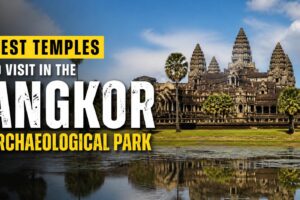




























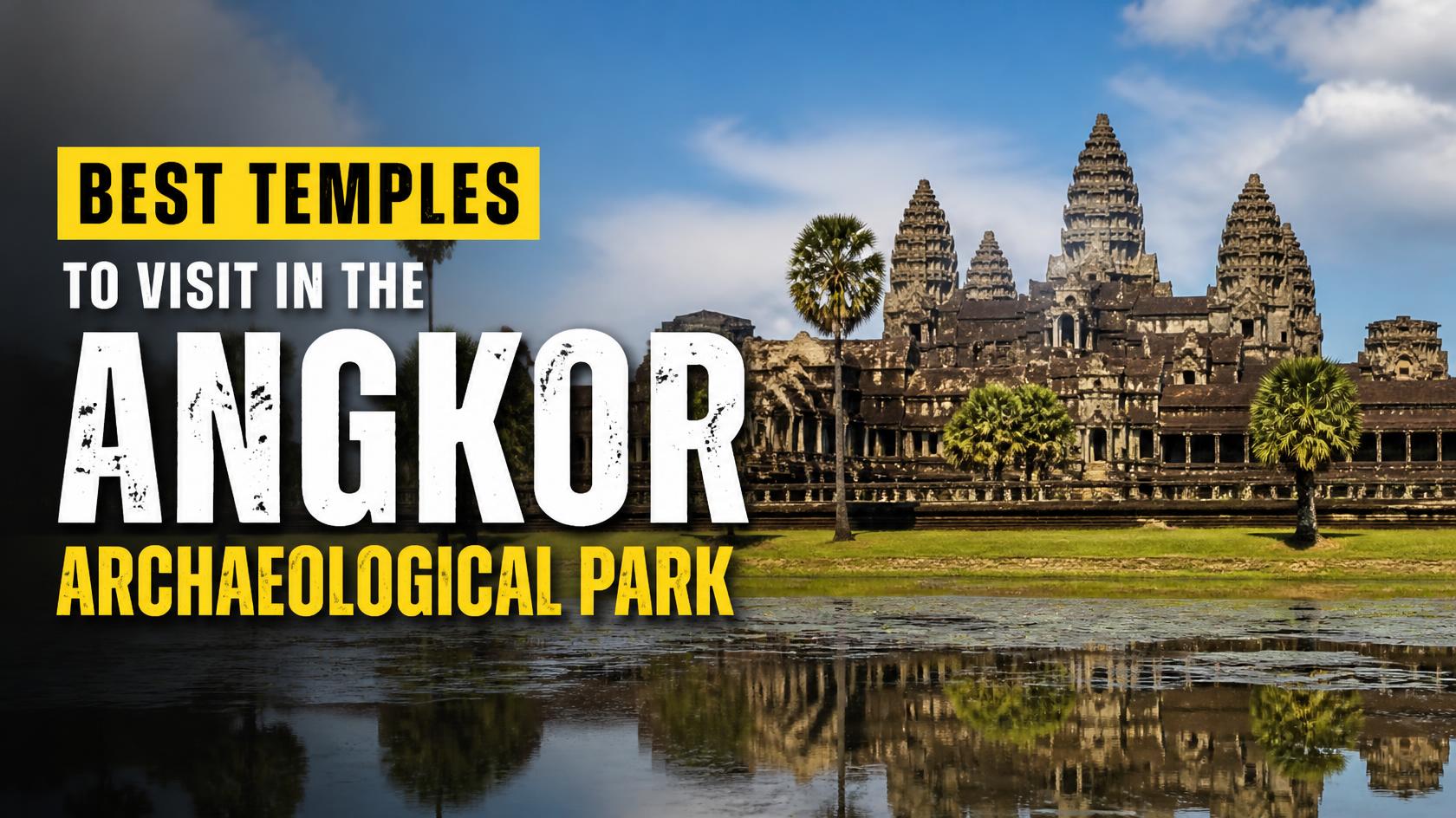

Exploring the best temples in Angkor Archaeological Park is one of the most extraordinary experiences a traveler can have in Cambodia. Near the historic city of Siem Reap, ancient stone towers rise above forests, enormous tree roots embrace centuries-old walls, and elaborate carvings reveal the religious beliefs and artistic achievements of the Khmer Empire.
Although Angkor Wat is the most famous monument, it is only one part of this remarkable archaeological landscape. The wider park includes ancient royal cities, Buddhist monasteries, Hindu temple mountains, reservoirs, gateways, and smaller sanctuaries dating from different periods of Khmer history.
Some temples, such as Bayon and Ta Prohm, are internationally recognized for their carved stone faces and dramatic forest settings. Others, including Preah Khan, Baphuon, Ta Som, and East Mebon, reward visitors with architectural details and historical stories that are easy to overlook on a rushed itinerary.
Angkor Archaeological Park covers approximately 400 square kilometers and was inscribed on the UNESCO World Heritage List in 1992. The site preserves the remains of Khmer capitals and their surrounding cultural landscape, primarily dating from the ninth to the fifteenth centuries.
For first-time visitors, choosing which temples to explore can be challenging. This guide introduces 14 outstanding Angkor temples, explains what makes each special, and provides practical advice on tickets, routes, transport, photography, visiting hours, and responsible tourism.
Best Angkor Temples at a Glance
| Temple | Best Known For | Suggested Visit |
|---|---|---|
| 1. Angkor Wat | Iconic towers, sunrise, bas-reliefs | 2–3 hours |
| 2. Bayon | Monumental stone faces | 45–75 minutes |
| 3. Ta Prohm | Giant tree roots and forest scenery | 1–1.5 hours |
| 4. Banteay Srei | Intricate pink sandstone carvings | 45–75 minutes |
| 5. Preah Khan | Expansive corridors and Buddhist history | 1–1.5 hours |
| 6. Baphuon | Temple mountain and reclining Buddha | 45–75 minutes |
| 7. Neak Pean | Island sanctuary and water symbolism | 30–45 minutes |
| 8. Ta Som | Tree-covered gateway and carved faces | 30–45 minutes |
| 9. Pre Rup | Brick temple mountain and views | 30–60 minutes |
| 10. East Mebon | Stone elephant sculptures | 30–45 minutes |
| 11. Banteay Kdei | Atmospheric galleries and quieter walks | 30–60 minutes |
| 12. Ta Keo | Imposing unfinished temple mountain | 30–45 minutes |
| 13. Phnom Bakheng | Hilltop temple and sunset scenery | 1–2 hours including the walk |
| 14. Bakong | Early Khmer temple-mountain architecture | 45–75 minutes |
These are approximate exploration times, not official visit durations. Actual time depends on interest, mobility, weather, crowds, and conservation restrictions.
1. Angkor Wat – The Essential Khmer Masterpiece
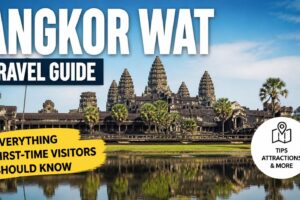
Angkor Wat is the most celebrated monument in Cambodia and the essential starting point for most first-time visitors.
Built in the early twelfth century during the reign of King Suryavarman II, the temple was originally dedicated to the Hindu god Vishnu. Over subsequent centuries, it became an important Buddhist sacred site.
The temple is admired for its five famous towers, surrounding moat, monumental causeways, symmetrical galleries, and extensive sculpted bas-reliefs.
What Makes Angkor Wat Special?
Angkor Wat combines impressive engineering with complex religious symbolism. Its central towers are commonly interpreted as representing Mount Meru, the sacred mountain of Hindu and Buddhist cosmology.
The temple’s bas-reliefs illustrate religious narratives, including the famous Churning of the Ocean of Milk, scenes from Hindu epics, and royal processions.
Thousands of decorative female figures, often identified as devatas, demonstrate the extraordinary skills of Khmer sculptors.
Best Things to See
- The western causeway and iconic view of the towers.
- The reflection pools near the western entrance.
- The Churning of the Ocean of Milk bas-relief.
- The decorative galleries and courtyard architecture.
- The central sanctuary, subject to access restrictions.
- Active Buddhist religious areas.
Best time: Early morning, particularly for sunrise, or a less hurried afternoon exploration.
Published opening hours: 5:00 AM–5:30 PM.
Suggested visit: 2–3 hours.
Visitor tip: The upper Bakan sanctuary has separate access rules and conservation closures. Check current notices before planning to climb it.
2. Bayon Temple – The Temple of Enigmatic Stone Faces
Bayon Temple stands near the center of Angkor Thom, the walled royal city associated with King Jayavarman VII.
Constructed in the late twelfth and early thirteenth centuries, Bayon is best known for the monumental faces carved into its towers.
The faces have inspired numerous interpretations involving Buddhist symbolism, royal imagery, and Khmer religious traditions.
Why Visit Bayon?
Bayon offers a completely different visual experience from Angkor Wat.
Instead of expansive open galleries and a symmetrical silhouette, visitors encounter clustered towers, narrow passages, and enormous serene faces appearing from different angles.
The temple’s narrative reliefs are also remarkable. They depict religious themes, military scenes, boats, markets, and moments of ordinary life.
Highlights
- The famous carved stone faces.
- Detailed scenes of Angkorian daily life.
- Architectural features associated with Jayavarman VII.
- Views of the surrounding Angkor Thom landscape.
Best time: Morning or late afternoon, depending on available access.
Published opening hours: 7:30 AM–5:30 PM.
Suggested visit: Approximately 45–75 minutes.
Visitor tip: Bayon is inside Angkor Thom, but the city and the temple are not the same thing. Make time to appreciate Angkor Thom’s monumental gates and nearby archaeological sites.
3. Ta Prohm – The Famous Jungle Temple
Ta Prohm is one of Angkor’s most atmospheric temples, known for massive tree roots that grow across ancient walls and stone structures.
Originally called Rajavihara, or royal monastery, it was an important Buddhist foundation associated with Jayavarman VII and dedicated in 1186.
The temple became internationally famous for its dramatic combination of architecture and vegetation, and it is frequently associated with the film Tomb Raider.
What to See at Ta Prohm
- Giant roots growing over sandstone structures.
- Partly restored galleries and courtyards.
- Decorative carvings and ancient gateways.
- The Hall of Dancers.
- The relationship between conservation work and the surrounding forest.
Although Ta Prohm may look as though nature has completely reclaimed it, the site is carefully managed through conservation projects designed to protect both the monument and its visitors.
Best time: Early in the morning, after the temple opens.
Published opening hours: 7:30 AM–5:30 PM.
Suggested visit: 1–1.5 hours.
Visitor tip: Use official paths and wooden walkways where provided. Do not climb tree roots, unstable walls, or restricted structures to take photographs.
4. Banteay Srei – The Jewel of Khmer Sculpture
Banteay Srei is among the most beautiful and artistically refined temples in the Angkor region.
Consecrated in 967 CE, it is famous for intricate carvings in pinkish sandstone.
Unlike the enormous state temples built by several Khmer kings, Banteay Srei is relatively small. Its exceptional detail, rather than its size, makes it remarkable.
Why Is Banteay Srei Famous?
The temple’s doorways, pediments, lintels, and decorative panels contain extraordinarily fine representations of Hindu mythology and floral motifs.
Its craftsmanship makes it particularly rewarding for travelers interested in art and architecture.
What to Look For
- Detailed sandstone lintels and pediments.
- Mythological carvings connected with Hindu traditions.
- Warm pink and reddish stone tones.
- Fine decorative ornamentation.
- The landscaped archaeological setting.
Location: Northeast of the principal Angkor temple circuits, generally reached as a separate excursion.
Best time: Morning, when conditions are cooler.
Suggested visit: 45–75 minutes, excluding the additional drive.
Visitor tip: Banteay Srei is farther from central Siem Reap than Angkor Wat or Bayon. Combine it with an appropriate additional stop instead of squeezing it into an already crowded one-day itinerary.
5. Preah Khan – A Vast Temple of Corridors and History
Preah Khan, meaning Sacred Sword, is one of the most rewarding temples on Angkor’s Grand Circuit.
The temple was dedicated in 1191 during the reign of Jayavarman VII and was associated with his father.
Preah Khan was more than a single sanctuary. It formed part of a substantial religious and institutional complex containing galleries, courtyards, shrines, and buildings connected with religious learning and ceremonial life.
Why Visit Preah Khan?
Preah Khan offers a fascinating experience of moving through connected spaces, many of which contain elaborate carvings and partially forested ruins.
Compared with the main Angkor Wat sunrise area, it can offer visitors more opportunities for slower, detailed exploration.
Highlights
- The long galleries and successive gateways.
- The Hall of Dancers.
- Decorative carvings and devata figures.
- The distinctive two-story structure with round columns.
- Large trees integrated into parts of the monument.
Best time: Morning or early afternoon.
Suggested visit: 1–1.5 hours.
Visitor tip: Preah Khan is extensive, so allow enough time for its corridors and outer structures. It is especially suitable for visitors interested in photography and Khmer architectural history.
6. Baphuon Temple – An Impressive Temple Mountain
Baphuon is located within Angkor Thom, northwest of Bayon.
Built in the eleventh century during the reign of King Udayadityavarman II, it was originally associated with the Hindu god Shiva.
The temple is famous for its elevated structure, long approach, and remarkable history of restoration.
What Makes Baphuon Unique?
Its stepped temple-mountain design illustrates an important stage in the development of Khmer monumental architecture.
During a later period, a large reclining Buddha was constructed across part of the temple’s western side.
Visitors can therefore see evidence of changing religious traditions within the same monument.
Highlights
- The dramatic elevated approach.
- Multiple architectural terraces.
- Views of the temple-mountain structure.
- The reclining Buddha on the western side.
- Restoration work that helped recover the monument.
Suggested visit: 45–75 minutes.
Visitor tip: Some stairways are steep, and access to elevated areas may be restricted. Visitors with mobility concerns can still appreciate important features from lower levels.
7. Neak Pean – A Peaceful Temple Surrounded by Water
Neak Pean, also written Neak Poan, is one of Angkor’s most distinctive small temples.
Built during the reign of Jayavarman VII, it is associated with Buddhist symbolism, water, and the ancient hydraulic landscape.
The central sanctuary stands within a water-filled arrangement of pools and channels, creating a markedly different atmosphere from Angkor’s large temple mountains.
Why Visit Neak Pean?
The approach typically takes visitors across a walkway through the former Jayatataka reservoir landscape.
Water levels and surrounding scenery vary seasonally.
The central sanctuary and its surrounding pools are associated with ideas of purification and healing in the historical interpretation of the site.
Highlights
- The scenic approach across the reservoir landscape.
- The small island sanctuary.
- The pool-and-channel layout.
- Buddhist symbolism and historic water management.
Suggested visit: 30–45 minutes.
Visitor tip: Neak Pean is primarily admired from designated visitor areas. Do not expect to enter every structure or cross into the central sacred enclosure.
8. Ta Som – The Hidden Beauty of the Grand Circuit
Ta Som is a comparatively modest temple built during the reign of Jayavarman VII in the late twelfth century.
It is known for carved gateway faces, detailed stone ornamentation, and a dramatic tree-covered entrance.
The temple is smaller than Ta Prohm or Preah Khan, making it an attractive stop for visitors who want to discover another example of Khmer architecture without a lengthy visit.
Best Things to See
- Carved faces on the entrance towers.
- The famous tree-covered eastern gateway.
- Decorative sandstone carvings.
- The arrangement of temple walls and entrances.
- Forest scenery around the monument.
Suggested visit: 30–45 minutes.
Best for: Photographers, Grand Circuit travelers, and visitors seeking smaller atmospheric temples.
Visitor tip: Ta Som has been the subject of ongoing conservation work. Follow the current access route and do not assume every area remains open during restoration.
9. Pre Rup – A Remarkable Brick Temple Mountain
Pre Rup is a major temple mountain constructed during the reign of King Rajendravarman and consecrated in 961 CE.
Its combination of brick sanctuaries, laterite structures, and elevated terraces makes it one of Angkor’s most distinctive architectural monuments.
Pre Rup is often associated with sunset photography, although it is also rewarding to visit during the morning.
Why Visit Pre Rup?
The temple illustrates the architectural achievements of the tenth-century Khmer kingdom, several generations before Angkor Wat was built.
Its elevated setting provides views over surrounding vegetation and parts of the historic landscape.
Highlights
- The three-tiered temple-mountain layout.
- Brick towers and decorative details.
- The central sanctuary.
- Views over surrounding vegetation and fields.
- Warm stone colors in late-day light.
Suggested visit: 30–60 minutes.
Visitor tip: Pre Rup has steep stone steps. Exercise caution in wet weather and follow any restrictions affecting the upper terraces.
10. East Mebon – The Temple of Stone Elephants
East Mebon is another important tenth-century monument associated with King Rajendravarman.
The temple was built on an island within the historic East Baray reservoir, an immense water-management feature of the Angkorian landscape.
Although the reservoir is no longer filled in the way it was in ancient times, the temple’s elevated setting and architectural remains help visitors imagine its original relationship with water.
What Makes East Mebon Special?
The temple is particularly recognizable for its large stone elephant sculptures positioned at different levels.
Its brick towers, sandstone decorative details, and temple-mountain design offer further insight into Khmer architectural development.
Highlights
- Large carved elephant figures.
- Tenth-century brick sanctuaries.
- Decorative lintels and other sandstone details.
- The historic relationship with the East Baray.
Suggested visit: 30–45 minutes.
Visitor tip: East Mebon and Pre Rup are often visited together on the Grand Circuit. Seeing both provides a useful comparison of Khmer temple architecture from the same reign.
11. Banteay Kdei – An Atmospheric Temple Near Srah Srang
Banteay Kdei is a Buddhist temple complex dating largely from the late twelfth and early thirteenth centuries, during the reign of Jayavarman VII.
Located near Srah Srang, it contains galleries, courtyards, gateways, and stone carvings that reflect the architectural traditions of the later Angkorian period.
It is less monumental than Angkor Wat and generally less famous than Ta Prohm, but that is part of its appeal.
Why Visit Banteay Kdei?
The temple offers an opportunity to explore the spatial design of an Angkorian Buddhist monument at a manageable scale.
Its corridors, partly forested areas, and decorative details create a peaceful atmosphere when visitor numbers are lower.
Highlights
- Stone galleries and gateways.
- Late Angkorian Buddhist architecture.
- Decorative carvings.
- The nearby Srah Srang reservoir landscape.
Suggested visit: 30–60 minutes.
Visitor tip: Combine Banteay Kdei with a stop at Srah Srang. The latter is a historic reservoir, not a temple, and helps illustrate the importance of water infrastructure in Angkorian civilization.
12. Ta Keo – An Unfinished Monumental Temple
Ta Keo is an impressive temple mountain associated with the reign of King Jayavarman V, around the late tenth and early eleventh centuries.
The monument is notable for its imposing stone terraces, steep stairways, and relatively limited decorative carving compared with many completed Angkorian temples.
It is frequently described as unfinished, although interpretations of its construction history and reasons for the unfinished appearance require archaeological caution.
Why Visit Ta Keo?
Ta Keo allows visitors to focus on the powerful structural forms of Khmer temple architecture.
Its height, symmetry, and large stone blocks create a striking impression, particularly from the lower approach.
Highlights
- The tall stepped pyramid.
- Monumental stone construction.
- Architectural features associated with an unfinished project.
- Views from permitted elevated areas.
Suggested visit: 30–45 minutes.
Visitor tip: Ta Keo has particularly steep stairs. Do not attempt to climb closed or unsafe sections, and consider admiring it from below if you are uncomfortable with heights.
13. Phnom Bakheng – Best for Hilltop Views and Sunset
Phnom Bakheng is a temple mountain dating to the late ninth century, associated with King Yasovarman I.
It stood at the heart of the early Angkorian capital known as Yasodharapura.
Located on a wooded hill near Angkor Wat, the temple is widely known for its sunset views.
Why Visit Phnom Bakheng?
Phnom Bakheng combines early Khmer architectural history with an elevated viewpoint over the surrounding landscape.
It offers a different experience from the lowland temple circuits, although reaching the monument requires an uphill walk.
Highlights
- The historic temple-mountain layout.
- Views over forested Angkorian landscapes.
- Sunset photography when weather permits.
- The experience of walking to a hilltop sacred site.
Published opening hours: 5:00 AM–7:00 PM.
Suggested visit: 1–2 hours, including walking and waiting.
Visitor tip: Sunset access can be subject to capacity limits and other visitor-management measures. Arrive with sufficient time, follow official guidance, and remember that a clear sunset is not guaranteed.
14. Bakong Temple – Best for Understanding Early Angkor
Bakong is one of the most important early Khmer temple mountains in the Roluos area, southeast of the principal Angkor monuments.
Constructed in the ninth century during the reign of King Indravarman I, Bakong represents an important stage in the development of monumental temple architecture before Angkor became the kingdom’s principal political center.
The temple formed part of the religious landscape associated with Hariharalaya, an important early Khmer capital.
Why Visit Bakong?
Bakong helps visitors understand that the architectural development of Angkor Wat began long before the twelfth century.
Its stepped temple mountain, central sanctuary, and surrounding religious structures reveal an early form of the grand architectural tradition later developed at Angkor.
Highlights
- The central stepped pyramid.
- Early Khmer temple-mountain design.
- Historical links with Hariharalaya.
- The surrounding Roluos archaeological landscape.
Suggested visit: 45–75 minutes, excluding transportation.
Visitor tip: Bakong is best combined with other early temples in the Roluos group, particularly Preah Ko and Lolei, if your schedule allows. Confirm current visitor access to individual structures.
Small Circuit vs. Grand Circuit: Which Angkor Route Is Better?
Visitors usually explore Angkor using two established sightseeing routes: the Small Circuit and Grand Circuit.
These are geographic touring routes, not separate ticket categories.
Small Circuit – Best for First-Time Visitors
The Small Circuit includes the principal monuments that many visitors consider essential.
Typical highlights include:
- Angkor Wat.
- Bayon and Angkor Thom.
- Ta Keo.
- Ta Prohm.
- Banteay Kdei.
- Other nearby sites such as Srah Srang and smaller temples.
This route is a practical choice if you have just one day in the park.
Grand Circuit – Best for a Second Temple Day
The Grand Circuit generally extends around the northern and eastern areas of the main temple landscape.
Typical highlights include:
- Preah Khan.
- Neak Pean.
- Ta Som.
- East Mebon.
- Pre Rup.
These monuments display different architectural periods, religious ideas, and relationships between temples and water infrastructure.
What About Banteay Srei and Roluos?
Banteay Srei and the Roluos temples lie beyond the main Small and Grand Circuit routes.
They are excellent additions for travelers who have a third day or who want to focus on sculpture and early Khmer architecture.
Our recommendation: Explore the Small Circuit first, the Grand Circuit second, and use a third day for Banteay Srei, Roluos, or favorite temples you want to revisit.
Best Angkor Temple Itineraries
One-Day Angkor Temple Itinerary
If time is limited, focus on a small number of essential monuments.
- Early morning: Visit Angkor Wat, with an optional sunrise experience.
- Mid-morning: Explore Bayon and selected parts of Angkor Thom.
- Late morning: Add Baphuon if weather, access, and energy permit.
- Lunch: Take a break at an appropriate restaurant or rest area.
- Afternoon: Visit Ta Prohm.
- Optional final stop: Explore Banteay Kdei or another nearby monument.
For many travelers, Angkor Wat, Bayon, and Ta Prohm are the three essential temples to prioritize during a one-day visit.
Two-Day Angkor Temple Itinerary
Day 1 – The Classic Angkor Experience: Angkor Wat, Bayon, Baphuon, Ta Prohm, and Banteay Kdei.
Day 2 – Grand Circuit: Preah Khan, Neak Pean, Ta Som, East Mebon, and Pre Rup.
This itinerary introduces visitors to several major periods of Khmer architecture and allows a more comfortable pace than trying to see everything in one day.
Three-Day Angkor Temple Itinerary
Day 1 – Iconic Temples: Angkor Wat, Bayon, Baphuon, and Ta Prohm.
Day 2 – Grand Circuit: Preah Khan, Neak Pean, Ta Som, East Mebon, and Pre Rup.
Day 3 – Architecture and Art: Banteay Srei and a separate visit to Bakong or other Roluos temples, with a return to favorite sites if time allows.
A three-day pass lets visitors distribute the three visiting days within its official seven-day validity period, providing flexibility for rest days and weather.
Angkor Pass Prices in 2026
International visitors generally need a valid Angkor Pass to enter the principal temples within Angkor Archaeological Park.
Angkor Enterprise publishes the following standard pass prices:
| Pass | Price | Validity |
|---|---|---|
| 1-Day Pass | US$37 | One visiting day |
| 3-Day Pass | US$62 | Three visits within seven days |
| 7-Day Pass | US$72 | Seven visits within thirty days |
Prices reviewed in October 2026. Always confirm current conditions and eligible visitor categories with Angkor Enterprise.
Official ticketing website: Angkor Enterprise – Available Tickets.
Which Pass Is Best?
The one-day pass suits visitors with limited time who want to explore the three best-known temples.
The three-day pass is generally the most useful option for first-time travelers who want to enjoy the park without rushing.
The seven-day pass is worth considering for visitors interested in detailed historical research, photography, repeated visits, or the smaller monuments.
Do Children Need Tickets?
According to Angkor Enterprise, children under twelve are exempt from the standard Angkor entrance fee.
Proof of age may be requested, so families should carry the child’s passport or another accepted document.
Children under twelve are not permitted to climb Angkor Wat’s upper Bakan sanctuary.
Are All Nearby Temples Included?
Do not assume that every ancient temple near Siem Reap uses the same admission ticket.
Angkor Enterprise separately lists tickets for destinations including Beng Mealea, Koh Ker, and Kbal Spean.
These places are worthwhile excursions, but they are not included in the fourteen core recommendations in this guide. Check their current ticket categories and admission requirements before traveling.
Opening Hours and Important Access Rules
Individual temples may have different visiting hours. The general park entry window shown on a pass does not mean every monument is open at the same time.
| Temple | Published Hours |
|---|---|
| Angkor Wat | 5:00 AM–5:30 PM |
| Bayon | 7:30 AM–5:30 PM |
| Ta Prohm | 7:30 AM–5:30 PM |
| Banteay Srei | 7:30 AM–5:30 PM |
| Phnom Bakheng | 5:00 AM–7:00 PM |
These published hours may change because of conservation work, safety requirements, ceremonial activities, or visitor-management decisions. Check other temples individually before planning early-morning or late-day visits.
Angkor Wat Bakan Sanctuary Update
In June 2026, Cambodia’s Ministry of Culture and Fine Arts announced updated visiting arrangements for Angkor Wat’s upper Bakan sanctuary.
Under the announcement, the Bakan area is normally accessible daily, except that access is restricted on the afternoons of the 14th and 28th of each month for conservation-related activities.
Separate regulations apply to stairway access, visitor age, safety, and appropriate clothing.
Follow the latest instructions displayed at the temple because temporary restrictions may also apply.
How to Get Around the Angkor Temples
Angkor’s temples are spread across a large landscape, so most visitors arrange transportation rather than walking between all major sites.
Tuk-Tuk
A tuk-tuk with a local driver is a popular way to explore the Small Circuit and Grand Circuit.
Drivers commonly wait while visitors explore each temple.
Before departure, agree on the itinerary, pickup time, total cost, and whether longer-distance stops are included.
Private Car
An air-conditioned private car can be more comfortable during hot weather, particularly for families or travelers who want to visit Banteay Srei and Roluos.
It can also be convenient for visitors with limited mobility, although individual temples may still involve long walks and steps.
Bicycle
Cycling is an attractive option for fit travelers who enjoy independent exploration.
However, distances, heat, and traffic should not be underestimated.
Wear a helmet, carry water, use appropriate road safety precautions, and plan a manageable route.
Licensed Local Guide
Hiring a knowledgeable Cambodian guide can greatly improve your understanding of the temples.
A qualified guide can explain Khmer history, Hindu and Buddhist symbolism, historical inscriptions, architectural development, and current conservation work.
For travelers interested in more than photography, this is often a worthwhile investment.
Best Time of Year to Explore Angkor’s Temples
The Angkor temples can be visited throughout the year, but the weather influences comfort and photography.
November to February
Generally the most comfortable period for temple sightseeing, with relatively cooler mornings and a lower risk of prolonged rain.
It is also a popular tourism season, so famous locations can be busy.
March to May
Hot conditions can make long walks tiring, especially around midday.
Start early, take breaks, and drink enough water.
June to October
The rainy season creates lush vegetation and atmospheric skies, especially at forested temples such as Ta Prohm and Preah Khan.
However, rainfall can make ancient stairs and stone paths slippery.
Best overall choice: November through February for comfortable sightseeing, or the green season for visitors who prioritize photography and can manage variable weather.
Photography Tips for Angkor Temples
Different temples suit different photographic interests.
| Photography Interest | Recommended Temple |
|---|---|
| Iconic sunrise silhouettes | Angkor Wat |
| Expressive stone faces | Bayon |
| Ancient ruins and giant roots | Ta Prohm |
| Intricate artistic details | Banteay Srei |
| Corridors and atmospheric light | Preah Khan |
| Architectural symmetry | Baphuon and Ta Keo |
| Water and peaceful scenery | Neak Pean |
| Elevated landscapes and sunset | Phnom Bakheng or Pre Rup |
Photography is subject to site rules. Commercial shoots, drones, specialized equipment, and some recording activities may require prior authorization.
Do not use fragile temple structures as places to stand or sit, and avoid interrupting Buddhist ceremonies or obstructing other visitors.
Responsible Tourism and Temple Etiquette
Angkor is both an archaeological treasure and a living cultural landscape. UNESCO notes that communities continue to reside and work within the park, and many temples retain religious meaning.
Visitors should help protect this heritage by following the official Angkor Visitor Code of Conduct.
- Dress respectfully: Cover shoulders and knees, especially in sacred areas.
- Stay on authorized paths: Do not enter closed structures or unstable areas.
- Protect carvings: Do not touch, lean on, or damage fragile stone surfaces.
- Respect monks: Ask before photographing religious practitioners.
- Avoid feeding wildlife: Monkeys and other animals should not be approached or encouraged to take food.
- Keep the park clean: Do not litter or smoke in prohibited areas.
- Respect local residents: Ask before photographing people or entering private property.
- Do not encourage child begging: Consider supporting legitimate education or community organizations instead.
- Follow conservation notices: Temporary restrictions help preserve monuments for future generations.
Frequently Asked Questions About Angkor Temples
What are the three must-see temples in Angkor?
For most first-time visitors, Angkor Wat, Bayon, and Ta Prohm are the three essential monuments. They offer very different experiences: monumental architecture, carved stone faces, and a famous forest-temple setting.
How many temples are there in Angkor Archaeological Park?
The park contains numerous major monuments and smaller archaeological structures spread across approximately 400 square kilometers. Angkor Enterprise advertises access to more than fifty temple sites through its standard Angkor passes, while the overall archaeological landscape contains many additional historic remains.
Which Angkor temple is the most famous?
Angkor Wat is Cambodia’s most famous temple and an international symbol of Khmer civilization. Its towers appear on the Cambodian national flag.
Which Angkor temple has the giant stone faces?
Bayon Temple, located inside Angkor Thom, is famous for its monumental carved faces. Other late Angkorian gateways also feature large faces.
Which temple has trees growing through the ruins?
Ta Prohm is the best-known forest temple, although large trees also appear at Preah Khan and Ta Som.
Which Angkor temple has the most detailed carvings?
Banteay Srei is especially celebrated for its exceptionally fine decorative sandstone carvings. Angkor Wat also contains extensive narrative bas-reliefs.
Is Angkor Thom a temple?
No. Angkor Thom is a large historic walled city containing several important monuments, including Bayon and Baphuon.
Which Angkor temples are best for sunset?
Phnom Bakheng and Pre Rup are two well-known choices. Access, weather, and visitor restrictions can affect the experience.
How many days do you need to visit the best Angkor temples?
Three days are ideal for travelers who want to visit the principal Small Circuit and Grand Circuit temples plus Banteay Srei or Roluos. One day is enough for a selection of highlights.
How much does the Angkor Pass cost in 2026?
The published standard prices are US$37 for one day, US$62 for three visiting days within seven days, and US$72 for seven visiting days within thirty days.
Can I visit Banteay Srei with an Angkor Pass?
Banteay Srei is part of the established Angkor temple tourism area and is included in the regular Angkor visitor itinerary. Check current ticket conditions with Angkor Enterprise.
Is Beng Mealea included in the same ticket as Angkor Wat?
Angkor Enterprise currently lists Beng Mealea under a separate admission ticket category. Do not assume that your standard Angkor Pass automatically covers it; verify the latest policy when planning.
What is the oldest temple in Angkor?
The region contains temples from several early periods, so the answer depends on the geographic and archaeological definition used. Bakong and Preah Ko, in the Roluos area, are important ninth-century monuments that predate Angkor Wat by several centuries.
Can you visit Angkor without a guide?
Yes. Independent exploration is possible. However, a knowledgeable local guide can greatly improve the experience by explaining history, art, architecture, and religious symbolism.
Are the Angkor temples accessible to wheelchair users?
Accessibility varies significantly. Some exterior viewing areas may be manageable, but uneven paving, steep stairs, narrow corridors, and historic structures present substantial barriers. Contact the relevant authorities or a specialist operator to confirm suitable routes and assistance.
What should visitors wear to Angkor temples?
Wear clothing covering the shoulders and knees, together with comfortable walking shoes. Follow additional clothing rules at sacred sanctuaries and active religious areas.
Sources and References
This guide draws on UNESCO World Heritage documentation, Cambodia’s APSARA National Authority, Angkor Enterprise ticketing information, and official visitor regulations. Archaeological interpretations and access arrangements can change over time.
- UNESCO World Heritage Centre – Angkor: World Heritage status, archaeological landscape, Khmer urban history, and major monuments.
- APSARA National Authority – Angkor Temples: Official historical and architectural descriptions of monuments across the park.
- Angkor Enterprise – Available Tickets: Official Angkor Pass prices, validity, and separately listed attractions.
- Angkor Enterprise – Frequently Asked Questions: Small and Grand Circuit routes, ticketing rules, and children’s admission.
- Angkor Enterprise – Visitor Code of Conduct: Clothing, photography, safety, and conservation etiquette.
- Angkor Enterprise – Angkor Wat: Monument history, architecture, and official opening hours.
- Angkor Enterprise – Bayon Temple: Historical background, stone faces, bas-reliefs, and published opening hours.
- APSARA National Authority – Ta Prohm: Buddhist history, giant tree roots, architecture, and visitor information.
- APSARA National Authority – Preah Khan: Jayavarman VII, religious history, architecture, and temple details.
- APSARA National Authority – Pre Rup: Tenth-century temple-mountain construction and architectural features.
- APSARA National Authority – Ta Som, June 2026: Religious symbolism, architectural features, and conservation work.
- Angkor Enterprise – Phnom Bakheng: Early Angkorian history and published opening hours.
- Ministry of Culture and Fine Arts – Bakan Sanctuary Access Announcement, June 2026: Updated conservation-related access restrictions.
Conclusion: Discovering the Remarkable Temples of Angkor
The best temples in Angkor Archaeological Park reveal the extraordinary artistic, architectural, and spiritual heritage of the Khmer Empire.
Angkor Wat represents the monumental achievements of classical Khmer architecture, while Bayon demonstrates the creativity of the late Angkorian period through its distinctive stone faces.
Ta Prohm offers the unforgettable sight of ancient ruins intertwined with giant tree roots, and Banteay Srei reveals a level of decorative craftsmanship that makes it one of Cambodia’s finest artistic monuments.
Beyond these famous attractions, temples such as Preah Khan, Baphuon, Neak Pean, Ta Som, East Mebon, and Bakong introduce visitors to different architectural styles, religious traditions, and stages of Khmer history.
For a first visit, two or three days provide a rewarding balance between the major landmarks and smaller discoveries. Travel at a comfortable pace, allow time for the details, and remember that every monument has a historical story beyond its appearance in photographs.
Above all, explore Angkor with respect. These temples are not simply ancient attractions; they are part of Cambodia’s living cultural heritage and deserve careful preservation.
Explore more of Cambodia with GoToKH.com through our guides to Angkor Wat, Siem Reap, Khmer history, ancient temples, cultural traditions, and practical travel planning across the Kingdom of Wonder.
