Skip to content
-
Subscribe to our newsletter & never miss our best posts. Subscribe Now!
Welcome to GoToKH.com Welcome to GoToKH.com GoToKH | Cambodia Travel Guide, Culture & Local Tips

Your Ultimate Guide to Exploring Cambodia – Temples, Islands, Food & Living.

Welcome to GoToKH.com Welcome to GoToKH.com GoToKH | Cambodia Travel Guide, Culture & Local Tips

Your Ultimate Guide to Exploring Cambodia – Temples, Islands, Food & Living.

  • Home
  • Destinations
    • Siem Reap & Angkor
    • Phnom Penh
    • Beaches & Islands
    • Mountains & Nature
    • Rivers & Lakes
    • Cities & Provinces
    • Hidden Gems
    • Ancient Temples & Heritage
  • Travel Guides
    • Best Time to Visit
    • Planning Your Trip
    • Where to Stay
    • Culture & Etiquette
    • Getting Around
    • Itineraries
    • Travel Costs & Budget
    • Travel Tips & Safety
    • Visas & Entry
  • Food & Lifestyle
    • Cafes & Restaurants
    • Cambodian Food
    • Drinks & Desserts
    • Khmer Lifestyle
    • Khmer Recipes
    • Markets & Shopping
    • Street Food
    • Traditional Crafts
  • About Cambodia
    • Arts & Architecture
    • Culture & Traditions
    • Festivals & Celebrations
    • Geography & Provinces
    • Government & Economy
    • History
    • Khmer Language
    • People & Society
    • Religion & Beliefs
Close

Search

Trending Now:
5 Essential Tools Every Blogger Should Use Music Trends That Will Dominate This Year ChatGPT prompts – AI content & image creation trend Ghibli trend – viral anime-style visual trend
Subscribe
Welcome to GoToKH.com Welcome to GoToKH.com GoToKH | Cambodia Travel Guide, Culture & Local Tips

Your Ultimate Guide to Exploring Cambodia – Temples, Islands, Food & Living.

Welcome to GoToKH.com Welcome to GoToKH.com GoToKH | Cambodia Travel Guide, Culture & Local Tips

Your Ultimate Guide to Exploring Cambodia – Temples, Islands, Food & Living.

  • Home
  • Destinations
    • Siem Reap & Angkor
    • Phnom Penh
    • Beaches & Islands
    • Mountains & Nature
    • Rivers & Lakes
    • Cities & Provinces
    • Hidden Gems
    • Ancient Temples & Heritage
  • Travel Guides
    • Best Time to Visit
    • Planning Your Trip
    • Where to Stay
    • Culture & Etiquette
    • Getting Around
    • Itineraries
    • Travel Costs & Budget
    • Travel Tips & Safety
    • Visas & Entry
  • Food & Lifestyle
    • Cafes & Restaurants
    • Cambodian Food
    • Drinks & Desserts
    • Khmer Lifestyle
    • Khmer Recipes
    • Markets & Shopping
    • Street Food
    • Traditional Crafts
  • About Cambodia
    • Arts & Architecture
    • Culture & Traditions
    • Festivals & Celebrations
    • Geography & Provinces
    • Government & Economy
    • History
    • Khmer Language
    • People & Society
    • Religion & Beliefs
Close

Search

Trending Now:
5 Essential Tools Every Blogger Should Use Music Trends That Will Dominate This Year ChatGPT prompts – AI content & image creation trend Ghibli trend – viral anime-style visual trend
Subscribe
Recent
Preah Ko Temple: Exploring the Origins of Khmer Architecture
Kampong Trach Caves: Exploring Kampot’s Hidden Limestone Wonder
Chambok Ecotourism Village: Waterfalls, Forest Walks & Homestays
Mekong River Dolphins in Kratie: Where and How to See Them Responsibly
Banteay Chhmar Temple: History, Reliefs, and Visitor Guide
Chi Phat Ecotourism Village: Activities and How to Visit
Kirirom National Park: Pine Forests, Trails, and Day Trips
Tuol Sleng Genocide Museum: A Respectful Visitor Guide
Bousra Waterfall Guide: How to Visit Mondulkiri’s Famous Falls
Official Government Websites of Cambodia: Essential Portals and Services
Home/Destinations/Ta Prohm Temple Guide: History, Ancient Trees & Best Time to Visit
Ta Prohm Temple Guide - History, Ancient Trees & Best Time to Visit
DestinationsAncient Temples & HeritageSiem Reap & Angkor

Ta Prohm Temple Guide: History, Ancient Trees & Best Time to Visit

By GoToKH
November 14, 2026 7 Min Read
0

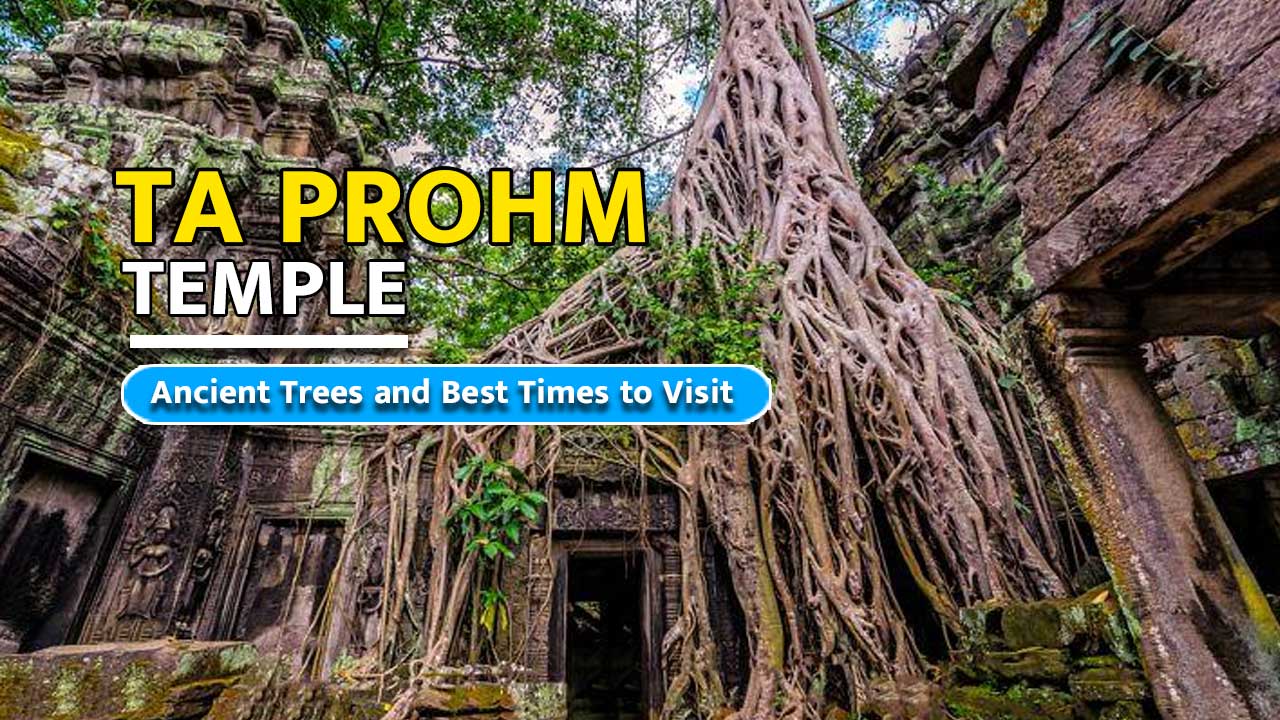
Ta Prohm is one of the most atmospheric temples in Cambodia’s Angkor Archaeological Park. Famous for enormous tree roots spreading across ancient stone walls and doorways, the temple offers a remarkable view of how nature and Khmer architecture have become intertwined over centuries.

Located near Angkor Thom in Siem Reap, Ta Prohm is a popular stop for visitors exploring the Small Circuit. Its forest-covered ruins, historic galleries, and peaceful courtyards make it one of the most memorable places to visit in Angkor.
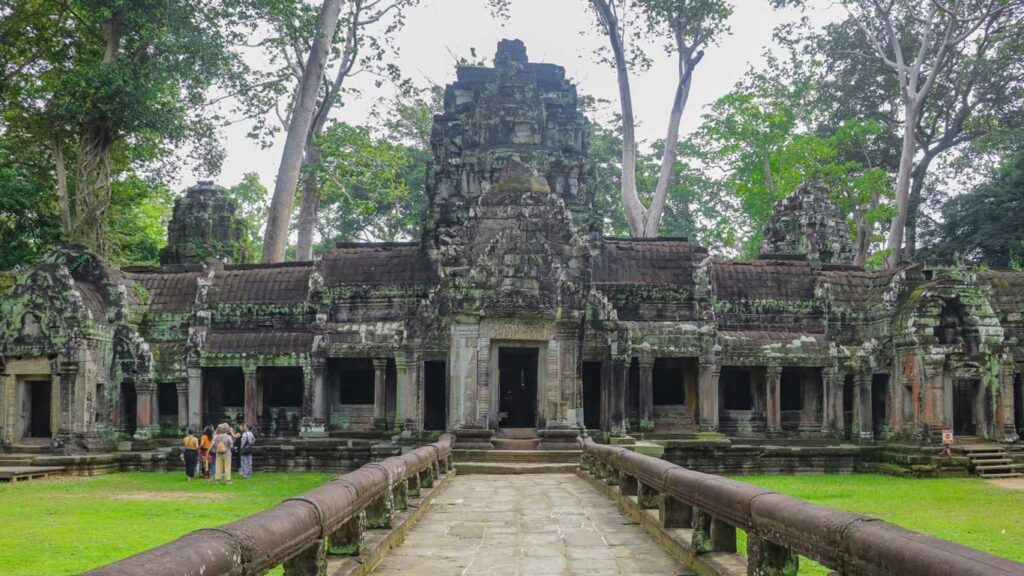
Ta Prohm Temple
Ta Prohm Temple

Ta Prohm Temple at a Glance

Location Angkor Archaeological Park, Siem Reap, Cambodia
Built Late 12th century; consecrated in 1186
King Jayavarman VII
Original Name Rajavihara, meaning “Royal Monastery”
Religious Background Mahayana Buddhist
Opening Hours 7:30 AM–5:30 PM, according to APSARA’s published visitor information
Suggested Visit Approximately 1–1.5 hours
Entrance Ticket Included in the Angkor Pass

History of Ta Prohm

Ta Prohm was built during the reign of King Jayavarman VII and consecrated in 1186. Its original name was Rajavihara, meaning the Royal Monastery. The temple was dedicated to the king’s mother, represented by the Buddhist figure Prajnaparamita, the personification of the Perfection of Wisdom.

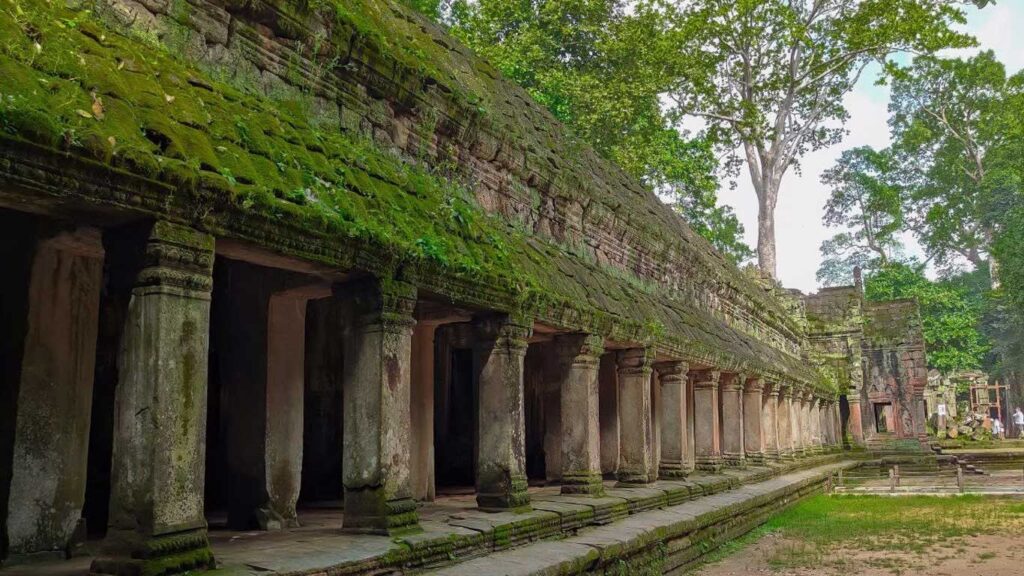
Unlike some Angkor temples that were extensively cleared and restored, Ta Prohm was deliberately preserved with much of its vegetation and ruined appearance. This approach allows visitors to appreciate the dramatic relationship between the ancient monument and the surrounding forest.

Although it looks partly reclaimed by nature, Ta Prohm is not simply an untouched ruin. Conservation teams have stabilized vulnerable structures and restored sections of the temple to protect its heritage and visitor safety.
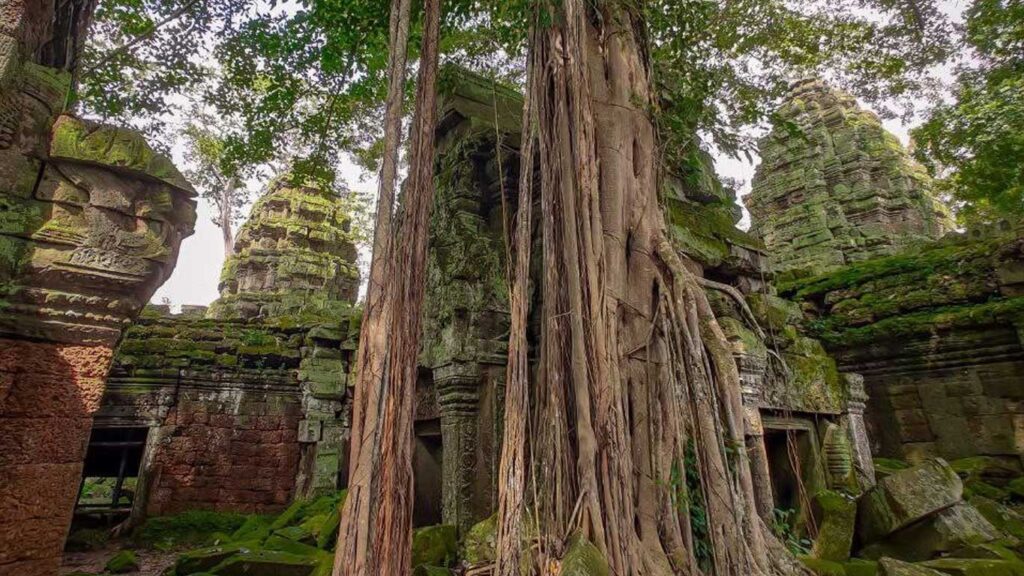
Ta Prohm Temple
Ta Prohm Temple

Why Are There So Many Giant Trees at Ta Prohm?

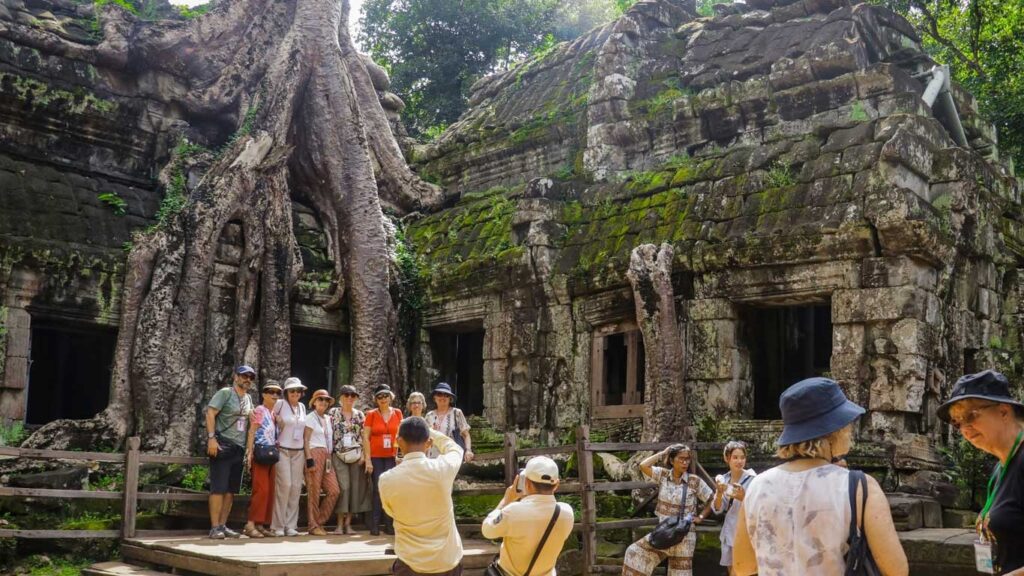
The enormous tree roots are the feature that makes Ta Prohm instantly recognizable. Large roots spread over galleries, walls, doorways, and stone blocks, creating unusual natural shapes that appear to hold parts of the temple together.

Spong trees are particularly associated with the temple. Angkor’s heritage management documentation also identifies Tetrameles nudiflora, Lagerstroemia, and Ficus species among the trees found at Ta Prohm.

These trees are part of the site’s character, but their relationship with the ancient structures requires careful management. Some roots help create the temple’s famous appearance, while tree growth and fallen trees can also place pressure on old stonework.
Ta Prohm Temple
Ta Prohm Temple

What to See at Ta Prohm

1. Giant Tree Roots and Stone Doorways

These are the temple’s most famous sights. Look for massive roots spreading across stone walls and around old doorways. Take photographs from designated visitor areas rather than climbing onto the roots or fragile structures.
Ta Prohm
Ta Prohm Temple

2. The Hall of Dancers

Do not miss the Hall of Dancers, one of the architectural highlights mentioned by APSARA National Authority. The surrounding structures and decorative details provide a glimpse of the temple’s original religious and artistic character.

3. Ancient Galleries and Courtyards

Explore the temple’s interconnected galleries, towers, courtyards, and passageways. Look closely at the surviving pediments and Buddhist-inspired carvings. The combination of weathered sandstone and forest vegetation gives each section a distinctive atmosphere.

4. Historic Gates and Restoration Areas

The temple’s gateways are important parts of its architectural design. Some sections have required extensive conservation work, so follow the signs and instructions from site staff when particular areas are restricted.

Best Time to Visit Ta Prohm Temple

Best Time of Day

For a more comfortable visit, arrive shortly after the temple opens or later in the afternoon. Early visits generally offer cooler conditions and a better chance to explore before larger tour groups arrive.

Time Visitor Experience
7:30–9:00 AM Recommended for cooler weather and early exploration.
9:00–11:30 AM Can become busier as Small Circuit visitors arrive.
11:30 AM–2:30 PM Hotter part of the day; take care to stay hydrated.
3:00–5:00 PM Another good option for a more relaxed afternoon visit.

Best Season to Visit

  • November–February: Generally cooler and comfortable for walking around the temple.
  • March–May: Hot weather is common, so an early visit is recommended.
  • June–October: The surrounding vegetation becomes greener, but rain can make stone paths and roots slippery.

Ta Prohm Entrance Fee and Opening Hours

Ta Prohm is included in the standard Angkor Pass, so visitors do not need to purchase a separate ticket for this temple. Angkor Enterprise currently lists the following standard pass prices:

Angkor Pass Price Validity
1-Day Pass US$37 1 day
3-Day Pass US$62 Any 3 days within 7 days
7-Day Pass US$72 Any 7 days within 30 days

Opening hours: APSARA’s Ta Prohm visitor profile lists the temple’s hours as 7:30 AM to 5:30 PM, with an estimated visit duration of 1 to 1.5 hours. The general Angkor Park ticket window is not the same as the opening schedule of every individual temple. Check current local notices before your visit.

For ticket details and official purchases, visit Angkor Enterprise.

How to Get to Ta Prohm

Ta Prohm is located approximately three kilometres east of the Victory Gate of Angkor Thom. It is normally visited as part of the Small Circuit, often combined with Angkor Wat, Angkor Thom, and Bayon Temple.

  • Tuk-tuk: A convenient way to explore the Small Circuit with a local driver.
  • Private car: A comfortable option for families or travelers who prefer air-conditioned transport.
  • Bicycle: Suitable for visitors who enjoy cycling and are prepared for the distance and tropical heat.
  • Guided tour: Useful for travelers who want historical explanations and help organizing the temple route.

Open Ta Prohm Temple in Google Maps

Important Restoration and Visitor Information in 2026

Ta Prohm continues to receive conservation attention. According to an APSARA National Authority update in October 2026, restoration work at the east gate began in 2022 and work at the south gate began in 2023, in cooperation with the Archaeological Survey of India.

Restoration activities may affect access to particular sections. Follow temporary signs, use designated walkways, and listen to instructions from tourism staff.

Practical Tips for Visiting Ta Prohm

  • Wear comfortable walking shoes with a good grip.
  • Bring drinking water, sunscreen, and a hat.
  • Wear clothing that covers your shoulders and knees.
  • Be careful on wet stones, uneven surfaces, and tree roots.
  • Do not climb on temple walls, carvings, or trees.
  • Respect restricted areas and ongoing restoration work.
  • Keep the temple clean and take your rubbish with you.

Ta Prohm is a sacred heritage site, so visitors should follow the Angkor Visitor Code of Conduct.

Frequently Asked Questions

Is Ta Prohm included in the Angkor Pass?

Yes. Ta Prohm is included in the standard Angkor Pass and is part of the Small Circuit. No separate entrance ticket is required.

How long should I spend at Ta Prohm?

Allow approximately 1 to 1.5 hours to explore the main areas, photograph the tree roots, and see the Hall of Dancers and surrounding galleries.

What is the best time to visit Ta Prohm?

Early morning shortly after opening is a good choice for cooler weather. Late afternoon is another option for visitors who want to avoid the strongest midday heat.

Why is Ta Prohm famous?

Ta Prohm is famous for its enormous tree roots growing over ancient stone structures, its Buddhist history, and its distinctive atmosphere of forest-covered ruins.

Who built Ta Prohm Temple?

King Jayavarman VII built Ta Prohm in the late 12th century. It was consecrated in 1186 and dedicated to his mother, represented by the Buddhist figure Prajnaparamita.

Is Ta Prohm suitable for families?

Families can visit Ta Prohm, but children should be supervised carefully. Some paths are uneven, roots can create trip hazards, and wet stones may be slippery.

Explore More Angkor Temples

Ta Prohm is only one of the remarkable monuments in the Angkor Archaeological Park. Continue planning your visit with these GoToKH travel guides:

  • Best Temples to Visit in the Angkor Archaeological Park
  • Angkor Wat Travel Guide
  • Bayon Temple Guide
  • Siem Reap Travel Guide

Final Thoughts

Ta Prohm is more than a famous photo stop. It is an important Buddhist monument that reflects the history of the Khmer Empire and the continuing relationship between nature and architecture at Angkor. Whether you are interested in history, photography, or simply exploring Cambodia’s ancient heritage, Ta Prohm deserves a place on your Siem Reap itinerary.

Take your time, respect the conservation rules, and enjoy one of the most distinctive temple experiences in Cambodia.

Official Sources

  • APSARA National Authority – Ta Prohm Temple Profile
  • APSARA – Ta Prohm’s History and Architectural Features
  • APSARA – Restoration Work at Ta Prohm’s East and South Gates, October 2026
  • Angkor Enterprise – Official Ticket Prices
  • UNESCO World Heritage Centre – Angkor

Tags:

Angkor Archaeological ParkAngkor TemplesCambodia Travel GuideCambodian HistoryJayavarman VIISiem Reap TravelWORDPRESS TAGS: Ta Prohm Temple
Author

GoToKH

Our mission is simple: to make traveling and living in Cambodia seamless, inspiring, and accessible to everyone. We aim to highlight both iconic landmarks and hidden gems while supporting sustainable tourism and promoting appreciation for Cambodian history and culture.

Follow Me
Other Articles
Cambodia Visa for US Citizens: Requirements, Fees & Entry Guide (2026)
Previous

Cambodia Visa for US Citizens: Requirements, Fees & Entry Guide (2026)

Phnom Kulen National Park Guide: Waterfalls, Ancient Temples & Visitor Tips
Next

Phnom Kulen National Park Guide: Waterfalls, Ancient Temples & Visitor Tips

No Comment! Be the first one.

Leave a Reply Cancel reply

Your email address will not be published. Required fields are marked *

Search...

Cambodia Travel Tips

  • Cambodia Travel Tips: 20 Essential Things to Know Before You Go
    Cambodia Travel Tips: 20 Essential Things to Know Before You GoOctober 16, 2026

Random Posts

  • Preah Ko Temple: Exploring the Origins of Khmer Architecture
    Preah Ko Temple: Exploring the Origins of Khmer ArchitectureNovember 25, 2026
  • Kampong Trach Caves: Exploring Kampot’s Hidden Limestone Wonder
    Kampong Trach Caves: Exploring Kampot’s Hidden Limestone WonderNovember 25, 2026
  • Chambok Ecotourism Village: Waterfalls, Forest Walks & Homestays
    Chambok Ecotourism Village: Waterfalls, Forest Walks & HomestaysNovember 25, 2026
  • Mekong River Dolphins in Kratie: Where and How to See Them Responsibly
    Mekong River Dolphins in Kratie: Where and How to See Them ResponsiblyNovember 25, 2026
  • Banteay Chhmar Temple Guide: History, Reliefs & Travel Tips
    Banteay Chhmar Temple: History, Reliefs, and Visitor GuideNovember 25, 2026

Categories

  • About Cambodia
  • Ancient Temples & Heritage
  • Arts & Architecture
  • Beaches & Islands
  • Best Time to Visit
  • Cafes & Restaurants
  • Cities & Provinces
  • Culture & Etiquette
  • Culture & Traditions
  • Destinations
  • Festivals & Celebrations
  • Food & Lifestyle
  • Geography & Provinces
  • Getting Around
  • Government & Economy
  • Hidden Gems
  • History
  • Itineraries
  • Khmer Language
  • Khmer Recipes
  • Markets & Shopping
  • Mountains & Nature
  • People & Society
  • Phnom Penh
  • Planning Your Trip
  • Religion & Beliefs
  • Rivers & Lakes
  • Siem Reap & Angkor
  • Travel Costs & Budget
  • Travel Guides
  • Travel Tips & Safety
  • Visas & Entry
  • Where to Stay
Welcome to GoToKH.com

GoToKH (gotokh.com) is your ultimate digital travel guide and resource hub for exploring the beauty, culture, and rich heritage of Cambodia. Whether you are a first-time international visitor, a seasoned backpacker, an expat living in the Kingdom, or a local traveler looking for your next weekend getaway, we provide authentic, up-to-date, and practical travel insights.

  • Facebook
  • X
  • Instagram
  • LinkedIn

Latest Posts

  • Where to Stay in Siem Reap: Best Areas and Accommodation
    Choosing where to stay in Siem Reap is an important… Read more: Where to Stay in Siem Reap: Best Areas and Accommodation
  • Where to Stay in Phnom Penh: Best Areas for Travelers
    Choosing where to stay in Phnom Penh can make a… Read more: Where to Stay in Phnom Penh: Best Areas for Travelers
  • Where to Stay in Kampot: Best Areas and Hotels
    Wondering where to stay in Kampot, Cambodia? This charming riverside… Read more: Where to Stay in Kampot: Best Areas and Hotels

Tags

Angkor Angkor Archaeological Park Angkor Wat Angkor Wat Sunrise Cambodia Cambodia Ancient Temples Cambodia Currency Cambodia e-Arrival Cambodia e-Visa Cambodia Ecotourism Cambodia Entry Requirements Cambodia Immigration Cambodia Nature Cambodian Culture Cambodian History Cambodian Street Food Cambodia Tourist Visa Cambodia Travel Cambodia Travel Guide Cambodia Travel Safety Cambodia Travel Tips Cambodia UNESCO Sites Cambodia Visa on Arrival Cambodia Waterfalls Cardamom Mountains Culture History Jayavarman VII Kampot Khmer Architecture Koh Rong Markets Mondulkiri Mountains Phnom Penh Phnom Penh Attractions Riverside Siem Reap Siem Reap Temples Temples Tourism Travelers Travel Guide Tuol Sleng Genocide Museum Waterfalls

GoToKH.com

  • About Us
  • Contact Us
  • Privacy Policy
  • Terms and Conditions
Copyright 2026 — GoToKH | Cambodia Travel Guide, Culture & Local Tips. All rights reserved. Blogsy WordPress Theme

Powered by CookieAdmin
Necessary cookies enable essential site features like secure log-ins and consent preference adjustments. They do not store personal data.
None
Functional cookies support features like content sharing on social media, collecting feedback, and enabling third-party tools.
None
Analytical cookies track visitor interactions, providing insights on metrics like visitor count, bounce rate, and traffic sources.
None
Advertisement cookies deliver personalized ads based on your previous visits and analyze the effectiveness of ad campaigns.
None
Unclassified cookies are cookies that we are in the process of classifying, together with the providers of individual cookies.
None
Powered by CookieAdmin