
Ta Prohm Temple Guide: History, Ancient Trees & Best Time to Visit

Ta Prohm is one of the most atmospheric temples in Cambodia’s Angkor Archaeological Park. Famous for enormous tree roots spreading across ancient stone walls and doorways, the temple offers a remarkable view of how nature and Khmer architecture have become intertwined over centuries.
Located near Angkor Thom in Siem Reap, Ta Prohm is a popular stop for visitors exploring the Small Circuit. Its forest-covered ruins, historic galleries, and peaceful courtyards make it one of the most memorable places to visit in Angkor.
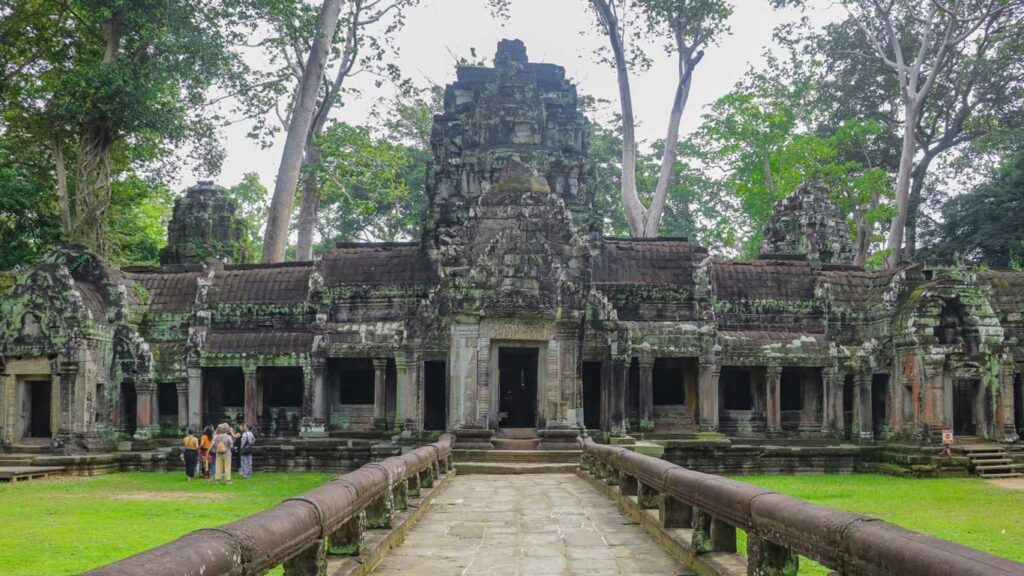
Ta Prohm Temple at a Glance
| Location | Angkor Archaeological Park, Siem Reap, Cambodia |
|---|---|
| Built | Late 12th century; consecrated in 1186 |
| King | Jayavarman VII |
| Original Name | Rajavihara, meaning “Royal Monastery” |
| Religious Background | Mahayana Buddhist |
| Opening Hours | 7:30 AM–5:30 PM, according to APSARA’s published visitor information |
| Suggested Visit | Approximately 1–1.5 hours |
| Entrance Ticket | Included in the Angkor Pass |
History of Ta Prohm
Ta Prohm was built during the reign of King Jayavarman VII and consecrated in 1186. Its original name was Rajavihara, meaning the Royal Monastery. The temple was dedicated to the king’s mother, represented by the Buddhist figure Prajnaparamita, the personification of the Perfection of Wisdom.
Unlike some Angkor temples that were extensively cleared and restored, Ta Prohm was deliberately preserved with much of its vegetation and ruined appearance. This approach allows visitors to appreciate the dramatic relationship between the ancient monument and the surrounding forest.
Although it looks partly reclaimed by nature, Ta Prohm is not simply an untouched ruin. Conservation teams have stabilized vulnerable structures and restored sections of the temple to protect its heritage and visitor safety.
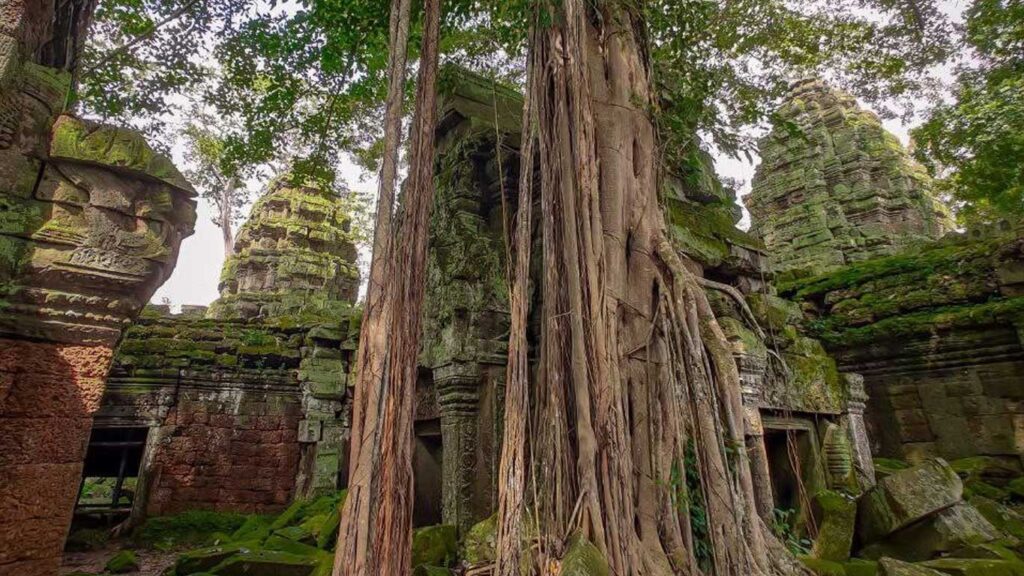
Why Are There So Many Giant Trees at Ta Prohm?
The enormous tree roots are the feature that makes Ta Prohm instantly recognizable. Large roots spread over galleries, walls, doorways, and stone blocks, creating unusual natural shapes that appear to hold parts of the temple together.
Spong trees are particularly associated with the temple. Angkor’s heritage management documentation also identifies Tetrameles nudiflora, Lagerstroemia, and Ficus species among the trees found at Ta Prohm.
These trees are part of the site’s character, but their relationship with the ancient structures requires careful management. Some roots help create the temple’s famous appearance, while tree growth and fallen trees can also place pressure on old stonework.
What to See at Ta Prohm
1. Giant Tree Roots and Stone Doorways
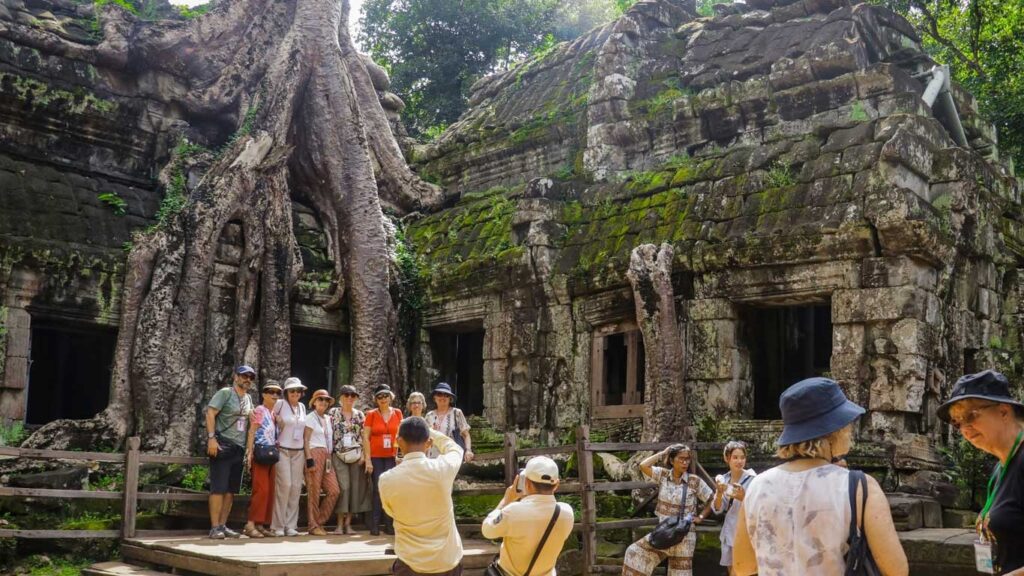
These are the temple’s most famous sights. Look for massive roots spreading across stone walls and around old doorways. Take photographs from designated visitor areas rather than climbing onto the roots or fragile structures.
2. The Hall of Dancers
Do not miss the Hall of Dancers, one of the architectural highlights mentioned by APSARA National Authority. The surrounding structures and decorative details provide a glimpse of the temple’s original religious and artistic character.
3. Ancient Galleries and Courtyards
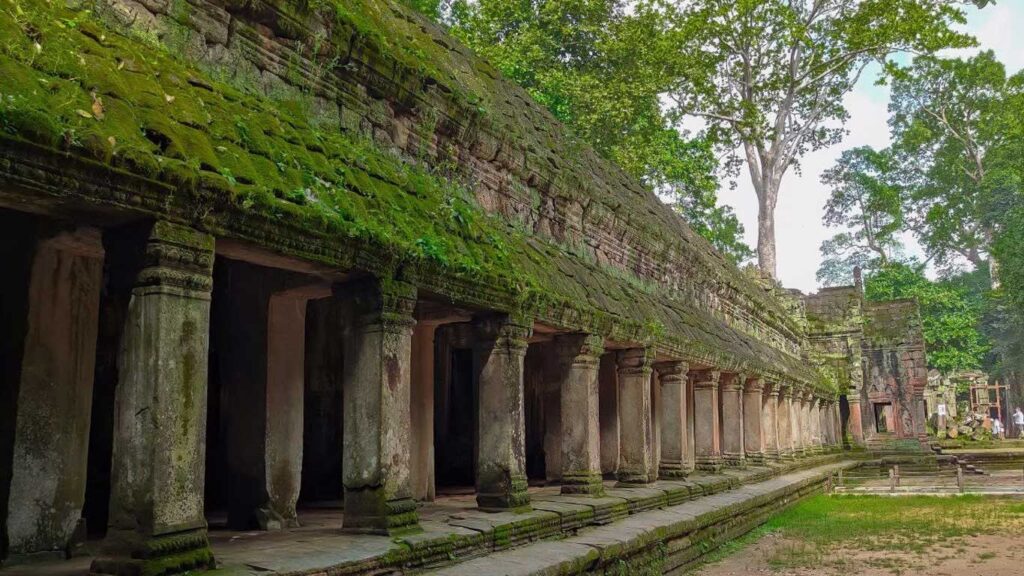
Explore the temple’s interconnected galleries, towers, courtyards, and passageways. Look closely at the surviving pediments and Buddhist-inspired carvings. The combination of weathered sandstone and forest vegetation gives each section a distinctive atmosphere.
4. Historic Gates and Restoration Areas
The temple’s gateways are important parts of its architectural design. Some sections have required extensive conservation work, so follow the signs and instructions from site staff when particular areas are restricted.
Best Time to Visit Ta Prohm Temple
Best Time of Day
For a more comfortable visit, arrive shortly after the temple opens or later in the afternoon. Early visits generally offer cooler conditions and a better chance to explore before larger tour groups arrive.
| Time | Visitor Experience |
|---|---|
| 7:30–9:00 AM | Recommended for cooler weather and early exploration. |
| 9:00–11:30 AM | Can become busier as Small Circuit visitors arrive. |
| 11:30 AM–2:30 PM | Hotter part of the day; take care to stay hydrated. |
| 3:00–5:00 PM | Another good option for a more relaxed afternoon visit. |
Best Season to Visit
- November–February: Generally cooler and comfortable for walking around the temple.
- March–May: Hot weather is common, so an early visit is recommended.
- June–October: The surrounding vegetation becomes greener, but rain can make stone paths and roots slippery.
Ta Prohm Entrance Fee and Opening Hours
Ta Prohm is included in the standard Angkor Pass, so visitors do not need to purchase a separate ticket for this temple. Angkor Enterprise currently lists the following standard pass prices:
| Angkor Pass | Price | Validity |
|---|---|---|
| 1-Day Pass | US$37 | 1 day |
| 3-Day Pass | US$62 | Any 3 days within 7 days |
| 7-Day Pass | US$72 | Any 7 days within 30 days |
Opening hours: APSARA’s Ta Prohm visitor profile lists the temple’s hours as 7:30 AM to 5:30 PM, with an estimated visit duration of 1 to 1.5 hours. The general Angkor Park ticket window is not the same as the opening schedule of every individual temple. Check current local notices before your visit.
For ticket details and official purchases, visit Angkor Enterprise.
How to Get to Ta Prohm
Ta Prohm is located approximately three kilometres east of the Victory Gate of Angkor Thom. It is normally visited as part of the Small Circuit, often combined with Angkor Wat, Angkor Thom, and Bayon Temple.
- Tuk-tuk: A convenient way to explore the Small Circuit with a local driver.
- Private car: A comfortable option for families or travelers who prefer air-conditioned transport.
- Bicycle: Suitable for visitors who enjoy cycling and are prepared for the distance and tropical heat.
- Guided tour: Useful for travelers who want historical explanations and help organizing the temple route.
Open Ta Prohm Temple in Google Maps
Important Restoration and Visitor Information in 2026
Ta Prohm continues to receive conservation attention. According to an APSARA National Authority update in October 2026, restoration work at the east gate began in 2022 and work at the south gate began in 2023, in cooperation with the Archaeological Survey of India.
Restoration activities may affect access to particular sections. Follow temporary signs, use designated walkways, and listen to instructions from tourism staff.
Practical Tips for Visiting Ta Prohm
- Wear comfortable walking shoes with a good grip.
- Bring drinking water, sunscreen, and a hat.
- Wear clothing that covers your shoulders and knees.
- Be careful on wet stones, uneven surfaces, and tree roots.
- Do not climb on temple walls, carvings, or trees.
- Respect restricted areas and ongoing restoration work.
- Keep the temple clean and take your rubbish with you.
Ta Prohm is a sacred heritage site, so visitors should follow the Angkor Visitor Code of Conduct.
Frequently Asked Questions
Is Ta Prohm included in the Angkor Pass?
Yes. Ta Prohm is included in the standard Angkor Pass and is part of the Small Circuit. No separate entrance ticket is required.
How long should I spend at Ta Prohm?
Allow approximately 1 to 1.5 hours to explore the main areas, photograph the tree roots, and see the Hall of Dancers and surrounding galleries.
What is the best time to visit Ta Prohm?
Early morning shortly after opening is a good choice for cooler weather. Late afternoon is another option for visitors who want to avoid the strongest midday heat.
Why is Ta Prohm famous?
Ta Prohm is famous for its enormous tree roots growing over ancient stone structures, its Buddhist history, and its distinctive atmosphere of forest-covered ruins.
Who built Ta Prohm Temple?
King Jayavarman VII built Ta Prohm in the late 12th century. It was consecrated in 1186 and dedicated to his mother, represented by the Buddhist figure Prajnaparamita.
Is Ta Prohm suitable for families?
Families can visit Ta Prohm, but children should be supervised carefully. Some paths are uneven, roots can create trip hazards, and wet stones may be slippery.
Explore More Angkor Temples
Ta Prohm is only one of the remarkable monuments in the Angkor Archaeological Park. Continue planning your visit with these GoToKH travel guides:
- Best Temples to Visit in the Angkor Archaeological Park
- Angkor Wat Travel Guide
- Bayon Temple Guide
- Siem Reap Travel Guide
Final Thoughts
Ta Prohm is more than a famous photo stop. It is an important Buddhist monument that reflects the history of the Khmer Empire and the continuing relationship between nature and architecture at Angkor. Whether you are interested in history, photography, or simply exploring Cambodia’s ancient heritage, Ta Prohm deserves a place on your Siem Reap itinerary.
Take your time, respect the conservation rules, and enjoy one of the most distinctive temple experiences in Cambodia.
Official Sources