

































Cambodia is known for its ancient temples, beautiful landscapes, welcoming people, and rich cultural traditions. But some of the most meaningful travel experiences happen beyond the country’s famous attractions, when visitors spend time in local neighborhoods, villages, markets, family-run businesses, and community-based tourism destinations.
Traveling through Cambodian communities offers an opportunity to see everyday life more closely. You may meet farmers working in the countryside, families preparing traditional food, artisans making handicrafts, or local guides sharing stories about their community. These experiences can be memorable, but they also require sensitivity and respect.
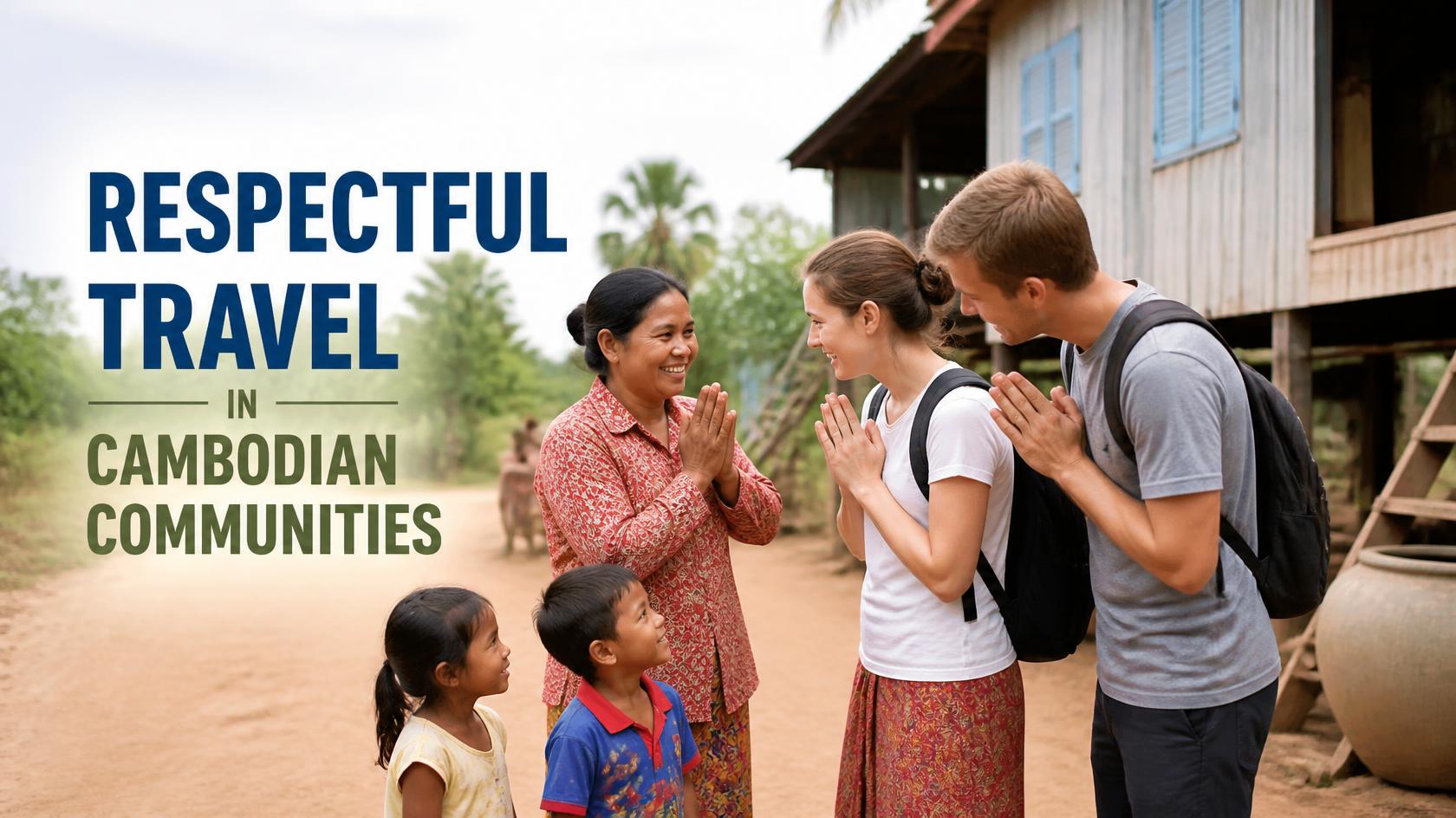
Respectful travel is not about knowing every Cambodian custom perfectly. It is about being observant, asking permission, treating people with dignity, and understanding that a community is a place where people live their everyday lives—not simply a tourist attraction.
Why Respectful Travel Matters in Cambodia
Tourism can bring valuable income and opportunities to Cambodian communities, particularly in rural areas. However, tourism can also create challenges when visitors photograph people without permission, enter private spaces, behave disrespectfully, or treat local traditions as entertainment.
Responsible travelers can help ensure that tourism benefits local residents while protecting their dignity, culture, environment, and way of life.
A simple principle is useful throughout your journey:
Observe first, ask when unsure, and follow the lead of local people.
Respect Local People as Individuals
When visiting a Cambodian community, remember that local residents are not part of a performance created for tourists. They are people going about their daily lives.
A friendly smile and polite greeting can create a positive interaction, but avoid assuming that everyone wants to talk, pose for photographs, or explain their lifestyle.
- Be polite when approaching local people.
- Give people personal space.
- Do not interrupt people who are working.
- Do not assume someone wants to be photographed.
- Avoid making jokes about people’s appearance, clothing, homes, or lifestyle.
- Be patient when communication is difficult because of language differences.
Even when you cannot communicate fluently, respectful body language and a calm attitude go a long way.
Ask Before Taking Photographs
Photography is one of the most important areas of community etiquette. Cambodian villages can offer wonderful opportunities for photography, but an interesting scene does not automatically mean you have permission to photograph it.
Whenever possible, ask before taking a close-up photograph of a person. A simple smile and gesture toward your camera can communicate the question if you do not speak Khmer.
- Ask permission before photographing people closely.
- Be especially careful when photographing children.
- Do not photograph private family activities without permission.
- Respect people who indicate that they do not want to be photographed.
- Avoid repeatedly photographing the same person or family.
- Ask before using photographs of local people for commercial purposes.
When photographing children, it is best to seek permission from a parent, guardian, teacher, or responsible adult rather than approaching the child alone.
Be Careful When Visiting Cambodian Villages
Rural communities are increasingly included in Cambodia’s tourism experiences, particularly through community-based ecotourism and cultural tourism.
Villages, however, are living communities rather than open-air museums. Houses, farms, schools, pagodas, workshops, and private property should be treated accordingly.
When walking through a village:
- Stay on appropriate roads and paths.
- Do not enter someone’s property without permission.
- Do not open gates, doors, or containers belonging to others.
- Do not touch farming equipment or personal belongings without permission.
- Keep noise at a reasonable level.
- Follow instructions from local guides.
If a community guide is accompanying you, listen to their advice. They can explain which areas are public, which are private, and what behavior is appropriate.
Respect Cambodian Homes
If you are invited into a Cambodian home, consider it a gesture of hospitality and trust.
In many Cambodian households, removing your shoes before entering may be appropriate, although customs can vary from one household to another. The easiest approach is to observe what your host does or politely ask.
- Wait to be invited inside.
- Follow the household’s customs regarding shoes.
- Do not enter private rooms without permission.
- Ask before taking photographs inside the home.
- Accept food or drinks politely when appropriate.
- Avoid criticizing the home or its facilities.
You do not need to know every household custom. Showing consideration is more important than trying to behave perfectly.
Respect Elders and Community Leaders
Respect for elders remains an important part of Cambodian social culture. When visiting a village or community, you may encounter older residents, local leaders, religious figures, teachers, or community representatives.
A polite greeting, calm manner, and respectful language are appropriate.
If a local elder is speaking, avoid interrupting unnecessarily. When sitting together, observe how others position themselves and follow the social setting rather than assuming that every situation follows the same rules.
Dress Appropriately in Local Communities
Clothing expectations vary depending on the location. A beach resort and a rural village may have very different social environments.
In traditional communities, religious locations, and family homes, modest clothing is generally the safer choice.
- Avoid extremely revealing clothing when visiting villages or religious sites.
- Wear appropriate clothing when entering pagodas.
- Bring a cover-up when traveling between beaches and cultural sites.
- Follow local instructions if a community has specific dress expectations.
Respectful clothing is especially important during religious ceremonies, weddings, funerals, and other important community events.
Understand Temple and Pagoda Etiquette
Many Cambodian communities are closely connected with their local pagoda. A pagoda is not simply a sightseeing location; it can be an important religious and community center.
When visiting:
- Dress modestly.
- Remove shoes when required.
- Speak quietly.
- Do not climb on religious structures.
- Do not touch religious objects without permission.
- Ask before photographing ceremonies or worshippers.
- Follow instructions from monks or temple staff.
Monks should also be treated respectfully. If you are unsure about appropriate behavior, observe how local visitors behave or ask your guide.
Be Respectful During Ceremonies and Family Events
Cambodian communities hold many religious and family events throughout the year, including weddings, funerals, Buddhist ceremonies, Pchum Ben, Khmer New Year, and other celebrations.
Seeing a ceremony does not necessarily mean that you should join or photograph it.
If you encounter a ceremony while traveling:
- Keep a respectful distance.
- Ask before taking photographs.
- Do not walk through an important ceremony simply to get a better photograph.
- Follow your local guide’s instructions.
- Avoid loud conversations near religious or solemn activities.
During funerals and other solemn occasions, extra sensitivity is appropriate. These are important moments for families, not tourism opportunities.
Do Not Treat Poverty as a Tourist Attraction
Some travelers may visit communities where living conditions are very different from their own. It is important to avoid turning poverty into a photographic or entertainment experience.
Do not take photographs of people simply because their homes or circumstances appear unusual to you. Ask yourself whether you would want a stranger photographing your own family in a similar situation.
When visiting disadvantaged communities, responsible tourism should focus on dignity, genuine interaction, and meaningful economic benefits rather than sensational images.
Support Local Businesses
One of the best ways to contribute positively to Cambodian communities is to spend money locally when appropriate.
Consider purchasing products and services directly from local residents, such as:
- Locally made handicrafts
- Traditional food and drinks
- Community-based tours
- Local transportation
- Family-run guesthouses
- Local restaurants
- Traditional workshops
When buying handicrafts, ask about the product and its origin. Purchasing authentic locally made products can help support artisans and preserve traditional skills.
Bargain With Respect
Bargaining is common in some Cambodian markets, but it should remain friendly and respectful.
Negotiating aggressively over a very small amount of money can create an uncomfortable situation, particularly when the seller depends on small sales for their livelihood.
If the price is reasonable and you want the product, consider whether saving a very small amount is worth creating tension.
A smile, patience, and good humor usually make bargaining more enjoyable for everyone.
Be Careful When Giving Money or Gifts to Children
Travelers may encounter children asking for money or other items in tourist areas. While the intention to help may be kind, giving money directly to children can create unintended consequences.
When you want to support vulnerable communities, consider using reputable local organizations, community projects, schools, or social enterprises where possible.
If you are visiting a community as part of an organized program, ask the local guide or organization about appropriate ways to contribute.
Respect the Environment of Local Communities
Community life and the natural environment are often closely connected in rural Cambodia. Farms, forests, rivers, lakes, and wetlands can provide food, income, and cultural value.
Travelers can help protect these places by following simple practices:
- Take rubbish with you or use designated bins.
- Avoid single-use plastic when practical.
- Do not damage plants or natural features.
- Do not disturb wildlife.
- Stay on designated trails.
- Follow community rules around forests, lakes, rivers, and protected areas.
Small actions become especially important when large numbers of visitors travel through the same community.
Learn a Few Khmer Words
You do not need to speak fluent Khmer to show respect. Learning a few basic words can make interactions warmer and more comfortable.
- Suosdei – Hello
- Orkun – Thank you
- Som toh – Sorry / Excuse me
- Baat – Yes, commonly used politely by men
- Chaa – Yes, commonly used politely by women
- Min ey te – You’re welcome / It’s nothing
Even an imperfect attempt is often appreciated when it is made sincerely and respectfully.
Respect Local Ways of Life
Travelers sometimes compare Cambodian communities with their own countries and may find differences in housing, transportation, farming, family life, work, or social customs.
Try to approach these differences with curiosity rather than judgment.
A village may operate according to traditions and rhythms that are unfamiliar to an international visitor. That does not make the lifestyle better or worse—it simply reflects a different social and cultural environment.
Travel is an opportunity to understand differences, not to measure one culture against another.
Choose Community-Based Tourism Responsibly
Community-based tourism can provide local residents with income while allowing visitors to experience Cambodia beyond conventional tourist attractions.
When choosing a community-based tourism experience, look for programs that clearly involve local residents and provide transparent information about the experience.
Good community tourism should aim to:
- Provide meaningful local employment or income.
- Respect local culture and traditions.
- Protect the natural environment.
- Give communities a role in tourism decisions.
- Provide visitors with genuine cultural experiences.
Local guides are particularly valuable because they can explain customs, history, environmental issues, and appropriate behavior that visitors may not otherwise understand.
Ask Before Participating
If you see local people performing an activity that interests you—such as cooking, farming, fishing, weaving, making crafts, or preparing food—do not immediately join in or touch equipment.
Instead, ask whether participation is welcome.
This simple habit respects both personal boundaries and local property. It can also lead to a much more meaningful interaction because the local person can decide how they would like to share their activity with you.
What Respectful Travelers Should Avoid
Some behaviors can unintentionally make local communities uncomfortable.
- Entering private homes or property without permission.
- Taking close-up photographs without consent.
- Touching people, children, religious objects, or personal belongings without permission.
- Making fun of local customs or lifestyles.
- Speaking loudly in religious or residential areas.
- Leaving rubbish behind.
- Giving money directly to children as a casual response to begging.
- Ignoring community rules because they seem inconvenient.
- Assuming that every local person wants to participate in tourism.
A Simple Respectful Travel Checklist
Before visiting a Cambodian community, remember these simple principles:
- Ask before photographing people or entering private spaces.
- Observe how local people behave and follow appropriate customs.
- Listen to local guides and community leaders.
- Dress appropriately for the setting.
- Spend locally when possible.
- Protect the environment and local property.
- Respect religious and family occasions.
- Be patient when cultural or language differences create confusion.
- Leave communities better off, or at least no worse, because of your visit.
Frequently Asked Questions
Can I take photos of people in Cambodian villages?
It is better to ask permission before taking close-up photographs of people. Always respect anyone who does not want to be photographed, and be especially careful when photographing children.
Should I remove my shoes when visiting a Cambodian home?
It is often appropriate, but customs can vary between households. Look at what your host does or ask politely before entering.
Is it appropriate to visit a Cambodian village as a tourist?
Yes, when the visit is organized respectfully and the community welcomes visitors. Community-based tourism can provide valuable cultural experiences and local economic benefits.
Should I give money to children I meet in Cambodia?
Directly giving money to children is generally not the best way to support communities. Consider supporting reputable local organizations, community programs, or local businesses instead.
What should I wear when visiting a rural Cambodian community?
Comfortable and modest clothing is usually a good choice. More conservative clothing is particularly appropriate when visiting homes, pagodas, ceremonies, and traditional communities.
Can I join a local ceremony if I see one?
Do not assume that you can participate. Ask your guide or a local person whether visitors are welcome and follow their instructions.
How can I support Cambodian communities through tourism?
Choose locally owned businesses, community-based tourism programs, family-run accommodation, local restaurants, and authentic Cambodian handicrafts when appropriate. Respectful spending can help tourism benefits remain within the community.
Sources & References
- Ministry of Tourism, Cambodia – tourism information and responsible travel resources.
- UNESCO – Intangible Cultural Heritage of Cambodia and cultural heritage information.
- Ministry of Culture and Fine Arts, Cambodia – information on Cambodian cultural heritage and traditions.
- UN Tourism – responsible and sustainable tourism principles.
Conclusion
Some of the most rewarding moments in Cambodia happen away from the country’s major tourist attractions. A conversation with a local family, a meal in a village, a visit to a traditional workshop, or a community-led nature experience can provide a deeper understanding of Cambodian life.
The key is to travel with humility and curiosity. Ask before photographing, respect private spaces, dress appropriately, listen to local people, support community businesses, and remember that every village and neighborhood is first and foremost a place where people live.
When travelers respect Cambodian communities, tourism becomes more than sightseeing—it becomes an opportunity for genuine cultural exchange and positive local impact.
For more practical guidance, explore our related guides on Cambodian Culture and Etiquette, Understanding Cambodian Culture and Traditions, and Responsible Travel in Cambodia.
