






























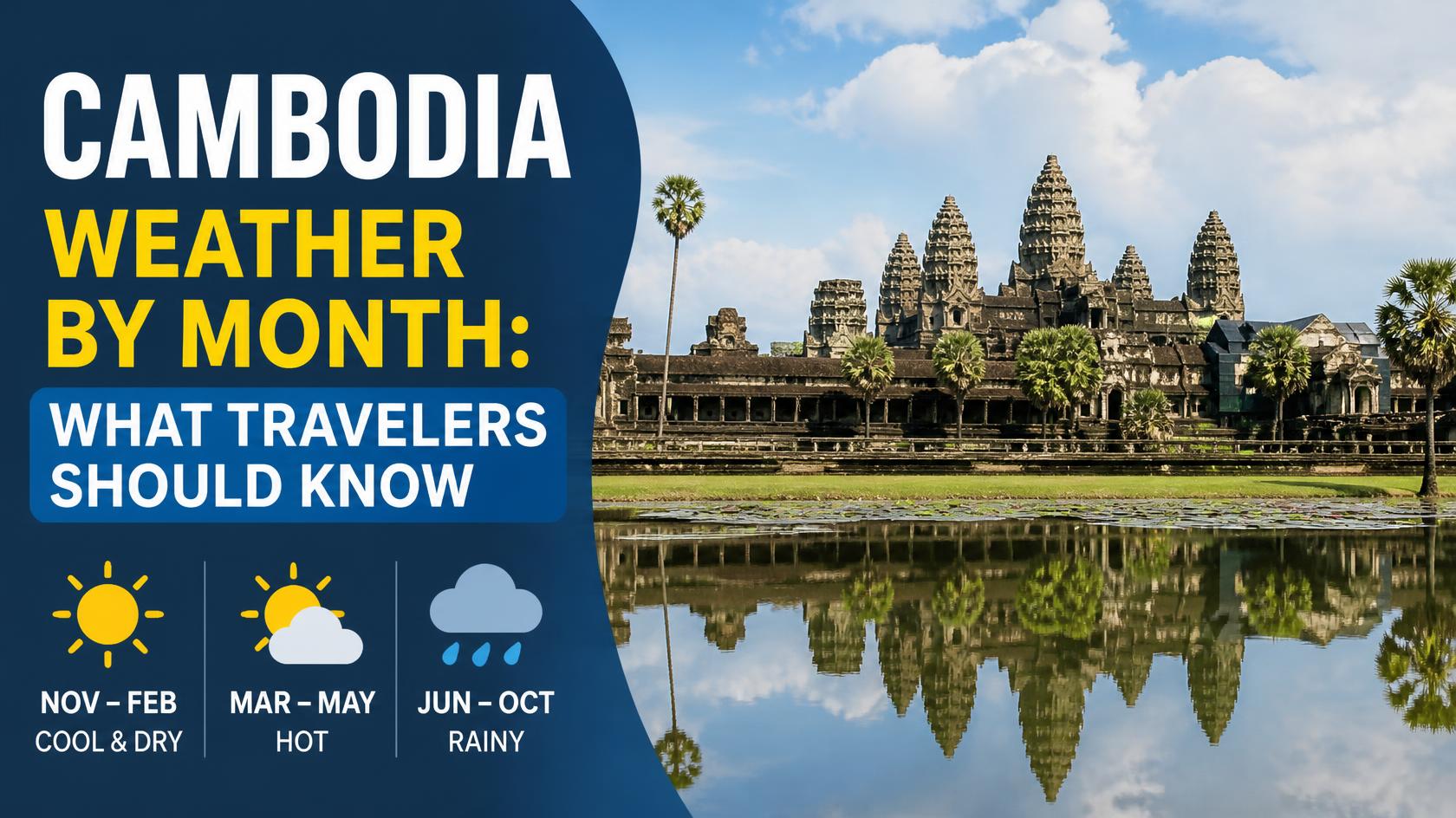

Understanding Cambodia weather by month can make a big difference when planning a trip. Cambodia is a tropical country with warm temperatures throughout the year, but rainfall, humidity, and travel conditions change significantly from month to month.
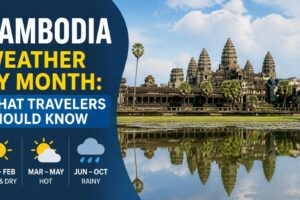
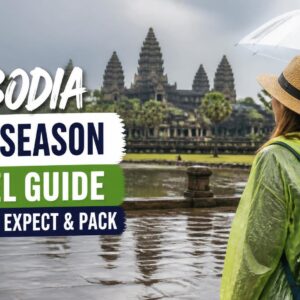
Cambodia generally has a dry season from November to April and a rainy season from May to October. The coolest part of the year is generally around December and January, while April is typically the hottest month. Rainfall varies considerably by region, with Cambodia’s southwestern mountains and coastal areas receiving substantially more rain than some central lowland areas.
For most first-time visitors, November through February offers some of the most comfortable conditions for sightseeing. However, every month has advantages, and the rainy season can be an excellent time to experience Cambodia’s green countryside, waterfalls, and quieter attractions.
Cambodia Weather at a Glance
| Month | General Weather | Rainfall | Travel Experience |
|---|---|---|---|
| January | Cooler and dry | Low | Excellent for sightseeing |
| February | Dry and warming | Low | Excellent for travel |
| March | Hot and mostly dry | Increasing | Good with heat planning |
| April | Very hot | Increasing | Hot but culturally exciting |
| May | Hot, humid, showers begin | Moderate | Good for flexible travelers |
| June | Warm, humid, rainy | High | Green and less crowded |
| July | Warm and wet | High | Good for nature and slow travel |
| August | Warm, humid and wet | High | Lush landscapes |
| September | Wet and humid | Very high in many areas | Quiet, green, flexible travel |
| October | Wet, gradually changing | High | Green landscapes and fewer crowds |
| November | Drying and more comfortable | Decreasing | Excellent travel conditions |
| December | Cooler and dry | Low | Excellent for sightseeing |
These descriptions are general climate patterns rather than guarantees for individual days. Cambodia’s rainfall and temperature can vary between regions and from one year to another.
How Cambodia’s Weather Works
Cambodia’s climate is dominated by the Asian monsoon system. The southwest monsoon brings warm, moisture-rich air and is the main driver of the country’s rainy season. The Lower Mekong Basin has a tropical monsoonal climate with a distinct wet and dry seasonal pattern.
According to the World Bank’s Cambodia climate profile, average temperatures are relatively consistent across the year, while the greatest changes are seen in rainfall. The country is generally warm year-round, with the highest temperatures occurring around the spring months before the rainy season becomes established.
This means travelers should think about heat, humidity and rainfall rather than expecting four distinct seasons like those found in temperate countries.
Cambodia Weather in January
January is one of the most comfortable months to visit Cambodia. It falls within the dry season and is generally characterized by lower rainfall and relatively pleasant temperatures compared with the hotter months that follow.
It is an especially popular month for visiting Angkor and other archaeological sites because travelers can spend more time outdoors without frequently dealing with heavy rain.
What January Is Like
- Generally dry
- Relatively cooler mornings and evenings
- Comfortable conditions for sightseeing
- Low rainfall in many areas
- Busy tourist destinations can be crowded
Best for: Angkor Wat, temple tours, city sightseeing, road trips and first-time visitors.
Travel tip: Early mornings can feel noticeably cooler, particularly in higher-elevation areas such as Mondulkiri. Pack a light layer if you plan to travel into the northeast.
Cambodia Weather in February
February remains part of the dry season, although temperatures gradually begin to rise.
Rainfall is usually limited, making February another excellent month for exploring Cambodia. It is suitable for combining several destinations in one trip, including Siem Reap, Phnom Penh, Battambang, Kampot and the southern coast.
Best for: sightseeing, temples, cultural attractions, countryside tours and beach trips.
Travel tip: Start outdoor activities earlier in the day as temperatures begin to increase toward the end of the month.
Cambodia Weather in March
March marks the beginning of the hotter part of Cambodia’s year. Days can become increasingly hot, particularly in the lowlands.
Rainfall remains relatively limited in many areas, although occasional showers can occur as the country moves toward the monsoon transition.
The World Bank’s climate data identifies March and April among the warmest periods in Cambodia, with April generally the hottest month.
Best for: travelers who prefer drier weather and can handle high temperatures.
Travel tip: Schedule temple visits and walking tours in the morning, take a midday break, and resume outdoor activities later in the afternoon.
Cambodia Weather in April
April is generally the hottest month in Cambodia. Average maximum temperatures can reach the mid-30s Celsius in many areas, with some locations experiencing even higher temperatures.
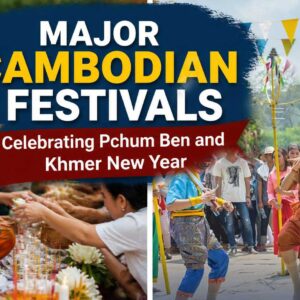
Despite the heat, April is one of the most culturally interesting months because Cambodians celebrate Khmer New Year.
During this period, towns and villages can become lively with family gatherings, traditional activities, religious ceremonies and celebrations.
Best for: Khmer New Year, cultural experiences and travelers comfortable with extreme heat.
Travel tip: Carry water at all times, use sun protection and avoid long outdoor walks during the hottest part of the afternoon.
Cambodia Weather in May
May is a transition month. Temperatures can remain very high, while humidity increases and rainfall becomes more frequent as the southwest monsoon develops.
Rainfall does not necessarily mean that every day is completely wet. Tropical showers can be intense but relatively short, although longer periods of rain are also possible.
Best for: flexible travelers, cultural tourism and visitors looking for a quieter experience.
Travel tip: Keep outdoor plans flexible and carry a lightweight rain jacket or umbrella.
Cambodia Weather in June
By June, the rainy season is well established in much of Cambodia.
The countryside becomes increasingly green, and rice fields, forests and waterways take on a different appearance from the dry-season landscape.
Rain can be frequent, but it does not necessarily prevent travel. Many visitors simply adjust their daily schedule around showers.
Best for: nature lovers, photographers, countryside travel and travelers who prefer fewer crowds.
Travel tip: Waterproof protection for phones, cameras and documents is especially useful.
Cambodia Weather in July
July is generally warm, humid and rainy. Rainfall is an important part of the country’s seasonal landscape, helping maintain the wetlands, rivers and agricultural areas that are central to Cambodian life.
The Mekong River Commission notes that the southwest monsoon is a major driver of the Lower Mekong’s annual flood cycle.
Best for: nature travel, green landscapes, photography and slow travel.
Travel tip: Avoid packing your itinerary too tightly. A flexible schedule makes rainy-season travel much easier.
Cambodia Weather in August
August is firmly within the rainy season. Rainfall can be substantial, particularly in mountainous and coastal areas.
The contrast between Cambodia’s wet and dry landscapes is particularly noticeable at this time of year. Forests become lush, waterfalls can be more impressive, and rice-growing areas are often vibrant green.
Best for: ecotourism, photography, countryside experiences and travelers seeking a quieter Cambodia.
Travel tip: If visiting remote destinations, check road conditions before traveling. Heavy rainfall can affect unpaved roads.
Cambodia Weather in September
September is generally one of the wettest months in many parts of Cambodia. The World Bank’s provincial climate data shows substantial regional variation in rainfall, with several provinces recording their highest monthly rainfall around August or September.
For travelers who do not mind rain, September can offer beautiful green scenery and a slower pace.
Best for: photographers, nature lovers and travelers seeking fewer crowds.
Travel tip: Allow extra time for road journeys and avoid depending on tightly scheduled outdoor activities.
Cambodia Weather in October
October generally remains wet, although conditions begin moving toward the transition to the drier season later in the month.
Travel can still be rewarding, especially for visitors interested in Cambodia’s countryside, temples and cultural experiences without peak-season crowds.
Best for: green landscapes, photography, cultural travel and flexible itineraries.
Travel tip: Check local forecasts before boat trips, trekking and long journeys, particularly in coastal and mountainous regions.
Cambodia Weather in November
November is an important transition month. Rainfall generally decreases, temperatures become more comfortable, and Cambodia begins entering one of its most popular tourism periods.
For many travelers, November offers an excellent balance between relatively favorable weather and the beginning of the high tourism season.
Best for: almost all major Cambodia experiences, including temples, cities, countryside and beaches.
Travel tip: If you are planning a popular hotel or tour during November, booking ahead can help, particularly around major holidays and events.
Cambodia Weather in December
December is one of the most popular months to visit Cambodia.
Conditions are generally dry, and temperatures are more comfortable than during the hot season. The World Bank’s long-term climate data identifies December among Cambodia’s cooler months, although temperatures remain tropical.
Best for: Angkor Wat, Phnom Penh, Battambang, Kampot, beaches and multi-destination trips.
Travel tip: Popular destinations can be busy, so reserve accommodation and major tours early during the holiday period.
Cambodia Weather by Region
National monthly averages do not tell the whole story. Cambodia’s geography creates significant differences in rainfall between regions.
Siem Reap and Northwestern Cambodia
Siem Reap experiences the typical Cambodian monsoon pattern. The dry season is generally more comfortable for temple sightseeing, while the rainy season produces greener landscapes around Angkor and the surrounding countryside.
Phnom Penh and the Central Lowlands
Phnom Penh can become extremely hot during the hottest part of the year. Rainfall increases during the monsoon, but the city remains accessible throughout the year.
Southern Cambodia and the Coast
Coastal provinces such as Kampot, Kep and Preah Sihanouk can receive substantially more rainfall than some inland areas. The World Bank’s provincial data shows particularly high annual rainfall in southwestern coastal locations such as Koh Kong.
Mondulkiri and Ratanakiri
The northeastern highlands can feel cooler than Cambodia’s lowland areas, particularly during the dry season. Forests and waterfalls can be particularly attractive during wetter months.
Cardamom Mountains and Koh Kong
The southwestern mountains and nearby coastal areas are among the wettest parts of Cambodia. The World Bank reports annual rainfall reaching several thousand millimeters in areas around the Cardamom Mountains and southwestern coast.
This is important for travelers planning trekking, camping or remote-road adventures.
Temperature in Cambodia by Season
Cambodia does not experience dramatic winter and summer temperature differences like temperate countries. Instead, the main changes are between the relatively cooler dry-season months and the hotter period before the rains.
Long-term World Bank climate data for Cambodia shows national average temperatures generally around the mid-to-high 20s Celsius, with April among the warmest months and December among the cooler months.
| Period | Typical Character |
|---|---|
| November–January | Cooler and generally dry |
| February–March | Warming and mostly dry |
| April–May | Hottest and increasingly humid |
| June–October | Warm, humid and generally wetter |
These are broad seasonal patterns. Actual temperatures can vary substantially by province, elevation, cloud cover and individual weather events.
Rainfall in Cambodia by Month
Rainfall is much more seasonal than temperature.
The Lower Mekong region generally receives most of its rainfall during the southwest monsoon. The Mekong River Commission identifies the wet season as a major component of the basin’s annual hydrological cycle, with rainfall concentrated during the monsoon period.
Rainfall also varies significantly geographically. Central lowland areas can be considerably drier than the Cardamom Mountains and southwestern coastal areas.
For travelers, this means that “rainy season” does not mean identical weather across the entire country.
What to Pack for Cambodia by Month
January to February
- Lightweight clothing
- Comfortable walking shoes
- Sun protection
- Light jacket for cooler mornings in some regions
March to May
- Breathable clothing
- Sun hat
- Sunglasses
- High-SPF sunscreen
- Reusable water bottle
- Lightweight rain protection toward May
June to October
- Quick-drying clothing
- Light rain jacket
- Compact umbrella
- Water-resistant day bag
- Waterproof phone protection
- Comfortable footwear suitable for wet conditions
November to December
- Lightweight clothing
- Comfortable walking shoes
- Sun protection
- Light layer for cooler mornings and evenings
Tips for Traveling in Cambodia’s Hot Weather
If you travel between March and May, managing heat should be part of your itinerary.
- Start sightseeing early.
- Drink water regularly.
- Take breaks in shaded or air-conditioned places.
- Avoid long walks during the hottest afternoon hours.
- Wear breathable clothing.
- Use sunscreen and a hat.
- Do not underestimate the heat when visiting large temple complexes.
Tips for Traveling During Cambodia’s Rainy Season
Rain does not have to ruin your trip. A few simple adjustments can make wet-season travel much easier.
- Keep your itinerary flexible.
- Carry rain protection every day.
- Protect electronics in waterproof bags.
- Allow extra time for road journeys.
- Check weather and local road conditions before remote trips.
- Choose accommodation with comfortable indoor spaces.
- Plan museums, cafés and other indoor activities as backup options.
Which Months Are Best for Different Types of Travelers?
| Traveler | Recommended Months | Why |
|---|---|---|
| First-time visitors | November–February | Comfortable sightseeing conditions |
| Temple lovers | November–February | Less heat and rain |
| Beach travelers | November–April | Generally drier conditions |
| Nature lovers | June–October | Lush vegetation and flowing waterfalls |
| Photographers | Year-round | Different landscapes in every season |
| Budget travelers | May–October | Quieter travel periods may offer better value |
| Festival travelers | April and other festival periods | Cultural celebrations |
| Road-trip travelers | November–February | Generally easier road conditions |
Is Cambodia Worth Visiting All Year?
Yes. Cambodia is a year-round destination, but your experience will change with the weather.
The dry season is easier for travelers who want predictable outdoor sightseeing. The rainy season rewards visitors who are flexible and interested in green landscapes, nature and a quieter atmosphere.
The most important thing is to match the season to your travel priorities rather than assuming that one month is universally best.
Frequently Asked Questions
What is the best month to visit Cambodia?
December and January are among the most comfortable months for general sightseeing. November through February is widely considered one of the best periods for first-time visitors.
What is the hottest month in Cambodia?
April is generally the hottest month. Temperatures can become particularly high in Cambodia’s lowland areas.
What is the rainy season in Cambodia?
The rainy season is generally May through October, although exact timing varies by region and year.
Does Cambodia have rain every day during the rainy season?
No. Rainfall can occur as short, intense showers or thunderstorms, although longer wet periods are also possible.
Which month has the least rain in Cambodia?
December, January and February are generally among the driest months, although rainfall varies between regions.
Which month has the most rain?
August and September are among the wetter months in many parts of Cambodia, but the wettest month varies by province. For example, World Bank climate data shows August as the wettest month in several southwestern provinces, while some northern areas peak around September.
Is January cold in Cambodia?
No. January is relatively cool by Cambodian standards but remains warm compared with winter climates in Europe or North America. Higher-elevation areas in the northeast can feel noticeably cooler.
Is April too hot to visit Cambodia?
It can be very hot, but Cambodia can still be visited in April. Travelers should reduce midday outdoor activities, stay hydrated and plan around the heat. April is also an important month for Khmer New Year celebrations.
Is September a bad time to visit Cambodia?
Not necessarily. September can be very wet, but it also offers lush scenery, fewer tourists and a different atmosphere. It is best for travelers who are comfortable with flexible plans.
When is the best time to visit Angkor Wat?
November through February is generally the easiest period for comfortable temple sightseeing. The rainy season can also be rewarding for travelers who prefer greener surroundings and fewer crowds.
Does weather vary between Siem Reap and Phnom Penh?
Yes. Both cities experience Cambodia’s monsoon cycle, but rainfall and temperatures can vary by location. Regional differences become even more pronounced in the mountains and along the coast.
Sources & References
- World Bank Climate Change Knowledge Portal — Cambodia Country Climate Profile and historical temperature and precipitation data.
- Mekong River Commission — Lower Mekong Basin climate, monsoon and hydrological information.
- Ministry of Tourism, Cambodia — General tourism and climate information for visitors.
Conclusion
Knowing Cambodia weather by month helps you choose the right travel period for your plans. January and February generally offer comfortable conditions, March and April bring increasing heat, May marks the transition toward the rainy season, and June through October brings greener landscapes and more frequent rain. November and December then begin the return to cooler and drier conditions.
For the easiest overall sightseeing experience, November to February remains a strong choice. But if you are interested in nature, photography, fewer crowds and Cambodia’s lush countryside, the rainy season can be equally rewarding.
Rather than searching for one perfect month, choose the season that best matches where you want to go and what you want to do. Cambodia offers something different in every part of the year.
Planning your Cambodia trip? Continue exploring GoToKH for practical guides to destinations, transportation, budgets, visas, itineraries, culture and travel tips.
