






























Choosing the best time to visit Cambodia depends on what you want to experience. Some travelers prefer the cooler, drier weather of the peak season, while others enjoy the lush landscapes, fewer crowds, and occasional lower prices of the rainy season.
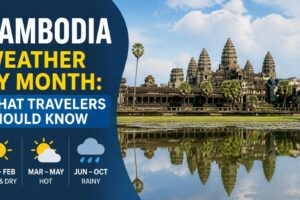
Cambodia can be visited throughout the year. Its tropical monsoon climate creates two main seasons: a generally dry season from around November to April and a rainy season from around May to October. The coolest and most comfortable period is usually from November through January, while March and April can be extremely hot. Rainfall generally increases from May onward, with the wettest conditions commonly occurring later in the rainy season.
For many first-time visitors, November to February offers the best overall balance of comfortable temperatures and relatively dry weather. However, May to October can also be an excellent time to visit if you prefer greener scenery, fewer tourists, and don’t mind occasional heavy rain.
Quick Answer: When Is the Best Time to Visit Cambodia?
| Period | Typical Conditions | Best For |
|---|---|---|
| November–February | Cooler, mostly dry, comfortable | First-time visitors, temples, sightseeing |
| March–May | Hot and increasingly humid | Fewer crowds, beaches, experienced travelers |
| May–October | Rainy, humid, very green | Nature, photography, fewer tourists |
| June–August | Frequent showers with lush scenery | Flexible travelers, countryside, culture |
| September–October | Among the wettest months | Slow travel, green landscapes, fewer crowds |
There is no single perfect month for everyone. The right time depends on your destination, activities, tolerance for heat and rain, and travel style.
Understanding Cambodia’s Seasons
Cambodia’s weather is strongly influenced by the Asian monsoon system. The country is tropical, so temperatures remain warm throughout the year, but rainfall and humidity change significantly between seasons.
The Ministry of Tourism generally describes Cambodia as having a rainy season from May to October and a dry season from November to April. Other climate references use slightly different transition dates because the monsoon does not change suddenly on a single day. Regional conditions also vary, particularly between the lowlands, mountains, and coast.
November to February: The Cool and Dry Season
This is generally the most popular period for tourism in Cambodia.
Temperatures are usually more comfortable than during the hottest months, rainfall is relatively limited, and conditions are favorable for sightseeing. December and January are commonly regarded as some of the coolest months of the year.
This makes the period particularly attractive for exploring Angkor Wat, Phnom Penh, Battambang, Kampot, Kep, and other major destinations.
The disadvantage is popularity. Hotels, tours, and popular attractions can be busier during this period, especially around major holidays and the Christmas and New Year period.
March to May: The Hot Season
March, April, and parts of May can be very hot. April is typically the hottest period of the year, and temperatures can rise well above 30°C.
For visitors who are sensitive to heat, walking around temples in the middle of the afternoon can become exhausting. However, this season has advantages too.
There are often fewer international tourists than during the cooler months, and the period includes Khmer New Year in April, one of Cambodia’s most important annual celebrations.
If you travel during the hot season, plan outdoor sightseeing for the early morning and late afternoon, and leave the hottest part of the day for lunch, rest, museums, cafés, or hotel facilities.
May to October: The Rainy Season
The rainy season is driven by the southwest monsoon and brings much of Cambodia’s annual rainfall.
However, “rainy season” does not necessarily mean constant rain. In many parts of Cambodia, rainfall often comes as a heavy shower or thunderstorm followed by a period of dry weather. The exact pattern varies from day to day and from region to region.
The reward is a dramatically greener Cambodia. Rice fields become vibrant, forests flourish, waterfalls can become more impressive, and landscapes around temples can look particularly beautiful.
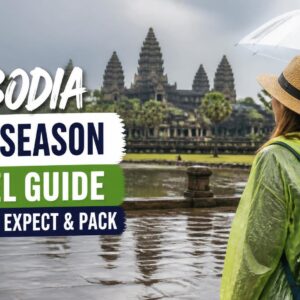
The Ministry of Tourism also notes that the rainy season can offer fewer tourists, while Angkor Wat and the surrounding countryside can have a distinctive atmosphere during the monsoon.
Month-by-Month Cambodia Weather Guide
January
January is one of the most comfortable months for traveling around Cambodia. Conditions are generally dry, with relatively mild temperatures compared with the hot season.
Best for: Angkor Wat, city sightseeing, road trips, temples, and first-time visitors.
February
February remains relatively dry, although temperatures begin to rise toward the end of the month.
Best for: temples, cultural attractions, countryside trips, and combining several regions.
March
March marks the transition toward hotter weather. Outdoor activities remain enjoyable if you plan around the heat.
Best for: travelers who want fewer crowds and do not mind high temperatures.
April
April is usually the hottest month. Despite the heat, it is an exciting time to visit because Cambodia celebrates Khmer New Year.
Best for: cultural experiences, festivals, and travelers comfortable with extreme heat.
May
May is a transition month as the southwest monsoon becomes established. Hot and humid conditions can combine with increasingly frequent rain.
Best for: flexible travelers, cultural travel, and visitors looking for a quieter experience.
June
Rain becomes more frequent, and the countryside becomes noticeably greener. Showers may interrupt outdoor activities but often do not last the entire day.
Best for: nature, photography, countryside travel, and travelers who prefer fewer crowds.
July and August
These months are firmly within the rainy season. Expect high humidity and regular rainfall, but also lush landscapes and atmospheric skies.
Best for: nature lovers, photographers, flexible itineraries, and travelers who enjoy Cambodia beyond its busiest tourist season.
September
September is typically one of the wetter periods of the year. Some roads, particularly rural roads, may become more difficult after prolonged rain.
Best for: slower travel, cultural experiences, green landscapes, and travelers comfortable adapting their plans.
October
October is another relatively wet month, although conditions vary from year to year. Toward the end of the month, the weather can begin transitioning toward the drier season.
Best for: travelers seeking fewer crowds and very green scenery.
November
November generally marks the beginning of the more favorable dry-season travel period. Temperatures become more comfortable and rainfall decreases.
Best for: almost every major type of Cambodia trip, including temples, cities, countryside, and beaches.
December
December is one of the most popular months to visit Cambodia. Weather is generally dry and relatively comfortable, making it excellent for sightseeing.
Best for: first-time visitors, families, couples, temple tours, and multi-city itineraries.
Best Time to Visit Cambodia for Angkor Wat
For many travelers, November to February is the easiest period for visiting Angkor Wat because temperatures are generally more manageable and rain is less likely to disrupt sightseeing.
However, the rainy season can create a completely different experience. The vegetation around the temples becomes greener, the air can feel fresher after rainfall, and there may be fewer visitors.
If you visit during the hotter months, start your temple sightseeing early in the morning. An early start can make a major difference because large temple complexes require considerable walking and exposure to the sun.
Best Time to Visit Cambodia’s Beaches and Islands
If your main goal is a beach holiday, the dry season is generally the safest choice for favorable beach conditions.
The Cambodian coast, including destinations around Sihanoukville, Koh Rong, Koh Rong Samloem, Kep, and nearby islands, can experience heavier rainfall and rougher seas during the southwest monsoon.
November through April is therefore generally more attractive for travelers prioritizing sunshine, swimming, and island activities. Conditions can still change, so check local weather and sea conditions before boat trips.
Best Time for Nature and Mountains
Cambodia’s forests and mountain regions can be especially attractive during and shortly after the rainy season.
Destinations such as the Cardamom Mountains, Mondulkiri, Ratanakiri, Kirirom, and Bokor can become intensely green when rainfall is abundant. Waterfalls and streams may also have stronger flows.
The trade-off is accessibility. Heavy rain can make some unpaved roads muddy or difficult, particularly in remote rural areas. Travelers planning trekking, motorbike trips, or community-based ecotourism should build flexibility into their itineraries.
Best Time to Visit Phnom Penh
Phnom Penh can be visited throughout the year, but November to February is generally more comfortable for walking around the city and exploring outdoor attractions.
During the hottest months, schedule visits to places such as the Royal Palace area, riverside, markets, and other outdoor attractions in the morning or late afternoon.
The rainy season can also work well for Phnom Penh because showers often provide a break from the heat. Museums, cafés, restaurants, and indoor attractions make it easier to adapt your schedule.
Best Time to Visit Cambodia for Fewer Crowds
If avoiding crowds is more important than having consistently dry weather, consider traveling during the rainy season.
June through October can provide a quieter atmosphere at many tourist destinations compared with the peak dry-season months. Angkor Wat can still be visited, and the surrounding landscapes are often greener.
Rather than avoiding Cambodia because of rain, consider planning your day around it. Start outdoor activities early, keep a flexible afternoon schedule, and carry lightweight rain protection.
Is Cambodia Worth Visiting During the Rainy Season?
Yes. The rainy season is not automatically a bad time to visit Cambodia.
One of the biggest misconceptions about monsoon travel is that it rains continuously from morning until night. In reality, rainfall patterns vary, and heavy showers can be separated by several hours of dry weather.
There are also several advantages:
- Fewer tourists at some attractions.
- Greener rice fields and countryside.
- Lush forests and mountains.
- More dramatic skies for photography.
- Potentially better value at some hotels and tourism businesses.
- A more relaxed atmosphere in popular destinations.
The main disadvantages are humidity, sudden downpours, muddy rural roads, and potentially rougher conditions along the coast.
How Weather Changes Your Cambodia Itinerary
Your itinerary should reflect the season.
During the Dry Season
- Start temple visits early to avoid the strongest heat.
- Book popular accommodation in advance during peak periods.
- Allow time for outdoor sightseeing.
- Carry sunscreen, water, sunglasses, and light clothing.
- Consider adding beaches and islands to your itinerary.
During the Rainy Season
- Keep some flexibility between destinations.
- Allow extra travel time for rural roads.
- Carry a lightweight rain jacket or compact umbrella.
- Protect phones and cameras from sudden rain.
- Use waterproof bags for important electronics.
- Check conditions before long road journeys or boat trips.
What to Pack for Cambodia’s Weather
Regardless of the season, lightweight clothing is useful because Cambodia remains warm for much of the year.
For the dry and hot seasons:
- Lightweight, breathable clothing
- Sun hat or cap
- Sunglasses
- High-SPF sunscreen
- Reusable water bottle
- Comfortable walking shoes
For the rainy season:
- Lightweight rain jacket
- Compact umbrella
- Quick-drying clothing
- Water-resistant day bag
- Waterproof phone or camera protection
- Sandals or shoes suitable for wet conditions
When visiting temples, remember that weather is not the only consideration. Dress respectfully and choose clothing that covers the shoulders and knees when visiting religious sites.
Regional Weather Differences in Cambodia
Cambodia is relatively compact, but weather conditions are not identical everywhere.
Siem Reap and the Tonle Sap region experience the familiar tropical monsoon cycle, with cooler dry-season months and a greener rainy season.
Phnom Penh and the central lowlands can become particularly hot during the dry-season hot period.
The Cardamom Mountains and southwestern highlands receive substantial rainfall and can be much wetter than some inland areas.
The coast and islands are strongly influenced by the southwest monsoon. Rain, wind, and sea conditions can therefore be important considerations for island travel.
Northeastern Cambodia, including Mondulkiri and Ratanakiri, can offer different experiences because of elevation and forested terrain.
For this reason, travelers planning a multi-region Cambodia itinerary should not rely solely on a single city forecast.
Best Time to Visit Cambodia by Travel Style
| Travel Style | Recommended Period |
|---|---|
| First-time visitor | November–February |
| Angkor Wat and temples | November–February; rainy season for greener scenery |
| Beach holiday | November–April |
| Nature and hiking | November–February for easier conditions; rainy season for lush landscapes |
| Budget-conscious travel | Rainy season can offer a quieter experience and potential value |
| Photography | Depends on style: dry season for clear skies, rainy season for dramatic landscapes |
| Festivals and culture | April for Khmer New Year; November for major water-related celebrations when scheduled |
| Road trips | Generally easier during the drier months |
Tips for Choosing the Best Month
Instead of asking only “What is the best month to visit Cambodia?”, ask what you want from your trip.
- Choose November to February if comfortable weather is your highest priority.
- Choose March or May if you can handle heat and want a quieter trip.
- Choose April if experiencing Khmer New Year is a major goal.
- Choose June to August if you enjoy green landscapes and do not mind rain.
- Choose September or October only if you are comfortable with wetter conditions and a flexible itinerary.
- Check conditions for your specific destination rather than relying only on a national average.
Frequently Asked Questions
What is the best month to visit Cambodia?
December and January are among the best choices for comfortable weather, relatively low rainfall, and sightseeing. November through February is generally the most popular overall period.
What is the rainy season in Cambodia?
The rainy season generally runs from May through October, although the exact timing and rainfall pattern can vary from year to year and by region.
Does it rain all day in Cambodia during the rainy season?
No. Rain often arrives as heavy showers or thunderstorms rather than continuous rain throughout the entire day. However, prolonged wet periods can occur.
What is the hottest month in Cambodia?
April is generally the hottest month, and temperatures can become very high before the main rainy season becomes established.
Is December a good time to visit Cambodia?
Yes. December is one of the most popular months because conditions are generally dry and relatively comfortable for sightseeing.
Is July a good time to visit Cambodia?
July can be a good choice for travelers who do not mind rain. The countryside is lush and tourist crowds can be lower, but you should allow flexibility for wet weather.
When is the best time to visit Angkor Wat?
November through February is generally the easiest period for comfortable sightseeing. The rainy season can also be rewarding if you prefer greener scenery and fewer visitors.
When is the best time to visit Cambodia’s islands?
The drier months from November through April are generally preferable for beach and island activities, although weather and sea conditions can vary.
Can I travel around Cambodia during the rainy season?
Yes. Many travelers visit successfully during the rainy season. However, allow additional time for road travel and be more cautious when planning remote countryside routes.
Sources & References
- Ministry of Tourism, Cambodia — Climate and weather information and traveler guidance.
- World Bank — Cambodia climate and environmental documentation.
- Mekong River Commission — Lower Mekong climate, monsoon, rainfall, and hydrological information.
Conclusion: There Is No Wrong Season to Visit Cambodia
The best time to visit Cambodia ultimately depends on your priorities. For the most comfortable combination of cooler temperatures and dry weather, November to February is the safest recommendation.
But Cambodia’s rainy season has its own appeal. From vibrant green rice fields and forests to dramatic skies around Angkor, the wetter months can provide a quieter and more atmospheric travel experience.
If you are flexible, don’t choose your travel dates based on weather alone. Consider your destinations, activities, budget, tolerance for heat, and the type of experience you want.
Cambodia is a year-round destination—and understanding its seasons simply helps you make the most of whichever month you choose.
Planning your Cambodia trip? Explore more GoToKH travel guides for practical advice on destinations, transportation, budgets, visas, itineraries, culture, and travel tips.
