





























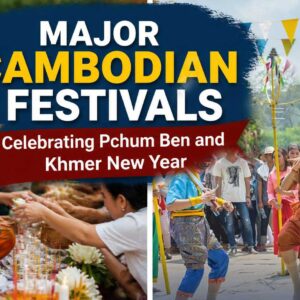


Major Cambodian Festivals: Celebrating Pchum Ben and Khmer New Year

Cambodia is a country where festivals bring together religion, family, food, music, and community life. Among the many celebrations held throughout the year, Pchum Ben and Khmer New Year are two of the most important traditional festivals for Cambodian people.
For travelers, these celebrations offer a special opportunity to see Cambodian culture beyond temples and tourist attractions. During these periods, families return to their hometowns, pagodas become important gathering places, traditional foods are prepared, and communities take part in religious ceremonies and traditional games.
Although both festivals are deeply connected with Cambodian Buddhist traditions, they have different meanings. Khmer New Year welcomes a new year and celebrates renewal, family, blessings, and community. Pchum Ben focuses strongly on remembering deceased relatives and ancestors, making offerings, and dedicating merit to them.
Quick Overview: Pchum Ben vs. Khmer New Year
| Festival | Typical Period | Main Meaning | Common Activities |
|---|---|---|---|
| Khmer New Year | Mid-April | Welcoming the new year, renewal, blessings, family reunion | Pagoda visits, traditional games, dancing, food, water blessings |
| Pchum Ben | September–October, according to the Khmer lunar calendar | Remembering ancestors and deceased relatives | Pagoda visits, food offerings, prayers, merit-making |
Both festivals are based on traditional calendars, so their exact dates change from year to year. Khmer New Year is generally celebrated for three days around April 13 or 14, while Pchum Ben is associated with a 15-day religious period culminating in the main Pchum Ben day.
1. Khmer New Year: Cambodia’s Celebration of Renewal
Khmer New Year, commonly known as Choul Chnam Thmey, is Cambodia’s traditional New Year celebration. It usually takes place in mid-April and lasts three days.
The festival traditionally comes after the agricultural harvesting season, making it a natural time for families and communities to rest, reunite, visit temples, and celebrate together. Today, it remains one of the most important periods of the Cambodian cultural calendar.
During Khmer New Year, many Cambodians leave cities such as Phnom Penh and return to their home provinces. Roads, towns, villages, pagodas, and tourist destinations can become particularly lively as families and friends gather.
The Three Days of Khmer New Year
Day 1: Moha Sangkran
The first day is known as Moha Sangkran, marking the transition into the new year. Families traditionally clean and decorate their homes, prepare food, light candles and incense, and make offerings.
Many people visit pagodas to pray, make offerings, and receive blessings. The atmosphere can range from quiet religious ceremonies to lively community celebrations.
Day 2: Wanabot
The second day is traditionally associated with generosity and giving. Families may give gifts to relatives, parents, grandparents, monks, and people in need.
Visiting relatives and sharing food are also important parts of the celebration. The day reflects the value placed on generosity, respect, and maintaining family relationships.
Day 3: Leung Sakk
The third day is associated with blessings and purification. One well-known tradition is the ceremonial washing or bathing of Buddha statues with scented water.
Young people may also show respect to older family members by washing their hands or feet and asking for blessings. This practice emphasizes respect between generations and the importance of family relationships.
2. Traditional Khmer New Year Games and Entertainment
Khmer New Year is not only a religious celebration. It is also a major social and cultural occasion filled with traditional games, music, dancing, and community activities.
Some traditional games commonly associated with Khmer New Year include:
- Chol Chhoung – a traditional scarf-throwing game played between groups.
- Leak Kanseng – a traditional game involving a scarf or cloth.
- Angkunh – a traditional game played with seeds or nuts.
- Tean Proat – a traditional community game involving pulling.
- Veay Ka-om – a traditional game involving playful interaction between participants.
- Traditional dancing – including popular Cambodian social dances during community celebrations.
In modern Cambodia, New Year celebrations can also include concerts, cultural performances, public events, food stalls, and activities organized at major tourist destinations.
In 2026, for example, Khmer Traditional New Year celebrations included traditional games, cultural performances, concerts, and activities at tourism destinations, while families continued to return to their hometowns and visit pagodas.
3. Pchum Ben: Cambodia’s Festival of Ancestors
Pchum Ben is one of Cambodia’s most culturally significant religious festivals. It is often described in English as the Festival of the Dead, Ancestors’ Day, or Ancestors Festival.
The festival is deeply connected with Cambodian Buddhist traditions and the remembrance of deceased parents, grandparents, relatives, and ancestors.
Unlike Khmer New Year, which is primarily associated with welcoming a new year, Pchum Ben is a period when families come together to remember those who have passed away and make offerings at pagodas.
The modern observance is commonly understood as a 15-day period, with the first 14 days associated with Kan Ben and Dak Ben practices, followed by the main Pchum Ben day.
In 2026, the Kan Ben and Pchum Ben period ran from September 27 to October 11, demonstrating why the dates should always be checked against the official calendar for the particular year.
4. What Happens During Pchum Ben?
During Pchum Ben, Cambodian families visit pagodas and bring prepared food and other offerings. Monks conduct prayers and religious ceremonies, while families dedicate merit to deceased relatives.
One of the most recognizable traditions is the preparation of Bay Ben, or balls of sticky rice. In some traditions, people bring rice offerings to pagodas very early in the morning.
Cambodian Buddhist beliefs surrounding Pchum Ben include the idea that deceased beings, including those who have become preta or hungry spirits, may benefit from offerings and merit dedicated by living relatives. These are religious beliefs and should be understood in their cultural and Buddhist context rather than as literal descriptions of an independently verified phenomenon.
The Ministry of Culture and Tourism-related Cambodian sources describe Pchum Ben as a time for Cambodians to remember ancestors, make offerings, and participate in religious ceremonies at pagodas.
Why Family Matters So Much During Pchum Ben
Pchum Ben is much more than a religious ceremony. It is also a major family occasion.
People living and working in Phnom Penh or other cities often travel back to their home provinces. Families may visit several pagodas connected with their relatives and hometowns. Older family members teach younger generations about traditional ceremonies, foods, prayers, and customs.
In this way, Pchum Ben helps maintain connections between generations and keeps traditional practices alive.
A 2026 Royal Message highlighted the festival’s importance for family reunification, respect for parents and ancestors, merit-making for deceased relatives, and the preservation of Cambodian cultural traditions.
5. Food and Offerings During Cambodian Festivals
Food plays an important role in both Khmer New Year and Pchum Ben.
Families prepare traditional Cambodian dishes to share with relatives, friends, and monks. Food brought to pagodas can include rice, fruit, desserts, and traditional Khmer dishes.
One particularly recognizable festive food is Num Ansom, a sticky-rice cake wrapped in banana leaves. Depending on the type, it can be filled with pork, banana, jackfruit, beans, coconut, or other ingredients.
Num Ansom and related traditional cakes such as Num Kom are commonly associated with offerings during Khmer New Year and Pchum Ben.
For visitors, trying traditional festival foods can be an enjoyable way to understand Cambodian culture. However, food prepared specifically as a religious offering should be treated respectfully.
6. Visiting a Cambodian Pagoda During a Festival
Pagodas become some of the most important cultural spaces during both festivals. Travelers are generally welcome to observe many public activities, but visitors should remember that these are religious and family occasions rather than tourist performances.
If you visit a pagoda during Khmer New Year or Pchum Ben:
- Wear modest clothing that covers the shoulders and knees.
- Remove your shoes when entering areas where this is required.
- Speak quietly and avoid disturbing prayers or ceremonies.
- Ask permission before taking close-up photographs of people participating in religious activities.
- Do not touch religious objects without permission.
- Follow instructions from monks, pagoda staff, or local residents.
- Be especially respectful when photographing elderly people, monks, or families making offerings.
Remember that a pagoda is a place of worship and community life. Observing respectfully is more important than getting the perfect photograph.
7. What Travelers Can Expect During Khmer New Year
For international visitors, Khmer New Year can be one of the most energetic times to experience Cambodian culture.
Depending on where you travel, you may see:
- Traditional games and dancing
- Family gatherings
- Pagoda ceremonies
- Traditional music
- Special Cambodian foods
- Cultural performances
- Large gatherings in villages and towns
- Water-related celebrations in some communities
- People traveling to their hometowns
Major tourist destinations such as Siem Reap can become particularly active. Traditional activities may take place around temples, cultural venues, public spaces, and local communities.
Travelers should also expect increased domestic travel. Buses, roads, accommodation, and popular tourist destinations can become busier around the holiday period.
8. What Travelers Can Expect During Pchum Ben
Pchum Ben has a different atmosphere. While there can be busy roads and large family gatherings, the heart of the festival is religious and reflective.
Visitors may see families arriving at pagodas with food and offerings, monks conducting ceremonies, people praying, and relatives gathering together.
Early morning can be particularly meaningful because some traditional offerings take place before or around sunrise.
Travelers should avoid treating the ceremony as entertainment. The best approach is to observe quietly, learn about the tradition, and respect the people taking part.
9. Khmer New Year vs. Pchum Ben: Understanding the Difference
| Aspect | Khmer New Year | Pchum Ben |
|---|---|---|
| General period | April | September–October |
| Main focus | New year, renewal, blessings, family | Ancestors, remembrance, merit-making |
| Typical duration | Three days | 15-day traditional observance |
| Pagoda visits | Very common | Central to the festival |
| Traditional games | Very common | Less central |
| Family reunion | Very important | Very important |
| Food offerings | Common | Central tradition |
| Atmosphere | Festive and celebratory | Religious, reflective, and family-oriented |
10. Why These Festivals Matter to Cambodian Culture
Khmer New Year and Pchum Ben show how Cambodian culture connects everyday life with religion, family, agriculture, food, and community.
They also demonstrate the importance of intergenerational knowledge. Children learn traditions from parents and grandparents, while communities continue practices that have been passed down over many generations.
Khmer New Year emphasizes renewal, generosity, blessings, family relationships, and community celebration. Pchum Ben emphasizes remembrance, gratitude, respect for ancestors, religious devotion, and merit-making.
Together, they provide a window into values that remain important in Cambodian society today.
Practical Tips for Travelers
Travel Smart During Cambodian Festivals
- Check the exact dates: Festival dates can change each year according to the traditional calendar.
- Book transportation early: Many Cambodians travel home during major holidays.
- Reserve accommodation: Popular destinations can become busy.
- Expect crowds: Pagodas, markets, roads, and tourist areas may be busier than usual.
- Dress respectfully: Especially when visiting pagodas.
- Carry water: April can be extremely hot during Khmer New Year.
- Respect religious ceremonies: Observe rather than interrupt.
- Ask before photographing: Especially during private family or religious moments.
- Try local food: Festival foods are an excellent way to experience Cambodian culture.
- Be flexible: Holiday schedules, transportation, and opening hours can differ from normal days.
Frequently Asked Questions
When is Khmer New Year celebrated in Cambodia?
Khmer New Year is generally celebrated in mid-April and traditionally lasts three days. The exact official dates can vary by year.
How long does Pchum Ben last?
The traditional Pchum Ben observance is associated with a 15-day period, including the Kan Ben/Dak Ben period and the main Pchum Ben day. Exact dates change each year according to the Khmer calendar.
Is Pchum Ben the same as Halloween?
No. Although Pchum Ben is sometimes informally compared with Western festivals involving the dead, it is fundamentally a Cambodian Buddhist religious and family tradition centered on remembrance, offerings, prayer, and merit-making.
Can tourists visit pagodas during Pchum Ben?
Yes. Visitors can often observe public religious activities, but they should dress modestly, behave quietly, and respect families and worshippers.
What food is associated with Cambodian festivals?
Festival foods vary by family and region. Traditional rice cakes such as Num Ansom and Num Kom are commonly associated with Khmer celebrations and offerings.
Is Khmer New Year a good time to visit Cambodia?
It can be an excellent time for travelers interested in Cambodian culture and community traditions. However, transportation and accommodation can become busy because many Cambodians travel home during the holiday.
What should I wear when visiting a pagoda during a festival?
Choose modest clothing that covers your shoulders and knees. Comfortable, respectful clothing is appropriate for visiting religious sites.
Sources & References
- Ministry of Culture and Fine Arts, Cambodia – Information and official messages concerning Khmer cultural traditions and Khmer New Year.
- Tourism Cambodia – Information on Khmer New Year traditions, Pchum Ben, Cambodian festivals, traditional games, and cultural practices.
- Agence Kampuchea Presse (AKP) – 2026 reporting on Khmer Traditional New Year and Pchum Ben.
- UNESCO – Information on Cambodian intangible cultural heritage and traditional cultural practices.
Festival dates and public holiday arrangements can change from year to year. Travelers should check current official Cambodian announcements before planning a trip around a specific festival.
Conclusion: Experience Cambodia Through Its Festivals
Khmer New Year and Pchum Ben offer two different but equally important perspectives on Cambodian culture. Khmer New Year fills homes, pagodas, villages, and cities with celebrations, games, family gatherings, and hopes for a new beginning. Pchum Ben creates a quieter and more reflective connection between families, religion, and memories of ancestors.
For international travelers, experiencing either festival can add a deeper cultural dimension to a trip to Cambodia. Instead of simply visiting temples and taking photographs, you can see how Cambodian people use traditions to maintain family connections, express gratitude, practice generosity, and pass cultural knowledge from one generation to the next.
If you want to understand the heart of Cambodia, experience its festivals with respect, curiosity, and an open mind.
