



































Angkor Wat Temple Guide: History, Architecture & Visitor Tips

Angkor Wat is Cambodia’s most famous temple and one of the world’s greatest surviving religious monuments. Built during the height of the Khmer Empire, the temple combines enormous scale, sophisticated architecture, detailed sandstone carvings and powerful religious symbolism.
Located in Siem Reap Province, Angkor Wat forms part of the vast Angkor Archaeological Park, a UNESCO World Heritage Site covering approximately 400 square kilometres. The wider Angkor complex contains numerous temples, reservoirs, canals, roads and the remains of successive Khmer capitals developed between the 9th and 15th centuries.
For first-time visitors, Angkor Wat can feel overwhelming. How early should you arrive? Which parts of the temple should you see first? How much does the Angkor Pass cost? What should you wear? Is sunrise worth it?
This guide explains the history, architecture, symbolism and practical details you need to plan a rewarding visit to Angkor Wat.
Quick Summary: Angkor Wat
| Feature | Details |
|---|---|
| Location | Siem Reap Province, Cambodia |
| Built | Early 12th century |
| Main ruler | King Suryavarman II |
| Original religion | Hinduism, dedicated to Vishnu |
| Later religious tradition | Buddhism |
| Architectural style | Khmer, commonly associated with the Angkor Wat style |
| World Heritage status | Part of the UNESCO World Heritage Site of Angkor |
| Angkor Park 1-day pass | US$37 |
| Angkor Park 3-day pass | US$62 |
| Angkor Park 7-day pass | US$72 |
Where Is Angkor Wat?
Angkor Wat is located about 6 kilometres north of central Siem Reap. It is the best-known monument within the much larger Angkor Archaeological Park.
The park is not a single temple. It is a huge archaeological landscape containing dozens of major monuments and many smaller structures. Famous sites include Angkor Wat, Angkor Thom, Bayon, Ta Prohm, Preah Khan, Banteay Srei and many others.
UNESCO describes Angkor as one of Southeast Asia’s most important archaeological sites, combining temples with ancient urban layouts, reservoirs, canals and communication routes.
History of Angkor Wat
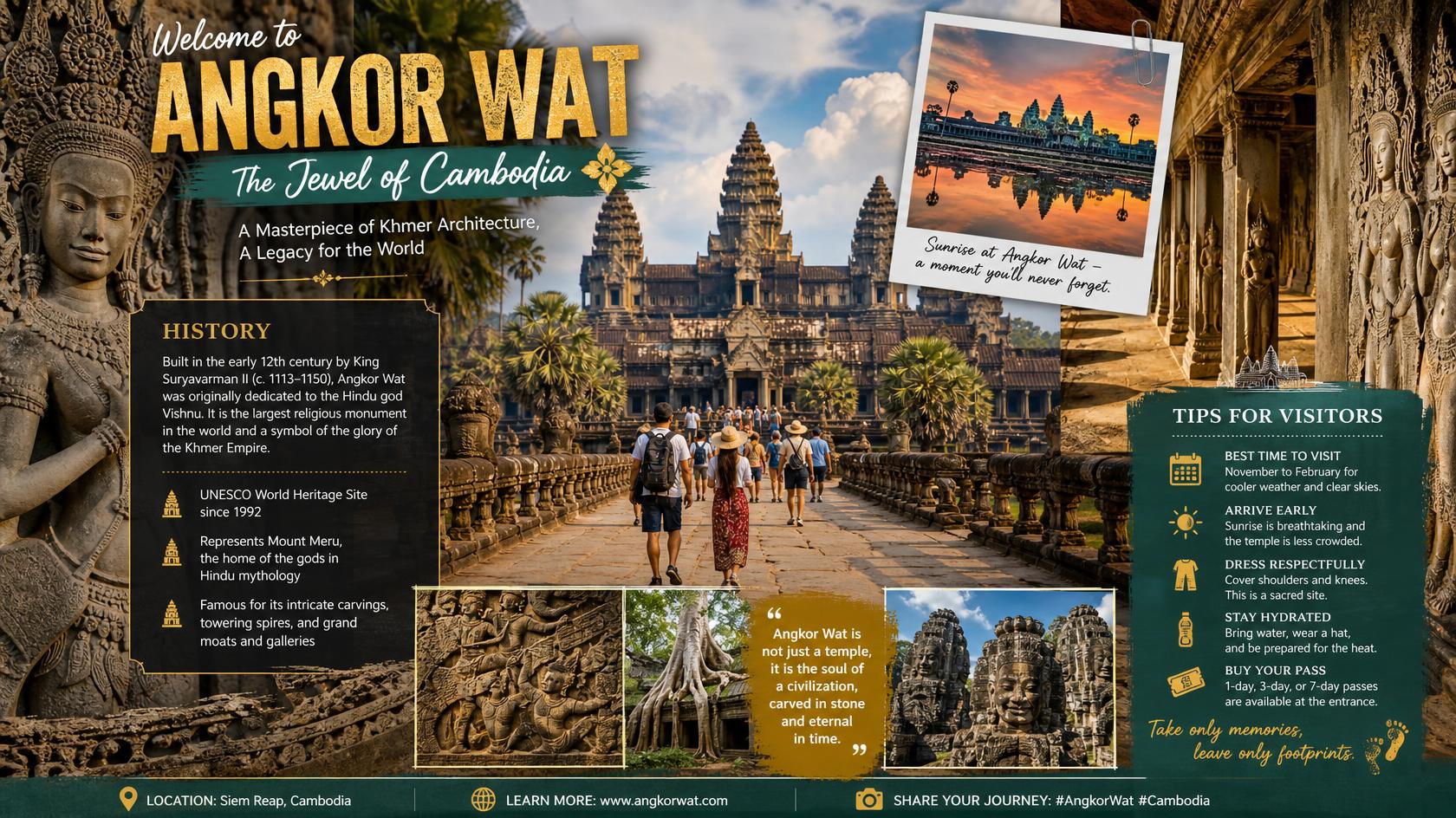
Angkor Wat was constructed during the reign of King Suryavarman II in the early 12th century. It was built as a major state temple and was dedicated primarily to Vishnu, an important Hindu deity.
The temple reflects the political and religious power of the Khmer Empire during one of the most important periods in Cambodian history.
A Temple of Vishnu
Unlike many major Khmer temples that were strongly associated with Shiva, Angkor Wat was originally dedicated to Vishnu. This religious dedication is reflected in its iconography, architectural orientation and decorative program.
The temple later became an important Buddhist religious site. Buddhist traditions have continued to shape the monument and its use over many centuries.
From Royal Temple to Global Heritage Site
Angkor was the centre of the Khmer Kingdom for several centuries. Its monuments demonstrate the empire’s achievements in architecture, engineering, art, urban planning and water management.
Today, Angkor is protected as a UNESCO World Heritage Site and managed through cooperation between Cambodian authorities and international conservation partners.
Angkor Wat Architecture: What Makes It Extraordinary?
Angkor Wat is remarkable because its architecture is not simply a collection of towers and galleries. The entire complex was designed as a symbolic representation of the Hindu cosmos.
The monument combines a massive moat, outer enclosure, long causeway, galleries, courtyards, stairways and the famous central towers into a carefully organized sacred landscape.
The Five Central Towers
The most recognizable feature of Angkor Wat is its group of five towers, arranged in a quincunx pattern. The central tower rises above the surrounding four towers and represents Mount Meru in Hindu cosmology.
Mount Meru was understood as the sacred cosmic mountain and dwelling place of the gods. The architectural composition therefore transforms the temple into a symbolic universe.
The Moat
Angkor Wat is surrounded by a massive moat. Water was both practical and symbolic in Khmer architecture.
The moat emphasizes the temple’s separation from the ordinary world while representing the cosmic ocean surrounding Mount Meru.
The Causeway
A long stone causeway crosses the moat and leads visitors toward the western entrance.
This approach creates a dramatic transition. As you walk toward the temple, the towers gradually become larger and more dominant, creating the impression of entering a sacred mountain.
The Galleries
Angkor Wat contains extensive galleries decorated with thousands of metres of bas-relief carvings.
These carvings are among the temple’s greatest artistic treasures. They depict scenes from Hindu mythology, royal processions, battles, celestial figures and stories from the Ramayana and Mahabharata traditions.
The Bas-Reliefs You Should Not Miss
If you have enough time, do not rush through the galleries. The bas-reliefs provide important clues about Khmer religion, mythology and royal ideology.
The Churning of the Ocean of Milk
One of the most famous scenes shows the Churning of the Ocean of Milk, a Hindu creation story involving devas and asuras pulling the body of the serpent Vasuki.
The scene is a powerful example of how mythology was transformed into monumental architectural decoration.
The Battle of Kurukshetra
Another gallery depicts scenes from the Mahabharata, including the great battle of Kurukshetra.
The relief provides visitors with an opportunity to see how ancient Khmer artists represented movement, warriors, weapons, horses and elephants in stone.
Heaven and Hell
Other galleries portray scenes related to Hindu concepts of heaven and hell, showing rewards and punishments according to religious beliefs.
Devatas and Apsaras
Hundreds of beautifully carved female figures appear throughout Angkor Wat. These figures are often referred to as devatas or celestial beings.
Look closely at their hairstyles, jewelry, clothing and facial expressions. Small differences between figures make the decoration especially interesting for visitors who take time to examine the details.
Why Does Angkor Wat Face West?
One of the most interesting questions about Angkor Wat concerns its western orientation.
Most major Khmer temples are generally associated with an eastern-facing entrance, while Angkor Wat is oriented toward the west. Scholars have proposed several explanations, including associations with Vishnu and funerary symbolism.
There is no single explanation that should be presented as absolutely certain. The western orientation remains one of the distinctive characteristics of Angkor Wat and an important subject in the study of Khmer architecture.
Angkor Wat Sunrise: Is It Worth It?
Sunrise at Angkor Wat is one of Cambodia’s most popular travel experiences.
On clear mornings, the silhouette of the five towers can appear above the reflection pool as the sky changes colour. However, sunrise conditions depend entirely on weather, clouds and visibility.
Tips for Angkor Wat Sunrise
- Arrive early because the viewing areas can become crowded.
- Bring a small flashlight for the walk before sunrise.
- Carry water.
- Stay behind designated barriers.
- Do not enter restricted areas to obtain a better photograph.
- Be patient if clouds hide the sun.
Sunrise is beautiful, but it is not the only good time to visit. If crowds are a concern, consider spending more time inside the temple after the early-morning rush has moved elsewhere.
Angkor Wat Ticket Prices in 2026
Angkor Enterprise currently lists three standard Angkor Archaeological Park passes for international visitors:
| Pass | Price | Validity |
|---|---|---|
| 1-Day Pass | US$37 | 1 day |
| 3-Day Pass | US$62 | 7-day validity period |
| 7-Day Pass | US$72 | 30-day validity period |
The current official ticket information states that the Angkor Park pass provides access to more than 50 accessible temples and lists entry from 5:00 AM with the park closing at 6:30 PM.
Angkor Enterprise is the official institution responsible for selling Angkor Archaeological Park tickets. Its website states that tickets purchased from unauthorized sources are not valid. Tickets can be purchased through the official website, mobile app, kiosks, ticket counter or through a tour guide.
Do Children Need an Angkor Pass?
According to Angkor Enterprise, children under 12 years old are exempt from the Angkor entrance fee. A passport or other proof of age may be requested.
How to Get to Angkor Wat
Most visitors stay in Siem Reap and travel to Angkor Wat by tuk-tuk, car, taxi, bicycle, scooter or organized tour.
Tuk-Tuk
A tuk-tuk is one of the most common ways to explore Angkor. It is practical for visitors who want a driver available throughout the day and provides some protection from the heat.
Private Car
A private car can be more comfortable, particularly for families, older travelers or visitors planning a full-day temple itinerary.
Bicycle
Experienced cyclists can ride from Siem Reap to Angkor Wat. However, the combination of distance, heat and additional cycling between temples means that visitors should consider their fitness and weather conditions.
Scooter
Angkor Enterprise confirms that visitors can rent and ride scooters themselves to visit the temples.
If you choose this option, wear a helmet, carry your driving documents as required and ride cautiously. Roads within and around the archaeological park can be busy, particularly during peak visiting periods.
What to Wear at Angkor Wat
Angkor Wat is an important sacred site, not simply a tourist attraction. Visitors should dress respectfully.
- Wear clothing that covers the shoulders.
- Choose clothing that covers the knees when entering sacred areas.
- Avoid extremely revealing clothing.
- Wear comfortable shoes suitable for stairs and uneven surfaces.
- Carry a light scarf or additional layer if needed.
The official Angkor Visitor Code of Conduct asks visitors to respect worshippers and monks and to wear appropriate clothing.
Angkor Wat Visitor Etiquette
Good behavior helps protect both the monument and the experience of other visitors.
- Do not climb: Stay on designated routes and do not climb fragile structures.
- Do not touch carvings: Oils and repeated contact can damage ancient stone surfaces.
- Respect monks and worshippers: Keep a respectful distance.
- Keep your voice low: Especially in sacred spaces.
- Do not litter: Take rubbish with you.
- Do not give money to children: Follow the official visitor code.
- Do not enter restricted areas: Barriers exist for safety and conservation.
- Ask before photographing people: Particularly monks or local residents.
APSARA National Authority specifically emphasizes that Angkor is a sacred site and asks visitors not to touch or climb monuments, to take their litter with them and not to give money to children.
How Long Do You Need at Angkor Wat?
You can technically see the main temple in a few hours, but rushing through it means missing much of its detail.
2–3 Hours
Suitable for travelers who have limited time and want to see the major galleries, central sanctuary and exterior views.
Half Day
A half-day allows a more relaxed exploration of the temple, including the bas-reliefs, galleries, courtyards and architectural details.
Full Day
A full day is unnecessary for Angkor Wat alone for most visitors, but it works well when combined with nearby temples such as Angkor Thom, Bayon and Ta Prohm.
Suggested Angkor Wat and Small Circuit Itinerary
Classic 1-Day Angkor Experience
- 5:00 AM: Enter the Angkor Park and travel toward Angkor Wat.
- Before sunrise: Find a designated viewing position.
- Morning: Explore Angkor Wat and its galleries.
- Late morning: Continue toward Angkor Thom.
- Midday: Take a break for lunch and rest.
- Afternoon: Visit Bayon and Ta Prohm.
- Late afternoon: Return toward Siem Reap.
This itinerary is energetic. Travelers who prefer a slower pace should consider spreading the temples across two or three days.
Angkor Wat in a 3-Day Itinerary
Day 1: Angkor Wat and the Small Circuit
- Angkor Wat
- Angkor Thom South Gate
- Bayon
- Ta Prohm
- Additional smaller temples if time allows
Day 2: Grand Circuit
- Preah Khan
- Neak Pean
- Ta Som
- East Mebon
- Pre Rup
Day 3: Slower Cultural Day
Use the third day for temples farther from the central circuit, museums, Cambodian cultural experiences or a second visit to a favorite Angkor monument.
Angkor Enterprise confirms that 3-day and 7-day passes can be used for the wider Angkor temple park within their respective validity periods.
Best Time of Day to Visit Angkor Wat
| Time | Experience |
|---|---|
| 5:00–7:00 AM | Sunrise atmosphere and cooler temperatures |
| 7:00–10:00 AM | Good time for detailed exploration before the strongest midday heat |
| 10:00 AM–2:00 PM | Hotter and potentially more tiring |
| 2:00–5:00 PM | Good for continued exploration as temperatures begin to ease |
| After 5:00 PM | Check current access and temple-specific closing arrangements |
The official Angkor Park ticket information currently lists park entry from 5:00 AM and closing at 6:30 PM, but individual monuments can have their own access arrangements.
What to Bring to Angkor Wat
- Valid Angkor Pass
- Passport or identification where needed
- Reusable water bottle
- Sun hat or cap
- Sunscreen
- Comfortable walking shoes
- Lightweight respectful clothing
- Small backpack
- Power bank
- Camera or smartphone
- Light rain protection during the wet season
Bring enough water for the day, especially during Cambodia’s hotter months. The combination of walking, stone surfaces and tropical temperatures can be tiring.
Best Time of Year to Visit Angkor Wat
The cooler dry season from approximately November to February is popular because temperatures are generally more comfortable for walking.
March to May can be very hot, so early-morning visits become especially valuable.
The rainy season from approximately June to October brings greener landscapes and dramatic skies. Rain showers can interrupt plans, but they can also make the temple grounds feel quieter and more atmospheric.
| Season | What to Expect |
|---|---|
| November–February | Generally cooler and comfortable; popular travel period |
| March–May | Hotter; start early and take breaks |
| June–October | Rainier and greener; prepare for changing weather |
Photography Tips for Angkor Wat
Angkor Wat is highly photogenic, but the best photographs often come from patience rather than simply taking as many pictures as possible.
- Use early morning light for softer tones.
- Photograph the temple from across the reflection pools.
- Look for symmetrical compositions along the causeway.
- Study the bas-reliefs at close range.
- Include people only when appropriate and respectful.
- Try architectural details rather than photographing only the five towers.
- Protect your camera and phone during rain.
Drone use should only be considered where officially permitted and under current local rules. Never operate a drone in a way that disturbs visitors, religious activities, wildlife or conservation work.
Common Mistakes First-Time Visitors Make
Trying to See Everything in One Day
The Angkor Archaeological Park is enormous. Attempting to visit too many temples can turn an exciting day into an exhausting checklist.
Ignoring the Heat
Visitors sometimes underestimate how much walking is involved. Drink water regularly and take breaks.
Wearing Unsuitable Clothing
Short or revealing clothing may be inappropriate for sacred areas and can prevent access to certain parts of the site.
Climbing Ancient Structures
Climbing damages monuments and can also cause serious injury. Follow barriers and designated routes.
Buying Unauthorized Tickets
Use official Angkor Enterprise channels. The official ticket office states that tickets purchased elsewhere are not valid.
Angkor Wat and Sustainable Tourism
Angkor is both a major tourist destination and a living cultural landscape. UNESCO notes that communities and villages remain within the wider Angkor area, including residents whose ancestors have long-standing connections with the region.
Responsible tourism therefore involves more than protecting stones. Visitors should respect local communities, religious practices, cultural traditions and the wider environment.
Choose licensed or reputable guides, support local businesses, reduce plastic waste and follow official conservation rules.
Frequently Asked Questions
What is Angkor Wat famous for?
Angkor Wat is famous for its enormous scale, five central towers, extensive sandstone bas-reliefs, Khmer architecture and its importance as one of the world’s most significant religious monuments.
Who built Angkor Wat?
Angkor Wat was commissioned during the reign of King Suryavarman II in the early 12th century.
Which religion was Angkor Wat originally built for?
Angkor Wat was originally built as a Hindu temple dedicated to Vishnu. It later became an important Buddhist religious site.
Is Angkor Wat a UNESCO World Heritage Site?
Yes. Angkor was inscribed on the UNESCO World Heritage List in 1992. The designation covers the wider Angkor archaeological complex, not just Angkor Wat itself.
How much is the Angkor Wat ticket in 2026?
The current Angkor Enterprise prices are US$37 for one day, US$62 for three days and US$72 for seven days.
What time does Angkor Wat open?
The current Angkor Enterprise information lists entry to the Angkor Temples Park from 5:00 AM and closing at 6:30 PM. Individual temple access may vary.
Can I visit Angkor Wat without a guide?
Yes. Visitors can explore Angkor independently. However, a knowledgeable guide can add valuable context about Khmer history, mythology, architecture and symbolism.
Is sunrise at Angkor Wat worth seeing?
Sunrise is a memorable experience, especially when weather conditions produce reflections and colourful skies. However, it is not guaranteed to produce a dramatic sunrise, and the area can become crowded.
How many days should I spend at Angkor?
One day can cover the major highlights, while three days allows a much slower exploration of the main circuits and additional temples. A seven-day pass is useful for travelers who want an extended archaeological experience.
What should I wear to Angkor Wat?
Wear respectful clothing that covers the shoulders and knees, particularly when entering sacred areas. Comfortable footwear is also important because visiting Angkor involves considerable walking and stairs.
Sources & References
- UNESCO World Heritage Centre – Angkor
- APSARA National Authority – Angkor Tourism Information and Visitor Code of Conduct
- Angkor Enterprise – Official Angkor Pass and Ticket Information
- Angkor Enterprise – Official Ticketing and Visitor Help Centre
- Cambodia Ministry of Tourism – Angkor and Siem Reap tourism information
Conclusion
Angkor Wat is much more than Cambodia’s most photographed temple. It is an extraordinary expression of Khmer civilization, combining religious symbolism, monumental architecture, sophisticated engineering and some of the finest stone carvings in Southeast Asia.
Understanding the temple’s history makes the visit more meaningful. The five central towers, enormous moat, long causeway, galleries and bas-reliefs were designed as part of a carefully organized sacred landscape connected to Khmer religious beliefs.
For today’s traveler, a successful visit is also about preparation. Buy your Angkor Pass through official channels, arrive early if you want to experience sunrise, wear suitable clothing, carry water and give yourself enough time to explore rather than rushing from one photograph to another.
Most importantly, remember that Angkor Wat is a sacred heritage site. By respecting the monuments, monks, worshippers, local communities and conservation rules, visitors help protect this extraordinary part of Cambodia’s history for future generations.
Planning your Cambodia adventure? Make Angkor Wat the starting point of your Siem Reap journey, then continue beyond the famous temple to discover Angkor Thom, Bayon, Ta Prohm, Banteay Srei and the many lesser-known temples hidden throughout the ancient Khmer landscape.
