































Knowing how to travel around Cambodia is an important part of planning a successful trip. Cambodia has a growing transportation network connecting major tourist destinations, provincial towns, beaches, islands, rural communities, and border areas.
International visitors have several options, including intercity buses and minivans, trains, domestic flights, private cars with drivers, taxis, tuk-tuks, ride-hailing apps, boats, and motorbikes. The best choice depends on your route, budget, travel time, comfort level, and how much flexibility you want.
For most travelers, a combination works best: use buses or trains between major cities, tuk-tuks or ride-hailing services within cities, and a private car with a driver when visiting several attractions in one day.
Quick Guide to Transportation in Cambodia
| Transport | Best For | Comfort | Typical Cost Level |
|---|---|---|---|
| Bus / Minivan | Intercity travel | Good | Low–Medium |
| Train | Scenic longer journeys | Good | Low–Medium |
| Domestic flight | Saving time | Very good | Medium–High |
| Private car + driver | Families, groups, flexible trips | Excellent | Medium–High |
| Tuk-tuk / Remorque | City sightseeing | Good | Low |
| Ride-hailing | Easy city transportation | Good | Low–Medium |
| Motorbike | Independent exploration | Depends | Low |
| Boat / Ferry | Islands and selected waterways | Good | Medium |
1. Traveling Between Cambodian Cities by Bus
Bus and minivan services are among the most practical ways to travel around Cambodia. They connect Phnom Penh with many major destinations, including Siem Reap, Battambang, Kampot, Kep, Sihanoukville, Kampong Cham and other provincial towns.
Several operators serve popular tourist routes. Depending on the company and route, travelers can choose standard buses, larger coaches, or smaller air-conditioned minivans.
Popular Bus Routes
- Phnom Penh – Siem Reap: One of the country’s most popular tourist routes.
- Phnom Penh – Battambang: Useful for travelers exploring western Cambodia.
- Phnom Penh – Kampot: Popular for trips to the southern countryside.
- Phnom Penh – Kep: Convenient for coastal travel.
- Phnom Penh – Sihanoukville: Useful for travelers continuing to Cambodia’s islands.
- Siem Reap – Battambang: A practical route for travelers exploring northwestern Cambodia.
Journey times depend on traffic, road conditions, stops, weather and the specific service. It is better to treat published travel times as estimates rather than guarantees.
Advantages of Buses
- Usually affordable.
- Frequent services on popular routes.
- Air-conditioned options are widely available.
- Useful for both independent travelers and backpackers.
- Easy to combine with multi-city itineraries.
Bus Travel Tips
- Compare departure and arrival locations before booking.
- Check whether luggage is included.
- Keep passports, cash and electronics with you rather than in checked luggage.
- Choose reputable operators for long journeys.
- Allow extra time if you have a flight or important connection afterward.
2. Traveling by Train in Cambodia
Train travel offers a slower alternative to buses and can be an enjoyable way to see parts of Cambodia’s countryside.
Royal Railway Cambodia is the country’s railway passenger operator. Its current passenger network includes the northern route toward Pursat and Battambang and the southern route connecting Phnom Penh with destinations including Takeo, Kampot, Kep and Sihanoukville.
Royal Railway describes its passenger services as operating from Phnom Penh on northern and southern lines. Travelers should check the current schedule before planning around a specific train because services and operating times can change.
Why Choose the Train?
- Relaxed travel experience.
- Opportunity to see rural Cambodia.
- Useful for selected routes from Phnom Penh.
- Good alternative to road travel for travelers who enjoy slower journeys.
The railway is not the fastest solution for every Cambodian destination, and the network does not directly connect every major tourist center. For example, travelers visiting Angkor from Phnom Penh will generally find road or air transportation more practical than relying on rail for the entire journey.
Check Royal Railway’s official schedule before purchasing tickets because passenger services can change according to operational conditions and special services.
3. Domestic Flights in Cambodia
Flying can save substantial travel time when you want to move quickly between distant parts of Cambodia.
Domestic air travel is particularly useful when your itinerary is short and you want to maximize time at your destination rather than spend several hours on the road.
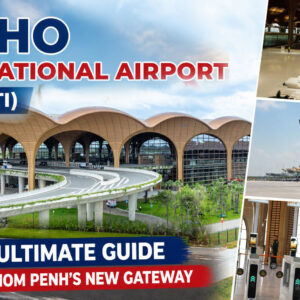
Major Cambodian aviation gateways include Phnom Penh, Siem Reap and Sihanoukville. Cambodia’s international aviation network has also expanded significantly with the opening of Techo International Airport serving Phnom Penh.
When Should You Fly?
Consider flying when:
- You have only a few days in Cambodia.
- You are traveling between distant destinations.
- You prefer to minimize long road journeys.
- You are traveling for business or have a fixed schedule.
For many tourists, however, buses remain more practical because Cambodia’s most popular destinations are well connected by road.
4. Private Car With a Driver
A private car with a driver is one of the most comfortable ways to explore Cambodia, particularly for families, couples, small groups, and travelers who want flexibility.
Instead of purchasing separate tickets for every attraction, you can arrange transportation for a full day or for an intercity journey.
When a Private Car Makes Sense
- Visiting several attractions outside a city.
- Traveling with children or older family members.
- Carrying substantial luggage.
- Exploring rural destinations.
- Traveling in a group and sharing the cost.
- Making multiple stops along one route.
A private driver can be especially useful around Siem Reap when visiting temples and attractions outside the central Angkor area. It can also be convenient for exploring Kampot, Kep, Battambang and countryside destinations.
Agree clearly on the price, duration, destinations, fuel arrangements and any additional charges before starting the journey.
5. Tuk-Tuks and Remorques
The tuk-tuk is one of Cambodia’s most recognizable forms of urban transportation.
Modern Cambodian tuk-tuks may include motorcycle-pulled passenger trailers and other three-wheeled designs commonly referred to as remorques. They are particularly useful for short trips around cities and tourist areas.
They are an excellent choice for:
- Hotel-to-restaurant trips.
- Short city journeys.
- Temple-area transportation.
- Local sightseeing.
- Short evening trips.
Ride-hailing platforms have made tuk-tuk transportation easier for international visitors. Grab currently offers services including GrabTukTuk, while GrabRemorque is available in Phnom Penh and Siem Reap. Grab provides upfront fares for these services, and its app can accept cash or supported credit cards.
6. Ride-Hailing Apps in Cambodia
Ride-hailing apps are among the easiest ways for visitors to get around Cambodia’s larger cities.
Grab
Grab provides car, tuk-tuk, remorque and other transportation options in numerous Cambodian cities, including Phnom Penh, Siem Reap, Kampot, Sihanoukville, Battambang and other destinations.
The main advantage is convenience. You can enter your destination, see the fare before confirming in supported services, and follow the trip through the application. Grab also supports card payments in addition to cash for applicable services.
PassApp
PassApp is another Cambodian ride-hailing platform offering transportation services. Its system allows users to select a service, enter pickup and drop-off locations, and confirm a ride through the application.
For international visitors, having a ride-hailing app installed can reduce the need to negotiate every short journey manually.
7. Getting Around Phnom Penh
Phnom Penh is a busy capital city with significant traffic, particularly during peak hours.
For most visitors, the easiest options are:
- GrabCar: Comfortable and convenient.
- GrabTukTuk: Good for short trips and sightseeing.
- PassApp: Another useful ride-hailing option.
- Traditional taxis: Useful when arranged through reputable providers.
- Private car with driver: Best for a full day of sightseeing or group travel.
Walking is practical in some central areas, but Cambodia’s heat, traffic and road conditions can make long walks uncomfortable.
When using tuk-tuks or motorcycles, keep bags and phones away from the roadside. Foreign travel advice warns that bag snatching by motorcycle riders can occur in Phnom Penh and other tourist areas.
8. Getting Around Siem Reap
Siem Reap is relatively easy to navigate because many hotels, restaurants and tourist attractions are concentrated around the central area.
For short journeys, tuk-tuks and ride-hailing services are convenient.
For Angkor temple sightseeing, travelers can choose:
- Tuk-tuk or remorque with a driver.
- Private car with a driver.
- Ride-hailing rental services.
- Bicycle for experienced cyclists and suitable routes.
- Motorbike where legally permitted and appropriate.
Grab currently offers rental options in Siem Reap, including vehicles for city-center trips, Angkor circuits and longer excursions.
For a full day at Angkor, having a dedicated driver can be more comfortable than ordering separate rides between every temple.
9. Traveling Around Cambodia by Motorbike
Motorbikes can provide freedom and flexibility, particularly for experienced riders exploring smaller towns and rural areas.
However, riding in Cambodia requires considerably more caution than simply renting a scooter and starting to ride.
The Ministry of Public Works and Transport states that drivers in Cambodia need a valid driving licence. Cambodia also has a formal process for foreigners applying for or exchanging a Cambodian driving licence.
Foreign travelers should also check whether their licence, international driving permit, insurance and rental arrangement legally cover the specific motorcycle they intend to ride.
Motorbike Safety Tips
- Always wear a helmet.
- Never ride after drinking alcohol.
- Avoid riding at night if you are unfamiliar with Cambodian roads.
- Slow down at intersections and village roads.
- Keep valuables secured.
- Inspect the motorcycle before accepting it.
- Photograph existing damage before leaving the rental shop.
- Check your travel insurance carefully.
UK government travel advice warns that road accidents are a significant risk in Cambodia and that traveling after dark increases the danger. It also advises travelers to check licensing and insurance requirements before hiring a motorcycle or car.
10. Motorbike Taxis and Moto-Dops
Motorbike taxis, commonly known as moto-dops, can be inexpensive and useful for short journeys.
However, they provide less protection than a car or tuk-tuk. Travelers carrying luggage or valuables may prefer a car or tuk-tuk instead.
Foreign travel advice specifically warns that traveling as a passenger on motorcycle taxis can be dangerous because of traffic and vehicle safety conditions.
11. Boats and Ferries
Boats are important for transportation to some islands and can also provide tourism experiences on selected rivers and lakes.
The most common tourist boat journeys include ferries connecting the mainland with Cambodia’s islands, particularly around the Sihanoukville area.
Boat travel is also associated with destinations around Tonle Sap Lake, although services and conditions can vary significantly according to water levels and season.
For island travel, always check the latest ferry timetable and weather conditions before departure.
Weather can affect boat safety. UK travel advice notes that tourist boats can sometimes operate in poor conditions and that river and lake conditions change significantly between wet and dry seasons.
12. Bicycle Travel in Cambodia
Bicycles can be an enjoyable way to explore Cambodia at a slower pace.
They are particularly suitable for:
- Siem Reap’s quieter roads.
- Small towns.
- Countryside routes.
- Short-distance exploration.
- Eco-tourism experiences.
However, cycling long distances on major highways requires experience and caution. Heat can also become a major issue during the hot season.
For Angkor, cycling can be rewarding for experienced riders, but remember that the archaeological park covers a large area and requires substantial physical effort.
13. Traveling Between Cambodia’s Major Tourist Destinations
| Route | Recommended Options |
|---|---|
| Phnom Penh → Siem Reap | Bus, minivan, flight, private car |
| Phnom Penh → Battambang | Bus, train, private car |
| Phnom Penh → Kampot | Bus, train, private car |
| Phnom Penh → Kep | Train, bus, private car |
| Phnom Penh → Sihanoukville | Bus, train, flight, private car |
| Siem Reap → Battambang | Bus/minivan, private car |
| Kampot → Kep | Tuk-tuk, taxi, private car |
| Sihanoukville → Islands | Ferry / speedboat |
Transport schedules and routes can change, so confirm the current service before booking a time-sensitive connection.
14. How to Choose the Best Transportation
The best transportation method depends on what matters most to you.
If You Are Traveling on a Budget
Use buses, shared minivans, local transportation and ride-hailing services. Public transportation generally costs less than hiring a private car for one or two people.
If You Have Limited Time
Consider domestic flights for long distances and private transportation for local sightseeing. Spending slightly more on transportation can give you additional time at your destination.
If You Are Traveling as a Family
A private car with a driver can be especially convenient. You have more space for luggage, greater flexibility with stops and a more controlled environment for children.
If You Are a Backpacker
Buses and minivans are usually the most practical options for moving between major destinations. Tuk-tuks, ride-hailing apps and occasional trains can handle local transportation.
If You Want an Authentic Experience
Consider taking a train, traveling through smaller towns, cycling in suitable areas, or using local tuk-tuks. Slower transportation can provide a closer look at everyday Cambodian life.
15. Booking Transportation in Cambodia
For popular routes, booking ahead is recommended, particularly during public holidays, Khmer New Year, major festivals and the busiest tourism months.
Before booking, check:
- Departure location.
- Arrival location.
- Departure time.
- Estimated travel duration.
- Luggage allowance.
- Cancellation policy.
- Air conditioning.
- Number of stops.
- Whether hotel pickup is included.
Do not choose a bus or minivan solely because it is the cheapest. For long journeys, vehicle condition, driver standards, departure time and operator reputation are important.
16. Transportation Safety Tips for Cambodia
Transportation is generally manageable for tourists, but road safety deserves serious attention.
- Wear a seat belt whenever one is available.
- Wear a helmet when riding a motorcycle.
- Avoid unnecessary road travel after dark.
- Do not leave valuables visible in vehicles.
- Keep your passport and important documents secure.
- Use reputable transportation providers.
- Check your travel insurance before renting a vehicle.
- Do not give your passport to a rental company as a security deposit.
- Keep bags away from the open side of tuk-tuks near traffic.
UK government travel advice specifically highlights Cambodia’s road-accident risks, motorcycle safety concerns and the importance of checking insurance and licensing requirements.
17. Should You Rent a Car in Cambodia?
For most international visitors, renting a car without a driver is not the easiest option.
Traffic conditions, local driving habits, navigation, road conditions and unfamiliarity with the country can make self-driving stressful.
A private car with a local driver is usually a more comfortable solution for travelers who want flexibility without having to manage the road themselves.
If you do decide to drive, make sure you have the correct licence and insurance. Cambodia’s Ministry of Public Works and Transport provides an official process for driver licensing and licence exchange.
18. Transportation During the Rainy Season
Rain can affect travel times, especially on rural roads.
During the wet season:
- Allow extra time for road journeys.
- Expect occasional delays.
- Check road conditions before traveling to remote areas.
- Use extra caution on motorcycles.
- Protect luggage from rain.
- Check ferry conditions before traveling to islands.
The rainy season does not mean that Cambodia becomes inaccessible. Most major tourist routes continue operating, but travelers should build more flexibility into their schedules.
19. A Practical Transportation Strategy for a First Cambodia Trip
For a first visit, you do not need to use every transportation method.
A simple strategy could be:
- Arrive in Cambodia by air through the airport that best matches your itinerary.
- Use a tuk-tuk or ride-hailing service for short trips inside cities.
- Use a private driver or organized transport for major sightseeing days.
- Use a bus or minivan for convenient intercity connections.
- Consider the train when its route and schedule suit your itinerary.
- Use ferries for island destinations.
- Fly domestically when saving travel time is more important than cost.
Frequently Asked Questions
What is the best way to travel around Cambodia?
For most tourists, a combination of buses, tuk-tuks, ride-hailing services and private cars works best. The right option depends on your route and budget.
Is it easy to travel around Cambodia?
Yes. Cambodia’s major tourist destinations are connected by roads, buses, private transportation and, on selected routes, rail and air services. Rural and remote areas require more planning.
Are buses safe in Cambodia?
Many travelers use buses and minivans successfully, but safety standards vary between operators. Choose reputable companies and avoid extremely tight schedules that leave no room for delays.
Is the train available in Cambodia?
Yes. Royal Railway operates passenger services on northern and southern railway lines from Phnom Penh, including routes toward Battambang, Pursat, Kampot, Kep and Sihanoukville. Always check the current schedule before traveling.
Is Grab available in Cambodia?
Yes. Grab operates in many Cambodian cities and offers services including cars, tuk-tuks and remorques. Availability depends on the city and specific service.
Can tourists rent motorbikes in Cambodia?
Motorbike rental is available in tourist destinations, but visitors should make sure they have the appropriate legal licence and insurance coverage. Cambodia’s Ministry of Public Works and Transport requires drivers to hold a valid licence.
Should I use a tuk-tuk or taxi?
For short city trips, both can work well. Tuk-tuks are particularly useful for short sightseeing journeys, while cars are generally more comfortable for longer trips, luggage or hot weather.
Is it better to travel by bus or train?
It depends on the route. Buses serve more destinations and are usually more flexible, while trains can provide a more relaxed and scenic experience on available routes.
How do I travel from Phnom Penh to Siem Reap?
The most common options are bus or minivan, private car, and air travel. The best choice depends on your budget and whether you prioritize price, comfort or travel time.
How do I travel from Sihanoukville to Koh Rong?
Travelers normally use a passenger ferry or speedboat from the Sihanoukville area. Check the current operator schedule and weather conditions before departure because sea conditions can affect services.
Do I need cash for transportation in Cambodia?
Cash remains useful, particularly for local tuk-tuks, small transportation providers and rural travel. Ride-hailing apps may offer cash and card payment options depending on the service.
Sources & References
- Royal Railway Cambodia — Passenger routes, railway services and current operational information.
- Ministry of Public Works and Transport, Cambodia — Driver licensing requirements and services.
- Grab Cambodia — Current transportation services and coverage.
- PassApp Taxis — Cambodian ride-hailing services.
- UK Foreign, Commonwealth & Development Office — Cambodia travel safety advice, including road, motorcycle and boat transportation risks.
Conclusion
Traveling around Cambodia is easier than many first-time visitors expect. The country offers a useful mix of affordable buses, scenic trains, domestic flights, private cars, tuk-tuks, ride-hailing services, ferries and other local transportation.
For a typical tourist itinerary, there is no need to choose only one form of transport. Use the option that makes sense for each part of your journey: a bus for an affordable intercity trip, a tuk-tuk for a short city ride, a private car for a full day of sightseeing, and a ferry when heading to the islands.
The most important rule is to prioritize safety, reputable operators, correct licensing, travel insurance and realistic journey times. With a little planning, transportation becomes part of the Cambodia experience rather than an obstacle to it.
Planning your Cambodia trip? Continue exploring GoToKH for guides to visas, travel costs, itineraries, destinations, weather, culture and practical travel tips.
