


































Best Nature Destinations in Cambodia: Mountains, Waterfalls, Forests, and Wildlife

Cambodia is widely known for Angkor Wat, ancient temples, and vibrant Khmer culture, but its natural landscapes offer another reason to explore the country. Beyond the historic cities are forest-covered mountains, dramatic waterfalls, freshwater lakes, wildlife habitats, and rural communities surrounded by beautiful scenery.
From the cool highlands of Mondulkiri to the Cardamom Mountains in the southwest, Cambodia offers nature experiences for many kinds of travelers. You can hike through forest trails, swim in waterfalls where permitted, explore volcanic lakes, take a boat through wetlands, or stay in a community-based ecotourism village.
The best destination depends on your interests, available time, comfort level, and travel season. Some places are relatively easy to visit on a short trip, while others require longer journeys, local guides, and careful preparation.
This guide introduces the best nature destinations in Cambodia, what makes each place special, activities to consider, and practical advice for planning a responsible outdoor adventure.
Quick Guide to Cambodia’s Best Nature Destinations
| Destination | Province or Region | Best For |
|---|---|---|
| Bokor National Park | Kampot | Mountain scenery, viewpoints, and waterfalls |
| Kirirom National Park | Kampong Speu | Pine forests, cooler air, and outdoor escapes |
| Mondulkiri | Northeastern Cambodia | Highland landscapes, waterfalls, and forest experiences |
| Ratanakiri and Yeak Laom Lake | Ratanakiri | Crater-lake scenery, forest, and cultural experiences |
| Cardamom Mountains and Chi Phat | Southwestern Cambodia | Trekking, cycling, rivers, and community ecotourism |
| Tatai and the Koh Kong area | Koh Kong | River scenery, rainforest, and boat trips |
| Virachey National Park | Ratanakiri and Stung Treng region | Remote forest landscapes and guided nature exploration |
| Ream National Park | Preah Sihanouk | Coastal forests, mangroves, and marine environments |
| Tonle Sap Lake and Prek Toal | Siem Reap and surrounding lake region | Wetlands, birdwatching, and floating communities |
| Chambok Community-Based Ecotourism | Kampong Speu | Waterfall visits, forest walks, and community tourism |
1. Bokor National Park: Mountain Views and Waterfalls
Best for: Mountain scenery, cooler weather, photography, and a nature-focused day trip.
Bokor National Park, in Kampot Province, is one of Cambodia’s best-known mountain destinations. Rising above the surrounding coastal lowlands, the area offers forested landscapes, winding roads, viewpoints, and waterfalls. Its elevation often brings cooler conditions than the nearby lowland towns, particularly outside the hottest part of the day.
The Bokor area is also known for its historical buildings and religious sites, making it an appealing destination for travelers who want to combine nature with heritage. However, the park’s natural attractions and built-up areas are not the same experience, so visitors should plan their stops according to their interests.
What to see and do
- Bokor mountain viewpoints: Enjoy broad views across the surrounding landscape when visibility is good.
- Popokvil Waterfall: Visit this well-known waterfall, whose appearance and water flow vary by season.
- Forest scenery: Observe the changing vegetation and mountain environment along accessible routes.
- Photography: Capture misty mountain views, landscapes, and roadside scenery where stopping is safe.
- Combine with Kampot: Stay in Kampot town and explore its riverside, local food, and surrounding countryside.
The Ministry of Tourism identifies Bokor National Park and Popokvil Waterfall among Kampot’s notable attractions. Water levels, visibility, and access conditions can change with the weather, so check local information before departure.
How much time should you allow?
A day trip from Kampot can suit visitors with limited time, while an overnight stay in the area gives you more flexibility to explore the surrounding province. Drive carefully on mountain roads and avoid stopping at unsafe roadside viewpoints.

2. Kirirom National Park: Pine Forests and a Cooler Escape
Best for: Forest scenery, picnics, outdoor relaxation, and travelers seeking a break from city heat.
Kirirom National Park, in Kampong Speu Province, is known for its pine-covered highlands and distinctive landscape. Its forest environment differs from the lowland plains and tropical coastal areas that many visitors associate with Cambodia.
The park is a popular choice for a short nature escape from Phnom Penh, although actual travel time depends on your starting point, traffic, and road conditions. It can appeal to couples, families, groups of friends, and independent travelers looking for time outdoors.
Things to do in Kirirom
- Enjoy a walk through accessible forest areas.
- Take photographs of pine trees and highland scenery.
- Arrange a picnic where permitted and remove all rubbish afterward.
- Explore designated viewpoints and outdoor attractions.
- Stay overnight nearby if you want to experience the area without rushing.
Facilities and activities vary by location, and not every trail or attraction is necessarily open at all times. Confirm current access rules before visiting, especially if you plan to hike or camp.
Why visit Kirirom?
Kirirom is a useful choice for travelers who want nature without committing to a long journey into northeastern Cambodia. It can also fit into a broader trip through Kampong Speu Province.
3. Mondulkiri: Highlands, Forests, and Waterfalls
Best for: Waterfall visits, highland landscapes, trekking, wildlife conservation, and longer nature trips.
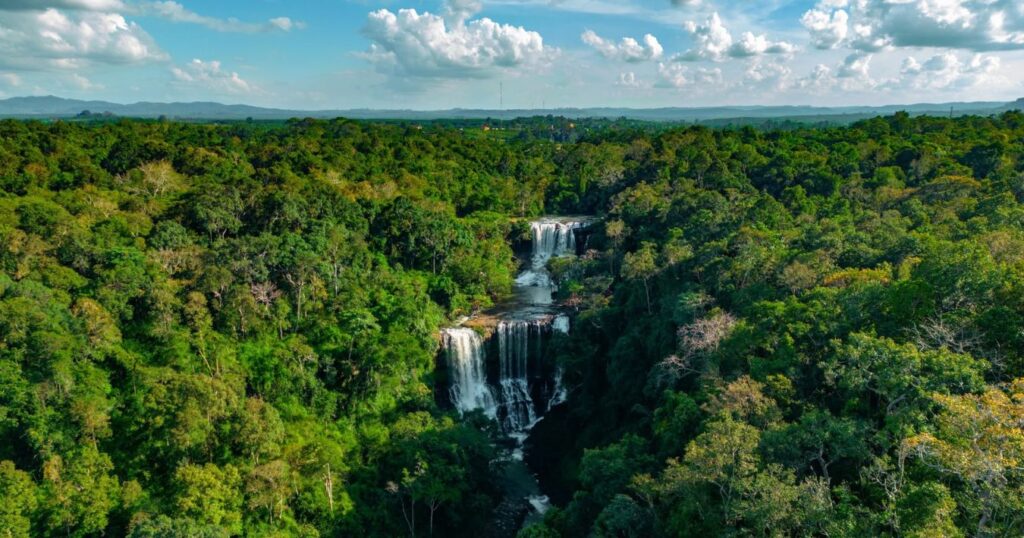
Mondulkiri is one of Cambodia’s most distinctive nature destinations. Located in the northeast, the province is known for rolling hills, extensive forest landscapes, valleys, streams, and waterfalls. Its scenery feels different from the central plains, making it especially attractive to travelers interested in Cambodia’s ecological diversity.
The provincial capital, Sen Monorom, is a common base for exploring the surrounding countryside. Visitors can arrange excursions to waterfalls, forest areas, community tourism projects, and responsible elephant conservation programs.
Bou Sra Waterfall
Bou Sra Waterfall is among Mondulkiri’s best-known natural attractions. Its cascading water and forest surroundings make it a popular stop for photography and sightseeing. The volume of water and the appearance of the falls change according to rainfall and season.
Follow posted safety guidance around slippery rocks, steep edges, and strong water flows. Do not enter restricted areas or attempt to swim where currents or depth make conditions dangerous.
Forest walks and highland scenery
Beyond the waterfalls, Mondulkiri offers opportunities to explore forest landscapes and rolling hills. Guided walks can help visitors understand local ecosystems, learn about conservation, and discover the region at a suitable pace.
Responsible elephant experiences
Mondulkiri is also associated with elephant conservation and community-based tourism. If visiting an elephant project, research its animal-welfare standards before booking.
Look for programs that prioritize the elephants’ well-being, allow animals to behave naturally, and do not depend on riding, performances, or forced interaction. The Elephant Valley Project, for example, describes its approach as observing elephants without riding or tricks.
Respecting Bunong communities
The Bunong people have deep cultural connections to Mondulkiri’s forests and landscapes. When visiting a community or joining a local tour, use a responsible guide, ask permission before photographing people, and respect local customs and places of cultural importance.
How long should you stay?
Allow at least two or three days if you want to explore waterfalls, enjoy a guided nature experience, and travel without rushing. Longer stays are worthwhile for visitors interested in more extensive trekking or community-based activities.
4. Ratanakiri and Yeak Laom Lake: A Volcanic Lake in the Forest
Best for: Freshwater scenery, forest surroundings, cultural exploration, and travelers interested in northeastern Cambodia.
Ratanakiri Province is known for its forested landscapes, highland scenery, and natural attractions. One of its best-known sites is Yeak Laom Lake, a nearly circular lake associated with an ancient volcanic crater near Banlung, the provincial capital.
Surrounded by forest, the lake offers a peaceful setting for visitors who want to enjoy nature without undertaking a demanding expedition. It is a strong option for travelers exploring Cambodia’s northeastern provinces.
What to do at Yeak Laom Lake
- Walk around the lake on designated paths where available.
- Enjoy the forest setting and take landscape photographs.
- Learn about the area’s natural history and cultural significance.
- Swim only if swimming is permitted and local conditions are safe.
- Combine the visit with other natural attractions around Banlung.
The lake is important to local communities, so visitors should respect local guidance, avoid littering, and follow any restrictions on swimming or other activities.
Explore more of Ratanakiri
Depending on your schedule, you can explore waterfalls, countryside, and forest areas around Banlung. Ask local tourism operators about current road conditions and the suitability of routes during the rainy season.
Ratanakiri is a better fit for travelers who can spare several days than for visitors trying to see Cambodia in a short weekend.

5. Cardamom Mountains and Chi Phat: Rainforest Adventure
Best for: Trekking, cycling, kayaking, wildlife observation, and community-based ecotourism.
The Cardamom Mountains form a major forested landscape in southwestern Cambodia. The region contains varied habitats, including evergreen forests, rivers, wetlands, and mountain environments. Its ecological importance makes responsible tourism particularly valuable.
For travelers who want to experience the area while supporting local communities, Chi Phat is a well-known community-based ecotourism destination in Koh Kong Province.
Why visit Chi Phat?
Chi Phat offers a way to explore the Cardamom landscape through locally organized activities. Depending on current services and conditions, visitors may be able to arrange guided forest walks, mountain biking, boat trips, camping, birdwatching, and visits to waterfalls.
Accommodation options can include homestays and guesthouses, allowing travelers to spend time in the village and support locally operated tourism services.
Activities to consider
- Guided trekking: Explore selected forest routes with a knowledgeable local guide.
- Mountain biking: Choose routes that match your fitness and experience.
- Boat trips: Discover rivers and wetland environments with an authorized operator.
- Wildlife and birdwatching: Observe animals from a respectful distance without feeding or disturbing them.
- Community stays: Learn about local life and contribute to community-based livelihoods.
Chi Phat’s official community tourism website recommends preparing carefully because village services are more limited than those in major tourist centers. Check accommodation, guide availability, transport, and equipment requirements in advance.
How long should you stay?
Two or three nights can provide time for a guided activity and a more relaxed village experience. Travelers interested in longer treks or camping should arrange their plans with local operators well ahead of time.
6. Tatai and the Koh Kong Region: Rivers, Rainforest, and Mangroves
Best for: River scenery, boat excursions, rainforest landscapes, and a slower coastal nature escape.
Koh Kong Province is a gateway to some of Cambodia’s southwestern natural landscapes. The wider region includes rivers, forested hills, mangrove environments, and coastal ecosystems. The Tatai area is particularly appealing to visitors who want to spend time near the water and explore nature by boat.
Depending on the location and operator, travelers may find opportunities for river cruises, visits to waterfalls, kayaking, or stays at riverside accommodation. The experience can be more about enjoying the landscape than following a busy sightseeing schedule.
What to do around Tatai
- Take a locally arranged boat trip along the river.
- Enjoy the views of forested hills and waterways.
- Ask about safe, guided visits to nearby waterfalls.
- Explore mangrove and coastal environments through responsible local operators.
- Choose accommodation that suits your preferred level of comfort and access.
Weather, river levels, and boat availability can affect excursions. Confirm the details before departure, and wear a life jacket whenever required or appropriate for the activity.
Who should visit?
Tatai is a good option for couples, nature photographers, and travelers seeking a quieter alternative to busy towns. It can also be combined with other destinations in Koh Kong Province, including community-based ecotourism in the Cardamom Mountains.
7. Virachey National Park: Remote Forests and Biodiversity
Best for: Experienced nature travelers, guided trekking, biodiversity, and remote landscapes.
Virachey National Park lies in northeastern Cambodia, in a region of forested mountains and extensive natural habitats. It is one of the country’s important protected landscapes and offers a different experience from more accessible attractions such as Kirirom or Bokor.
Travel here requires more preparation. Routes, guide availability, weather, and access restrictions may determine which activities are possible. Visitors should not assume that every part of the park is open for independent exploration.
What makes Virachey special?
- Large forest landscapes and varied natural habitats.
- Opportunities to learn about biodiversity and conservation.
- Guided nature experiences for travelers interested in remote environments.
- A chance to understand the importance of protecting Cambodia’s natural heritage.
Plan carefully before visiting
Contact authorized local guides or relevant park authorities to confirm permitted routes, required arrangements, and current conditions. Remote forest travel can involve limited communications, difficult terrain, insects, and rapidly changing weather.
Virachey is not the best choice for a casual day trip. It is more suitable for visitors who are prepared to follow local guidance and adapt their plans to environmental and safety conditions.
8. Ream National Park: Coastal Forests and Marine Environments
Best for: Coastal nature, mangroves, boat trips, and travelers combining wildlife with a seaside holiday.
Ream National Park, in Preah Sihanouk Province, protects a mix of coastal and terrestrial environments. The wider landscape includes waterways, mangroves, forest habitats, and marine areas, offering a different kind of nature experience from Cambodia’s mountain destinations.
For visitors staying around Sihanoukville, the park can provide an opportunity to explore natural environments beyond the main beach areas. Activities depend on current access and local arrangements, but may include guided boat trips and nature observation.
Things to consider
- Arrange boat trips with responsible local operators.
- Respect protected habitats and any access restrictions.
- Avoid leaving rubbish or disturbing wildlife.
- Check weather conditions before going out on the water.
- Confirm which activities and areas are currently open to visitors.
Ream is especially relevant for travelers who want to learn about coastal ecosystems. It can complement a beach holiday, although visitors should plan transport and activities in advance rather than assuming all areas are easily accessible.
9. Tonle Sap Lake and Prek Toal: Wetlands and Birdlife
Best for: Birdwatching, wetland landscapes, boat trips, and learning about freshwater ecosystems.
Tonle Sap is Cambodia’s largest freshwater lake system and one of the country’s most important ecological landscapes. Its size and water levels change substantially throughout the year, influencing habitats, fishing livelihoods, and communities around the lake.
For nature-focused travelers, the lake offers a chance to see a side of Cambodia very different from mountains and forests. Boat excursions can reveal open water, flooded vegetation, fishing areas, and communities whose daily lives are closely connected to the lake.
Discover Prek Toal
Prek Toal is known for its wetland habitats and importance for waterbirds. It is a destination of interest to birdwatchers and travelers who want to understand the relationship between wildlife, water, and local livelihoods.
Birdwatching opportunities depend on the season, water conditions, and the species present. Arrange visits with knowledgeable local guides, maintain a respectful distance from wildlife, and follow conservation rules.
When should you visit?
The lake changes throughout the year, so the appearance of the landscape and the type of boat trip available may vary. Before booking, ask your operator about seasonal water levels, expected wildlife sightings, departure times, and the length of the excursion.
Tonle Sap and Prek Toal can be combined with a stay in Siem Reap, making them useful additions to a trip that already includes Angkor’s historic sites.

10. Chambok Community-Based Ecotourism: Waterfalls and Rural Nature
Best for: Short nature trips, waterfall visits, forest walks, and community-based tourism.
Chambok, in Kampong Speu Province, is associated with community-based ecotourism and offers a way to explore rural landscapes while supporting local livelihoods. It is a useful destination for travelers who want a nature experience without undertaking a long journey into a remote forest region.
Depending on current arrangements and seasonal conditions, visitors may be able to enjoy forest walks, visit waterfalls, and learn about local life through community-organized activities.
Why choose a community-based nature destination?
Community-based ecotourism can create income opportunities for residents while giving visitors a more direct understanding of the area’s environment and culture. Its success depends on responsible visitor behavior, fair local participation, and the protection of natural resources.
Tips for visiting Chambok
- Check current activity availability before traveling.
- Use local guides when required or recommended.
- Bring suitable footwear for forest paths and wet conditions.
- Ask before photographing residents or entering private areas.
- Take all rubbish away and avoid damaging plants or wildlife habitats.
Chambok can be a good option for travelers seeking a relatively accessible introduction to community-based ecotourism in Cambodia.
Which Nature Destination Is Best for Your Travel Style?
With so many landscapes to choose from, selecting a destination becomes easier when you consider your time, interests, and preferred level of adventure.
For a short trip from Phnom Penh
Consider Kirirom National Park or a nature-focused visit in Kampong Speu. These options may be more practical than traveling all the way to the northeastern highlands, although journey times depend on traffic and your exact destination.
For waterfalls and mountain scenery
Mondulkiri and Bokor National Park are strong choices. Mondulkiri suits travelers with more time for exploring the highlands, while Bokor can be combined with a stay in Kampot.
For trekking and forest exploration
Chi Phat and the Cardamom Mountains offer community-based guided activities. Virachey National Park may suit experienced travelers seeking more remote environments, provided the visit is arranged through appropriate local channels.
For wildlife and birdwatching
Consider Tonle Sap and Prek Toal for wetland birdlife, or explore responsible conservation experiences in Mondulkiri. Wildlife sightings are never guaranteed, and visitors should avoid any activity that disturbs animals.
For a quiet nature retreat
The Tatai area and selected highland destinations can be suitable for travelers who want time outdoors without packing every day with activities. Check accommodation locations, available services, and transport options before booking.
Best Time to Explore Nature in Cambodia
Cambodia has a tropical monsoon climate, and the best time for nature travel depends on the destination and the activities you plan to do. Broadly, the drier months from around November to April are often convenient for road travel and outdoor excursions. The rainy season, generally from May to October, can bring greener landscapes and stronger waterfall flows but may also make some routes more difficult.
November to February
This period is often comfortable for outdoor activities, with relatively dry conditions in many parts of the country. It is a popular travel period, so arrange accommodation and guided excursions early when visiting well-known destinations.
March to April
Temperatures can be high, particularly in lowland areas. Begin hikes early, carry sufficient drinking water, use sun protection, and take breaks in the shade.
May to October
Rain can transform forests, rivers, and waterfalls, but heavy showers may affect road access, trekking routes, and boat trips. Check the forecast and local advice before setting out, especially in remote areas.
There is no single perfect season for every destination. Ask local operators about the specific trail, waterfall, lake, or wildlife experience you plan to visit.
Practical Tips for Nature Travel in Cambodia
1. Check access and transport in advance
Some natural attractions are easy to reach, while others require a private vehicle, local transport, a boat, or a guided excursion. Confirm the route and return arrangements before traveling.
2. Choose suitable footwear and clothing
Comfortable walking shoes are useful for most nature trips. For trekking, bring footwear with good grip, lightweight clothing, a rain jacket during wetter months, and a small backpack for essentials.
3. Carry enough water and basic supplies
Remote destinations may have limited shops and services. Bring drinking water, sun protection, insect repellent, any necessary medication, and a charged phone. For longer treks, ask your guide about food, water, and emergency preparations.
4. Respect wildlife
Observe animals from a distance, never feed wild animals, and avoid tours that encourage handling or forced interaction. For wildlife and elephant experiences, choose operators that put animal welfare and conservation first.
5. Leave no trace
Carry rubbish out, stay on designated paths, avoid damaging plants, and do not collect wildlife, plants, rocks, or cultural objects from protected areas. Follow instructions from local guides and park staff.
6. Support local communities
Where appropriate, hire local guides, use community-run services, and buy food or crafts from local businesses. Responsible spending can help create incentives for protecting natural resources and preserving cultural traditions.
7. Prepare for limited connectivity
Mobile coverage and internet access may be unreliable in remote forests and mountainous areas. Download maps or important information before departure, tell someone about your itinerary, and follow your guide’s safety advice.
Suggested 7-Day Nature Itinerary in Cambodia
If you have a week to explore Cambodia’s natural landscapes, a route through the southwest can combine mountain scenery, forest experiences, and coastal environments. This itinerary is a planning example; transport availability and road conditions should determine the final schedule.
Days 1–2: Kampot and Bokor National Park
Use Kampot as a base to explore Bokor’s mountain scenery and visit Popokvil Waterfall when conditions allow. Enjoy the town’s riverside atmosphere in the evening and leave time for rest rather than trying to fit every attraction into one day.
Days 3–4: Chi Phat and the Cardamom Mountains
Travel toward the Chi Phat area and arrange community-based activities with local operators. Depending on your interests, choose a guided forest walk, cycling excursion, or boat trip. Confirm transfer times and accommodation before leaving Kampot.
Days 5–6: Tatai and Koh Kong
Continue toward Koh Kong and enjoy a river-focused nature experience around Tatai. Choose a responsible boat operator and check the weather before arranging excursions.
Day 7: Return travel
Keep the final day flexible for the journey back to your departure city. If your transport connection is important, avoid scheduling a remote excursion immediately before it.
This route involves substantial road travel and is best suited to visitors comfortable with changing locations. If you prefer less time in transit, spend the full week in one region, such as Kampot and its surroundings, or explore Mondulkiri over several days instead.
Frequently Asked Questions About Nature Destinations in Cambodia
What is the best nature destination in Cambodia?
There is no single best destination for everyone. Mondulkiri is excellent for highland scenery and waterfalls, Bokor is known for mountain views, Chi Phat offers guided forest adventures, and Tonle Sap is important for wetland landscapes and birdlife.
Where can I see waterfalls in Cambodia?
Well-known options include Bou Sra Waterfall in Mondulkiri, Popokvil Waterfall in the Bokor area, and waterfalls accessible through selected community-based ecotourism sites. Water flow and access vary by season, so check local conditions before traveling.
Are Cambodia’s national parks suitable for families?
Some parks and accessible nature areas can be suitable for families, especially when activities are chosen according to children’s ages and abilities. Check trail difficulty, road conditions, available facilities, and water safety before visiting.
Can I explore Cambodia’s nature destinations without a guide?
Some accessible attractions can be visited independently, but remote forests, longer treks, wildlife areas, and boat excursions may require or strongly benefit from a local guide. Always follow park rules and confirm which routes are open.
When is the best time to visit Cambodia’s waterfalls?
Waterfalls often have stronger flows during and after rainy periods, but heavy rain can make access routes slippery or unsafe. The ideal timing depends on the specific waterfall and recent weather conditions.
Where can I experience responsible elephant tourism in Cambodia?
Mondulkiri has elephant conservation and ecotourism projects. Research the individual operator’s animal-welfare standards and prioritize experiences that allow elephants to behave naturally without riding, performances, or forced contact.
Is Cambodia good for ecotourism?
Cambodia offers community-based tourism, forest exploration, wetland excursions, and wildlife conservation experiences. Responsible operators can help visitors experience natural areas while supporting local livelihoods and conservation efforts.
How many days do I need to explore Cambodia’s nature?
A nearby attraction may fit into a day trip, while destinations such as Mondulkiri, Ratanakiri, and the Cardamom Mountains deserve several days. Allow additional time for long journeys, guided activities, and possible weather-related changes.
Sources & References
- Ministry of Tourism, Cambodia – Mondulkiri Province: https://www.tourismcambodia.org/public/index.php/provinces/46/mondulkiri
- Ministry of Tourism, Cambodia – Kampot Province and Bokor National Park: https://www.tourismcambodia.org/public/index.php/provinces/52/kampot
- Ministry of Tourism, Cambodia – Chi Phat Community-Based Ecotourism Site: https://www.tourismcambodia.org/public/index.php/mot/cbet-destination/541/chi-phat-community-based-ecotourism-site
- Chi Phat Community-Based Ecotourism – Official destination information: https://chi-phat.org/
- Ministry of Tourism, Cambodia – Community-Based Ecotourism Destinations: https://www.tourismcambodia.org/public/mot/cbet-destination
- Elephant Valley Project – Elephant welfare and conservation: https://elephantvalleyproject.org/
- Ministry of Tourism, Cambodia – Official provincial and destination information: https://www.tourismcambodia.org/public/provinces
Conclusion: Discover Cambodia Beyond Its Famous Temples
Cambodia’s natural landscapes reveal a quieter and more adventurous side of the country. From the pine forests of Kirirom and mountain viewpoints in Bokor to Mondulkiri’s waterfalls, Ratanakiri’s crater lake, and the rainforest trails around Chi Phat, there are many ways to experience the country’s natural diversity.
For a short escape, choose a destination that is relatively easy to reach. If you have more time, consider a highland journey or a guided forest adventure. Wetlands and coastal parks offer another perspective, highlighting the importance of water, wildlife, and conservation.
Wherever you go, travel responsibly, prepare for local conditions, and respect the communities and ecosystems that make these places special.
Start planning your Cambodia nature adventure with GoToKH.com and explore more destinations, travel guides, and ideas for discovering the Kingdom’s natural beauty.
