







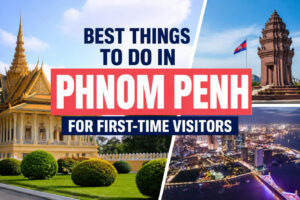


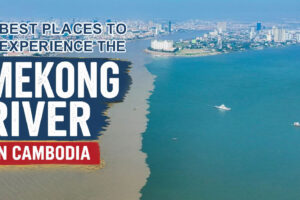





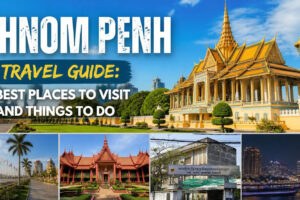









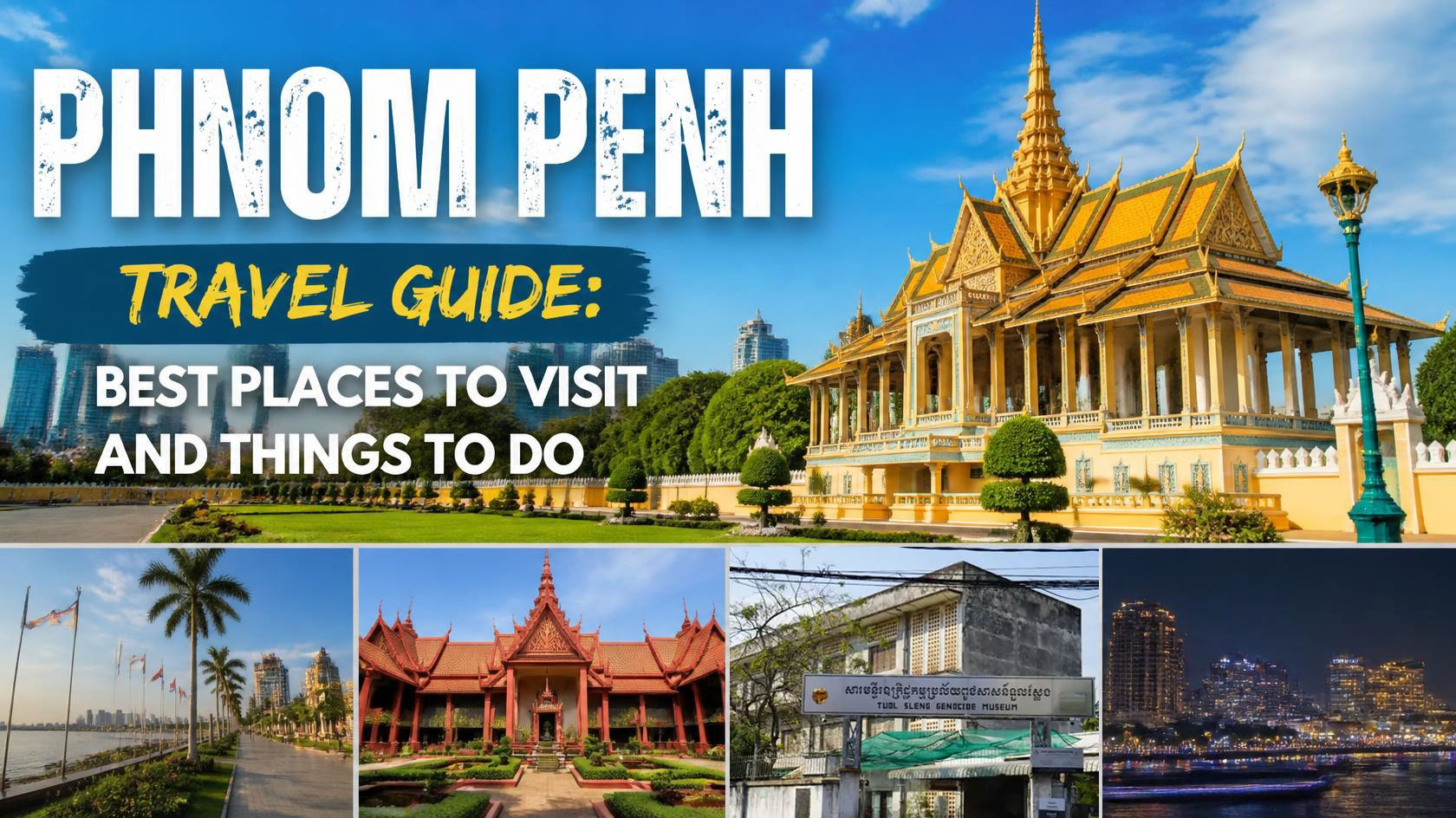

Welcome to Phnom Penh, the vibrant capital of Cambodia, where golden-roofed palaces, Buddhist temples, bustling markets, riverside promenades, and modern cafés come together in one fascinating destination. Located at the meeting point of the Mekong, Tonle Sap, and Bassac rivers, Phnom Penh offers travelers an opportunity to discover Cambodia beyond the ancient temples of Angkor.
Whether you are visiting Cambodia for the first time, exploring Southeast Asia, or returning to experience more of Khmer culture, Phnom Penh has something memorable to offer. Visitors can admire the Royal Palace, discover centuries of Khmer art at the National Museum, learn about Cambodia’s difficult modern history, sample traditional Cambodian dishes, and enjoy the lively atmosphere along the riverfront.
This comprehensive Phnom Penh travel guide introduces the best places to visit, top things to do, recommended itineraries, transportation options, accommodation areas, and essential travel tips to help you plan a rewarding visit to Cambodia’s capital.
Phnom Penh at a Glance
- Country: Cambodia
- Destination: Phnom Penh, the national capital
- Best for: History, culture, architecture, museums, markets, dining, and riverside experiences
- Recommended stay: Two to three days for most first-time visitors
- Languages: Khmer is the official language; English is commonly used in many tourism-related businesses
- Currency: Cambodian Riel (KHR); US dollars are also widely used
- Best time to visit: Generally November to February for more comfortable sightseeing weather
- Main international gateway: Techo International Airport (KTI)
Why Visit Phnom Penh?
Phnom Penh is more than a stop between Siem Reap and Cambodia’s southern beaches. It is the country’s political, cultural, and commercial center, with layers of history visible throughout its streets.
At the Royal Palace, visitors encounter Cambodia’s royal heritage and traditional architecture. The National Museum reveals the artistry of civilizations that shaped the country long before the modern capital existed. Buddhist pagodas offer insight into everyday spiritual life, while neighborhood markets reveal how residents shop, eat, work, and socialize.
Phnom Penh also contains important memorials connected to the Khmer Rouge period. Visiting these sites can deepen travelers’ understanding of Cambodian history and the importance of remembrance, reconciliation, and peace.
Beyond its historical attractions, the capital offers contemporary Cambodian experiences: independent coffee shops, modern shopping centers, creative restaurants, traditional street food, and pleasant evening walks beside the river.
Best Places to Visit in Phnom Penh
1. Royal Palace – Discover Cambodia’s Royal Heritage
The Royal Palace of Cambodia is one of the city’s most recognizable landmarks and a highlight of almost every Phnom Penh itinerary.
Established in the nineteenth century, the palace complex is known for its elegant Khmer architecture, gilded rooftops, ceremonial buildings, and landscaped gardens. The complex remains an official royal residence, so visitors can explore designated public areas rather than the entire property.
One of its most important buildings is the Throne Hall, used for royal ceremonies and official occasions. The nearby Silver Pagoda, also known as Wat Preah Keo Morakot, contains important Buddhist treasures and is famous for its silver-tiled floor.
Visitor tips: Wear clothing covering your shoulders and knees, allow around 90 minutes to two hours, and visit in the morning when temperatures are usually more comfortable. Opening arrangements can change during royal ceremonies, and photography restrictions apply inside certain buildings.
2. National Museum of Cambodia – Explore Khmer Art and History
Located close to the Royal Palace, the National Museum of Cambodia is an excellent destination for travelers interested in Khmer civilization, religion, sculpture, and cultural heritage.
The museum occupies a beautiful red-toned building inspired by traditional Khmer architecture and arranged around a peaceful central courtyard.
Its collection includes sculptures, ceramics, bronzes, and other cultural objects representing Cambodia’s prehistoric, pre-Angkorian, Angkorian, and post-Angkorian periods. For travelers planning to visit Angkor Wat, the museum provides valuable historical context.
Notable works include representations of Hindu deities and Buddhist figures that demonstrate the artistic achievements and religious influences of earlier Khmer kingdoms.
Visitor tips: The museum’s published hours are 8:00 AM to 5:00 PM, with final admission at 4:30 PM. According to its official website, adult foreign admission is US$10. Photography is not permitted inside the galleries, although exterior and courtyard photography is generally allowed. Confirm current details before visiting.
3. Wat Phnom – Visit the Temple Associated with the City’s Name
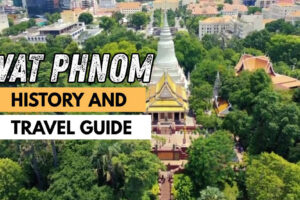
Wat Phnom is one of Phnom Penh’s most significant Buddhist temples. Standing on a small hill near the northern part of the historic city center, it is closely associated with the traditional story of how Phnom Penh received its name.
According to local tradition, a woman named Penh discovered sacred Buddha images and arranged for a sanctuary to be built on the hill. The surrounding settlement gradually became associated with Phnom Penh, meaning Penh’s Hill.
Today, visitors can explore the temple grounds, observe religious traditions respectfully, and enjoy one of the city’s greener historic spaces.
Visitor tips: Allow approximately 45 minutes to an hour. Dress modestly, behave respectfully around worshippers, and consider visiting in the morning or late afternoon.
4. Tuol Sleng Genocide Museum – Understand Cambodia’s Recent History
The Tuol Sleng Genocide Museum, formerly known as Security Prison 21 (S-21), is one of Cambodia’s most important historical memorial sites.
Originally a school, the complex was transformed into a detention and interrogation center during the Khmer Rouge regime. Today, the museum preserves historical evidence, photographs, exhibits, survivor testimony, and other materials documenting the suffering experienced during this period.
Visitors should approach the museum with sensitivity and respect. Some exhibits contain distressing accounts and images, and the experience may not be appropriate for young children.
In July 2025, Tuol Sleng and Choeung Ek became part of the UNESCO World Heritage property Cambodian Memorial Sites: From Centres of Repression to Places of Peace and Reflection, together with the former M-13 prison site.
Visitor tips: The museum’s official website lists daily opening hours of 8:00 AM to 5:00 PM and an adult international admission fee of US$5. Audio guides are available for an additional charge. Allow at least 90 minutes, particularly if using an audio guide.
Official website: Tuol Sleng Genocide Museum.
5. Choeung Ek Genocidal Center – A Place of Remembrance
Located south of central Phnom Penh, Choeung Ek Genocidal Center is another significant memorial documenting the atrocities committed during the Khmer Rouge period.
The site was used as an execution and burial location and is now preserved as a place of remembrance and historical education. Visitors can learn about the victims, the history of the site, and Cambodia’s continuing efforts to preserve historical memory.
Choeung Ek is part of the same UNESCO World Heritage inscription as Tuol Sleng. Together, the two locations offer essential context for understanding Cambodia’s twentieth-century history.
Because the subject matter is emotionally difficult, visitors may prefer to set aside a dedicated morning or afternoon rather than combine these memorials with an overly busy sightseeing schedule.
Visitor tips: Arrange transportation in advance, allow sufficient travel time, and follow all memorial guidelines. Avoid inappropriate photography and treat the site as a place of mourning and reflection.
6. Central Market – Explore Phnom Penh’s Art Deco Landmark
Central Market, known locally as Phsar Thmei, is one of the most distinctive markets in Cambodia.
Recognizable by its large central dome and Art Deco architecture, the market is both an important commercial center and an interesting sightseeing destination.
Inside, travelers can browse clothing, jewelry, accessories, souvenirs, household goods, and other products. Around the surrounding market area, food stalls and small businesses offer a glimpse into daily commercial life in the capital.
Central Market is particularly suitable for travelers who enjoy architecture, shopping, and observing the energy of Cambodian city life.
Visitor tips: Visit earlier in the day to avoid the strongest heat, keep small valuables secure, and compare prices before purchasing souvenirs.
7. Russian Market – Shop for Souvenirs and Experience Local Life
Tuol Tom Poung Market, widely known as the Russian Market, is another popular destination for visitors looking for handicrafts, clothing, artwork, and souvenirs.
The market offers a lively shopping environment with narrow aisles and an extensive variety of goods. Travelers may find traditional textiles, decorative items, accessories, and locally made products.
The surrounding Tuol Tom Poung neighborhood has also developed a vibrant café and restaurant scene, making it a good area to explore beyond the market itself.
Visitor tips: Bring cash in small denominations, explore the surrounding streets, and negotiate prices politely where bargaining is appropriate. When purchasing traditional crafts, look for sellers who can explain the product’s origin and craftsmanship.
8. Sisowath Quay – Enjoy Phnom Penh’s Riverside
One of the most enjoyable free activities in Phnom Penh is walking along Sisowath Quay, the city’s well-known riverside promenade.
The area offers open views toward the rivers, opportunities for people-watching, and easy access to restaurants, cafés, hotels, and historic attractions.
Late afternoon and early evening are especially pleasant times to visit. As temperatures begin to cool, the waterfront becomes a gathering place for residents and travelers enjoying exercise, conversation, and evening walks.
For a different perspective, consider joining a river cruise. Boat trips can provide views of the city’s skyline, waterfront buildings, and river junction.
Visitor tips: Take an evening walk, bring a camera, and compare river-cruise prices and safety arrangements before booking.
9. Independence Monument – Admire an Important National Landmark
The Independence Monument, situated at the intersection of Norodom Boulevard and Sihanouk Boulevard, commemorates Cambodia’s independence from France in 1953.
Its distinctive design reflects traditional Khmer architectural influences, making it one of the capital’s most recognizable landmarks.
The surrounding landscaped area and nearby public monuments contribute to the ceremonial atmosphere of this part of the city.
Visitors can admire the monument from surrounding pedestrian-accessible areas, especially in the evening when the monument is illuminated.
Visitor tips: Do not enter busy traffic to take photographs. The monument is best appreciated from safe viewpoints around the surrounding streets and public spaces.
10. SOSORO Museum – Learn About Cambodia Through Money and Economics
For visitors looking for something different, the SOSORO Museum offers an engaging perspective on Cambodian history through economics, trade, money, and financial development.
Established by the National Bank of Cambodia, the museum uses historical exhibits and multimedia displays to explain how Cambodia’s monetary system evolved over many centuries.
The museum is particularly interesting for travelers who want to understand the relationship between Cambodia’s historical kingdoms, international trade, economic challenges, and modern development.
Visitor tips: According to its official website, the museum opens Tuesday through Sunday from 9:00 AM to 6:00 PM. Allow approximately one to three hours depending on your interest in the exhibitions.
Official website: SOSORO Museum.
11. Koh Dach (Silk Island) – Escape the Busy City
If you have extra time in Phnom Penh, consider an excursion to Koh Dach, often called Silk Island, in the Mekong River area.
The island is known for a quieter rural atmosphere, village scenery, and traditional weaving activities. It offers a contrast to Phnom Penh’s busy roads, commercial buildings, and crowded markets.
Travelers interested in traditional crafts can seek out local weaving workshops and learn about textile production. Purchasing directly from local makers can be a meaningful way to support community businesses.
Visitor tips: Arrange transportation and ferry details in advance, check whether workshops are receiving visitors, and avoid photographing residents without permission.
Best Things to Do in Phnom Penh Beyond Sightseeing
Try Traditional Cambodian Food
A visit to Phnom Penh would not be complete without exploring Khmer cuisine. The capital offers everything from simple neighborhood eateries to contemporary restaurants presenting traditional Cambodian flavors in new ways.
Popular dishes worth trying include:
- Fish Amok: A fragrant Cambodian fish preparation featuring coconut milk and aromatic spices.
- Beef Lok Lak: Stir-fried beef commonly served with vegetables and a pepper-lime dipping sauce.
- Num Banh Chok: Khmer rice noodles traditionally served with a flavorful fish-based gravy and fresh vegetables.
- Bai Sach Chrouk: Grilled pork with rice, commonly eaten for breakfast.
- Khmer Curry: A mildly spiced coconut-based curry often enjoyed with rice or bread.
Neighborhoods such as BKK1, Tuol Tom Poung, and the Riverside area provide many dining choices, from Cambodian food to international cuisine.
Discover Phnom Penh’s Coffee Culture
Phnom Penh has an active café culture, combining traditional Cambodian coffee shops with independent specialty cafés and modern coffee chains.
Visitors can enjoy a traditional iced coffee, try Cambodian-grown coffee beans, or spend time relaxing in a modern café after sightseeing.
BKK1 and Tuol Tom Poung are particularly appealing for travelers who enjoy exploring different cafés and restaurants.
Take a Sunset River Cruise
A river cruise can be a memorable way to experience Phnom Penh from the water. Depending on the route, passengers may see riverside neighborhoods, traditional boats, bridges, and the changing skyline.
Sunset trips are especially popular. However, operators, schedules, and river conditions vary, so compare options before booking.
Explore Local Neighborhoods
Some of Phnom Penh’s most rewarding experiences come from simply exploring beyond its famous landmarks.
Walking through appropriate pedestrian areas, visiting neighborhood cafés, observing local markets, and exploring quieter streets can reveal the everyday rhythms of Cambodian urban life.
For a more meaningful experience, support local businesses, respect private property, and ask permission before taking photographs of people.
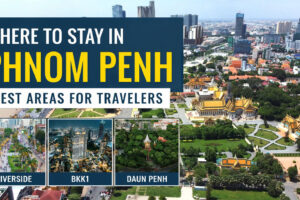
Where to Stay in Phnom Penh
Choosing the right neighborhood can make your trip more comfortable and reduce travel time between attractions.
| Area | Best For | What to Expect |
|---|---|---|
| Riverside | First-time visitors and sightseeing | River views, restaurants, and easy access to historic attractions |
| Daun Penh | History and culture | Central location near major landmarks |
| BKK1 | Couples, business travelers, and food lovers | Modern hotels, cafés, restaurants, and convenient services |
| Tonle Bassac | Modern accommodation and dining | Contemporary hotels, apartments, and entertainment |
| Tuol Tom Poung | Budget travelers and longer stays | Markets, independent cafés, and a more local neighborhood atmosphere |
Our recommendation: Choose Riverside or Daun Penh for a short sightseeing trip. BKK1 is an excellent all-round option if you prefer restaurants, cafés, and modern accommodation.
How Many Days Do You Need in Phnom Penh?
For most first-time visitors, two to three days in Phnom Penh provide a comfortable introduction to the capital.
One Day in Phnom Penh
With just one day, concentrate on the historic center:
- Morning: Royal Palace and Silver Pagoda
- Late morning: National Museum of Cambodia
- Afternoon: Wat Phnom or Central Market
- Evening: Riverside walk and Cambodian dinner
Two Days in Phnom Penh
Spend the first day exploring the Royal Palace, National Museum, Wat Phnom, and Riverside.
Use the second day to learn about Cambodia’s modern history at Tuol Sleng and Choeung Ek, allowing plenty of time for reflection. If you prefer a lighter itinerary, substitute a neighborhood market, SOSORO Museum, or cultural experience.
Three Days in Phnom Penh
Three days allow a more relaxed visit:
- Day 1: Royal Palace, Silver Pagoda, National Museum, and Riverside
- Day 2: Tuol Sleng, Choeung Ek, and a quiet afternoon
- Day 3: Central Market, Russian Market, SOSORO Museum, local cafés, or an excursion to Koh Dach
Adjust the schedule according to opening hours, traffic, weather, and your personal interests.
How to Get to Phnom Penh
By Air
Techo International Airport (KTI) began operations on September 9, 2025, becoming the principal international air gateway serving Phnom Penh.
The airport is located south of central Phnom Penh in Kandal Province. Travelers can reach the city by taxi, private transfer, and other available transportation services. An airport express bus also connects the airport with designated city stops.
Because the airport is outside the central urban area, allow adequate time for transfers, particularly during busy traffic periods.
For official airport transportation information, visit Techo International Airport – Transportation.
By Bus or Private Vehicle
Phnom Penh is connected by road to major Cambodian destinations, including Siem Reap, Battambang, Kampot, Kep, and Sihanoukville.
Intercity buses, minivans, and private transfers are available on many popular routes. Journey times depend on traffic, weather, road conditions, and the type of transport chosen.
Travelers should use reputable operators, confirm departure locations, and allow extra time during Cambodian public holidays.
How to Get Around Phnom Penh
Phnom Penh is relatively easy to explore once you understand its transportation options.
- Tuk-tuks: Convenient for short and medium-distance journeys around the capital.
- Ride-hailing apps: Services such as Grab and PassApp can help travelers request rides and check fares.
- Taxis and private cars: Useful for airport transfers, families, and longer journeys.
- Walking: Suitable around the Royal Palace, museum district, and Riverside, especially during cooler hours.
- Public buses: An inexpensive option for travelers comfortable navigating bus routes and stops.
Traffic can be heavy, and sidewalks may be uneven or obstructed. Use caution when crossing roads, and avoid assuming vehicles will stop automatically at pedestrian crossings.
Best Time to Visit Phnom Penh
Phnom Penh has a tropical climate, with warm temperatures throughout the year.
November to February: Generally the Most Comfortable Season
These months typically bring more pleasant conditions for outdoor sightseeing, walking, temple visits, and market exploration. They are often considered the best months to visit Phnom Penh.
March to May: Hot Season
Temperatures can become intense, particularly around midday. Plan outdoor attractions for the morning, drink sufficient water, and use the hottest part of the day for indoor museums or breaks.
June to October: Rainy Season
The rainy season brings higher humidity and periodic heavy showers. Sightseeing remains possible, but flexible plans are helpful because rainfall and localized flooding can affect travel conditions.
Regardless of the season, lightweight clothing, sun protection, comfortable footwear, and a reusable water bottle are useful.
Phnom Penh Travel Budget
Phnom Penh accommodates a wide range of travel budgets. Total costs depend on accommodation, dining choices, transportation, and paid attractions.
| Travel Style | Indicative Daily Budget |
|---|---|
| Budget traveler | US$25–45 |
| Mid-range traveler | US$50–100 |
| Comfortable or luxury traveler | US$150 or more |
These are broad planning estimates per person, not guaranteed prices. International flights, major shopping, and some private tours are excluded. Hotel-sharing arrangements can also change the cost per person.
Travelers can save money by eating at local restaurants, grouping nearby attractions together, comparing transportation fares, and selecting accommodation that fits their sightseeing plans.
Essential Phnom Penh Travel Tips
- Dress respectfully: Cover your shoulders and knees when visiting active temples, religious sites, and the Royal Palace.
- Use local currency: Cambodian Riel is especially useful for small purchases, markets, and everyday payments.
- Carry practical cash amounts: Some small businesses prefer cash, while many established businesses also accept digital or card payments.
- Protect valuables: Keep phones, bags, and wallets secure, especially near busy roads and markets.
- Stay hydrated: Phnom Penh can be hot and humid, even outside the hottest months.
- Respect memorial sites: Follow visitor rules and avoid insensitive behavior or photography.
- Confirm entry requirements: Check current visa conditions, passport validity, and the official Cambodia e-Arrival requirements before traveling.
- Use reliable transportation: Confirm pickup locations, fares, and airport details before departure.
- Check attraction details: Opening hours, admission fees, and access arrangements can change during holidays or official events.
Frequently Asked Questions About Phnom Penh
Is Phnom Penh worth visiting?
Yes. Phnom Penh offers an important combination of Cambodian royal heritage, Buddhist culture, museums, traditional markets, riverfront experiences, and modern city life. It is particularly rewarding for travelers interested in history and understanding contemporary Cambodia.
What are the best things to do in Phnom Penh?
The most popular activities include visiting the Royal Palace and Silver Pagoda, exploring the National Museum, walking along Sisowath Quay, visiting Wat Phnom, browsing Central Market, and learning about Cambodian history at Tuol Sleng and Choeung Ek.
How many days should I spend in Phnom Penh?
Two to three days are ideal for most first-time visitors. A single day can cover several central attractions, while three days allow for markets, museums, local dining, and a more relaxed pace.
Is Phnom Penh safe for tourists?
Phnom Penh can be visited comfortably with normal travel precautions. Keep valuables secure, use reputable transportation services, remain alert around traffic, and avoid walking alone in poorly lit unfamiliar areas late at night.
What is the best area to stay in Phnom Penh?
Riverside and Daun Penh are convenient for sightseeing, while BKK1 is popular for comfortable accommodation, restaurants, and cafés. Tuol Tom Poung is another interesting option for travelers seeking a more local atmosphere.
Can I explore Phnom Penh without a tour guide?
Yes. Many attractions are accessible independently, especially when using tuk-tuks or ride-hailing apps. However, guides and museum audio tours can provide valuable historical explanations, particularly at major heritage and memorial sites.
Which airport serves Phnom Penh?
Techo International Airport (KTI) is the principal international airport serving Phnom Penh. It began operations on September 9, 2025. Check your flight booking and official airport information before arranging transfers.
Is Phnom Penh better than Siem Reap?
The two destinations offer different experiences. Siem Reap is the main gateway to Angkor Wat and other ancient temples, while Phnom Penh offers royal landmarks, museums, contemporary Cambodian culture, markets, and important twentieth-century history. Visiting both provides a broader perspective on Cambodia.
Sources and References
This guide draws on official tourism, cultural heritage, museum, and airport information. Visitors should verify changing prices, opening hours, transport schedules, and entry requirements before traveling.
- Cambodia Ministry of Tourism – Destination information and cultural attractions.
- National Museum of Cambodia – Collections, visitor information, and museum admission.
- Tuol Sleng Genocide Museum – Historical exhibitions, visitor rules, and opening information.
- UNESCO World Heritage Centre – Cambodian Memorial Sites, inscribed in 2025.
- SOSORO Museum, National Bank of Cambodia – Museum exhibitions and visitor information.
- Techo International Airport – Airport operations and transportation.
- Cambodia e-Arrival – Official digital arrival information.
Final Thoughts: Discover the Heart of Cambodia in Phnom Penh
Phnom Penh is a city of history, resilience, culture, and constant change. From the golden architecture of the Royal Palace to the peaceful spaces of Wat Phnom, the fascinating collections of the National Museum, and the lively markets of the capital, it offers experiences that deepen any journey through Cambodia.
Its museums and memorials reveal difficult but essential chapters of Cambodian history, while its restaurants, cafés, neighborhoods, and riverside provide opportunities to connect with the country’s contemporary culture.
For travelers exploring Cambodia, Phnom Penh deserves at least two or three days on your itinerary. Take time to discover its landmarks, enjoy traditional Khmer food, support local businesses, and experience the capital beyond its most famous attractions.
Continue exploring Cambodia with GoToKH.com for practical travel guides, inspiring destinations, cultural insights, and useful planning advice for your next adventure.
