

























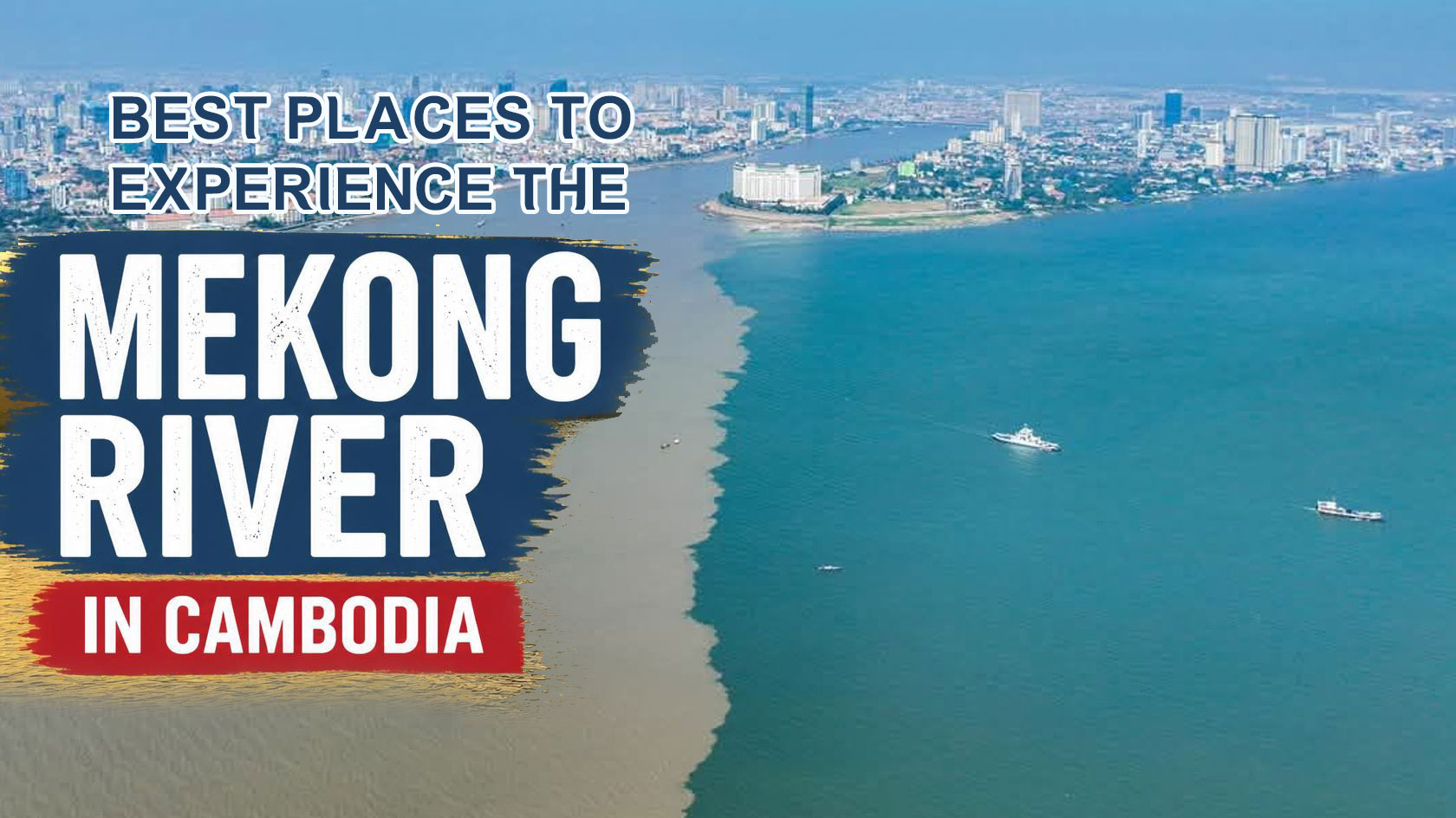

The Mekong River in Cambodia is more than a beautiful waterway. It is an essential part of the country’s natural environment, cultural heritage, economy, and everyday life. Flowing through riverside towns, agricultural communities, tropical islands, and protected wetlands, the Mekong offers travelers a different perspective on Cambodia beyond its famous temples and beaches.
Along its banks, visitors can enjoy sunset cruises in Phnom Penh, explore rural islands near Kampong Cham, cycle through peaceful villages in Kratie, watch critically endangered Irrawaddy dolphins from responsible observation boats, and discover the remarkable flooded forests of Stung Treng.
While some Mekong destinations are easy to visit on a short excursion, others reward travelers who enjoy slower journeys, community-based tourism, and nature-focused adventures.
This guide introduces the best places to experience the Mekong River in Cambodia, including what to see and do, where to stay, when to visit, and how to explore the river safely and responsibly.
The Mekong River in Cambodia: An Overview
The Mekong is one of Asia’s great international rivers, flowing through or along six countries: China, Myanmar, Laos, Thailand, Cambodia, and Vietnam.
After entering northern Cambodia from Laos, the river travels south through Stung Treng, Kratie, Kampong Cham, and the Phnom Penh region before continuing toward Vietnam and the Mekong Delta.
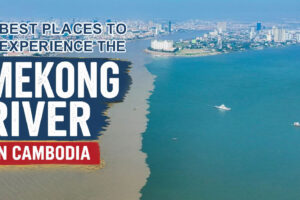
Near Phnom Penh, the Mekong connects with the Tonle Sap River and the Bassac River in the historically important Chaktomuk area, often referred to as the Four Faces.
This river system has shaped Cambodian settlement, fishing, agriculture, transportation, religious traditions, and trade for centuries.
The Mekong is also home to exceptional biodiversity. Its Cambodian waters support numerous freshwater fish species, important wetland habitats, migratory birds, and a remaining population of critically endangered Irrawaddy river dolphins.
For travelers, the river offers experiences ranging from comfortable city cruises to remote ecological adventures.
Quick Guide: Best Mekong River Destinations in Cambodia
| Destination | Best For | Suggested Experience |
|---|---|---|
| Phnom Penh | First-time visitors | Sunset river cruises and riverside walks |
| Koh Dach | Local crafts and rural culture | Island villages and traditional weaving |
| Kampong Cham | Provincial culture and scenery | Riverfront walks and historic attractions |
| Koh Pen | Cycling and village life | Rural island exploration |
| Kratie | Slow travel and river sunsets | Riverside town and countryside |
| Kampi | Wildlife and conservation | Responsible Irrawaddy dolphin watching |
| Koh Trong | Quiet island experiences | Cycling, orchards, and homestays |
| Stung Treng Wetlands | Nature and birdwatching | Ramsar wetlands and river landscapes |
| Koh Han and O’Svay | Community-based ecotourism | Kayaking, forest excursions, and local stays |
1. Phnom Penh – Best for Mekong River Cruises and City Views
Phnom Penh is one of the easiest places to experience Cambodia’s major rivers, particularly if you are visiting the country for the first time.
The capital is located near the meeting point of the Mekong, Tonle Sap, and Bassac rivers. This important geographic location has influenced the city’s development, trade, and cultural identity.
The city’s riverside promenade, Sisowath Quay, is a popular gathering place for residents and travelers. In the morning, people exercise and enjoy the cooler air. By late afternoon, the riverfront becomes lively with families, vendors, restaurants, and visitors admiring the scenery.
A boat cruise is an enjoyable way to see the capital from the water. Depending on the operator and route, passengers may enjoy views of the Royal Palace area, riverside neighborhoods, bridges, and the changing city skyline.
Best Things to Do in Phnom Penh
- Take a late-afternoon or sunset river cruise.
- Walk along Sisowath Quay and enjoy the waterfront atmosphere.
- Explore the nearby Royal Palace and National Museum.
- Observe traditional and modern boats on the river.
- Enjoy riverside dining with views of the water.
- Learn about the Chaktomuk river junction and its historical significance.
Best for: First-time visitors, families, couples, and travelers who want an accessible introduction to Cambodia’s rivers.
Recommended time: Half a day for the riverfront and a cruise, or two to three days to explore Phnom Penh more thoroughly.
Travel tip: Check the exact boat departure point, route, duration, safety equipment, and total price before booking. Not every cruise travels along the same section of the Mekong.
2. Koh Dach (Silk Island) – Best for Traditional Crafts and Rural Life
Koh Dach, often called Silk Island, is a peaceful river island in the Mekong northeast of central Phnom Penh.
Although it is relatively close to the capital, Koh Dach offers a different atmosphere from the busy streets of Phnom Penh. Visitors can explore village roads, agricultural landscapes, traditional houses, and local handicraft activities.
The island is especially associated with weaving traditions. Cambodian craftspeople produce textiles using skills passed between generations, and selected workshops welcome visitors interested in learning about the weaving process.
For travelers who enjoy cultural experiences and relaxed countryside scenery, Koh Dach is a rewarding excursion.
Best Things to Do on Koh Dach
- Visit local textile and weaving workshops.
- Explore quiet village roads by bicycle or suitable local transport.
- Discover traditional Khmer houses and riverside scenery.
- Purchase handmade products directly from local craftspeople.
- Observe rural livelihoods and agricultural activities respectfully.
Best for: Culture lovers, families, photographers, and visitors interested in traditional Cambodian crafts.
Recommended time: Half a day to a full day.
Travel tip: Confirm current ferry services and routes. Some island areas can be accessed by different road and ferry combinations, so the most convenient journey depends on your departure point.
3. Kampong Cham – Best for a Relaxed Mekong Riverside Town
Kampong Cham is one of Cambodia’s most appealing provincial towns along the Mekong River.
Situated northeast of Phnom Penh, Kampong Cham combines riverside scenery, traditional markets, historic buildings, Buddhist temples, and a relaxed atmosphere.
The town provides an opportunity to experience the Mekong as part of everyday Cambodian life rather than exclusively as a tourism attraction.
Visitors can walk along the riverside, admire the large Kizuna Bridge, explore local markets, and enjoy Cambodian food in a provincial setting.
The surrounding area also includes historic religious sites such as Wat Nokor, an Angkorian-era temple complex with an active Buddhist pagoda.
Best Things to Do in Kampong Cham
- Enjoy a morning or evening walk beside the Mekong.
- Admire the Kizuna Bridge crossing the river.
- Explore traditional markets and local restaurants.
- Visit Wat Nokor and nearby cultural attractions.
- Take an excursion to Koh Pen.
- Discover riverside agricultural villages outside town.
Best for: Slow travelers, photographers, cultural travelers, and visitors exploring Cambodia beyond major tourist centers.
Recommended stay: One to two nights.
Travel tip: Kampong Cham is a practical stop for travelers continuing toward Kratie or Stung Treng. Take time to enjoy the town rather than treating it only as a transport stop.
4. Koh Pen – Best for Cycling and Mekong Island Villages
Koh Pen, also spelled Koh Paen or Koh Paen Island, is a rural island in the Mekong River close to Kampong Cham town.
The island is known for its peaceful village atmosphere, agricultural landscapes, traditional homes, and seasonal relationship with the river.
One of its best-known attractions is the traditional bamboo bridge that has historically connected the town to the island during suitable low-water periods.
A permanent bridge also provides access to Koh Pen, making it possible to visit the island without relying on the seasonal bamboo crossing.
Visitors interested in the bridge should verify whether a bamboo structure is currently installed and open. Its availability depends on water levels, maintenance, and local arrangements.
Best Things to Do on Koh Pen
- Cycle through quiet island villages.
- Observe agriculture and traditional rural homes.
- Explore the island’s riverbank scenery.
- Learn about the seasonal bamboo bridge tradition.
- Support small village businesses and local food vendors.
Best for: Cycling enthusiasts, families, countryside photographers, and travelers who enjoy exploring at a slower pace.
Recommended time: Half a day.
Travel tip: Carry drinking water, use sun protection, and ask permission before photographing residents or entering private property.
5. Kratie – Best for Mekong River Sunsets and Slow Travel
Kratie is one of the most rewarding destinations for travelers interested in the Mekong River’s natural and cultural landscape.
This small provincial town is located along the eastern bank of the Mekong and is known for its relaxed riverfront, traditional shophouses, nearby agricultural communities, and access to endangered Irrawaddy dolphin habitat.
Kratie has a slower pace than Cambodia’s main tourism cities. Many visitors enjoy spending time at riverside cafés, observing boats, and watching the sun set over the Mekong.
The town also provides convenient access to Koh Trong, Kampi, Phnom Sambok, and cultural sites farther north.
Best Things to Do in Kratie
- Watch sunset over the Mekong River.
- Explore the central riverfront and traditional streets.
- Take a ferry to Koh Trong.
- Visit Kampi for a responsible dolphin-watching excursion.
- Explore Phnom Sambok and its Buddhist surroundings.
- Try local Cambodian food, including bamboo-cooked sticky rice known as kralan.
Best for: Nature lovers, couples, slow travelers, and visitors interested in river communities.
Recommended stay: Two nights, with additional time if you want to explore nearby villages.
Our recommendation: Kratie is an excellent base for travelers who want to combine wildlife conservation, riverside scenery, and local culture.
6. Kampi Dolphin Site – Best for Irrawaddy Dolphin Watching
One of the most memorable wildlife experiences in Cambodia is the opportunity to observe Irrawaddy dolphins in the Mekong River.
The Kampi Dolphin Site is located approximately 15 kilometers north of Kratie town. It is one of the country’s best-established locations for responsible river-dolphin observation.
Irrawaddy dolphins are distinctive for their rounded heads, short beaks, and relatively subtle surfacing behavior. Unlike the more acrobatic dolphins often seen in the ocean, these freshwater dolphins usually surface briefly before disappearing beneath the water.
The Mekong population is critically endangered, and conservation efforts are essential for its survival.
According to WWF-Cambodia, the dolphins’ remaining Cambodian Mekong habitat extends through a protected river corridor between Kratie and Stung Treng. Major threats include illegal fishing practices, accidental entanglement in fishing gear, and environmental pressures on the river ecosystem.
What to Expect on a Dolphin-Watching Tour
Visitors typically arrange transportation from Kratie to the Kampi observation area, where local boat operators offer trips along designated sections of the river.
During a responsible excursion, boats travel toward appropriate viewing locations and maintain a respectful distance from dolphins.
Early morning and late afternoon can be appealing times to visit. Lower-water months may also make dolphins easier to observe in certain deep pools.
However, dolphin sightings are never guaranteed. These are wild animals living in their natural habitat, not captive animals trained to appear for visitors.
How to Watch Dolphins Responsibly
- Choose a licensed or locally recognized boat operator who follows conservation guidance.
- Keep a safe distance and never ask the boat driver to chase dolphins.
- Use low-noise observation methods and avoid unnecessary engine disturbance.
- Do not feed, touch, or attempt to swim with dolphins.
- Avoid loud music or shouting near the animals.
- Respect river-guard and protected-area instructions.
- Never use drones or other equipment that may disturb dolphins without authorization.
Best for: Wildlife enthusiasts, conservation-minded travelers, families, and photographers.
Recommended time: Allow two to three hours from Kratie for the round trip and observation activity, with flexibility for local conditions.
Important: Historical dolphin-viewing descriptions near the Cambodia–Laos border should not be treated as evidence of a surviving dolphin population at those sites. WWF has documented the loss of the former border-area subpopulation. Kampi remains the more established choice for visitors.
7. Koh Trong – Best for Cycling, Homestays, and Peaceful Island Life
Koh Trong is a beautiful river island located directly across the Mekong from Kratie town.
It is one of the best places in Cambodia to experience traditional river-island life at a relaxed pace.
The island has village roads, agricultural plots, fruit orchards, traditional houses, small businesses, and community accommodation options.
A bicycle ride is a popular way to explore the island. With relatively little traffic on many local roads, visitors can enjoy the scenery and discover rural life beyond Kratie’s town center.
Koh Trong is also associated with pomelo cultivation and traditional farming practices.
Best Things to Do on Koh Trong
- Explore island roads by bicycle.
- Visit local fruit orchards where visits are permitted.
- Enjoy views of the Mekong and Kratie riverfront.
- Stay in a community homestay where available.
- Observe village life respectfully.
- Enjoy quiet sunrise or sunset scenery.
How to get there: Arrange a local ferry or boat crossing from the Kratie riverfront. Departure arrangements and operating times can vary with water levels and local demand.
Best for: Slow travelers, cyclists, couples, and visitors interested in community tourism.
Recommended time: Half a day, or overnight for a more immersive experience.
8. Stung Treng – Best for Mekong Wetlands and Wild Landscapes
Stung Treng Province is among Cambodia’s most important destinations for travelers interested in the natural environment of the upper Mekong.
Located in northern Cambodia near Laos, Stung Treng offers a remarkable landscape of river channels, islands, sandbars, seasonally flooded forests, and protected wetlands.
The province is also known for its connection with the Sekong River, which meets the Mekong near Stung Treng town.
One of the region’s most important protected areas is the Middle Stretches of the Mekong River North of Stung Treng, designated as a Wetland of International Importance under the Ramsar Convention.
The Ramsar site covers approximately 14,600 hectares and protects a complex river ecosystem with islands, rocky channels, sandbars, and wetland vegetation.
Its appearance changes significantly between the rainy and dry seasons, offering different experiences for nature lovers.
Best Things to Do in Stung Treng
- Explore sections of the Mekong wetlands with authorized local guides.
- Enjoy river scenery and photography.
- Observe wetland birds from suitable viewing areas.
- Discover seasonal flooded forests.
- Visit community-based ecotourism destinations.
- Learn about the conservation importance of the upper Mekong.
Best for: Adventure travelers, wildlife enthusiasts, photographers, and ecotourism visitors.
Recommended stay: Two to three nights for nature excursions.
Travel tip: Some wetland areas are remote, and boat routes change with seasonal water levels. Arrange excursions through knowledgeable local operators rather than exploring unfamiliar waterways independently.
9. Koh Han – Best for Community-Based Ecotourism
Koh Han, near Koh Sneng Village in Stung Treng Province, is an excellent destination for travelers interested in responsible tourism and the distinctive landscapes of the Mekong wetlands.
The area is associated with the Samros Koh Han Community-Based Ecotourism initiative, which helps local residents benefit from tourism while encouraging protection of the surrounding environment.
The island and nearby river channels support a variety of wildlife and provide attractive opportunities for nature excursions.
During the wetter months, rising water can create flooded-forest routes suitable for guided boat or kayaking experiences when conditions permit.
During lower-water periods, exposed rocks, river islands, and distinctive tree-root formations reveal another side of the landscape.
Things to Do at Koh Han
- Take guided boat excursions along the Mekong.
- Go kayaking where routes and safety conditions permit.
- Explore seasonal flooded forests.
- Watch birds and other wetland wildlife.
- Visit suitable river beaches during low-water periods.
- Experience community homestays and local food where available.
Best for: Responsible tourism, kayaking, birdwatching, local culture, and nature-focused travel.
Travel tip: Arrange your visit through the local community tourism organization or a reliable operator. Confirm tour availability, current prices, transport, and accommodation before departure.
10. Borey O’Svay – Best for Exploring the Upper Mekong Islands
Borey O’Svay, in Stung Treng Province, is another destination associated with community-based ecotourism along Cambodia’s upper Mekong River.
The surrounding landscape includes river islands, wetland vegetation, forest areas, and seasonal beaches.
Local community tourism initiatives have developed activities intended to introduce visitors to the area’s natural environment and provide additional sources of income for residents.
Depending on seasonal conditions and available local services, activities may include boat trips, guided walks, birdwatching, and exploring riverside scenery.
O’Svay is best approached as a nature and community destination rather than a conventional tourist resort with extensive facilities.
Why Visit Borey O’Svay?
- Explore a less-visited part of the Cambodian Mekong.
- Experience river islands and wetland landscapes.
- Learn about rural livelihoods and community conservation.
- Support locally managed ecotourism where available.
- Enjoy nature photography away from major city centers.
Best for: Experienced independent travelers, nature lovers, and visitors interested in community-based tourism.
Important: Do not assume dolphin sightings are available here. Historical information about border-area dolphin watching is outdated following the loss of the former Cambodia–Laos border subpopulation.
Travel tip: Confirm current access, local guides, road and boat conditions, and any applicable protected-area restrictions before traveling.
Best Things to Do Along the Mekong River in Cambodia
While every destination has its own attractions, several activities make Mekong travel especially memorable.
Enjoy a Sunset River Cruise
Phnom Penh is a convenient destination for comfortable sightseeing cruises. Smaller towns and selected community tourism areas may also offer boat trips, although routes and services vary.
Choose reputable operators, confirm the total fare, and make sure suitable life jackets are available.
Explore Mekong Islands by Bicycle
Koh Trong and Koh Pen are appealing choices for relaxed cycling through rural landscapes.
Travel slowly, respect local road users, carry drinking water, and avoid cycling during the hottest hours of the day.
Observe Irrawaddy Dolphins
Kratie’s Kampi area offers the best-established opportunity in this guide for observing critically endangered dolphins.
Responsible wildlife tourism should support conservation rather than create additional disturbance to the animals.
Visit Community-Based Ecotourism Sites
Koh Han and Borey O’Svay provide opportunities to learn about the relationship between the Mekong’s ecosystems and the communities that depend on them.
Choose experiences that employ local guides, support community businesses, and respect conservation rules.
Learn About Cambodian River Culture
Traditional fishing, agriculture, boat transportation, Buddhist practices, and village life are closely connected to the Mekong.
Visitors can discover these traditions through local guides, village stays, markets, and respectful cultural activities.
Best Time to Experience the Mekong River in Cambodia
The Mekong can be visited throughout the year, but seasonal water levels greatly influence what travelers see and which activities are available.
| Season | Typical Conditions | Best Experiences |
|---|---|---|
| November–February | Generally drier and more comfortable weather | Riverside towns, cycling, boat trips, and nature excursions |
| March–April | Hot weather and generally lower river levels | River islands and exposed seasonal landscapes |
| May–October | Rainier weather and rising river levels | Green countryside and flooded-forest scenery where conditions allow |
For most first-time visitors, November to February offers the most comfortable overall travel conditions.
For dolphin watching, lower-water periods can concentrate dolphins in certain deep pools, although sightings depend on wildlife behavior and local conditions.
For flooded-forest experiences around Stung Treng, wetter months can be especially scenic, but boat access and safety must be assessed locally.
Seasonal patterns vary by year. Heavy rainfall, strong river currents, and upstream water conditions can affect activities even when the weather appears clear at your departure point.
Suggested Mekong River Itinerary in Cambodia
Travelers who want to explore more than one Mekong destination can follow the river northward from Phnom Penh.
3-Day Mekong Highlights
- Day 1 – Phnom Penh: Explore the riverfront and enjoy a sunset cruise.
- Day 2 – Kampong Cham: Discover the town’s riverfront, visit local attractions, and explore Koh Pen if time permits.
- Day 3 – Kratie: Travel to Kratie and enjoy the town’s Mekong sunset.
This itinerary introduces several river destinations, but it does not leave enough time for every attraction. Travelers interested in dolphins should consider adding another day.
5-Day Mekong Nature and Culture Itinerary
- Day 1: Phnom Penh riverfront and river cruise.
- Day 2: Kampong Cham and Koh Pen.
- Day 3: Travel to Kratie and explore its riverfront.
- Day 4: Kampi dolphin observation and Koh Trong.
- Day 5: Travel toward Stung Treng or spend a more relaxed day in Kratie.
For travelers who want to explore Koh Han and the Stung Treng wetlands properly, extending this route to six or seven days is more realistic.
How to Travel Between Mekong River Destinations
Travel between Cambodia’s Mekong destinations usually involves roads rather than a continuous passenger boat service.
Intercity buses, minivans, private cars, and local transportation connect Phnom Penh, Kampong Cham, Kratie, and Stung Treng.
For river islands, ferries and smaller local boats may be required, while selected destinations can also be reached by bridges.
In remote Stung Treng communities, arrangements may involve both road and boat transport.
Travelers should confirm:
- Current road and departure conditions.
- Bus or minivan departure points.
- Ferry availability and operating times.
- Seasonal boat routes.
- Life jacket availability.
- Whether a local guide is required.
- The location and availability of accommodation.
Do not assume that a scheduled public boat connects all the destinations in this guide. Multi-day river cruises and private expeditions, where available, operate separately from ordinary road transport.
Where to Stay Along the Mekong River
Accommodation varies significantly between large cities and remote community tourism destinations.
| Destination | Accommodation Options |
|---|---|
| Phnom Penh | International hotels, boutique hotels, guesthouses, and riverside properties |
| Kampong Cham | Budget hotels, guesthouses, and selected comfortable hotels |
| Kratie | Riverside guesthouses, smaller hotels, and boutique accommodation |
| Koh Trong | Community homestays and selected small eco-oriented properties |
| Stung Treng Town | Local hotels and guesthouses |
| Koh Han and O’Svay | Community accommodation or organized nature stays where currently available |
Our recommendation: Stay in Phnom Penh for short urban river experiences, Kratie for dolphins and island cycling, and Stung Treng for northern Mekong ecotourism.
How Much Does a Mekong River Trip Cost?
Costs depend on accommodation standards, transport distances, group size, guided activities, and the type of boat used.
Urban riverfront walks and exploring local markets may be inexpensive, while specialist wildlife tours, private boat excursions, and remote community trips can cost more.
Before booking a river activity, request a complete quotation covering:
- Transportation to and from the departure point.
- Boat hire and fuel.
- Local guiding services.
- Conservation or community fees, if applicable.
- Meals and drinking water.
- Accommodation for overnight excursions.
- Any required equipment or permits.
Because fees vary between operators and seasons, travelers should not rely on a single quoted price as a universal Mekong River entrance fee.
Responsible Travel and Wildlife Conservation
The Mekong is a working river and an important ecosystem, not simply a sightseeing destination.
Many communities depend on it for fishing, agriculture, transportation, food, and other livelihoods. The river also supports wildlife that can be vulnerable to human disturbance.
Visitors can help protect the Mekong by following responsible travel practices.
- Respect wildlife: Never chase dolphins or approach nesting birds too closely.
- Support community tourism: Choose local guides and businesses that contribute to community livelihoods.
- Reduce plastic waste: Carry a reusable water bottle and dispose of rubbish properly.
- Respect private property: Ask permission before entering farms, homes, or workshops.
- Protect river habitats: Avoid disturbing wetland plants, sandbar nesting areas, and sensitive riverbanks.
- Travel safely: Use suitable life jackets and avoid boating during dangerous weather.
- Follow local rules: Protected areas may restrict certain activities or require authorization.
Frequently Asked Questions About the Mekong River in Cambodia
Where is the best place to see the Mekong River in Cambodia?
Phnom Penh is the easiest place for first-time visitors, while Kratie offers excellent riverside scenery and opportunities for responsible dolphin watching. Stung Treng is ideal for travelers interested in wetlands and ecotourism.
Where can you see Irrawaddy dolphins in Cambodia?
The Kampi Dolphin Site, approximately 15 kilometers north of Kratie town, is one of the best-established locations for observing Mekong Irrawaddy dolphins. Sightings are not guaranteed, and visitors should use responsible operators who follow conservation guidance.
Is Kratie worth visiting?
Yes. Kratie is an excellent destination for river sunsets, quiet provincial life, wildlife conservation, countryside activities, and excursions to Koh Trong.
Can you take a Mekong River cruise in Phnom Penh?
Yes. Phnom Penh offers sightseeing and sunset cruises around the city’s riverfront and nearby river junctions. Routes, durations, prices, and boat facilities vary by operator.
What are the best Mekong islands to visit in Cambodia?
Koh Dach near Phnom Penh, Koh Pen near Kampong Cham, and Koh Trong near Kratie are excellent choices for rural scenery and cultural experiences. Koh Han in Stung Treng is appealing for nature-focused community ecotourism.
What is the best season for visiting the Mekong River?
November to February generally offers comfortable weather for sightseeing. Lower-water months can be good for island activities and selected dolphin observation, while wetter months can provide impressive flooded-forest scenery in northern Cambodia.
Can you travel from Phnom Penh to Kratie by boat?
Travelers should not assume a regular public passenger boat operates between these destinations. Road transport is generally the more practical option, while organized river cruises or private journeys may have different routes and schedules.
Is the Mekong River safe for swimming?
Swimming is not recommended without specific local safety guidance. The Mekong can have strong currents, sudden depth changes, underwater hazards, and boat traffic. Conditions can change rapidly with water levels and rainfall.
Is Stung Treng worth visiting?
Yes, particularly for nature lovers and travelers interested in community-based ecotourism. The province includes internationally important wetlands, island landscapes, bird habitats, and the Koh Han ecotourism area.
How many days do you need to explore Cambodia’s Mekong River?
One evening is enough for a Phnom Penh river cruise, while two days in Kratie can cover dolphin watching and Koh Trong. A broader Mekong journey from Phnom Penh to Stung Treng is more enjoyable with approximately five to seven days.
Sources and References
This guide draws on official Cambodian tourism resources, international wetland conservation information, WWF-Cambodia, and Mekong tourism organizations. Wildlife conditions, community activities, transportation, and access arrangements can change. Verify important details before traveling.
- Cambodia Ministry of Tourism – Phnom Penh Riverfront: River junction, promenade, and visitor attractions.
- Cambodia Ministry of Tourism – River Cruise: Mekong tourism and river travel experiences.
- Cambodia Ministry of Tourism – Kandal Province: Koh Dach and traditional handicrafts.
- Cambodia Ministry of Tourism – Kampong Cham Province: Regional history, Mekong scenery, and cultural attractions.
- Cambodia Ministry of Tourism – Kratie Province: Kampi dolphin watching, riverside destinations, and local attractions.
- WWF-Cambodia – Mekong Irrawaddy River Dolphins: Dolphin ecology, distribution, threats, and conservation.
- WWF-Cambodia – Mekong Dolphin Conservation: Conservation challenges and historical changes in dolphin distribution.
- Convention on Wetlands – Cambodia: Ramsar sites and internationally important wetland habitats.
- Cambodia Ministry of Tourism – Stung Treng Province: Upper Mekong attractions and wetland tourism.
- Mekong Tourism Coordinating Office – Koh Han Ecotourism: Community tourism, kayaking, river islands, and local livelihoods.
- Cambodia Ministry of Tourism – O’Svay Community-Based Ecotourism: Community tourism and the upper Mekong landscape.
Conclusion: Experience Cambodia Along the Mekong River
The Mekong River offers some of Cambodia’s most rewarding cultural and natural experiences.
From the lively waterfront of Phnom Penh and peaceful islands near Kampong Cham to Kratie’s remarkable dolphin habitat and the protected wetlands of Stung Treng, each destination reveals a different part of the country’s relationship with its great river.
For first-time visitors, Phnom Penh and Kratie are excellent starting points. Phnom Penh offers accessible cruises and urban riverfront scenery, while Kratie provides opportunities to explore peaceful island communities and learn about the conservation of critically endangered dolphins.
Travelers seeking a more adventurous experience can continue north to Stung Treng, where flooded forests, river islands, and community-managed ecotourism sites showcase the Mekong’s exceptional biodiversity.
Whatever route you choose, travel slowly, respect riverside communities, and support tourism activities that help protect Cambodia’s natural heritage.
Discover more of Cambodia with GoToKH.com for destination guides, nature experiences, cultural attractions, and practical travel advice throughout the Kingdom of Wonder.
