









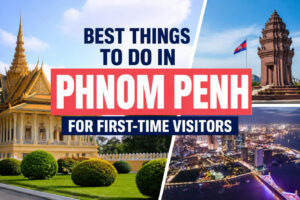







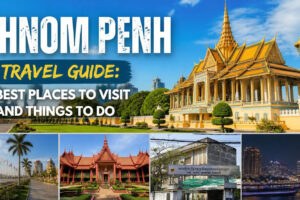









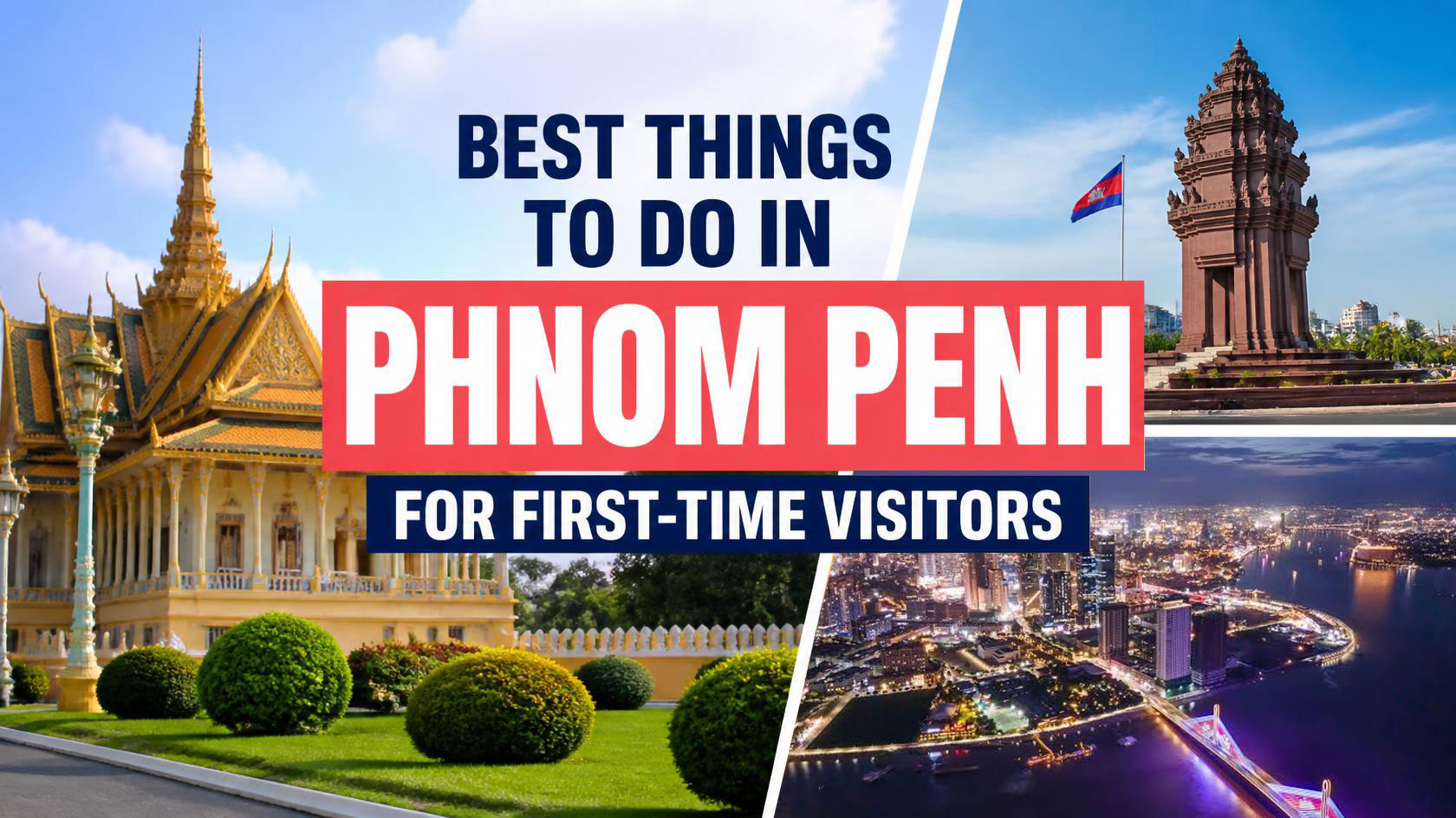

Phnom Penh, the capital of Cambodia, is a fascinating destination where royal heritage, Buddhist traditions, modern city life, bustling markets, riverside scenery, and important historical memorials come together.
Unlike Siem Reap, which is best known for the ancient temples of Angkor, Phnom Penh offers an opportunity to understand Cambodia through its museums, neighborhoods, architecture, food, history, and everyday urban culture.
For first-time visitors, the city can initially feel busy. Motorbikes move through crowded streets, markets are full of activity, and modern towers rise beside traditional shophouses and Buddhist pagodas. Yet beneath this energetic atmosphere, Phnom Penh offers rewarding experiences for travelers who take time to explore.
Some of the best things to do in Phnom Penh include visiting the Royal Palace and Silver Pagoda, discovering Khmer art at the National Museum, walking along the riverside, exploring traditional markets, enjoying Cambodian cuisine, and learning about the country’s recent history at important memorial sites.
This guide introduces Phnom Penh’s essential attractions, explains how to organize your time, and provides practical information about entry fees, local transportation, accommodation, food, and respectful travel.
Phnom Penh at a Glance
| Travel Information | Details |
|---|---|
| Location | South-central Cambodia |
| Known For | Royal Palace, museums, Buddhist pagodas, markets, and riverside culture |
| Recommended First Visit | 2–3 days |
| Best Time for Sightseeing | Generally November–February |
| International Airport | Techo International Airport |
| Local Transportation | Tuk-tuks, ride-hailing services, taxis, and walking in suitable central areas |
| Currency | Cambodian riel (KHR); US dollars also widely accepted |
| Best Areas to Stay | Riverside, Daun Penh, BKK1, and selected central neighborhoods |
1. Visit the Royal Palace and Silver Pagoda
The Royal Palace of Cambodia is one of Phnom Penh’s most important landmarks and a natural starting point for first-time visitors.
Located near the riverfront, the palace complex is known for its traditional Khmer architecture, elegant roofs, golden spires, decorative buildings, and landscaped courtyards.
The present palace complex developed after Phnom Penh became Cambodia’s royal capital in the nineteenth century.
Today, it remains associated with the Cambodian monarchy, and some sections continue to serve official royal functions.
What to See at the Royal Palace
- Throne Hall: A magnificent ceremonial building associated with important royal occasions.
- Silver Pagoda: A sacred complex also known as Wat Preah Keo Morakot, containing important Buddhist religious objects.
- Royal Gardens: Landscaped grounds and elegant traditional architecture.
- Chan Chhaya Pavilion: A prominent ceremonial structure associated with royal traditions.
- Decorative architecture: Khmer roofs, stupas, sculptures, and ornamental details.
The Silver Pagoda is especially famous for its association with precious religious images and its distinctive ceremonial interior.
Visitors should remember that the Royal Palace is a living royal and religious complex, not simply a museum.
Visiting Information
Location: Samdech Sothearos Boulevard, central Phnom Penh.
Suggested visit: Approximately 1–2 hours.
Opening hours: The palace commonly operates morning and afternoon visiting sessions, with a midday break. Published visitor guides describe approximately 8:00–11:00 AM and 2:00–5:00 PM, but official ceremonies can cause closures without much notice.
Admission: Foreign visitor tickets have commonly been around US$10. Confirm the current amount at the official entrance before purchasing.
Dress code: Wear clothing that covers your shoulders and knees. Follow any additional restrictions on photography and entry to individual buildings.
Best for: First-time visitors, architecture enthusiasts, cultural travelers, and photographers.
2. Explore the National Museum of Cambodia
A short distance from the Royal Palace, the National Museum of Cambodia is one of the best places to understand Khmer history, art, and religious traditions.
The museum occupies a beautiful terracotta-colored building inspired by traditional Khmer architectural forms.
Inside, visitors can explore an important collection of ancient Cambodian sculptures and cultural artifacts.
The exhibits cover major historical periods, including pre-Angkorian and Angkorian civilizations.
Highlights of the Museum
- Ancient Khmer stone sculptures.
- Hindu and Buddhist religious imagery.
- Historical objects associated with the Khmer Empire.
- Traditional craftsmanship and artistic development.
- A peaceful central courtyard and garden.
The museum provides useful background for travelers planning to visit Angkor Wat, Sambor Prei Kuk, or other archaeological sites.
Visiting Information
According to the museum’s official website:
- Opening hours: Daily, 8:00 AM–5:00 PM.
- Last ticket sale: 4:30 PM.
- Foreign adult admission: US$10.
- Foreign visitors aged 10–17: US$5.
Photography is not permitted inside the museum galleries, although photographs may be taken in permitted exterior and courtyard areas.
Official website: National Museum of Cambodia.
Suggested visit: 1–2 hours.
Best for: History lovers, art enthusiasts, families with older children, and first-time visitors.
3. Walk Along Sisowath Quay and Phnom Penh Riverside
Sisowath Quay is one of Phnom Penh’s most recognizable urban areas.
Running along the waterfront, this lively promenade provides views of the river, passing boats, traditional buildings, restaurants, and the surrounding city.
It is especially enjoyable in the early morning and late afternoon when the temperature becomes more comfortable.
Visitors may see residents exercising, walking, gathering with friends, or enjoying the waterfront atmosphere.
The area also provides convenient access to the Royal Palace, Wat Ounalom, local restaurants, and several streets with historic buildings.
Things to Do Along the Riverside
- Take a relaxed walk along the promenade.
- Watch boats traveling along the river.
- Enjoy sunset views and the changing city skyline.
- Try Cambodian food at nearby restaurants.
- Photograph the Royal Palace area from suitable public locations.
- Explore historic streets behind the waterfront.
Best time to visit: Early morning or late afternoon.
Cost: Walking along the public promenade is generally free.
Traveler’s tip: Keep phones and bags secure, particularly near traffic. Be careful when stepping into roads or stopping for photographs.
4. Take a Sunset Cruise on the Mekong and Tonle Sap Rivers
One of the most relaxing experiences in Phnom Penh is a sunset river cruise.
Phnom Penh developed near the meeting point of major waterways, including the Mekong, Tonle Sap, and Bassac rivers.
This historically important location is associated with the name Chaktomuk, often interpreted as the Four Faces.
Boat excursions provide a different perspective on the capital, allowing travelers to admire waterfront buildings, bridges, changing city scenery, and the contrasting landscapes of the riverbanks.
What to Expect
Depending on the operator, cruises may offer:
- Sunset views over the capital.
- Riverside skyline photography.
- Views of fishing and passenger boats.
- Light refreshments or meals.
- Short sightseeing journeys around the river junction.
Some boats offer simple sightseeing trips, while others operate restaurant-style cruises.
Suggested duration: About 1–2 hours, depending on the service.
Traveler’s tip: Ask about the route, duration, final price, weather cancellation policy, and availability of suitable life jackets before boarding.
Never assume that all boats offer the same safety standards or facilities.
5. Discover Wat Phnom, the Temple Linked to the City’s Origins
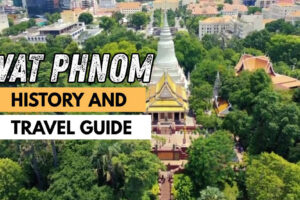
Wat Phnom is one of Phnom Penh’s most significant Buddhist landmarks.
Located on a small hill near the northern end of the historic central area, the temple is closely associated with traditional stories explaining the foundation and name of Phnom Penh.
According to a well-known legend, a woman called Daun Penh discovered sacred Buddha images and arranged for a shrine to be constructed on a raised mound.
The story remains an important part of the city’s cultural identity.
Today, Wat Phnom is surrounded by a small park and features Buddhist religious structures, decorative stairways, and traditional sculptures.
What to Do at Wat Phnom
- Explore the main temple and surrounding grounds.
- Learn about the traditional story of Daun Penh.
- Observe Buddhist architectural details.
- Enjoy a quiet walk through the nearby gardens.
- Discover one of the city’s oldest symbolic landmarks.
Suggested visit: Approximately 45–60 minutes.
Admission: A small fee may apply to foreign visitors.
Traveler’s tip: Dress respectfully and avoid buying caged birds for release. Such activities can encourage the capture and trade of wild birds.
6. Explore Central Market (Phsar Thmey)
Central Market, known locally as Phsar Thmey, is one of Phnom Penh’s best-known architectural and commercial landmarks.
Opened in 1937, its remarkable Art Deco building features a large central dome and four wings extending outward.
Beyond its striking architecture, the market offers an interesting introduction to everyday shopping in Cambodia.
Vendors sell clothing, jewelry, watches, accessories, household products, electronics, souvenirs, and a variety of food.
Why Visit Central Market?
- Admire the impressive historic market building.
- Explore traditional shopping stalls.
- Browse clothing and souvenirs.
- Discover local snacks and fresh produce.
- Experience an important part of everyday city life.
Best time to visit: Morning, before the hottest part of the day.
Suggested visit: Around 1 hour, or longer if shopping.
Traveler’s tip: Compare prices before buying expensive goods, especially jewelry or electronics. Keep valuables secure in crowded areas.
7. Visit Tuol Sleng Genocide Museum (S-21)
For visitors who wish to understand Cambodia’s recent history, the Tuol Sleng Genocide Museum is an important place of education, remembrance, and reflection.
The museum occupies the site of the former S-21 detention and interrogation center used by the Khmer Rouge regime.
Before 1975, the buildings formed part of a school. Under the Khmer Rouge, the site became a prison associated with severe human rights abuses, torture, and the killing of detainees.
Today, the museum preserves historical documents, photographs, objects, and testimonies to help visitors understand what happened and why remembrance matters.
This is not a recreational attraction. It is a memorial site dedicated to victims and survivors.
What Visitors Should Know
The exhibits can be emotionally difficult and include disturbing historical material.
Some travelers may prefer to visit with a museum-approved guide or audio guide to better understand the historical context.
Visitors should remain respectful, follow photography rules, and avoid posing for inappropriate photographs.
Visiting Information
According to the museum’s official website:
- Opening hours: Daily, 8:00 AM–5:00 PM, including public holidays.
- Foreign adult admission: US$5.
- Foreign visitors aged 10–17: US$3.
- Foreign children under 10: Free with age verification.
- Foreign-language audio guide: US$5.
Official website: Tuol Sleng Genocide Museum.
Suggested visit: About 1.5–2 hours.
Important: Families with young children should consider the distressing nature of the exhibits before visiting.
8. Visit Choeung Ek Genocidal Center
Choeung Ek Genocidal Center is another important memorial site documenting the atrocities of the Khmer Rouge period.
Located south of central Phnom Penh, it was used as an execution site for prisoners transferred from S-21 and other detention facilities.
Today, the area serves as a place of remembrance and historical education.
Visitors can learn about the victims, the events of the period, and the importance of protecting human rights and preventing future atrocities.
The memorial stupa and preserved grounds provide space for reflection.
A New UNESCO Recognition
In July 2025, Tuol Sleng and Choeung Ek became part of a UNESCO World Heritage inscription titled Cambodian Memorial Sites: From Centres of Repression to Places of Peace and Reflection.
The serial inscription also includes the former M-13 detention site outside Phnom Penh.
This recognition emphasizes the historical evidence preserved at these sites and their importance to remembrance, education, and peace.
Practical Advice
Choeung Ek is approximately 15–17 kilometers south of central Phnom Penh, depending on your starting point and route.
Most visitors use private transportation or an arranged tuk-tuk or car.
Allow enough time for travel, the memorial visit, and a thoughtful return journey.
Admission, audio-guide availability, and visiting arrangements should be checked locally.
Recommended for: Visitors who are interested in understanding Cambodia’s recent history and are prepared for emotionally challenging material.
Respectful travel reminder: Tuol Sleng and Choeung Ek deserve a thoughtful approach. They should not be treated as entertainment destinations or obligatory photo opportunities.
9. Visit Independence Monument and Wat Botum Park
Independence Monument, known in Khmer as Vimean Ekareach, is one of the capital’s most recognizable modern landmarks.
The monument commemorates Cambodia’s independence from French colonial rule in 1953.
Completed in 1958, it was designed by the renowned Cambodian architect Vann Molyvann.
Its lotus-inspired form reflects influences from traditional Khmer architecture.
Located at the intersection of Norodom and Sihanouk boulevards, the monument is especially attractive when illuminated in the evening.
Nearby public spaces, including Wat Botum Park, provide opportunities for a relaxed walk.
Things to Do Nearby
- Photograph Independence Monument from safe public viewpoints.
- Explore nearby parks and pedestrian areas.
- Visit the Norodom Sihanouk Memorial.
- Enjoy an evening walk when the temperature is cooler.
Suggested visit: 30–60 minutes.
Traveler’s tip: Independence Monument stands in a busy road junction. Do not attempt to cross moving traffic to reach its central island. Use suitable pedestrian routes and photograph it from designated public areas.
10. Shop at Russian Market (Tuol Tompoung Market)
Russian Market, officially known as Tuol Tompoung Market, is a popular destination for visitors looking for souvenirs, clothing, handicrafts, and everyday Cambodian market life.
The market acquired its English nickname because of its popularity among Russian visitors and expatriates during the 1980s.
Today, it remains a lively shopping destination with narrow aisles and numerous small stalls.
What Can You Find?
- Clothing and accessories.
- Traditional textiles and scarves.
- Handicrafts and decorative products.
- Souvenirs and household goods.
- Local snacks and market food.
Suggested visit: 1–2 hours.
Traveler’s tip: The covered market can become hot. Visit in the morning, drink sufficient water, and inspect the quality of products before purchasing.
Be cautious about items advertised as ancient artifacts or designer-branded goods. Avoid purchasing cultural objects of uncertain legal origin or counterfeit products.
11. Discover Wat Ounalom and Buddhist Culture
Wat Ounalom is an important Buddhist monastery located close to the Phnom Penh riverfront.
Traditionally associated with the fifteenth century, it has long held a significant role in Cambodia’s Buddhist religious institutions.
The pagoda offers visitors an opportunity to learn about Cambodian Buddhist architecture and contemporary monastic life.
Unlike tourism attractions created primarily for visitors, Wat Ounalom remains an active place of worship.
Visitors may see monks, religious images, stupas, and people attending religious activities.
Suggested visit: 30–45 minutes, where public access is permitted.
Traveler’s tip: Wear modest clothing, remove shoes before entering appropriate worship spaces, and ask permission before photographing monks or ceremonies.
12. Explore SOSORO Museum of Economy and Money
One of Phnom Penh’s more distinctive museums is the SOSORO Museum, officially the Preah Srey Içanavarman Museum of Economy and Money.
Established by the National Bank of Cambodia, the museum explores Cambodia’s economic and monetary history across approximately 2,000 years.
Its exhibitions connect ancient history, trade, currency, financial institutions, and political developments.
The museum is housed in a restored historic building and uses multimedia displays to explain subjects that might otherwise seem complicated.
Why Visit?
- Explore Cambodia’s history from an economic perspective.
- Discover traditional and modern currency.
- Learn about trade and monetary development.
- Enjoy an educational indoor activity during hot or rainy weather.
- Explore the museum’s historic building and garden.
Visiting Information
According to the museum’s official website:
- Opening days: Tuesday–Sunday.
- Hours: 9:00 AM–6:00 PM.
- Foreign visitor admission: 20,000 Cambodian riel.
- Foreign visitor ticket with audio guide: 32,000 Cambodian riel.
Official website: SOSORO Museum.
Suggested visit: 1–2 hours.
Best for: Curious travelers, history enthusiasts, students, and visitors interested in a less conventional museum experience.
13. Enjoy Cambodian Street Food and Local Restaurants
Discovering Phnom Penh through its food is one of the most enjoyable experiences for first-time visitors.
The capital has a diverse dining scene ranging from traditional market stalls and small family restaurants to modern cafés and contemporary Cambodian dining establishments.
Visitors can experience regional Khmer dishes, street snacks, fresh fruit, traditional desserts, and specialty coffee.
Foods Worth Trying
- Num Banh Chok: Khmer rice noodles typically served with a fragrant fish-based curry sauce and fresh vegetables.
- Fish Amok: A Cambodian dish featuring fish cooked with aromatic curry ingredients, often served in banana leaves or other traditional presentation styles.
- Beef Lok Lak: Stir-fried beef commonly served with vegetables, rice, and a pepper-lime dipping sauce.
- Nom Pang: Cambodian-style baguette sandwiches with a variety of fillings.
- Grilled meat and rice: Popular local meals commonly available at breakfast and lunch.
- Khmer desserts: Sweet preparations featuring coconut milk, sticky rice, beans, palm sugar, and seasonal fruit.
Where to Experience Local Food
Food stalls around markets, neighborhood streets, and local restaurants provide different opportunities to explore Phnom Penh’s food culture.
Choose places where food is prepared hygienically and served fresh.
Traveler’s tip: Begin with dishes that are familiar or cooked to order, then gradually explore additional local specialties according to your preferences.
14. Take a Half-Day Trip to Koh Dach (Silk Island)
If you have extra time in Phnom Penh, consider visiting Koh Dach, commonly known as Silk Island.
Located in the Mekong River northeast of the capital, the island offers a peaceful contrast to the city’s busy roads and dense urban neighborhoods.
Koh Dach is associated with traditional textile production, village life, and agricultural landscapes.
Visitors may find weaving workshops, traditional houses, small local businesses, and quiet countryside roads.
Things to Do on Koh Dach
- Visit local weaving workshops where visitors are welcomed.
- Discover traditional Cambodian textiles.
- Explore the island’s rural landscape.
- Purchase handmade products directly from local craftspeople.
- Enjoy a relaxed break from the city center.
Access may involve road transportation and a local ferry, depending on the route and current services.
Suggested visit: Half a day or longer.
Best for: Families, photographers, craft enthusiasts, and travelers staying more than two days in Phnom Penh.
Best Things to Do in Phnom Penh: Quick Comparison
| Attraction | Best For | Suggested Time |
|---|---|---|
| Royal Palace & Silver Pagoda | Architecture and royal culture | 1–2 hours |
| National Museum | Khmer history and art | 1–2 hours |
| Sisowath Quay | Walking and local life | 1 hour |
| Sunset River Cruise | Scenic views and relaxation | 1–2 hours |
| Wat Phnom | Buddhist culture and city history | 45–60 minutes |
| Central Market | Shopping and architecture | 1 hour |
| Tuol Sleng Museum | Historical education and remembrance | 1.5–2 hours |
| Choeung Ek | Remembrance and historical education | 2–3 hours including travel |
| Independence Monument | Architecture and photography | 30–60 minutes |
| Russian Market | Souvenirs and local shopping | 1–2 hours |
| Wat Ounalom | Buddhist culture | 30–45 minutes |
| SOSORO Museum | History and interactive learning | 1–2 hours |
| Koh Dach | Crafts and rural experiences | Half day |
How Many Days Should You Spend in Phnom Penh?
For most first-time visitors, two or three days in Phnom Penh provides a comfortable introduction to the capital.
One Day in Phnom Penh
If you have only one full day, focus on a small number of centrally located attractions.
Morning: Visit the Royal Palace and Silver Pagoda, subject to opening arrangements.
Late morning: Explore the National Museum.
Afternoon: Visit Wat Phnom or Central Market.
Evening: Walk along the riverfront and enjoy dinner or a sunset cruise.
This itinerary combines history, culture, shopping, and waterfront scenery without requiring a long journey outside the city.
Two Days in Phnom Penh
Day 1 – Royal Heritage and Riverside:
- Royal Palace and Silver Pagoda.
- National Museum of Cambodia.
- Lunch at a Cambodian restaurant.
- Wat Ounalom or Wat Phnom.
- Sunset cruise or riverside walk.
Day 2 – History and Local Culture:
- Tuol Sleng Genocide Museum, if you choose to visit.
- Choeung Ek Genocidal Center, allowing time for travel and reflection.
- A quieter afternoon or early evening.
- Optional Central Market or local dining experience, depending on energy and interests.
Because the memorial visits may be emotionally demanding, avoid turning them into a hurried checklist. Some visitors may prefer to visit only one site or dedicate more time to reflection.
Three Days in Phnom Penh
A third day provides greater flexibility.
Consider exploring SOSORO Museum, taking a trip to Koh Dach, visiting Russian Market, or spending additional time discovering Phnom Penh’s neighborhoods and food culture.
Three days are particularly useful for visitors who enjoy exploring cities slowly rather than moving quickly between attractions.
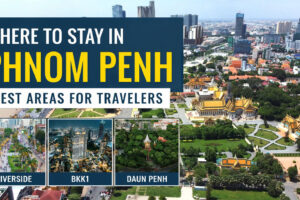
Where to Stay in Phnom Penh for First-Time Visitors
Choosing the right neighborhood can make sightseeing easier.
| Area | Best For | Atmosphere |
|---|---|---|
| Riverside / Daun Penh | First-time visitors and sightseeing | Central, lively, and convenient |
| BKK1 | Couples, cafés, and modern accommodation | Urban and relatively comfortable |
| Royal Palace Area | Historic attractions and culture | Central and walkable in selected streets |
| Tonle Bassac | Restaurants and contemporary city life | Modern and lively |
| Tuol Tompoung | Local neighborhoods and longer stays | Relaxed and food-focused |
Our recommendation: Riverside and Daun Penh are convenient for a short first visit focused on major attractions. BKK1 is attractive for travelers who prefer contemporary restaurants, cafés, and a wider selection of modern hotels.
Remember that staying in a central neighborhood does not guarantee that all attractions are within easy walking distance. Phnom Penh’s weather and traffic can make short vehicle journeys worthwhile.
How to Get Around Phnom Penh
Phnom Penh is spread across several districts, so most visitors combine walking with local transportation.
Tuk-Tuks
Tuk-tuks are widely used for short and medium-distance journeys.
They are convenient for traveling between attractions that are too far apart to walk comfortably.
Ride-Hailing Applications
Ride-hailing services such as Grab and PassApp are commonly used in Phnom Penh.
These applications can help travelers understand the expected fare and communicate their destination more easily.
Check the vehicle details and driver information before entering.
Private Cars and Taxis
Private cars can be a comfortable choice for families, airport transfers, and longer journeys such as visiting Choeung Ek.
Air conditioning is particularly valuable during the hottest months.
Walking
Walking is useful in selected central areas, particularly around the Royal Palace, National Museum, and riverside.
However, sidewalks are not always continuous, and traffic can be busy.
Cross roads carefully and avoid using your phone close to passing motorbikes.
Getting from Techo International Airport to Phnom Penh
An important change for visitors arriving in 2026 is the opening of Techo International Airport, Cambodia’s new main aviation gateway serving Phnom Penh.
The airport began commercial operations on September 9, 2025, replacing the former Phnom Penh International Airport for the city’s main commercial air services.
Techo International Airport is located south of the capital in Kandal Province.
Because it is farther from central Phnom Penh than the old airport, international travelers should plan their airport transfer in advance.
Airport Transfer Options
Depending on current services, transport options may include:
- Prearranged private transfers.
- Hotel pickup services.
- Authorized airport taxis.
- Available shuttle or bus services.
- Approved ride-hailing services where airport pickup is supported.
Journey times depend on traffic, the route, and your hotel’s location. Allow extra time during peak travel periods.
Official airport website: Techo International Airport.
Traveler’s tip: Check your airport code and arrival instructions carefully when booking transportation. Older travel articles may still refer to the former Phnom Penh airport.
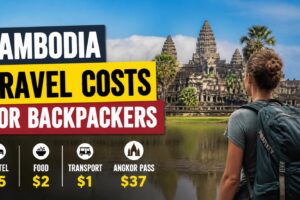
How Much Does It Cost to Visit Phnom Penh?
Phnom Penh offers travel experiences for many budgets, from inexpensive local meals and guesthouses to international hotels and premium dining.
Daily spending depends on accommodation, transportation, dining preferences, and how many paid attractions you visit.
The following are approximate planning ranges, not live prices or guaranteed quotations.
| Travel Style | Approximate Daily Budget Per Person |
|---|---|
| Budget traveler | US$25–45 |
| Mid-range traveler | US$50–100 |
| Comfort-focused traveler | US$120+ |
These allowances assume ordinary daily travel expenses and can vary considerably. They do not include international flights or unusually expensive private tours.
Major sightseeing fees should be added according to the attractions selected.
For example, the National Museum charges US$10 for foreign adults, while Tuol Sleng Genocide Museum charges US$5, according to their official published information.
Always check current prices before visiting.
Best Time to Visit Phnom Penh
Phnom Penh has a tropical climate with warm temperatures throughout the year.
November to February – Generally the Most Comfortable
This period usually offers relatively comfortable conditions for sightseeing.
Walking along the riverside and exploring markets can be particularly enjoyable during the morning and evening.
March to May – Hot Season
Temperatures can become very high, particularly around midday.
Plan outdoor activities early, take regular breaks, and use air-conditioned museums or cafés during the hottest hours.
June to October – Rainy Season
Rainfall can bring greener landscapes and dramatic skies, but heavy showers may disrupt outdoor plans.
Traffic can become slower during periods of intense rain or localized flooding.
Keep a flexible itinerary and carry suitable rain protection.
Safety and Practical Travel Tips for First-Time Visitors
- Protect phones and bags: Keep valuables away from traffic-facing sides of tuk-tuks and busy roads.
- Use reliable transportation: Book through established providers or agree on fares in advance.
- Cross streets carefully: Phnom Penh traffic requires attention, even at intersections.
- Carry small cash: Cambodian riel is useful for markets, local food, and small purchases.
- Dress appropriately: Cover shoulders and knees when visiting religious sites.
- Check attraction schedules: Royal ceremonies, holidays, and maintenance can affect access.
- Stay hydrated: Heat and humidity can make sightseeing tiring.
- Respect memorial sites: Approach Tuol Sleng and Choeung Ek with sensitivity.
- Be cautious with riverboats: Check safety equipment and weather before boarding.
- Choose hygienic food: Prefer fresh, properly cooked dishes and safe drinking water.
- Plan airport transportation: Techo International Airport is outside the city center.
- Allow extra time: Traffic congestion can affect transfers and sightseeing schedules.
Frequently Asked Questions About Phnom Penh
Is Phnom Penh worth visiting for first-time travelers?
Yes. Phnom Penh offers important cultural landmarks, royal architecture, museums, markets, river experiences, local cuisine, and opportunities to understand Cambodia’s history.
What are the must-see attractions in Phnom Penh?
Popular choices include the Royal Palace, Silver Pagoda, National Museum, Wat Phnom, Central Market, Independence Monument, and Sisowath Quay. Visitors interested in recent history may also choose to visit Tuol Sleng and Choeung Ek.
How many days do you need in Phnom Penh?
Two or three days are suitable for most first-time visitors. One day allows a brief introduction, while three days offer more time for museums, markets, food, and nearby excursions.
What is the best area to stay in Phnom Penh?
Riverside and Daun Penh are convenient for sightseeing. BKK1 and Tonle Bassac are good alternatives for travelers interested in modern hotels, restaurants, and cafés.
How much does the Royal Palace cost?
Recent visitor guides commonly report a foreign admission price of approximately US$10. Because palace ticketing and access can change, confirm the current price directly at the entrance.
How much is the National Museum entrance fee?
The National Museum of Cambodia officially lists admission at US$10 for foreign adults and US$5 for foreign visitors aged 10–17.
Is Tuol Sleng Genocide Museum open every day?
Yes. Its official website lists opening hours of 8:00 AM–5:00 PM daily, including public holidays. Check for any exceptional changes before your visit.
Are Tuol Sleng and Choeung Ek UNESCO World Heritage sites?
Yes. In 2025, both were included in the UNESCO World Heritage inscription for Cambodian Memorial Sites, together with the former M-13 prison site.
Can you visit Phnom Penh without a tour guide?
Yes. Many attractions can be visited independently. However, guides can provide valuable historical and cultural explanations, particularly at museums, religious sites, and major heritage landmarks.
Where can you watch sunset in Phnom Penh?
Popular options include the riverside promenade and suitable river cruises. Sunset conditions depend on the weather, season, and viewing location.
What is the best market for tourists in Phnom Penh?
Central Market is excellent for architecture and general shopping, while Russian Market is popular for souvenirs, clothing, and handicrafts.
What airport serves Phnom Penh in 2026?
Techo International Airport, which began commercial operations on September 9, 2025, serves Phnom Penh as the capital’s main international airport.
Is Phnom Penh safe for tourists?
Many travelers visit Phnom Penh without serious problems. However, visitors should take sensible precautions concerning road traffic, phone and bag theft, transportation, and late-night activities.
What is the best month to visit Phnom Penh?
November to February is generally the most comfortable period for outdoor sightseeing. However, Phnom Penh can be visited throughout the year with appropriate planning for heat and rain.
Sources and References
This travel guide draws on official Cambodian tourism information, museum websites, UNESCO documentation, and current airport information. Attraction prices, opening hours, and transportation services can change. Check the latest details before visiting.
- Cambodia Ministry of Tourism – Royal Palace: Official visitor information on the Royal Palace, Silver Pagoda, and royal architecture.
- National Museum of Cambodia – Admission: Official ticket prices, opening hours, and photography rules.
- Cambodia Ministry of Tourism – Wat Phnom: Historical background, visitor guidance, and cultural significance.
- Cambodia Ministry of Tourism – Central Market: Market architecture, history, and shopping information.
- Tuol Sleng Genocide Museum – Official Website: Historical context, admission, opening hours, and visitor regulations.
- UNESCO World Heritage Centre – Cambodian Memorial Sites: World Heritage inscription of Tuol Sleng, Choeung Ek, and M-13.
- Cambodia Ministry of Culture and Fine Arts – Sites of Memory: Cambodian government information on the memorial sites and their UNESCO recognition.
- Cambodia Ministry of Tourism – Independence Monument: Architectural history and national significance.
- Cambodia Ministry of Tourism – Russian Market: Market shopping and local tourism information.
- National Bank of Cambodia – SOSORO Museum: Official museum information, opening hours, and admission fees.
- Techo International Airport – Opening Announcement: Official confirmation of the airport’s September 2025 operational launch.
- Tourism Cambodia – Koh Dach: Island setting, traditional community activities, and visitor information.
- US CDC Yellow Book – Cambodia: Travel health and practical transportation safety guidance.
Conclusion: Discover the Best of Phnom Penh
Phnom Penh is one of Cambodia’s most rewarding destinations for travelers who want to understand the country beyond its famous ancient temples.
The Royal Palace and Silver Pagoda reveal Cambodia’s royal and religious heritage. The National Museum preserves extraordinary Khmer artistic traditions, while Wat Phnom connects visitors with the city’s origins.
Markets, restaurants, and riverside walks introduce the energy of contemporary Cambodian life. For those who choose to visit, Tuol Sleng and Choeung Ek provide opportunities for historical education, remembrance, and reflection.
Phnom Penh also rewards slower exploration. A simple meal at a local restaurant, a quiet morning near the river, or a visit to a traditional market can become one of the most memorable parts of a Cambodia journey.
For a first visit, allow at least two days, choose centrally located accommodation, organize transportation carefully, and balance historical sightseeing with time to experience the city’s everyday atmosphere.
Whether you are beginning a longer journey through Cambodia or spending a few days in the capital, Phnom Penh provides a valuable introduction to the country’s history, culture, and modern identity.
Explore more of Cambodia with GoToKH.com for guides to Phnom Penh, Siem Reap, Angkor Wat, Cambodian food, cultural heritage, accommodation, and practical travel advice throughout the Kingdom of Wonder.
