





















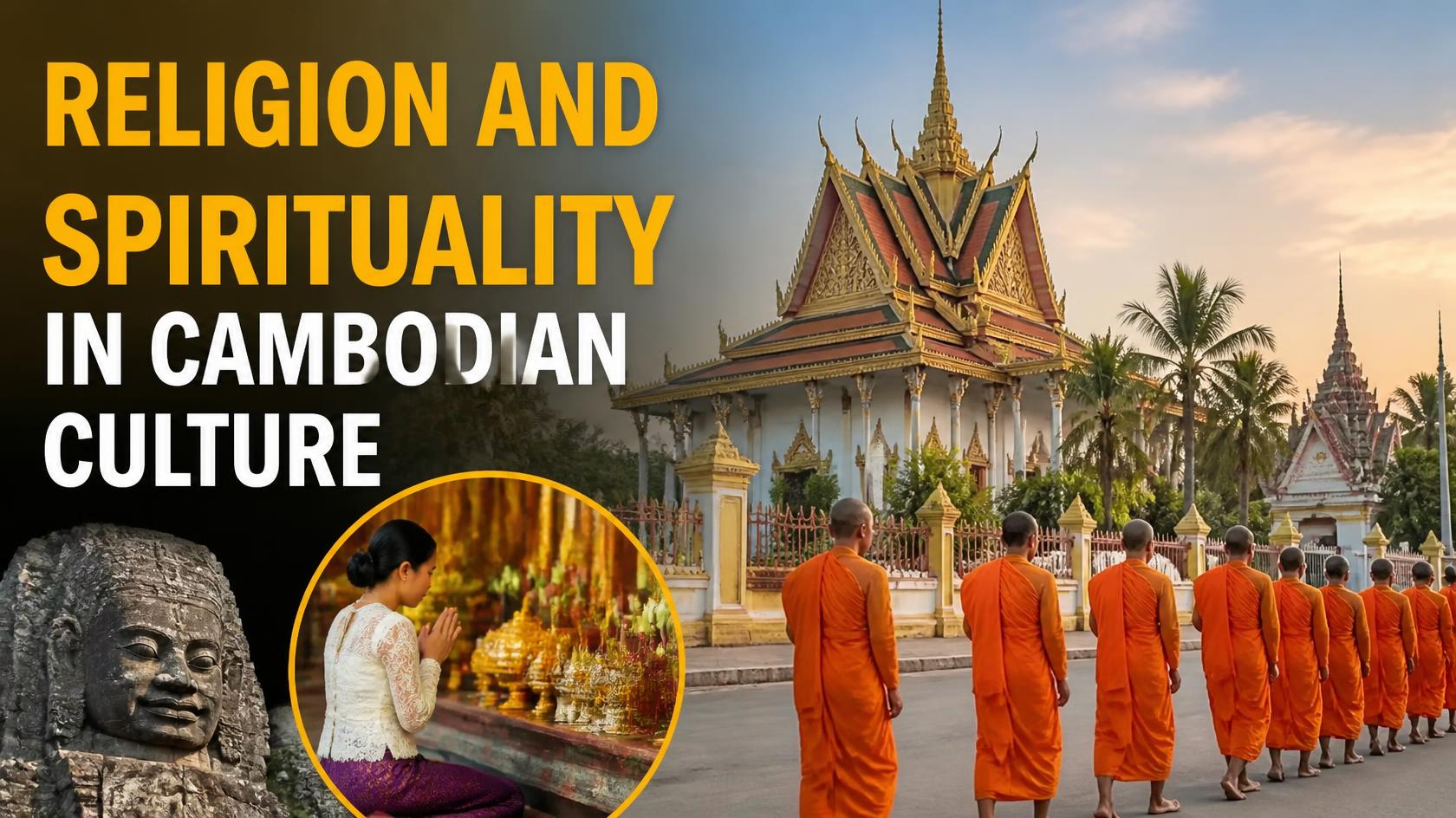

Religion and spirituality in Cambodian culture are deeply connected with everyday life, family traditions, historical identity, and community relationships. From the golden spires of Buddhist pagodas to ancient Hindu temples, ancestral ceremonies, and traditional beliefs in guardian spirits, Cambodia’s spiritual heritage reflects centuries of cultural development.
Today, Theravada Buddhism is the dominant religious tradition in Cambodia and plays an important role in the country’s social and cultural life. Buddhist teachings influence customs surrounding generosity, respect for elders, religious festivals, marriage, funerals, and community responsibilities.
However, Cambodian spirituality extends beyond formal Buddhist practice. Many families also maintain traditions associated with ancestors, protective spirits, sacred natural places, and older religious beliefs. These practices often coexist with Buddhism rather than forming completely separate systems.
Cambodia is also home to Muslim, Christian, Indigenous, and other religious communities whose traditions contribute to the country’s cultural diversity.
For travelers, understanding Cambodia’s spiritual traditions provides valuable insight into the meaning of pagodas, religious ceremonies, traditional festivals, and everyday expressions of respect.
This guide explores the main religions practiced in Cambodia, the history of Khmer spirituality, Buddhist beliefs, traditional spirit worship, ancestor remembrance, religious diversity, and practical etiquette for visiting sacred places.
Religion in Cambodia at a Glance
| Topic | Overview |
|---|---|
| State Religion | Buddhism, as established by Cambodia’s Constitution |
| Dominant Buddhist Tradition | Theravada Buddhism |
| Other Religious Communities | Muslims, Christians, Mahayana Buddhists, followers of Indigenous beliefs, and others |
| Traditional Khmer Spiritual Beliefs | Neak Ta guardian spirits, ancestor-related practices, and local protective traditions |
| Important Buddhist Festivals | Pchum Ben, Visak Bochea, Meak Bochea, and Kathina |
| Important Sacred Places | Buddhist pagodas, ancient temples, spirit shrines, and community religious sites |
| Historical Religious Influences | Hinduism, Mahayana Buddhism, Theravada Buddhism, and local spiritual traditions |
| Travel Etiquette | Dress modestly, remove shoes where required, and respect worshippers |
1. Theravada Buddhism: The Heart of Cambodian Religious Life
Theravada Buddhism is the most influential religious tradition in contemporary Cambodian society.
It is practiced by the majority of Cambodian Buddhists and shapes many aspects of social customs, festivals, religious education, and community life.
According to Cambodia’s Ministry of Cults and Religions figures cited in the United States Department of State’s 2023 International Religious Freedom Report, approximately 93 percent of the population was Buddhist in the ministry’s 2022 estimates.
Such figures vary depending on the source, year, and methods used. They should be understood as reported estimates rather than precise measurements of every individual’s beliefs or religious activity.
What Is Theravada Buddhism?
Theravada Buddhism is a major branch of Buddhism that emphasizes the teachings attributed to Siddhartha Gautama, commonly known as the Buddha.
Its religious foundations include the importance of ethical conduct, meditation, wisdom, and the pursuit of liberation from suffering.
Among the best-known Buddhist teachings are the Four Noble Truths and the Noble Eightfold Path.
In Cambodia, these teachings are expressed not only through formal religious education but also through everyday practices and community traditions.
The Importance of Karma and Merit
Two particularly important concepts in Cambodian Buddhist life are karma and merit.
Karma refers to intentional actions and their moral consequences within Buddhist understanding.
Merit, often expressed through the Khmer concept of bon (បុណ្យ), is associated with beneficial actions such as generosity, ethical behavior, support for religious institutions, and acts of compassion.
Many Cambodian Buddhists believe that performing good deeds contributes to spiritual well-being and favorable future conditions.
Merit-making activities may include:
- Offering food and necessities to Buddhist monks.
- Making donations to religious or charitable activities.
- Supporting parents, elders, and community members.
- Participating in Buddhist ceremonies.
- Practicing generosity and compassion.
- Observing moral principles and religious teachings.
However, Buddhist teachings and individual religious practices vary. Not every Cambodian interprets karma, merit, and spiritual duties in exactly the same way.
2. Buddhist Pagodas and Their Role in Cambodian Communities
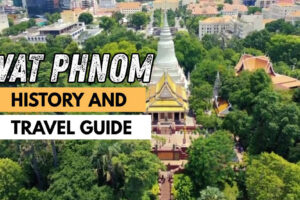
A Buddhist pagoda, commonly called a wat (វត្ត), is much more than a place for prayer.
In many Cambodian communities, pagodas serve as centers of religion, education, social connection, traditional ceremonies, and cultural preservation.
They can also provide spaces for community gatherings and important life events.
What Can You Find Inside a Cambodian Pagoda?
A typical Cambodian Buddhist pagoda complex may contain several structures:
- Vihear: A principal worship or ordination-related building containing Buddha images.
- Preah Chedei: A stupa or religious monument, sometimes associated with sacred relics or the remains of deceased individuals.
- Monks’ residences: Buildings where members of the monastic community live.
- Dining or community halls: Spaces used for religious gatherings and communal activities.
- Buddha statues and religious images: Representations used in worship, instruction, and contemplation.
- Decorative murals: Paintings illustrating Buddhist stories and moral teachings.
The layout of pagodas differs according to their age, location, financial resources, and local traditions.
Why Pagodas Matter Beyond Religion
Historically, Cambodian pagodas have contributed to literacy, religious education, and the transmission of cultural knowledge.
Monks and laypeople have helped preserve manuscripts, religious stories, and traditional practices.
Pagodas also provide important settings for festivals, memorial ceremonies, charitable activities, and gatherings of relatives.
For travelers, visiting a pagoda offers an opportunity to appreciate Cambodian architecture and community traditions, provided they respect the fact that it remains an active place of worship.
3. The Role of Buddhist Monks in Cambodian Society
Buddhist monks, known in Khmer as preah sang (ព្រះសង្ឃ), occupy an important position in Cambodian religious life.
They study and teach Buddhist principles, lead or participate in religious ceremonies, and help maintain monastic traditions.
Monks are often invited to participate in ceremonies associated with important family and community events.
Daily Monastic Life
Depending on the monastery and religious observance, a monk’s daily schedule may include:
- Prayer and chanting.
- Meditation.
- Study of Buddhist teachings and texts.
- Participation in religious ceremonies.
- Receiving food and other offerings from lay supporters.
- Teaching or community-related activities.
Monastic practices follow established religious rules, although routines may differ between individual pagodas.
Temporary Ordination
Some Cambodian men enter the monkhood temporarily, while others remain monks for many years or for life.
Temporary ordination may be associated with personal religious commitment, study, family circumstances, or a desire to dedicate merit to parents and relatives.
However, becoming a monk is not a universal requirement for Cambodian men, and individual experiences vary.
Women and Buddhist Religious Life
Women play essential roles in Cambodian Buddhist communities as donors, teachers, religious supporters, and participants in ceremonies.
Older women may also become don chi, often referred to in English as Buddhist nuns or female renunciants, who typically follow particular religious disciplines and wear white clothing.
Their status and practices are not necessarily identical to those of fully ordained monks.
4. The Historical Influence of Hinduism in Cambodia
Although modern Cambodia is predominantly Buddhist, Hinduism played a major role in the country’s early religious and cultural development.
During the pre-Angkorian and Angkorian periods, Khmer rulers supported temples dedicated to Hindu deities, especially Shiva and Vishnu.
Hindu religious concepts influenced royal ceremonies, architectural symbolism, sculpture, temple decoration, and the political expression of kingship.
Hinduism During the Khmer Empire
The Khmer Empire developed a remarkable landscape of monumental temples between the ninth and fifteenth centuries.
Many early Angkorian religious foundations were associated with Hinduism.
The sacred mountain concept of Mount Meru, important in Hindu and Buddhist cosmology, influenced the symbolic design of temple mountains and other Khmer monuments.
Stone carvings depict gods, celestial figures, guardians, sacred animals, and scenes from religious narratives.
Angkor Wat and Vishnu
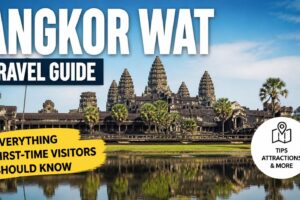
Angkor Wat, built during the reign of King Suryavarman II in the twelfth century, was originally dedicated to Vishnu.
Its architecture and extensive reliefs illustrate the religious ideas and artistic achievements of the Khmer Empire.
Over time, Angkor Wat became an important Buddhist religious site, a role it continues to hold today.
Hindu Traditions in Modern Cambodian Culture
Elements of Hindu-derived mythology and symbolism remain visible in Cambodian performing arts, temple decoration, royal cultural traditions, and stories associated with the Khmer past.
Figures from the Ramayana tradition appear in the Cambodian Reamker, an important part of Khmer literary and theatrical heritage.
However, these cultural influences do not mean that most modern Cambodians practice Hinduism as their principal religion.
They demonstrate the long historical interaction of different religious traditions.
5. Mahayana Buddhism and Cambodia’s Ancient Temples
Mahayana Buddhism also influenced Cambodia’s historical religious development.
It became particularly prominent in royal patronage during the reign of King Jayavarman VII in the late twelfth and early thirteenth centuries.
Jayavarman VII is associated with major Buddhist religious foundations, including Bayon, Ta Prohm, and Preah Khan.
Bayon Temple and Buddhist Symbolism
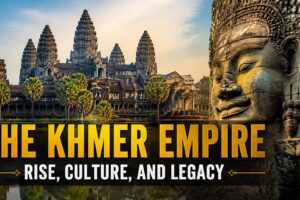
Bayon, located at the center of Angkor Thom, is one of Cambodia’s most recognizable monuments.
Its monumental face towers, religious imagery, and architectural plan reflect important religious ideas associated with Jayavarman VII’s reign.
UNESCO identifies Bayon as a major expression of the king’s Mahayana Buddhist religious program.
However, Bayon’s history also includes later religious transformations. During subsequent reigns, changes in patronage and worship affected parts of the monument.
From Mahayana to Theravada Buddhism
Over the later Angkorian period, Theravada Buddhism became increasingly influential in Khmer society.
This transformation occurred gradually and was connected with wider religious, social, and political changes.
The older traditions did not disappear entirely. Their artistic and symbolic influence remains visible in Cambodian temples, sculpture, and historical monuments.
6. Neak Ta: Traditional Guardian Spirit Beliefs
One of the most distinctive aspects of Cambodian spirituality is the belief in Neak Ta (អ្នកតា).
In many Khmer communities, Neak Ta are understood as protective beings or spiritual guardians associated with particular places.
Depending on local traditions, a Neak Ta may be connected with a village, forest, large tree, river, hill, or another significant location.
Some are associated with ancestral figures or remembered individuals, while others are understood as guardians of the land.
What Does Neak Ta Mean?
The term Neak Ta is often translated as an ancestral or territorial guardian spirit, although no single English expression fully captures the concept.
Researchers studying Cambodian spiritual traditions emphasize that Neak Ta cannot always be understood simply as ghosts or deceased ancestors.
The meanings and stories associated with individual guardian beings differ among communities.
Where Are Neak Ta Shrines Found?
Small shrines associated with local protective spirits may be found:
- Under large or historically significant trees.
- Near village entrances.
- Beside roads or community gathering places.
- Near fields, waterways, and natural landmarks.
- Within or close to some Buddhist pagoda compounds.
Offerings and ceremonies vary by location and tradition.
Some residents make offerings while asking for protection, good fortune, or community well-being.
How Do Neak Ta Beliefs Relate to Buddhism?
Traditional spirit beliefs and Buddhist practice are not necessarily viewed as conflicting by the people who observe them.
A Cambodian family may attend a Buddhist pagoda, make offerings to monks, and also show respect to a local Neak Ta shrine.
Anthropological research in Cambodia documents the interaction between spirit-related customs and Buddhist institutions.
These practices reflect the layered nature of Cambodian spirituality, which includes Buddhist teachings alongside older local traditions.
Traveler’s tip: Spirit shrines should be treated respectfully, even if they are small or do not resemble formal temples. Do not touch or move offerings, enter restricted spaces, or treat a shrine as a decorative photography prop.
7. Ancestor Worship and Remembering the Dead
Respect for ancestors is another essential aspect of Cambodian cultural and spiritual life.
Family relationships are deeply valued, and remembrance of deceased relatives remains important across generations.
In Buddhist contexts, families may dedicate merit to deceased parents, grandparents, and other relatives through prayers, offerings, and religious ceremonies.
These practices combine Buddhist teachings with longstanding cultural ideas about family duty and remembrance.
Pchum Ben: The Festival of Ancestors
Pchum Ben (ភ្ជុំបិណ្ឌ) is one of Cambodia’s most significant religious festivals.
It generally takes place in September or October, according to the Cambodian lunar calendar.
The traditional observance lasts fifteen days, with the final day marking the principal Pchum Ben celebration.
During this period, Cambodian families visit pagodas to offer food and necessities to monks and dedicate merit to departed relatives.
Some traditional beliefs hold that spirits of deceased relatives may seek offerings or spiritual assistance during this time.
These beliefs are important cultural interpretations and should be understood within their religious context rather than presented as scientifically established events.
Family Memorial Ceremonies
Many Cambodian Buddhist families also hold memorial ceremonies after the death of a relative.
These may include ceremonies held approximately seven days and one hundred days after death, although practices vary by region and family.
Families may invite monks to chant, make food offerings, gather relatives, and dedicate merit to the deceased.
Such ceremonies express grief, family solidarity, gratitude, and religious devotion.
Why Ancestor Remembrance Matters
Ancestor-related traditions reinforce the connection between living generations and family history.
They encourage remembrance, respect, generosity, and responsibility toward relatives.
For travelers, Pchum Ben provides a meaningful example of how Buddhist traditions and Cambodian family values are connected.
8. Arak and Other Indigenous Spiritual Traditions
Cambodian spiritual life also includes traditions associated with Arak (អារក្ស), protective spirits, and ceremonial practices passed through local communities.
These beliefs can involve particular families, lineages, villages, or ritual specialists.
In some communities, spirit-related ceremonies include traditional music, offerings, and practices understood as seeking guidance, protection, or spiritual balance.
However, the meaning of Arak and related traditions varies across locations, and these practices should not be described as one standardized national religion.
Indigenous Beliefs in Northeastern Cambodia
Indigenous communities in provinces such as Mondulkiri and Ratanakiri maintain distinctive cultural traditions.
Among some communities, sacred forests, natural landmarks, ancestral relationships, and traditional ceremonies play important spiritual roles.
The beliefs of Bunong, Tampuan, Kreung, and other Indigenous peoples are not identical and should not be reduced to a single label.
Traditional practices can coexist with Buddhism, Christianity, or other religious identities, depending on the community and individual.
Responsible travel advice: Always seek local permission before visiting sacred sites or attending ceremonies. Some places are not intended for public tourism, and visitors should respect community decisions about access and photography.
9. Islam in Cambodia and the Cham Community
Although Buddhism is the dominant religion, Islam is an important part of Cambodia’s religious diversity.
Many Cambodian Muslims belong to the Cham ethnic community, which has a distinctive history, language, and cultural identity.
Cham communities are found in several parts of Cambodia, including areas around the Mekong River, Tonle Sap Lake, Kampong Cham, Tboung Khmum, and other provinces.
However, not every Cham person follows the same religious practices or identifies with the same Islamic tradition.
Religious Life in Muslim Communities
Muslim communities may organize religious life around mosques, prayer, religious education, and important observances such as Ramadan and Eid.
Religious practices vary among communities and Islamic traditions.
Some Cambodian Muslim families maintain cultural customs connected with Cham language, clothing, food, and community history.
Visitors can learn about this heritage through respectful cultural encounters and community-based experiences where welcomed.
Visiting Mosques in Cambodia
If you wish to visit a mosque, contact the mosque or a knowledgeable local guide first.
Dress modestly, observe prayer restrictions, and ask whether visitors are permitted inside particular spaces.
Avoid interrupting religious activities or photographing worshippers without permission.
10. Christianity and Other Religious Communities
Christianity is another religion practiced in Cambodia.
Christian communities include Catholics, Protestants, and other denominations, with churches found in Phnom Penh and various provincial locations.
Christianity has a long history in Cambodia, although its institutions and communities experienced major changes during the twentieth century.
Today, churches provide religious services, community activities, and various educational or charitable initiatives.
Other religious traditions practiced in Cambodia include Mahayana Buddhism, Chinese religious traditions, Baha’i beliefs, and smaller faith communities.
Some residents also identify as nonreligious or practice customs without belonging formally to a religious institution.
These different communities contribute to Cambodia’s wider cultural and religious landscape.
11. Religion, Cultural Values, and Everyday Life
Religious and spiritual traditions influence many aspects of Cambodian social behavior.
Although cultural customs are not identical to religious rules, the two are often closely connected.
Respect for Elders
Respect for parents, grandparents, teachers, monks, and older community members is an important Cambodian social value.
It is expressed through language, behavior, greetings, and family responsibilities.
This respect is connected with religious teachings as well as broader cultural traditions.
Sampeah: The Traditional Greeting
The Sampeah (សំពះ) is a traditional Cambodian greeting involving hands pressed together and a slight bow.
The position of the hands and depth of the bow may vary according to the person being greeted and the social context.
A respectful Sampeah is often used when greeting elders, monks, and other respected individuals.
Generosity and Community Support
Acts of generosity are highly valued in Cambodian Buddhist life.
Families may contribute to pagoda maintenance, religious events, charitable activities, and community projects.
These forms of giving connect Buddhist merit-making with practical support for other people.
Religious Practices at Home
Depending on individual beliefs, some Cambodian homes include a Buddha image, family memorial space, or a small shrine associated with traditional spiritual practices.
Families may light incense, offer flowers, or conduct prayers on particular occasions.
Such customs vary widely, and they should not be assumed to occur in every Cambodian household.
12. Major Religious Festivals in Cambodia
Cambodia’s religious calendar includes festivals and ceremonies that bring together families, monks, and local communities.
| Festival | Usual Time | Main Significance |
|---|---|---|
| Meak Bochea | February or early March | Commemoration of an important event in Buddhist tradition |
| Visak Bochea | April or May | Commemorates events associated with the Buddha’s life, enlightenment, and passing |
| Khmer New Year | Mid-April | Traditional New Year, family gatherings, pagoda visits, and merit-making |
| Chol Vossa | Usually July | Beginning of the Buddhist rains retreat |
| Pchum Ben | September or October | Honoring ancestors and dedicating merit to deceased relatives |
| Chenh Vossa | Usually October | End of the traditional rains retreat |
| Kathina | Usually October or November | Offering robes and necessities to Buddhist monks |
Many religious festivals follow the lunar calendar, so their dates shift from year to year.
Not every religious observance is an official public holiday. Travelers should check current government calendars and local pagoda announcements before planning around a particular ceremony.
13. Religion in Cambodian Art and Architecture
Cambodia’s religious heritage is visible throughout its architecture, sculpture, music, literature, and performing arts.
Ancient Khmer Temples
Temples such as Angkor Wat, Bayon, Preah Vihear, and Sambor Prei Kuk reveal the historical interaction of Hindu, Buddhist, and local spiritual traditions.
Their towers, carvings, religious statues, and ceremonial spaces reflect complex systems of sacred symbolism.
Buddhist Pagoda Architecture
Modern Cambodian pagodas often feature decorative roofs, naga motifs, golden details, Buddha images, and paintings illustrating Buddhist stories.
Architectural styles differ across regions and time periods.
Khmer Classical Dance
The Royal Ballet of Cambodia preserves performance traditions associated with royal ceremonies, religious stories, and sacred symbolism.
UNESCO recognizes the Royal Ballet as an important form of Cambodian intangible cultural heritage.
Its repertoire includes mythological and religious narratives, demonstrating the relationship between performance and spirituality.
Traditional Music and Shadow Theatre
Traditional Cambodian music, including Pinpeat, often accompanies classical dance and ceremonial performances.
Large shadow-puppet theatre, known as Sbek Thom, also has historical religious and ritual associations.
These art forms demonstrate that Cambodian spirituality can be expressed through sound, movement, storytelling, and visual design.
14. The Impact of Modern History on Cambodian Religion
Religious life in Cambodia was profoundly affected by the Khmer Rouge regime from 1975 to 1979.
During this period, Buddhist institutions were severely disrupted, monks were persecuted or forcibly disrobed, and numerous religious buildings and cultural institutions suffered destruction or damage.
Other religious communities were also subjected to persecution and severe restrictions.
These events caused devastating losses of religious leaders, historical knowledge, and community traditions.
Religious Revival After 1979
Following the end of the Khmer Rouge regime, Cambodian communities gradually rebuilt religious institutions.
Monastic education resumed, pagodas were restored or reconstructed, and traditional ceremonies became more widely practiced again.
Religious revival was not limited to Buddhism. Other communities also worked to restore religious organizations and cultural traditions.
For many Cambodians, the restoration of religious life became an important part of cultural recovery and social rebuilding.
15. Religious Freedom in Cambodia
Cambodia’s Constitution recognizes Buddhism as the state religion while providing guarantees relating to freedom of religious belief and worship.
Article 43 of the Constitution states that Cambodian citizens have the right to freedom of belief and that the state guarantees religious worship under conditions relating to the beliefs of others and public order and security.
The legal and practical situation of different religious communities is more complex than this constitutional provision alone.
Reports on religious freedom discuss government registration, regulation of religious activities, and differing relationships between the state and religious institutions.
For visitors, the important cultural point is that Cambodia contains several living religious traditions, and understanding the country requires respect for that diversity.
16. How to Visit Cambodian Temples and Sacred Places Respectfully
Visiting Buddhist pagodas and historical temples can be one of the most rewarding cultural experiences in Cambodia.
However, appropriate behavior is important because many sacred places are active religious sites.
Dress Modestly
Wear clothing that covers your shoulders and knees when visiting pagodas and important religious buildings.
Some sites have more specific dress requirements, so follow local instructions.
Remove Your Shoes Where Required
Shoes are commonly removed before entering certain worship spaces.
Look for signs or follow the example of local visitors.
Respect Monks and Worshippers
Avoid touching monks or their robes, and follow local etiquette when presenting offerings or speaking with members of the monastic community.
Do not interrupt chanting, meditation, or private religious activities.
Be Careful with Your Feet
In Cambodian cultural etiquette, pointing your feet toward a Buddha image or a person is considered disrespectful.
When sitting on the floor inside a pagoda, keep your feet directed away from sacred images and follow local guidance.
Ask Before Taking Photographs
Request permission before photographing monks, worshippers, ceremonies, or people participating in private rituals.
Some sacred areas restrict photography entirely.
Respect Local Shrines
Small spirit shrines, family religious spaces, and sacred natural sites deserve the same care as larger temples.
Do not remove offerings, move religious objects, or enter restricted areas.
Do Not Assume Donations Are Required
Voluntary offerings may be welcomed at some religious sites, but visitors should not assume that payment is required simply to observe a public ceremony.
When uncertain, ask temple staff or a trusted local guide.
17. Where Can Travelers Learn About Cambodian Religion?
Several cultural and historical settings can help visitors gain a deeper understanding of Cambodian spirituality.
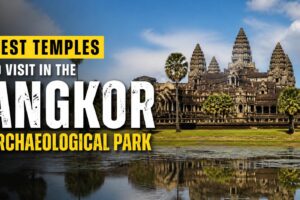
Angkor Wat and Angkor Archaeological Park
Angkor offers an extraordinary introduction to Cambodia’s religious history, particularly the interaction between Hindu and Buddhist traditions.
Visitors can examine temple architecture, sacred imagery, and monuments associated with different historical periods.
A knowledgeable licensed guide can provide valuable context.
Buddhist Pagodas
Pagodas in cities and villages provide opportunities to learn about contemporary Buddhist community life.
Visitors may observe public prayer activities, religious architecture, and community ceremonies where appropriate.
National Museum of Cambodia
The National Museum in Phnom Penh preserves important examples of Khmer sculpture and religious art.
Its collections help explain the historical importance of Hindu and Buddhist imagery in Cambodian civilization.
Community Cultural Experiences
Responsible cultural programs may provide opportunities to learn about village traditions, religious festivals, and local beliefs.
Choose knowledgeable guides and activities that respect the privacy and dignity of local communities.
18. Useful Khmer Words Related to Religion and Spirituality
| Khmer Word | Pronunciation Guide | English Meaning |
|---|---|---|
| សាសនា | Sasna | Religion |
| ព្រះពុទ្ធសាសនា | Preah Put Sasna | Buddhism |
| វត្ត | Wat | Buddhist pagoda or monastery |
| ព្រះសង្ឃ | Preah Sang | Buddhist monks or monastic community |
| បុណ្យ | Bon | Merit, religious offering, or festival, depending on context |
| អ្នកតា | Neak Ta | Traditional guardian or territorial spirit |
| ជំនឿ | Chumneua | Belief |
| បុព្វបុរស | Bopve Boros | Ancestors |
| ភ្ជុំបិណ្ឌ | Pchum Ben | Festival of ancestor remembrance |
| សំពះ | Sampeah | Traditional respectful greeting |
Pronunciation note: These spellings are simplified for English-speaking visitors. Khmer pronunciation cannot always be represented accurately through English letters alone.
Frequently Asked Questions About Religion in Cambodia
What is the main religion in Cambodia?
Theravada Buddhism is the dominant religion in Cambodia. Buddhism is also recognized as the state religion under the Cambodian Constitution.
Is Cambodia a Buddhist country?
Yes. Buddhism is the dominant religion and has a major influence on Cambodian culture, holidays, social customs, and community life. However, Cambodia also has Muslim, Christian, Indigenous, and other religious communities.
What percentage of Cambodians are Buddhist?
Government figures cited in the United States Department of State’s 2023 religious freedom report estimated that approximately 93 percent of Cambodia’s population was Buddhist in 2022. Estimates vary by source and year.
Was Cambodia originally Hindu or Buddhist?
Cambodia’s religious history includes early local spiritual traditions as well as Hindu and Buddhist influences. Hinduism was important in many pre-Angkorian and Angkorian royal foundations, while different forms of Buddhism also developed over the centuries. There was no single uniform religious identity throughout the country’s entire early history.
Why is Angkor Wat important to religion?
Angkor Wat was originally constructed as a Hindu temple dedicated to Vishnu during the reign of Suryavarman II. It later became an important Buddhist religious site and remains spiritually significant today.
What is Neak Ta in Cambodia?
Neak Ta refers to traditional guardian beings or territorial spirits associated with places such as villages, forests, trees, and natural landmarks. Beliefs and ceremonies differ among communities and often coexist with Buddhist practices.
Do Cambodians worship their ancestors?
Many Cambodian families maintain traditions of respecting and remembering deceased relatives. These may include memorial ceremonies, merit dedication, and participation in the Pchum Ben festival. The meaning of these practices varies among families and religious traditions.
What is Pchum Ben?
Pchum Ben is a major Cambodian Buddhist festival dedicated to remembering deceased relatives and ancestors. Families visit pagodas, make offerings, and dedicate merit during an observance traditionally lasting fifteen days.
Are there Muslims in Cambodia?
Yes. Cambodia has Muslim communities, including many members of the Cham ethnic group. Islamic traditions contribute to the country’s religious and cultural diversity.
Is Christianity practiced in Cambodia?
Yes. Cambodia has Catholic, Protestant, and other Christian communities, with churches and religious organizations operating in different parts of the country.
Can tourists enter Buddhist pagodas in Cambodia?
Many pagodas welcome respectful visitors, although access to certain areas or ceremonies may be restricted. Dress modestly, remove shoes where required, and ask before taking photographs.
Can women speak to Buddhist monks in Cambodia?
Yes, respectful conversation may be possible. Visitors should follow local customs, avoid physical contact with monks, and ask for guidance when uncertain about appropriate etiquette.
What are the most important Buddhist festivals in Cambodia?
Important Buddhist observances include Visak Bochea, Meak Bochea, Pchum Ben, and Kathina. Khmer New Year also includes significant Buddhist activities, although it is a broader traditional national celebration.
How does religion influence Cambodian culture?
Religion influences Cambodian festivals, family ceremonies, traditional values, art, architecture, community activities, and spiritual beliefs. It also helps preserve connections between Cambodia’s historical heritage and contemporary society.
Sources and References
This article draws on Cambodia’s Constitution, international religious freedom documentation, UNESCO heritage resources, Cambodian government cultural information, and academic research on Buddhist and Indigenous spiritual traditions. Religious practices vary among individuals, communities, and regions, and demographic estimates should be interpreted according to their source and date.
- Royal Government of Cambodia – Constitution of the Kingdom of Cambodia: Article 43 on Buddhism as the state religion and freedom of religious belief.
- United States Department of State – 2023 Report on International Religious Freedom: Cambodia: Religious demographics, Buddhist traditions, Islam, Christianity, Indigenous religions, and the legal framework.
- UNESCO World Heritage Centre – Angkor: The historical, artistic, and religious significance of Cambodia’s Angkorian heritage.
- UNESCO World Heritage Centre – Sambor Prei Kuk: Early Khmer religious traditions and the interaction of Hindu, Buddhist, and local spiritual influences.
- UNESCO – Safeguarding Bayon Temple at Angkor Thom: Jayavarman VII, Mahayana Buddhism, and the religious transformation of Bayon.
- Journal of Southeast Asian Studies – Spirit Cults and Buddhist Practice in Kep Province, Cambodia: Academic research on Neak Ta beliefs and their relationship with Buddhism.
- The Asia Pacific Journal of Anthropology – Chthonic Sovereigns? Neak Ta in a Cambodian Village: Research on traditional territorial and guardian-spirit beliefs.
- National Radio of Cambodia – Pchum Ben Religious Festival: Cambodian traditions of ancestor remembrance and the fifteen-day Pchum Ben observance.
- Cambodia Ministry of Tourism – Advice for Travelers: Official recommendations on cultural behavior, religious-site etiquette, clothing, and photography.
- UNESCO Intangible Cultural Heritage – Royal Ballet of Cambodia: Religious and spiritual symbolism in traditional Khmer performing arts.
- UNESCO Intangible Cultural Heritage – Sbek Thom, Khmer Shadow Theatre: Sacred origins and religious connections of traditional Cambodian shadow theatre.
Conclusion: Understanding Cambodia Through Its Spiritual Heritage
Religion and spirituality are essential to understanding Cambodian culture. They influence the country’s festivals, family traditions, artistic expressions, social customs, historical monuments, and everyday community life.
Theravada Buddhism remains the most influential religious tradition in modern Cambodia, providing teachings and practices associated with generosity, moral conduct, meditation, and spiritual development.
At the same time, traditional beliefs in Neak Ta guardian spirits, ancestor remembrance, and local spiritual practices demonstrate how older cultural traditions continue alongside Buddhism.
Cambodia’s ancient Hindu and Mahayana Buddhist heritage remains visible in the magnificent temples of Angkor, while Muslim, Christian, Indigenous, and other religious communities contribute to the country’s broader spiritual diversity.
For travelers, understanding these traditions can transform a visit to Cambodia from a sightseeing holiday into a deeper cultural experience.
A respectful visit to a pagoda, an opportunity to observe a religious festival, or a conversation with a knowledgeable local guide can reveal the values and beliefs that have shaped Cambodian society for generations.
Whether exploring Angkor Wat, discovering traditional village customs, or learning about the country’s religious festivals, visitors are encouraged to approach Cambodia’s spiritual heritage with curiosity, respect, and cultural sensitivity.
Explore more about Cambodia with GoToKH.com through our guides to Khmer history, Buddhism, Cambodian festivals, traditional beliefs, cultural etiquette, ancient temples, and the living heritage of the Kingdom of Wonder.
